What is really shaping IT investment across EMEA in 2026? 

Across EMEA, IT spending continues to grow, but the forces shaping that growth are becoming more complex. Geopolitical tensions, regulatory developments and economic uncertainty are increasing the pressure on organisations to prioritise resilience and operational stability, even as executive expectations around artificial intelligence continue to rise. Many enterprises are now moving beyond experimentation and beginning to explore how AI can be operationalised at scale. The question for 2026 is not simply whether AI investment will continue, but how organisations balance innovation ambitions with resilience priorities in a rapidly evolving market environment. 

Growth remains stable but increasingly concentrated 

IT spending across EMEA is expected to grow by 7% in 2026, driven primarily by the continued double‑digit expansion of the software market. While 2025 was marked by a surge in the Service Provider segment, 2026 shows a more balanced outlook, with both Enterprise and Service Provider spending following similar growth trajectories. The only exception is the Consumer market, which remains flat (Source: IDC Worldwide Black Book, March 2026). 

Geopolitical tensions, supply chain disruptions and an increasingly complex regulatory landscape continue to reshape investment priorities across EMEA. As explored in our recent analysis of how ongoing conflicts are stress-testing the digital economy, organisations are placing greater emphasis on resilience, operational continuity and regional autonomy in their technology strategies. IT spending is therefore not slowing, but becoming more deliberate and selective, with investment increasingly directed toward capabilities that strengthen stability and long-term adaptability in an uncertain global environment. 

Executive expectations are raising the bar 

At the same time, executive ambition around AI continues to intensify. IDC research indicates that 50 percent of CEOs believe AI will offer their organisation the opportunity to reinvent its business model within the next three to five years. 

This signals a shift in how AI is positioned within enterprise strategy. AI is no longer viewed primarily as a tool for experimentation or incremental efficiency gains. Instead, it is increasingly expected to deliver tangible transformation, automation and competitive differentiation. 

However, survey data also shows that some organisations are reassessing elements of their AI programmes. Concerns around return on investment, governance, data readiness and skills availability are influencing decision-making across the region. The result is a more demanding environment in which expectations are rising but scrutiny is increasing as well. 

From experimentation to operational AI 

Across EMEA, AI maturity is evolving. The early phase of generative AI experimentation is giving way to a stronger focus on operational deployment. 

Organisations are now moving beyond isolated pilots towards integrating AI capabilities into core workflows, enterprise applications and decision-making processes. This transition reflects a broader shift towards operational AI and the emergence of more agentic enterprise models. 

At the same time, scaling AI requires far more than access to models. Infrastructure readiness, data management capabilities, governance frameworks and organisational skills are becoming decisive factors in determining whether organisations can move from experimentation to sustained operational impact. 

Resilience, governance and execution will define the next phase 

The evolving EMEA technology landscape is therefore shaped by a combination of innovation pressure and structural constraints. Geopolitical uncertainty, regulatory requirements and resilience priorities are increasingly influencing technology investment decisions. 

For technology providers operating in the region, understanding these dynamics is critical. Growth opportunities remain significant, but they are tied more closely to execution readiness, operational maturity and the ability to support organisations as they scale AI responsibly. 

Join the conversation

In our upcoming webcast on April 28, IDC analysts Andrea Siviero, Stephen Minton, and team will explore what these shifts mean for the EMEA IT market in 2026, including: 

  • How geopolitical developments and resilience priorities are influencing IT investment across the region 
  • Where growth is concentrated across EMEA markets and industries 
  • How organisations are moving from AI experimentation to operational deployment 
  • What the rise of more agentic enterprise models means for enterprise technology environments 

Register for the webcast here.

Got a question? Drop it in here.

Andrea Siviero - Senior Research Director, MacroTech, Digital Business, and Future of Work - IDC

Andrea Siviero leads IDC's European Digital Business and Future of Work Research group. The group provides market research insights to foster a purposeful and fair adoption of technologies supporting digital societies, businesses and workforce and empower tech providers in strategic decision making, planning and go-to-market activities. Siviero also co-leads the IDC Worldwide MacroTech Research program, focused on the intertwined connection between the Economical and Digital worlds - analyzing the impact key MacroEconomic factors have on the digital landscape and viceversa, how technologies are impacting economies around the world.

2026 年 3 月,“算电协同” 首次被写入《政府工作报告》,标志着算力与电力系统的深度融合正式上升至国家战略层面。当前全球 AI 产业竞争正从技术赛点转向成本赛点,这一战略落地不仅能化解算力快速增长与能源供给之间的结构性矛盾,更可依托 AI Token 跨境服务输出带动电力资源数字化出口,推动我国算力竞争迈入电力系统调度与协调能力比拼的全新阶段,为数字经济出口打造新增长极。

战略落地:政策沉淀与能源转型的必然结果

算电协同升级为国家战略,是长期政策铺垫与内需驱动的必然结果。早在 2023 年 12 月,“算电协同” 概念首次出现在《关于深入实施 “东数西算” 工程加快构建全国一体化算力网的实施意见》中;2024 年,国家发改委、能源局等部门在《加快构建新型电力系统行动方案(2024—2027 年)》中,为算电协同配套项目制定了具体实施纲领,其推进节奏与我国新型电力系统建设、能源转型的时间线高度契合。

从能源供给端来看,2025 年底我国风电光伏装机占比达 47.3%,首次超过煤电;非化石能源发电量占比升至 42.9%,风光新增发电量占全社会新增用电量的 97.1%,新能源已成为用电增量的核心供给主体。但现阶段能源与算力布局仍存在明显矛盾:一方面存在结构性、时段性供电紧张的时间错配问题,另一方面是东部算力需求旺盛但绿电资源稀缺,西部绿电富集但算力需求不足的空间错配问题。算电协同不仅是解决时空错配的抓手,更承担着推动区域协调发展、保障国家算力安全、完善新型电力系统、落地 “双碳” 目标的多重使命,其核心是将我国电力系统的产业优势转化为数字经济的竞争优势。

全球竞争:算力竞争的终局是电力系统综合实力的较量

全球 AI 产业规模化落地,推动算力需求呈指数级增长,算力消耗与电力供给的强绑定成为行业发展的核心特征。IDC 数据显示,2023-2028 年全球智能算力五年复合增长率达 46.2%,2025 年我国智算规模达 1037.3EFLOPS,同比增长 43%,这背后是 AI 大模型训练与推理规模化落地带来的算力需求爆发。算力需求的快速攀升直接推高电力消耗,2025 年我国 AI 数据中心 IT 能耗预计达 77.7 太瓦时,2027 年将增至 146.2 太瓦时,五年实现 6 倍增长,电力供给端的压力持续加大。

全球 AI 产业竞争已出现阶段变化,上半场竞争聚焦芯片等核心技术突破,下半场则转向电力系统综合实力的较量,成本竞争趋势显现:低成本、稳定且绿色的电力供给是核心竞争力。

模式创新:AI Token 开创电力出口新模式

算电协同将继续推动我国电力出口模式转型。通过 “电力转化为算力、算力生成 Token”,实现电力资源的数字化跨境服务输出。与 2000 年后我国电子家电、智能手机、新能源汽车等实体商品出口不同,AI Token 属于数字服务贸易范畴,依托 API 电子传输实现跨境交付,且受 WTO 电子传输关税豁免规则保护,形成了数字经济领域的 “免税高速公路”,降低了跨境服务输出的成本与壁垒。

当前全球 AI Token 产业竞争呈现明显的层级特征,表层是 AI 模型技术的比拼,中层是算力服务能力的竞争,而底层则是电力体系综合实力的较量。在全球 AI Token 竞争中中国拥有四大核心优势:

1. 电力规模优势:2025 年全国用电量突破 10 万亿千瓦时,电力供给能力稳居全球前列;

2. 成本优势:中西部地区拥有丰富的低成本绿电资源;

3. 布局优势:“东数西算” 与 “算电协同” 双战略加持下,我国算力布局与能源布局的协同性提升;

4. 技术优势:我国 AI 模型性价比高、开源生态强大,为算力服务与 AI Token 产业提供有力支撑。

未来方向:电力和算力的双螺旋演进

未来,算电协同发展将聚焦三大核心方向——推动实现电力服务算力、算力反哺电力的双向赋能、提升能源与算力资源的配置效率。

1. 持续推进 “算力跟着电走”,推动算力设施向绿电资源集中区域集聚,最大化利用低成本绿电;2. 推动算力错峰用电落地,将非实时性算力任务合理安排在电力低谷时段;

3. 推动算力成为电网可调节资源,助力电网实现削峰填谷,提升电网运行的稳定性。

产业机遇:算电协同背景下,IT 供应商迎市场新空间

算电协同战略落地为 IT 技术供应商打开了新市场空间,IDC认为有四个机会窗口:

1. 算力电力协同调度系统开发需求爆发,全国一体化算力监测调度、源网荷储一体化管控等场景,亟需能实现算力负荷与电力供应动态匹配的智能调度平台;

2. 绿色算力基础设施技术升级需求凸显,液冷温控、高密度供电、低 PUE 数据中心改造等技术成为算力设施建设标配,绿电直连配套的数字化适配技术也迎来蓝海市场;

3. 跨域融合技术服务空间广阔,算力枢纽与新能源基地协同布局背景下,数字孪生、AI 能效优化、跨境算力服务 API 搭建等技术服务需求快速增长;

4. 中西部算力基建配套市场持续扩容,“算力跟着电走” 的布局思路下,中西部新能源富集区的算力集群建设,将带来服务器部署、算力网络搭建、边缘计算节点建设等大量项目机会。

IDC 认为,未来全球算力竞争不再局限于规模比拼,而是转向算力、电网、储能、调度的系统能力综合较量。算电协同作为我国新型基建的重要组成部分,其深度推进不仅能推动新能源高效消纳、降低数据中心运营成本、提升我国 AI 产业全球竞争力,更能优化电网资源配置、稳定居民用电成本、推动绿色 AI 服务普惠化。而以 AI Token 为纽带的电力数字化出口,也将成为我国数字经济出口的全新增长极。对于 IT 技术供应商而言,当前正处于算电协同领域的市场窗口期,企业需紧密关注国家及地方政策导向,积极融入行业生态,与电力运营商、发电集团、电力设备商、综合能源服务商等主体深化合作,才能把握产业发展机遇。

IDC相关研究报告:《IDC Perspective 电力算力协同发展趋势预测与市场研判,2025》(Doc#CHC52926825)

算电协同正在成为数字基础设施与能源体系深度融合的重要方向,也将重塑全球算力产业的竞争格局。围绕这一趋势,IDC已在算力基础设施、数据中心能源管理、电力数字化以及绿色算力发展等领域持续开展研究。未来,IDC将持续发布相关研究成果与产业洞察,深入解读算电协同的发展趋势与市场机遇,欢迎持续关注IDC在数字能源与算力产业领域的最新研究与观点。

如需进一步了解与研究相关内容或咨询 IDC其他相关研究,请点击此处与我们联系。

最新の関税動向は、世界のテクノロジー・サプライチェーン全体にコスト圧力と不確実性をもたらしています。日本企業にとっても、部材調達・生産・組立・物流が複数国を跨ぐことが多い中、関税変更は価格戦略やサプライチェーン設計の見直しを迫る要因になり得ます。

IDCでは、Simon Ellis(製造・サプライチェーン担当 グループバイスプレジデント)と、Phil Solis(コネクティビティ/スマートフォン向け半導体担当 リサーチディレクター)が、最新の関税動向がテクノロジー・エコシステム全体の価格、製造戦略、長期投資判断に与える影響を以下のように議論しています。

原文:2026年2月25日公開(英語)|日本語版監修: 寄藤 幸治

直近の最大課題は「不確実性」

最高裁判所が過去の一部関税を「適法ではない」と判断する一方で、新たな関税が導入されつつあります。その結果、コストへの影響(エクスポージャー)は残り、より大きな課題として浮上しているのが予測不能性です。

「こうした事柄について、明確さがほとんどありません。月曜日に真実だったことが火曜日には真実ではなくなる。企業が取り組むべき構造的な対応は、数分、数時間、数日、数週間で終わるものではなく、数か月、場合によっては数年かかります。だからこそ、何が正しい判断なのかが見えにくいのです」
– Simon Ellis(IDC)

製造業やサプライチェーンのリーダーにとって、設備投資、調達先変更や地域的な分散といった構造的な意思決定は複数年単位の時間軸で行われます。政策の方向性が短期間で変わる環境では、企業は「進める/延期する/追加リスクを受け入れる」といった選択の中で、難しい判断を迫られます

変動局面で問われる「価格設定の慎重さ」

関税によるコスト影響は、スマートフォン、PC、サーバーに影響するメモリ価格の上昇など、他のコスト圧力の上に重なります。

「これらの関税が当面続くと考えるなら、その分を織り込んで価格は高くなるでしょう。価格を下げてから、また上げ直すのは難しい。あまりに混乱が大きすぎます」
– Phil Solis(IDC)

価格の意思決定は容易ではありません。コストが上がれば、通常は価格にも反映されます。一方で、コストが下がったとしても、価格が同じペースで下がるとは限りません。追加関税が継続する可能性がある環境では、企業は「いったん値下げして後で値上げに転じる」ことを避け、価格対応に慎重になりがちです。

国境を跨ぐ複雑性と「関税の積み上げ(Tariff Stacking)」

現代のテクノロジー製品は、最終製品になるまでに複数回国境を跨ぐことが一般的です。たとえば半導体が輸入され、モジュールに組み込まれ、サブシステムに統合され、最終製品として組み立てられる―という具合です。

各段階で追加のコスト影響が発生し得るため、関税は「積み上げ」の形でバリューチェーン全体の価格圧力を増幅させます。複雑なグローバル供給網を運用する企業にとっては、コスト管理とコンプライアンスの両面で、部材・製品がどの法域を通過したかを追跡・トレースする重要性が高まります。

効率とレジリエンスのバランス

パンデミック以降、企業はサプライチェーンの効率性とレジリエンスの間で、継続的な緊張関係に直面してきました。関税は、そのバランスに加わる新たな混乱要因です。

マルチソーシングや余剰能力の確保によってレジリエンスを高めれば、リスクは下がる一方で追加コストが生じます。テクノロジー領域の意思決定者は、「どこに柔軟性が不可欠で、どこは効率を優先できるのか」を見極める必要があります。

次の一手をどう選ぶか

主要な製造・インフラ投資は、10年、20年といった長期の時間軸で決まることが少なくありません。短期的に政策が揺れ動く環境では、長期計画は一段と複雑になります。

テクノロジーベンダー、製造業者、そしてテクノロジーバイヤーに共通する中心課題は、不確実性が続く中でも、規律ある意思決定を維持することです。

最新の関税動向が今後数か月のテクノロジー市場に与え得る影響について、IDCのより詳しい見解は、記事内の対談(動画)をご覧ください。

原文:2026年2月25日公開(英語)|日本語版監修:寄藤 幸治

関連する調査やご相談について

より詳細なインサイトや市場動向については、当社アナリストへお気軽にご相談ください

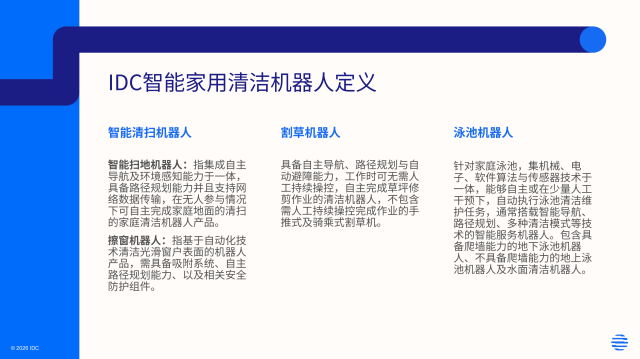
2025年,全球家用清洁机器人市场交出亮眼成绩单,总量突破3200万台。但数据背后的结构性变化更值得深究:哪些赛道正在爆发?谁在改写竞争规则?企业应如何布局未来?本文基于IDC最新发布的系列跟踪报告,为您深度解读扫地、擦窗、割草、泳池等细分赛道的关键转折点,并为行业参与者提供切实可行的战略建议。

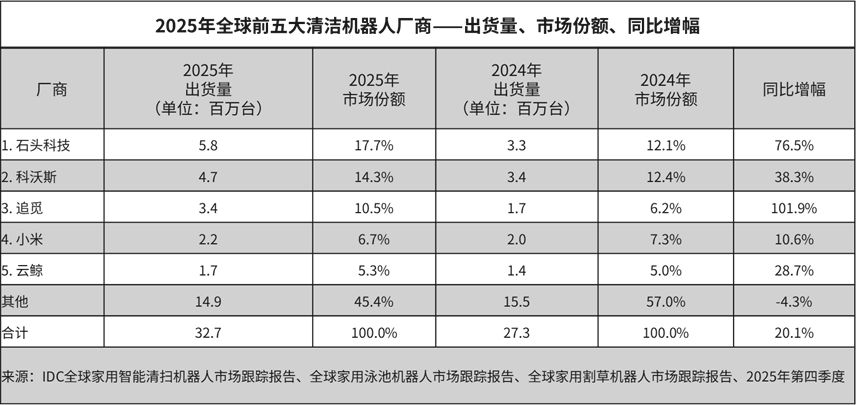
IDC最新发布的《全球家用智能清扫机器人市场跟踪报告》等系列报告显示,2025年全球家用清洁机器人市场整体出货量达到3272万台,同比增长20.1%,其中割草机器人同比增长63.8%,引领细分品类增长。2025 年,头部扫地机器人企业持续拓展产品边界,布局割草机器人、泳池机器人等新兴细分赛道。与此同时,中国初创企业在割草机器人与泳池机器人领域表现亮眼,凭借出色的产品竞争力在欧洲、北美市场快速提升份额,对割草、泳池赛道中的海外传统行业龙头形成有力冲击。对于行业从业者、投资者以及关注这一领域的观察者而言,理解这些变化背后的驱动力,是在未来竞争中占据主动的关键。

一、 扫地机器人:存量竞争下的战略分野

作为家用清洁机器人的基本盘,扫地机器人市场在2025年出货2412.4万台,同比增长17.1%。其中,中东非与中东欧市场表现尤为突出,增速分别高达95.6%和40.3%,成为拉动全球扫地机器人行业增长的核心区域。IDC分析认为,这一增长态势得益于两大因素:一是这些地区城镇化进程加快,中产阶级家庭数量上升,对智能化家居产品的接受度提升;二是中国品牌加速出海布局,通过本地化运营和更具竞争力的产品定价,激活了此前未被充分开发的潜在需求。

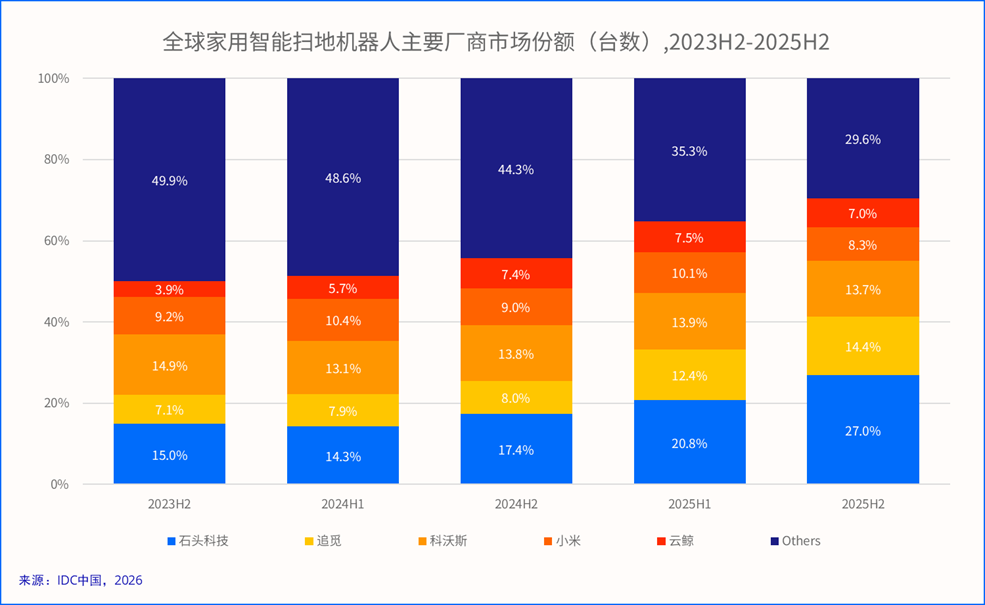
石头科技凭借技术优势和全球化布局,2025年继续稳居全球市场首位,同时在美国、德国、韩国等主要国家位列第一;追觅则依托在欧洲市场的强劲增长,市场份额快速提升,成为中国品牌出海的又一成功样本。曾经的行业巨头iRobot在2025年跌出全球前五,其传统优势区域如北美、日本等地的市场份额,正被中国品牌进一步蚕食。这一此消彼长的态势,不仅是市场份额的转移,更深刻反映出不同战略路径的阶段性结果。

IDC观察到,面对日益激烈的竞争,扫地机器人企业正加速战略转型,呈现出两条清晰的演进路径:一部分厂商选择“纵向深耕”,聚焦全场景家庭机器人赛道,围绕家庭环境拓展产品矩阵,从地面清洁延伸到家庭户外庭院等场景;另一部分则选择“横向拓展”,向全品类科技企业升级,依托在算法、供应链等方面的积累,布局更多消费电子领域,拓宽业务边界。这两种路径各有利弊,如何选择未来的战略方向,将成为企业下一阶段发展的分水岭。

二、擦窗机器人:结构性需求与同质化竞争并存

擦窗机器人作为家用清洁机器人的重要补充,2025年出货量达到237.3万台,同比增长70.4%,增速仅次于割草机器人。科沃斯以超50%的份额稳居行业首位。在中国市场,城镇化进程中高层住宅比例的提升,使得外窗清洁成为刚需,而人工清洁不仅成本高,且存在安全隐患,这为擦窗机器人创造了巨大的替代空间。在海外市场,大户型住宅的落地窗设计同样催生了对自动化清洁方案的需求。IDC调研发现,中低端产品同质化严重,产品功能、外观设计高度相似,导致促销周期价格战频发。当前产品正朝着无线化、智能化持续迭代升级。

割草机器人:技术迭代引爆市场,中国初创改写游戏规则

2025年,全球割草机器人市场迎来爆发式增长,全年出货199.2万台,同比增长高达63.8%,成为所有细分品类中增长最快的赛道。比整体增速更值得关注的是内部的结构性巨变:无边界割草机器人出货量达到131.8万台,占比跃升至66.2%,同比暴涨182.4%;而传统的埋线款割草机器人则出货67.3万台,同比下滑10.1%。IDC深入分析认为,这一转型的背后是三大驱动力的共同作用:首先,定位导航技术的成熟是关键基础,卫星定位、视觉导航、激光雷达等技术的成本下降和性能提升,使得无边界方案从高端走向普及;其次,用户体验的代际差异加速替代,埋线方案需要复杂的施工布线,而无边界产品真正做到“开箱即用”,契合了欧美DIY文化的消费偏好;第三,中国供应链的规模化优势大幅降低了高性能产品的制造成本,使得无边界割草机器人的价格进入大众市场可接受的区间。

在快速增长的无边界割草机器人市场,一个引人注目的现象是:前六名均为中国厂商。以九号公司、追觅、科沃斯为代表的科技企业,凭借高性能产品及极具竞争力的价格,正在加速超车。IDC指出,传统园林工具厂商虽然在品牌认知和渠道布局上具备先发优势,但在智能化技术的快速迭代面前,这一优势正被快速削弱。中国厂商不仅在产品性能上实现赶超,更通过电商渠道和新兴零售模式,直接触达终端消费者,绕过传统渠道壁垒。

泳池机器人:平静水面下的暗流涌动

泳池机器人市场整体表现较为平稳: 2025年,全球泳池机器人市场细分数据显示:地上泳池机器人(不具备爬墙能力)出货125.7万台,水面清洁机器人出货23.3万台,地下泳池机器人(具备爬墙能力)出货274.7万台。

在这三大细分品类中,地下泳池机器人是技术门槛最高、价值最大的核心赛道。值得注意的是,在这一品类中,无缆部分占比达到55%,同比增长32.8%。近年来中国厂商凭借无缆产品的创新突破,对这一格局形成有力冲击。智能化趋势正在加速渗透这一传统赛道。消费者对泳池机器人的期待,正从“能清洁”转向“会清洁”——能够自主规划路径、识别污渍类型、通过APP远程控制、甚至与家庭智能系统联动。这一趋势为中国厂商提供了弯道超车的机会,也对传统厂商的技术升级提出紧迫要求。

从数据看趋势:2025年全球清洁机器人市场的三大核心洞察

洞察一:中国品牌主导产品形态升级和技术创新方向,同时加速抢占全球市场份额

依托完整供应链、快速迭代能力与算法优势,中国厂商在扫地、擦窗、割草、泳池等多品类同步突破。从无线化到AI导航,从全能基站到多机协同,这些由中国厂商率先大规模应用的技术正在成为行业标准。当前全球头部阵营已基本由中国品牌占据,技术与规模双重壁垒不断加固。

洞察二:细分市场品牌竞争仍处于洗牌期,尤其在割草机器人与泳池机器人赛道,厂商格局仍有较大变化空间

这两大品类正从有线向无线、从随机向规划快速升级,行业渗透率仍处低位。以初创企业为主的新玩家与跨界大品牌持续涌入,技术路线、渠道布局与产品定义尚未完全固化。价格、性能、资本稳定度与海外本土化运营共同影响最终格局,头部集中度仍有重塑可能。

洞察三:具备持续AI能力的厂商将在新一轮竞争中胜出。AI大模型、多传感器融合、自主决策与具身智能技术,正在重构避障、路径规划、污渍识别、故障自愈与智能交互能力。这些能力的提升,正在带来显著的体验差异与品牌溢价,而清洁能力正是消费者最为重视的产品基础。能够持续投入算法、数据与场景理解的厂商,将在高端化、全球化与生态化竞争中占据主动,最终成为市场主导者。

结论与建议:如何决胜家用清洁机器人下半场

2025年的数据清晰地表明,家用清洁机器人市场正加速从单一的家庭清洁工具,向家庭智能服务助手跃迁。面对中国品牌主导、技术快速迭代、细分赛道分化的竞争新格局,IDC为行业参与者提出以下四点切实可行的战略建议:

建议:在细分赛道的洗牌期精准卡位,寻找战略定位。割草机器人和泳池机器人仍处于从有线向无线、从随机向规划快速升级的窗口期,品牌格局远未定型。新玩家和跨界者仍有大量机会进入并建立优势。企业的成功将不仅仅取决于产品性能与价格,更取决于多维度的战略选择:技术路线上,是采用RTK还是视觉导航,需要根据目标市场和成本结构做出权衡;渠道布局上,是发力线上直营还是线下渠道合作,需要结合产品定位和区域特点;资本策略上,如何在研发投入和价格竞争中保持财务稳健;海外运营上,如何实现真正的本土化而非简单的产品出口。这些问题的答案,将共同决定企业在洗牌期中的最终位置。

建议:将AI能力构建为长期核心护城河,而非营销噱头。AI大模型与具身智能技术正在从根本上重构用户体验的核心环节:避障能力从“识别障碍物”升级到“理解场景”,路径规划从“全覆盖”升级到“重点区域强化”,污渍识别从“按模式清扫”升级到“按污渍类型调整清洁策略”,人机交互也从“按键控制”升级到“自然语言对话”。厂商应将AI能力建设作为长期战略投入,而非短期营销噱头。清洁能力始终是产品的基石,而AI能力则是实现高端化、全球化和生态化的通行证。

建议:构建多品类协同的场景生态,而非孤立产品。2025年的数据表明,头部厂商正在从单一品类向全场景布局演进。对于用户而言,清洁不是孤立的需求,而是家庭生活的一部分。能够提供更多场景家庭服务的厂商,有机会构建更高的用户粘性和品牌忠诚度。IDC建议,有条件的厂商可以思考如何通过统一的APP、一致的交互体验、共享的技术平台,实现多品类产品的协同效应。这不仅能提升单客价值,也能积累更丰富的数据资产,反哺算法迭代和产品创新。

IDC中国高级分析师赵思泉认为,作为机器人市场的重要组成部分,家用清洁机器人凭借落地场景及成熟技术率先走入大众视野,服务全球家庭。在消费升级、技术成熟与场景拓展的共同驱动下,行业整体保持高速增长,智能化成为长期发展主线。

延伸阅读与交流:

如需了解更多IDC相关研究或进一步与我们沟通,欢迎识别二维码与 IDC 联系,我们将安排专人与您对接,为您提供定制化的市场洞察与咨询服务。


如需了解IDC在智能终端领域的最新研究报告、数据产品及行业分析,请扫描二维码,在线获取完整研究目录与内容简介,助您精准把握市场脉动。

Claire Zhao - Senior Market Analyst - IDC

Claire Zhao is senior market analyst for Client System Research of IDC China. She is responsible for conducting research on the augmented reality (AR)/virtual reality (VR) market, and vertical analysis for the PC market. She started working for IDC China as a summer intern in 2019 as part of the Telecommunication group. Prior to joining IDC, Claire did some internships in the banking and insurance industries, and had some research experiences related to risk management, financial market, and data analytics. Claire graduated from Rensselaer Polytechnic Institute with a master’s degree in Financial Mathematics.

The market leadership imperative in the agentic economy

In the agentic economy, where autonomous AI systems increasingly act on behalf of the business, market leadership depends on an organization’s ability to orchestrate AI-driven decisions, workflows, and governance at scale. As autonomous agents increasingly shape how work gets done, leaders must shift from controlling systems to navigating interconnected, AI-enabled operations with confidence, trust, and strategic clarity.

This is the central message of IDC’s FutureScape Field Manual: C-suite Edition — The Market Leadership Imperative: Creating Advantage in the Agentic Economy. Rather than focusing on AI as a standalone capability, the ebook examines how agentic systems are reshaping decision-making, operating models, and leadership responsibility across the enterprise.

From control to navigation

For decades, leadership in technology-driven organizations was rooted in control: standardizing systems, optimizing processes, and reducing variability. In the agentic economy, that model no longer holds. AI agents introduce autonomy, interdependence, and speed at a scale that challenges traditional command-and-control approaches.

IDC frames this shift as a move from control to navigation. Leaders are no longer steering isolated systems; they are guiding dynamic networks of human and machine decision-makers. Success depends on understanding how these systems interact, where governance must evolve, and how trust is established when decisions are increasingly made by software acting on behalf of the business.

The implication is sobering: leaders can have the right strategy and still drift if they fail to account for these forces. The field manual positions leadership not as command and control, but as navigation, continuously adjusting course with insight, governance, and alignment across the C-suite.

The crosscurrents reshaping enterprise strategy

A core section of the ebook examines the major forces converging around agentic AI. Rather than treating them as separate issues, the analysis shows how they reinforce one another.

Economic volatility is forcing tighter capital discipline just as AI investments accelerate. Geopolitical realignment and digital sovereignty are reshaping where data, models, and infrastructure can live. Regulatory pressure is increasing faster than many organizations’ readiness. At the same time, the workforce is being redefined as human–AI collaboration replaces task-based automation.

The takeaway is clear: in the agentic economy, technology strategy now intersects directly with geopolitical strategy, talent strategy, and trust strategy. Leaders who address these dimensions in isolation risk fragmented adoption and rising complexity.

Four pillars of the agentic future

To help executives make sense of this environment, the field manual introduces four leadership pillars that serve as a shared compass for decision-making.

The first focuses on navigating disruption itself, recognizing that volatility is now structural, not episodic. The second addresses the shift from AI pilots to enterprise-wide orchestration, in which agents operate across systems rather than within silos. The third centers on trust, resilience, and transparency, positioning governance not as a constraint but as a source of confidence and differentiation. The fourth looks beyond productivity, exploring how agentic AI unlocks new forms of innovation, growth, and value creation.

Each pillar is framed with IDC research, executive-level implications, and reflective questions designed to spark discussion across leadership teams.

Trust as an operating discipline

One of the most distinctive elements of the ebook is its treatment of trust. Instead of positioning trust as an abstract value, the field manual treats it as an operational capability.

It introduces the idea that transparency, explainability, accountability, and governance must be embedded into daily operations as AI becomes more autonomous. Trust becomes measurable, visible, and actionable — not just a compliance requirement, but a leadership behavior that directly affects resilience, innovation, and stakeholder confidence.

A shared language for the C-suite

What sets this field manual apart is its intent. It is not written for one role or function. It is designed to create a shared language between CEOs, CIOs, CFOs, CMOs, COOs, and CHROs at a moment when decisions about AI can no longer be delegated or deferred.

The ebook connects near-term realities with longer-term consequences, helping leaders understand not only what is changing, but what they need to be discussing next. It invites dialogue rather than prescribing answers, a deliberate choice in an era where certainty is rare, but informed navigation is essential.

Why this matters now

The agentic economy is already taking shape. Organizations that move deliberately, align strategy with governance, and treat AI as a leadership issue will be positioned to turn disruption into advantage.

This field manual offers a clear-eyed view of that challenge, and a structured way for leaders to begin navigating it together.

For those ready to move from insight to impact, the full eBook provides the depth, context, and questions needed to chart a confident path forward.

Ryan Smith - Content Marketing Director - IDC

Ryan Smith is the Director of Content Marketing at IDC, where he leads brand-level content and social media strategy, aligning research insights with compelling storytelling to engage technology decision-makers. With a background in both IT and marketing, Ryan brings a unique blend of technical understanding and creative strategy to his work. He’s also a seasoned storyteller, speaker, and podcast host who believes the right message, told the right way, can drive both trust and transformation.

Work in 2026 is being rewired around human-AI teams, where people who learn to collaborate with intelligent systems are gaining a clear edge in productivity, creativity, and career growth. IDC’s latest FutureScape and Future of Work insights show that this is no longer a distant trend but the operating reality for leading organisations worldwide.

The new shape of work

According our 2026 Futurescape for the AI-enabled Future of Work around 40% of roles in the G2000 will involve direct engagement with AI agents by 2026, fundamentally reshaping how entry, mid-level, and senior jobs are designed. In Europe specifically, we expect around 70% of new positions to be directly influenced by AI, blending technical fluency with human-centred capabilities like problem solving, empathy, and domain expertise.

AI is simultaneously and subtly absorbing much of the background work. Our analysis suggests AI tools can save workers over 40% of their typical workday, with IT workers gaining up to 45% of their time back as routine tasks are automated. Instead of spending hours on status reports, basic analysis, or rote documentation, employees can focus more on designing solutions, making decisions, and collaborating with customers and colleagues.

Agents as instruments, not co-workers

One of our most important messages though is that AI agents should be treated as instruments that extend human capability, not as synthetic co-workers to be managed like people. When AI is framed as a powerful tool in a human-led process, organisations are less likely to over-automate and more likely to invest in skills, governance, and thoughtful workflow redesign.

This mindset shift is already visible in how leaders talk about AI “co-pilots” across development, operations, and knowledge work. We predict  that as agentic AI matures, organisations that focus on measuring and improving AI–human collaboration, rather than just raw productivity, will see margin gains of up to 15% by the end of the decade.

The skills crunch: $5.5 trillion on the line

The biggest drag on this transformation is no longer the technology but the skills to use it well. Our data shows that over 90% of global enterprises will face critical skills shortages by 2026, with AI-related gaps alone putting up to $5.5 trillion of economic value at risk through delays, missed revenue, and quality issues. Yet in our Global Future of Work Decision Maker only about a third of organisations say they are fully ready for AI-driven ways of working, and just a similar share of employees report receiving any AI training in the past year.

This imbalance is already reshaping labour markets. The 2025 IDC Employee Experience survey shows that that 66% of enterprises are reducing entry-level hiring as they deploy AI, and 91% report roles being changed or partially automated. Routine-heavy junior tasks are disappearing fastest, while demand grows for roles that can design, supervise, and continuously improve AI-infused workflows.

How to ride, not resist, the wave

For leaders and professionals, the 2026 question is not “Will AI take my job?” but “How quickly can my organisation and my skills adapt to human–AI collaboration?”. Our research into AI, automation, and Future of Work points to a few practical priorities that separate frontrunners from the rest.

  • Build AI literacy for everyone, not just specialists: core skills now include prompt design, interpreting AI output, and knowing when to override or escalate decisions.
  • Redesign roles around human strengths: shift job descriptions toward judgment, creativity, relationship-building, and cross-domain problem solving, with AI handling repeatable analysis and orchestration.
  • Invest in trustworthy data and governance: companies that neglect high-quality, AI-ready data will see productivity fall behind as they struggle to scale agentic solutions.
  • Measure collaboration, not just output: by 2029, organisations that track and optimise human–AI collaboration are projected to enjoy up to 15% higher margins than those that chase automation alone.

Work has been rewired, but the most valuable node in the system is still the human at the centre of an intelligent network of tools, agents, and collaborators. In 2026, the winners will be those who treat AI not as a threat or a crutch, but as a force multiplier for distinctly human ambition.

To watch our EMEA FutureScape predictions presentation, click here.

If you have any questions, please drop them in this form.

Meike Escherich - Associate Research Director, European Future of Work - IDC

Meike Escherich is an associate research director with IDC's European Future of Work practice, based in the UK. In this role, she provides coverage of key technology trends across the Future of Work, specializing in how to enable and foster teamwork in a flexible work environment. Her research looks at how technologies influence workers' skills and behaviors, organizational culture, worker experience and how the workspace itself is enabling the future enterprise.

After 38 years with IDC, I have decided that it’s the right time to step into the next chapter of my career. Beginning in January, I will transition out of my current role into supporting the company as a Special Advisor, where I will continue to champion IDC and the critical role we play in guiding the technology community forward. 

When I joined IDC as an associate research analyst, I could not have predicted the opportunities and experiences that would follow. I was drawn to IDC because of its unique vantage point on the technology industry, and I stayed because of two things: the constantly changing nature of technology and its impact on the world, and the opportunity to learn from some of the smartest people in the industry—across IDC, our customers, and the broader market. 

Throughout my career, I’ve had the privilege of working with exceptional colleagues and leaders who shaped IDC’s global research and data offerings. Together, we created, honed, and strengthened IDC’s position as the trusted source for technology intelligence used by organizations around the world. 

What’s next 

During my time here, IDC has evolved through multiple technology cycles—from client/server, to mobility and cloud, and now AI. With strong leadership, a talented global team, and a clear vision for what trusted tech intelligence looks like in the AI era, IDC is stronger than ever. 

To my colleagues: thank you for your dedication, your partnership, and the professionalism that defines IDC. 

And to our customers and partners: thank you for trusting us with your most important decisions and challenging us to continuously raise the bar. 

IDC’s future is bright and I am excited to support it.  
 

Crawford 

Crawford Del Prete - President - IDC

Crawford Del Prete was appointed President of IDC in February 2019. Prior to his current role, he served as IDC's Chief Operating Officer. Through his leadership, IDC has established a leading position as the world's most prominent and trusted technology market intelligence provider. Crawford joined IDC in 1989 as a research analyst. Throughout his IDC career, he has grown multiple IDC businesses to industry leadership positions. He was instrumental in creating IDC's high visibility research and data tracking products which are used daily in the IT industry for strategic planning. Crawford is a leading authority on the IT industry and has completed extensive research on the structure and evolution of the information technology industry. He advises technology and business leaders on how to adapt and change in a time when technology is changing the world. He is frequently quoted in publications such as The Wall Street Journal, The Financial Times, The New York Times and other leading media sources. He is a regular guest on Bloomberg Technology TV, offering insight and perspective on daily technology events. He was awarded The Patrick J. McGovern Award for Management Excellence in 2014. In 1995, he was awarded IDC's James Peacock Award for research excellence, IDC's highest research honor. He holds a B.A. from Michigan State University and in 2012, he was named a Distinguished Alumni of the University. Follow Crawford on Twitter @craw.

As the IDC Government Insights team developed this year’s IDC FutureScape: Worldwide Smart Cities and Communities 2026 Predictions, one trend became clear: cities of all sizes are rapidly adopting LLM-driven AI tools. As cities confront tighter budgets, rising public needs, and the accelerating pace of AI adoption, two predictions stand out: One prediction on Agentic AI and workflow orchestration, and the other on unlocking the value of government data through fine-tuned large language models (LLMs).

Together, these prediction signal a shift from technology-as-a-tool to technology-as-a-teammate (or as “a personal intern”)— where intelligent systems collaborate with humans to simplify complexity, bridge data silos, and elevate service delivery. For mayors, CIOs, and innovation officers, this is more than automation, it’s a reimagining of how government works.

Agentic AI Connects the Dots Across City Systems

By 2027, 65% of cities will deploy AI agents across systems and data to orchestrate end-to-end workflows and reduce workloads while addressing risks of misuse and overreach and “process debt.”

Local governments have long wrestled with what IDC has termed “process debt” — the accumulated workflow inefficiency of fragmented systems, redundant data entry, and manual workarounds. Agentic AI changes that equation. Unlike traditional AI models built for narrow tasks, AI agents can understand goals, coordinate across systems, and execute full workflows — from processing applications to reconciling budgets to automating permit approvals.

But this evolution demands groundwork. Before AI agents can drive real impact, state and local governments must map workflows, clean data, and redesign processes that currently constrain efficiency. As we often discuss, automating broken processes “rarely delivers better outcomes.” Instead, success depends on combining automation with human oversight, workforce readiness, and transparent governance.

Human + Machine Collaboration

Agentic AI will shift how public sector teams work — not by replacing people in the near-term, but by augmenting their capacity. Entry-level clerical roles may evolve, but new opportunities will emerge for “AI process managers,” ethics officers, and cross-agency data specialists. IDC emphasizes that HR must be a strategic partner in this transformation, guiding reskilling and maintaining morale during rapid change.

The payoff? Smarter workflows, faster decisions, and lower service delivery costs. When AI agents manage the repetitive, city staff can focus on what humans do best — strategic decisions, innovation and empathetic human interactions.

Unlocking the Hidden Value of Government Data

By 2026, 50% of state and local governments will invest in fine-tuning LLMs on data the models have never seen, unlocking value from decades of protected records and siloed systems.

Every city sits on a goldmine of data — from zoning and traffic to health, housing, and economic development. Yet much of it is trapped in systems that don’t talk to each other; not only that, this data is private and has not been used to train the LLMs that are serving up GenAI results.

The next wave of Smart City innovation will come from fine-tuning LLMs on this untapped data. Cities will begin training models on internal records — with strict governance — to capture local context and institutional knowledge. The result: AI systems that “speak government”, understand regulatory nuances, and generate insights and recommendations grounded in real municipal operations. This provides faster insights for planning decisions and actions that support mission outcomes.

From Locked Archives to Living Intelligence

Imagine an AI system trained on decades of urban planning documents, council minutes, and building permits. It could summarize past precedents for new zoning requests, detect policy inconsistencies, or surface patterns in infrastructure maintenance failures. Or consider a model fine-tuned on social services data — capable of predicting which households may need early intervention to prevent homelessness.

These capabilities hinge on one foundation: responsible data governance. IDC advises governments to invest in “AI-ready data” — standardizing formats, labeling metadata, and implementing data governance technologies to ensure security and trust. As models become more specialized, leaders must also modernize infrastructure, upgrading government clouds and integrating intelligent computing power to support large-scale inferencing.

Bringing It Together: The Convergence of Agentic AI and Data Intelligence

The two predictions are two sides of the same coin. Agentic AI depends on data liquidity; data intelligence depends on intelligent orchestration. Together, they form the digital nervous system of the future city.

As IDC’s broader FutureScape 2026 report underscores, the Smart City of the near future is not just connected — it’s context-aware. AI agents will move seamlessly across departments, drawing on fine-tuned LLMs to provide decisions informed by a city’s own history and conditions.

The FutureScape highlights key trends:

  • Agentic AI is the next leap in digital government, transforming automation into orchestration across workflows.
  • Fine-tuned government LLMs will unlock decades of hidden data, fueling more contextual and accurate decision-making.
  • Responsible governance is the foundation — without ethical frameworks, AI progress can erode rather than build trust.
  • The future is collaborative: Humans define intent and context; AI executes and optimizes — together delivering public value faster and smarter.

Guidance for City Leaders

Smart City success depends not just on adopting AI, but on designing for agility, responsibility, and inclusion. Based on Predictions 1 and 6, here are three critical actions:

  1. Modernize the Data Core
    Build secure, interoperable data platforms that connect siloed systems. Invest in metadata management, data lineage, and ethical AI governance frameworks that prepare your data for fine-tuning and automation.
  2. Pilot Agentic Workflows in High-Impact Areas
    Start small but strategic — automate processes where the value is measurable (e.g., licensing, fleet maintenance, or procurement). Use sandboxed environments to test AI agents safely before scaling.
  3. Center People in the Process
    Partner with HR to redefine job roles and develop AI literacy. Transparent communication and change management are essential to maintain public trust and employee confidence.
  4. Design for Accountability and Transparency
    Incorporate audit trails, explainable AI, and citizen feedback loops. The legitimacy of AI-driven decisions will determine long-term success more than the sophistication of the technology.

The FutureScape 2026 predictions make one thing clear —when agentic AI and data governance converge, cities can be better proactive orchestrators of well-being, equity, and sustainability.

Cities like Boston, Singapore, and Barcelona are already using AI-powered urban planning platforms to integrate policy, climate, and citizen feedback — showing how government-specific data can supercharge innovation responsibly. These early movers demonstrate what’s possible when leaders treat AI not as a black box but as a civic partner.

As Smart City leaders plan their 2026 strategies, now is the time to evaluate your readiness for agentic AI and data-driven transformation.

If your city is already advancing innovative, AI-enabled initiatives, consider submitting your project for the IDC 2026 Smart Cities and Communities North America Awards, now open for nominations.

Ruthbea Yesner - Program VP - IDC

Ruthbea Yesner is the Vice President of Government Insights at IDC. In this practice, Ms. Yesner manages the US Federal Government, Education, and the Worldwide Smart Cities and Communities Global practices. Ms. Yesner's research discusses the strategies and execution of relevant technologies and best practice areas, such as governance, innovation, partnerships and business models, essential for government and education transformation. Ms. Yesner's research includes analytics, artificial intelligence, Open data and data exchanges, digital twins, artificial intelligence, the Internet of Things, cloud computing, and mobile solutions in the areas of economic development and civic engagement, urban planning and administration, smart campus, transportation, and energy and infrastructure. Ms. Yesner contributes to consulting engagements to support K-12 and higher education institutions, state and local governments and IT vendors' overall Smart City market strategies.

AI will continue to shape the enterprise communications landscape in 2026, with organisations seeking practical value while navigating cost, governance, and deployment constraints. Interest in AI is high, but companies still face gaps around affordability, readiness, and real-world use cases. As a result, the market will progress through grounded, incremental steps, supported by stronger data foundations, evolving pricing models, and greater collaboration across ecosystems and service partners.

1. AI Adoption Will Remain Pragmatic and Focused on Clear ROI

AI will continue to gain momentum, but organisations will prioritise capabilities that deliver immediate, measurable value, such as summarisation, transcription, call insights, and automated follow-ups.

While interest in agentic AI grows, mainstream adoption will be limited by cost and narrow use-case readiness. Vendors will increasingly focus on making agentic capabilities more affordable, modular, and easier to deploy.

2. Data Foundations Will Become the Enabler for Context and Automation

As organisations look into value extraction, data quality and connectivity become essential. AI will need access to contextual, structured, and cross-functional data to deliver accurate outcomes and automate workflows.

To meet these needs, vendors will open their ecosystems, deepen integrations with CRM, ERP, and workflow tools, and begin supporting agent-to-agent orchestration (A2A/MCP) across front-, mid-, and back-office processes.

3. Pricing Models Will Evolve to Reflect AI Consumption Patterns

As AI features become more widely used, traditional subscription pricing will feel less aligned with the way organisations actually consume AI. Vendors will gradually introduce usage-based or metered models, allowing customers to scale AI adoption at their own pace.

To ensure reliability, AI will increasingly blend generative and deterministic approaches, supported by stronger AI observability to maintain accuracy and trust.

4. Verticalisation and Professional Services Will Help Close the Adoption Gap

AI adoption challenges vary significantly by industry. In 2026, more vendors will develop vertical-specific UC&C solutions that reflect distinct workflows in sectors such as healthcare, retail, financial services, and manufacturing.

Because the gap between vendor innovation and customer adoption persists, vendors will collaborate more closely with professional services providers who can translate innovation into practical transformation through guided deployment and workflow redesign.

5. Europe Prioritises Hybrid Deployment and Democratized AI for SMBs

In Europe, concerns around data sovereignty and transparency will continue to influence technology decisions, prompting sustained interest in private cloud and selective retention of on-premises components. Most organisations will move toward hybrid models that offer both innovation and control.

At the same time, European vendors will intensify their focus on SMBs, which represent the bulk of the region’s economy. 2026 will see continued efforts to democratise AI, offering simpler, lighter-weight solutions—such as AI receptionists—as well as modular capabilities that make AI adoption accessible to smaller businesses via partner-led delivery.

Conclusion

In 2026, enterprise communications will move forward through practical AI adoption, deeper data integration, flexible pricing, verticalised innovation, and hybrid deployment models. Markets like Europe will emphasise sovereignty and SMB accessibility, but globally, success will depend on vendors balancing innovation with pragmatism—offering AI that is trustworthy, affordable, and genuinely transformative for how people and organisations communicate and work.

For more information, drop your question in here.

For more predictions, watch IDC’s EMEA FutureScape predictions webcast here.

Oru Mohiuddin - Research Director - IDC

Oru Mohiuddin is a Research Director in the European Enterprise Communications and Collaboration team. Based in London, she is responsible for IDC’s coverage of Unified Communications and Collaboration in the region. Her work focuses on tracking the markets for premise-based and cloud solutions and new developments and trends, particularly in the light of changing work patterns impacting the traditional mode of enterprise communication. Prior to joining IDC, Oru worked for Euromonitor International, where she focused on Future of Work and technology in the SMB context. She also worked in New York and Bangladesh and speaks English and Bengali. Oru was awarded Chevening Scholarship by the British Foreign and Commonwealth Office to pursue her MSc in International Development from the University of Birmingham. In addition, Oru has a BA from Marymount Manhattan College in New York.

Graham Fruin - Senior Research Analyst, European Enterprise Communications and Collaboration - IDC

Graham Fruin is a senior research analyst in IDC's European Enterprise Communications and Collaboration team. Based in the U.K., his primary focus is on the voice and data connectivity markets. His work has a particular emphasis on the migration from legacy voice solutions to IP-based platforms and the way they are used in conjunction with unified communications. In addition, he analyzes the evolution of the internet access market, which includes the rapid proliferation of Fiber to the Premises (FttP) across Europe.

Since the arrival of ChatGPT in late 2022, the dominant AI technology narrative was that large, general-purpose “foundation models” could serve many use cases: everything from writing software code to creating marketing plans, summarizing meetings, analyzing contracts, and more.

But as we approach 2026, the tide is shifting, and it is becoming apparent that to serve targeted business use cases optimally, AI models work best when they are at least somewhat specialized. What’s more, even providers of state-of-the-art AI models are actually delivering their products and services as “mixtures of experts” (MoEs): collections of task-specialized models hidden behind a unified front-end, where each request (prompt) is routed to the specialized model that fits best.

The shift: From model selection to model orchestration

Before the rise of GenAI, choosing the best AI model architecture was a key step to success in driving an effective outcome. Even now, in GenAI implementations, many teams spend significant time trying to find the “best model” to serve a given use case. Teams scour model benchmarks, run tests, compare outputs, select a winner, and optimize around it.

However we are currently seeing an explosion of innovation and engineering advances in AI models, and what might be “best” today might very well not be best in six months (or even next month). What’s more, agentic AI systems demand flexibility. Different tasks that agents are being called on to execute are likely to require different kinds of capabilities.

Model routing enables teams to build systems that evaluate incoming requests and automatically route them to the model best suited to the job; or even combine models in sequence to produce an optimal outcome.

Why this matters: Performance, cost, and trust

The value of model routing is about more than insulation from technology entropy; it’s also about optimizing performance, cost and trust.

  • Performance: Model routing enables systems to boost accuracy and reliability by dynamically selecting the most context-appropriate model rather than forcing a generalist to handle every request. In addition, models can be selected based on where they run – at the edge, on premises, in a public cloud, for instance – due to the impact on latency as well as cost.
  • Cost control: With routing, workloads can be distributed intelligently between premium proprietary models, where needed, and efficient open-source alternatives.
  • Governance and trust: Enterprises can enforce compliance and sovereignty by ensuring certain data types are always processed by approved, region-specific, or private models.

How leaders should prepare

So what does all this mean for leaders trying to put model routing into practice? It starts with shifting mindset, strengthening oversight, and designing for flexibility from day one.

  • Adopt a multi-model mindset. Stop optimizing around a single model and start designing architectures that can host and switch between many.
  • Invest in AI governance and observability. Model routing introduces another layer of technology, and you will need monitoring systems that track system performance, quality, and cost across every route and over time.
  • Explore blends of open and proprietary models. Understand that state-of-the-art proprietary models can deliver great results, but cost and flexibility can suffer. Open models – which are massively easier to specialize, and offer deployment flexibility – may fit individual use cases very well.

IDC perspective: Routing is the road to scale

For businesses, delivering AI value at scale is about using a variety of levers to optimize results – it’s not about leveraging ever-larger models. Model routing is one of the main levers that will become increasingly important.

As businesses confront the crosscurrents of data sovereignty, compute costs, and model diversity, routing architectures provide a key tool to navigate complexity. Model routing helps organizations treat AI-powered automation as a distributed, orchestrated capability, rather than a monolith. Those who master routing will move faster, spend less, and innovate more safely. Those who don’t will watch their single-model strategies stall under the weight of their own limitations.

Download IDC FutureScape 2026: AI & Automation Predictions to explore how routing, orchestration, and agentic architectures will redefine the enterprise technology stack.

Neil Ward-Dutton - VP AI, Automation, Data & Analytics Europe - IDC

Neil Ward-Dutton is vice president, AI, Automation, Data & Analytics at IDC Europe. In this role he guides IDC’s research agendas, and helps enterprise and technology vendor clients alike make sense of the opportunities and challenges across these very fast-moving and complicated technology markets. In a 28-year career as a technology industry analyst, Neil has researched a wide range of enterprise software technologies, authored hundreds of reports and regularly appeared on TV and in print media.