In Europe, the primary driver for corporate sustainability initiatives is the EU’s Corporate Sustainability Reporting Directive (CSRD). It came into force in January 2023 at EU level and must be transposed into national law in all EU countries within 18 months (by mid-2024).

The EU CSRD aims to improve transparency and accountability around corporate sustainability performance. It also aims to accelerate the integration of environmental, social and governance (ESG) considerations into corporate business practices to support the transition to a more sustainable, inclusive economy.

From 2025, those companies already subject to the Non-Financial Reporting Directive (NFRD) — around 10,000 in Europe — will have to report on a variety of sustainability indicators for their FY24. In the following years, the CSRD will be widened to cover around 50,000 companies — all those listed on EU regulated markets with more than 250 employees, more than €40 million in revenues and/or more than €20 million in total assets. The directive also covers non-EU companies with operations in the EU.


Download eBook: Sustainability in EMEA: Opportunities for Tech Vendors, Challenges for Tech Buyers


The key differences to previous laws are:

  • The introduction of standardised, mandatory sustainability metrics on companies’ policies, risks, impacts and outcomes relating to ESG issues
  • The mandate to consider double materiality, i.e., identifying all potential negative and positive impacts on people and environment connected with a company’s own operations and its value chain
  • The requirement that reported information is audited
  • The requirement that reported information is digitally tagged to feed into a European single access point

Non-compliance can lead to sanctions and financial penalties, but also reputational damage.

Our recent surveys have revealed that most companies are in the very early stages of being able to meet these requirements. The measurement of value chain sustainability performance (including Scope 3 emissions and product life-cycle assessments) is very complex and requires the creation of new KPIs and respective data architectures that enable continuous data collection and analysis, real-time monitoring, automated performance reporting, and data assurance.


Register for the webcast: Sustainability in EMEA: The Challenge of Moving from Ambition to Action


Will CSRD Legislation Lead to the Same Last-Minute Rush and Soar in Penalties as with GDPR?

Remember when the GDPR came into effect in May 2018? Shortly before, there was a great rush as organisations prepared for compliance. Why? Because of the threat of severe penalties. And penalties were imposed: since its launch, hundreds of millions of euros of fines have been handed out by data protection authorities around Europe. In 2019, those fines totalled €73 million, rising to €172 million in 2020 and €1.3 billion in 2021 (source: enforcementtracker.com).

As with GDPR, CSRD legislation replaces older laws with new, stricter and better enforced legislation. While they are EU directives, both GDPR and CSRD have “extraterritoriality” enforcement, meaning regulators can fine organisations anywhere in the world if they have operations in the EU and do not comply.

The risks of not being prepared for CSRD are significant. If member states implement similar penalties or sanctions as for financial reporting legislation, organisations could face legal sanctions (imprisonment or disqualification of company directors), public reprimands or penalties, depending on the country-specific enaction.

Non-compliance could also result in reputational damage, loss of stakeholder confidence, allegations of greenwashing and legal action from non-governmental entities such as climate activists.

And it’s not just the CSRD. The EU is also working on a Supply Chain Due Diligence Directive that aims to mitigate the adverse impact of governance, environmental and human rights risks in the value chain of companies selling products within the EU. Many national governing bodies are implementing or tightening mandatory carbon emission and other sustainability regulations.

Investing now in efforts to prepare data collection, analysis and reporting capabilities will keep an organisation ahead of the curve as CSRD and other new sustainability regulations are put in place.

Reporting compliance and impacts on risk management are one thing. Forward-looking companies are going further and are acting on the metrics. They are developing disruptive strategies and road maps for sustainable business transformation that redesigns end-to-end value chains and breaks up traditional industry models.

Circular (instead of linear) economy approaches are emerging, innovation is sustainability driven and products and services are becoming “sustainable by design”. Those approaches — not yet widely seen — are the basis for future-proof organisations that will have a much lower risk profile, greater resilience and long-term strategic growth potential. And they won’t have to fear sustainability regulations.


Related Research

2023 Key Sustainability Trends and Developments in EMEA

Sustainability and ESG Readiness Among European Organizations

Other Resources

IDC Survey Finds Organizations Turning Toward ESG Software Solutions and Independent ESG Program Management

The Need for Harmonised ESG Reporting for Financial Entities

Katharina Grimme - Associate VP, Research and Practice Lead, EMEA Sustainable Strategies and Technologies - IDC

Katharina Grimme has more than 20 years' experience as an industry analyst and strategy consultant in the tech industry and is leading is leading IDC's Sustainability research in EMEA. With her expertise and passion for sustainable concepts for business, society, and digitization, she drives thought leadership at the intersection of sustainability and digital transformation.

A few months ago, as I was walking down the aisles of a professional fair for public sector decision makers, I noticed two main themes on display:

  • Cybersecurity, from secure citizen identity verification to the resilience of systems and data to threats.
  • Efficiency of public services, with an emphasis on the need to better leverage and share data.

As a public decision maker, I would be lost, if not paralysed by, the contradiction of being asked to modernise my systems and organisation through better use of data and data sharing, while being constantly reminded that cyberthreats (and cyber attacks) are everywhere.

The first months of 2023 have been characterised by two sub-topics that illustrate this bipolarity: digital sovereignty (a country’s capacity for self-determination and in some cases data protection and isolation) and generative AI (a platform’s capacity to have access to all the data you might collect and extract, and lever this information to turn it into intelligible insights).

To bring these together, we felt something was needed and that some well-implemented borders and security measures are needed to be reconsidered.

An Inflection Point in the Importance of Data

Governments have long classified data primarily on its sensitivity. The UK government’s security classification, for example, defines “the sensitivity of information (in terms of the likely impact resulting from compromise, loss or misuse) and the need to defend against a broad profile of applicable threats.” Based on that definition of sensitivity, UK government policy applies three levels of classification for government data: top secret, secret and official. The majority of EU governments have also classified the data they manage based on sensitivity.

This classification showed its limits in February 2022 when Ukraine rushed to identify and migrate strategic data assets critical for the government to enable operational continuity and bolster resilience. Previously, Ukrainian law required some government data to be stored in local servers in Ukraine, but this was changed a week before the invasion. Essential data has already been migrated from over 27 Ukrainian ministries.

IDC analysis shows the public sector is at an inflection point when it comes to the importance of data, and that it’s not only a matter of protecting sensitive data but also of anticipation. This is done by recognising data as a critical and strategic asset for governments to function more efficiently, effectively and resiliently to deliver the outcomes and security solutions that citizens expect, in times of crisis and on a daily basis.

A Framework to Facilitate Readiness

This has led us to create a framework that builds a new layer in data classification. In our Learning from Ukraine: Building a Framework to Safeguard Governments’ Critical Data, we recommend that governments not only classify and manage sensitive data but also critical and value-added data.

Critical data can be defined as data that if not accessible or not reliable can jeopardise a government’s ability to function in its daily activities and in times of crisis. It’s important to highlight this difference between classifying data based on the level of sensitivity and the level of criticality because some data sets have both characteristics.

For example, a criminal record is both sensitive (because it contains personal information) and critical for the criminal justice system to function. However, land registry data does not contain the most sensitive information but is critically important to determine jurisdictional boundaries, settle property disputes and assess the value of taxable assets.

Bringing Everyone on Board

Data sharing and interoperability and the building of European data spaces are vital here; sovereignty (the capacity to self-determine your action) should serve this cause and not get in the way, as it is often confused with security.

Sovereignty is a current concern as many government entities are seeking to update their cloud policies, such as the “Cloud au Centre” in France and “cloud first” in the UK. Some initiatives also promote interoperability, with Portugal’s eSPap government authority developing a platform for public entities.

These initiatives aim to bring more coherence to IT systems and enable new services in healthcare and security, for example.

Local governments are still trailing European or central governments when it comes to transformation, partly due to trust issues. We believe that enabling this new layer of criticality, and adapting our framework for every local public entity CIO, will be key to creating a common secure language.

To learn more about government’s role in safeguarding critical data, see our new study Learning from Ukraine: Building a Framework to Safeguard Governments’ Critical Data and join us at the IDC Government Xchange.

Remi Letemple - Senior Research Analyst, IDC Government Insights - IDC

Remi Letemple leads IDC’s Worldwide Sustainable Transportation and Smart Vehicles Strategies service, where he provides strategic guidance and thought leadership on the future of mobility and transportation. Operating at a global level, he is recognized as a subject matter expert in smart mobility and transportation technologies—including connected, autonomous, shared, and electric mobility—enabled by software-defined vehicle (SDV) architectures, over-the-air (OTA) updates, cloud and edge platforms, and AI, including generative AI.

The proliferation of data is transforming businesses and public administrations, and changing consumer experiences and society. The European Union has responded to the challenge with the ambitious European Strategy for Data (2020). One of the pillars of the strategy is the creation of common European data spaces in strategic economic sectors and domains of public interest.

Europe’s strategic data spaces vision is the next stage of evolution of data sharing. Rather than happening only within the boundaries of one organisation or through bilateral contractual agreements that are costly to manage and not conducive to innovation, data sharing must scale to multilateral exchanges, including beyond industry boundaries.

Building on the experience of the European research community with the European Open Science Cloud, the European Strategy for Data proposes an additional nine data spaces. Since the EU Strategy for Data also left the door open for other data spaces to emerge, other EU preparatory actions are planting the seeds for the development of data spaces in adjacent domains, such as cultural heritage, language, media, smart cities and tourism.

The key features of data spaces are:

  • Federated technology capabilities that dynamically match data demand and supply in a trustworthy and energy-efficient manner
  • Governance policies and processes for secure, transparent, non-discriminatory and fair participation of every data user and data provider
  • The ability to make good quality, interoperable data available within and across industries, for non-profit/altruistic purposes, for-profit purposes or both, in compliance with EU regulation

Accelerating Data Sharing

The bold vision for European data spaces still has some way to go. IDC’s research on the future of industry ecosystems (subscription required) found that over 90% of public and private sector organisations globally share data with external partners, but only 30% do it in a consistent and strategic manner, instead of only when strictly necessary and mandated by law. Among European governments, only 22% of organisations have established public-private collaborations to share data for the public interest. There are many digital sovereignty, governance, semantic and technical interoperability challenges to overcome to fully achieve the European data spaces vision. Nonetheless, many actions are accelerating the realisation of the vision:

  • European Union grants funding for coordination and support actions, such as DATES
  • Implementation of new regulation, such as the Data Governance Act
  • Implementation of industry-specific European regulations, such as the Commission Delegated Regulation (EU) 2017/1926 regarding the provision of multimodal travel information services
  • Multilateral initiatives, such as GAIA-X
  • Individual country platforms that could then be federated across Europe, such as the smart tourism data platforms being developed by the Italian and Spanish governments
  • Individual countries’ investments in digital sovereign computing infrastructure that can support data spaces

We expect data spaces to be realised through different architectural and operating models. For example, some of them could consist of a set of common standards maintained by a non-profit association, while others could be based on a federation of national data platforms operated by member states’ governments that build ad hoc integrations for cross-border data exchange. They could also be centred on a joint platform, owned by one or multiple large private sector enterprises that operate as the anchor for a data space.

The Role of European Government in Data Spaces

As these architectural road maps and operating models evolve, it’s important that European governments take an active role in influencing the trajectory. Governments can play five roles in shaping the future of data spaces:

  • Regulator. Governments act as policymakers to set the rules (laws, policies, standards, etc.) for deploying, operating and participating in data spaces.
  • Operator. Governments provide the core data space platform services such as onboarding, identity management, data aggregation, data catalogues, data access and billing.
  • Enabler. Governments fund and/or provide data space platform infrastructure such as connectivity, cloud and edge computing.
  • Data providers. Governments supply data to the data spaces.
  • Data users. Governments consume data from the data spaces.

Senior government leaders should not just wait and see for EU-wide regulations and programmes to define the European data spaces road map. They should take a proactive approach to realise the benefits of data sharing by:

  • Evaluating what role they want to play to maximise the benefits for the public sector and to incentivise private sector contribution, while setting the example in terms of protecting personal data, intellectual property and digital sovereignty
  • Working with the private sector to identify priority use cases, business models, governance models and technical blueprints that accelerate deployment in a secure manner
  • Collaborating with technology suppliers and academia to accelerate development of technologies that enable trusted data sharing in federated, heterogeneous environments
  • Collaborating with enterprises and industry associations to prioritise the data space in which it makes sense for governments to take an operator or enabler role
  • Nurturing organisational competencies and culture that foster data spaces

If you want to learn more about the role governments can play and the capabilities they need for data spaces, read our new study (subscription required) and join us at the IDC Government Xchange.

Massimiliano Claps - Research Director - IDC

Massimiliano (Max) Claps is the research director for the Worldwide National Government Platforms and Technologies research in IDC's Government Insights practice. In this role, Max provides research and advisory services to technology suppliers and national civilian government senior leaders in the US and globally. Specific areas of research include improving government digital experiences, data and data sharing, AI and automation, cloud-enabled system modernization, the future of government work, and data protection and digital sovereignty to drive social, economic, and environmental outcomes for agencies and the public.

Ways to Make IT Seen As a Customer Focused, High Quality Face of the Organization

Organizations regularly complain about the cost level of their IT department. This is by no means a new phenomenon. At IDC, we continuously assist IT managers dealing with challenging cost reduction targets. I find that these cost reduction targets are often determined bluntly, and IT departments have trouble in demonstrating their true value to the organization.

Run and Change: Commodity and Adding Value

The first step to take is making a well-considered distinction between the ‘run’ and ‘change’ parts of the IT budget. In other words, appreciate the difference between keeping the automation of the organization running and enabling the organization to innovate.

  • The running of the automation should be the subject of continuous cost saving projects and optimization. Regular benchmarks and a fitting sourcing strategy are important tools to optimize this part of your IT.
  • On the other hand, we have ‘change’, the innovation. This is where the strategic added value of IT lives. The added value is often found in software development, allowing for digitization of certain process to save cost in the primary functions of the business or to innovate in other ways, such as bringing new products to market faster.

What Are Other Ways for IT to Shine Within the Organization?

User Satisfaction

Another way to present IT as an adder of value instead of a cost center is through user satisfaction. In nearly every IT procurement project guided by IDC, user experience is a major theme. Key steps to take in improving user satisfaction is through simplifying technology and improving user IT practices. These practices like self-service portals, instructional videos, FAQs, and user training improve user self-sufficiency through automation and education. Our benchmark data teaches us that successful implementation of these practices can have spectacular results on both the service desk workload and user satisfaction rating.

Consider the Employee Instead of the User

After implementing these practices, which many organizations have successfully done, an IT organization has the opportunity to engage the employee to add more value during their time with the organization. Yes, we have now transitioned from user satisfaction to employee satisfaction. After all, a user is more than a workplace account. Cooperation with other supporting functions of the organization, such as human resources, becomes an opportunity.

Employees are motivated by more than salary and vacation time. The feeling of purpose and corporate social responsibility are crucial factors for many employees to really connect with their employer and experience satisfaction in their careers. In the work from home climate that we have experienced since early 2020, this connection is at risk.

“In nearly every IT procurement project guided by IDC, user experience is a major theme.”

The logistical processes of the IT organization can play a cost-efficient role in engaging the remote worker. To supply offices with the right hardware and services, IT knows logistical services such as ‘on-site support’ and ‘IMACD’ (install, move, add, change, dispose). During the pandemic, these services have modified somewhat for some organizations as many workers changed their work location. Especially now, these logistical processes allow the organization to engage their remote workers. Take, for example, the onboarding of new employees. When IT delivers the required hardware, why not integrate with HR and include a handwritten note from the manager and overviews of the company culture and mission. With some real attention and coordination with other departments, IT can deliver a warm and welcoming experience at no additional cost.

In summary, if the cards are played right, IT can be seen as a value adding function instead of a cost center. The logistical processes are already in place to position IT as the customer focused, high quality face of the organization towards the employee. If a transparent dialogue between IT and the rest of the organization about the cost level is also in place, the relationship is bound to become value based instead of cost based.

German Chancellor, Olaf Scholz said in January that the government had successfully fended off the economic crisis, while the country’s minister of economy also addressed the extreme adaptability of German firms making it possible to avoid the worst scenarios. These statements strike a much more positive tone than those in October when negative growth was forecast for the German economy for 2023.

The panic over energy supplies has eased – at least for now – and the general outlook has significantly improved in the Germany, Austria, and Switzerland region (DACH) over the past 4 months. However, it remains clouded by some serious risks as the storms of disruption continues to rage above Europe. Organizations must remain cautious and stay focused on data to evaluate evolving risks and opportunities.

Business Risks are Hiding Behind Short-Term Improvements

The Russia-Ukraine War marks a critical economic and geopolitical turning point for Europe and the rest of the world – and the functioning of ICT markets has not escaped the impacts of the conflict.

Relying heavily on Russian gas, the DACH region has become particularly vulnerable to the increasing energy prices. Although the governments of Austria, Germany, and Switzerland reacted quickly to ensure energy supply for the winter months, the complete independence from Russian energy products is yet to come. Governments will have to consider that rapid escape from reliance on Russian gas may contravene with climate ambitions on the short term​, therefore reducing energy demand and increasing energy efficiency will need to be in focus.

Although forecasts have been revised upwards during the past months, the latest data still indicate a major economic slowdown for the DACH region in 2023. Germany is expected to grow just 0.2%, while the economies of Austria and Switzerland are projected to see 0.5% growth. These numbers can easily go negative if geopolitical conflicts escalate or there is another major outbreak of COVID-19 in China, for example. Indeed, our Future Enterprise Resilience Survey found that more than 90% of German organizations expect recession this year.

DACH experienced the highest inflation in decades in 2022, and price increases are expected to weigh on households and businesses in 2023 and beyond. Switzerland is the only country in DACH, and one of only two countries in Europe, expected to keep inflation under 2% this year.

Labour shortage will be another major factor impacting IT budgets, while the lack of digital skills within the organization may hinder the completion of digital initiatives. Easing supply chain bottlenecks and declining transportation costs reduced pressures on some of the previously constrained sectors, such as automotive manufacturing, but the possibility of further supply chain disruptions cannot be ruled out.

How is the ICT market impacted by these headwinds and how should businesses approach weathering Europe’s storms of disruption?

Shifting Focus on Tech Investments

Despite volatile market conditions, ICT spending in the DACH region is expected to rise 4.9% this year and 6.4% over the 2021–2026 period, exceeding the European average. However, IT plans have been impacted. Organizations are reshuffling their investments, focusing on technologies that can sustain the growth in uncertain times, reduce costs, improve performance, optimize processes, enhance customer experience, and nurture talent.​

Our identified the following key areas to drive ICT spending in the DACH region:

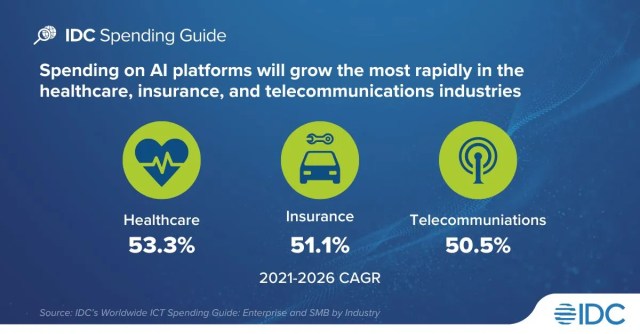
  • Artificial Intelligence: AI’s tremendous potential to improve customer experience, enable new employee experiences, mitigate skills shortages, and transform the workplace is driving rapid adoption. Augmented human resources, image processing, fleet and freight management will be among the top 10 use cases related to AI. According to IDC’s Worldwide ICT Spending Guide: Enterprise and SMB by Industry, spending on AI platforms will grow an outstanding 46.6% in the DACH region during 2021–2026.
  • Security: The rising frequency and sophistication of cyberattacks are keeping security a top investment priority. Annual spending on security in DACH is growing faster than the European average and is expected to exceed $18.5 billion in 2026.
  • Cloud: Investments are expected to more than double between 2022 and 2026 as organizations continue migrating workloads and data to the cloud to boost cost efficiency, flexibility, and customer satisfaction.
  • Internet of Things: IoT is a critical element of cost reduction, process optimization, and improved performance. Steady, double-digit growth in IoT spending is expected into 2026, with investments related to electric vehicle charging, advanced payments and shopping growing fastest.

Apart from these, enterprise infrastructure, managed services and project/professional services are additional areas where DACH organizations indicated they would continue their investment pace.​

IDC’s Recommendations

Planning the IT budgets and identifying technologies to support growth in these uncertain times is extremely difficult, especially without having the right skills and partners to complete digital initiatives. In response to the current era of uncertainty, industries are embracing transformative new trends and technologies. Adapting to these transformations, being use case-centric, and placing the right bets for growth will be essential to keep afloat and continue delivering value.


IDC can help technology vendors stay resilient, competitive, and generate revenue during turbulent times. We offer the following assets to support organizations’ needs for precision planning:

  • IDC Trackers enable organizations to assess their competition and their position by analyzing technology markets, vendor shares, and forecasts.
  • IDC Black Books provide extensive market overviews to help organizations position their products and services for the appropriate audiences.
  • IDC Spending Guides enable organizations to find strategic opportunities according to industry, company size, use case, and geography.

Contact us for more information about how IDC data products can help business leaders target, plan, and execute their most important strategic initiatives. We provide analysis of 100+ countries, 120+ technology markets, 20 industries, and 400+ use cases.

The IMF has warned that half of the European Union and a third of the world face recession in 2023. This means that economic headwinds such as energy costs and currency fluctuations are forcing organisations to reassess budget decisions.

In our recent Future Enterprise Resilience and Spending Survey (December 2022), IT leaders said they expect inflation to impact spending decisions. IT cost price increases stemming from inflation and currency changes is expected to have the greatest impact on IT spending plans in 2023.

C-suite concerns are related to IT and technology challenges. In our Worldwide C-Suite Tech Survey (August 2022), 60% of European C-suite concerns about the impact on their IT and digital spending was related to challenges coming into sharper focus as macroeconomic conditions worsen. This includes IT price increases stemming from inflation.

So how can tech vendors navigate these issues and thrive?

Planning Is the Foundation for Success

According to research by the Harvard Business Review, companies that not only survived recessions but thrived afterwards were those that were prepared and agile — those that didn’t just slash costs but invested strategically.

Strategy is essential to know where to plan resources, to determine which projects you are going to prioritise and which you are not, and to know how you are going to identify and target the opportunities that will give you the best return.

Download eBook: Essential Building Blocks for an Effective Growth Strategy

A good strategy should help you align with business conditions, so that you can be agile enough to deliver short-term savings without impacting long-term growth.

Informed Decisions

Data becomes more important in volatile and uncertain economic situations. Economic conditions can impact regions and industries differently. Knowing the factors that might impact the market(s) you are selling into is crucial.

Those who are buying tech is changing, with European tech spending moving from the IT department to the C-suite. In Europe, 47% of IT spending is now C-suite funded (source: IDC Worldwide IT Spending Guide: Line-of-Business Forecast, January 2023, European forecast).

Download eBook: Speaking the Language of the C-Suite: Selling Beyond the IT Department

This is an example of how data can give you insight into your customers and how they are buying. Knowing who is buying, where they are spending and what is impacting spending decisions will help you build an effective strategy.

Data-supported decisions are key to effective resource management both internally and externally.

This means you need to know who is buying in your market. Which markets or industries are more resilient? What are their drivers and challenges?

Adapt and Invest

Times of economic uncertainty can also be a time of possibility. Microsoft, Instagram and Airbnb, for example, were all formed during or just after a recession.

Technology is an area where businesses tend to continue or increase spend. 66% of European C-suites believe that IT budgets will increase, even during an economic downturn (source: IDC Worldwide C-Suite Tech Survey, August 2022).

According to our Digital Executive Sentiment Survey (October 2022), European organisations now expect more than 50% of their revenues to come from digital business models on average in the next three years.

Technology is often seen as a critical business differentiator to better deliver business outcomes, increase resilience and accelerate revenue growth. So while caution may continue while the economic outlook is uncertain, investments in projects that improve efficiencies are continuing. According to the Harvard Business Review, prioritising digital transformation and digital technology can help cut costs and improve efficiencies.

In an economic downturn it can be harder to achieve growth, as you have to do more with less. It can also be harder to get customers to spend, so you must ensure that you are targeting the opportunities with the best chance of success.

But there are opportunities. So what you do and where you allocate resources becomes increasingly important.

You need results. To be proactive rather reactive, but still agile enough to pivot to changing market conditions. An effective strategy is essential to that.

Visit our website for more information on how we can help you build for growth.

Not Going Back to the Office Full Time

If you bring together a group of senior managers and ask them what the most pressing concern is in their workplace strategy, the most likely answer will be, “How can we get our workforce back into the office?” Nostalgia about the “good old days” reassures them that work is better done in the office. A buzzing office at full capacity is often taken as a sign of high performance.

Our data shows that 68% of European employers are determined to have employees back full time in the office (IDC FoW Survey, 2022). Meanwhile, workers are demanding greater flexibility and a choice of where and how to work.

Some employees want to be in the office, while many want to “balance their lives” and family obligations. Our data shows that compared with hybrid staff, employees working onsite five days a week are 10% less likely to recommend their employer, meaning they are less loyal and more likely to switch jobs.

About 73% of office workers in Future Forum’s future-of-work study say they are open to new jobs if they are dissatisfied with the level of flexibility they are offered.

In the wake of a recession in Europe, however, many businesses are reluctant to invest in the technologies needed to transform their organisation into a digital-first workplace for the long term.

Our survey data from December 2022 shows that concerns around geopolitical tensions and labour shortages remain high in Europe, with inflation having the biggest impact on spending plans for 2023. 70% of organisations are planning to significantly reduce their IT spend in 2023 (IDC FERS Survey, Wave 11, 2022).

Many managers need to seriously consider whether a return to a traditional work policy will enable their business to survive in today’s world. A typical organisation has two generations of digital natives in their workforce (Millennials and Gen Z). Employees are key stakeholders in the evolution of their workplace, and their interests and preferences must be considered. Organisational culture needs to evolve and keep pace with social changes. The alternative, in form of a non-negotiable “everyone return to the office” strategy, would cause more harm than good in terms of business outcomes such as talent attrition, quiet quitters and lower productivity.

The Digital HQ and Why It’s a Must-Have

So, what is the way forward? A digital HQ that is accessible to all — those in the office and those working away from the office — can be the foundation for a more flexible work environment that drives performance, loyalty and other positive business outcomes.

Platform vendor Slack defines the digital HQ as “a single, virtual space to connect people, tools, customers and partners for faster and more flexible work”. Contrary to most assumptions, a digital HQ does not imply that people never meet in person.

Yes, the workplace is digital by default, but people will still get together in their office. However, they do so for team building and collaboration, social connection and networking, or training.

The understanding is that going to the office to replicate an at-home work pattern that focuses on productivity would be a waste of time. As a result, the office — or “physical headquarters” — is being reimagined less as a place of routine and obligation and more of a centre for driving company culture and values.

These new offices emphasise free-form flexibility, offering hot desks, huddle rooms and smart meeting rooms. However, too few companies have given thought to the workings and architecture of digital headquarters. And given that so many workflows and team collaboration efforts now happen in the digital space, that seems like a serious lack of imagination and an invitation to failure.

To ride the wave in a challenging labour market, companies must prioritise attracting talent and keeping existing employees motivated. By enabling employees to connect and collaborate from anywhere, a digital HQ helps companies to provide the flexibility that today’s workforce demands.

All workers can feel included and productive in a digital HQ, no matter where they live or what their daily schedules might look like. Flexible work practices are also essential to building inclusive workplaces, which is top of mind for many employers as diversity, equity and inclusion have become a priority in recent years.

A digital HQ can break down silos, unite teams in an asynchronous work model and boost security. Employee and customer experience will benefit from that increased agility and create a stronger culture as a result. The fact that 56% of European companies feel they are not ready to meet current and future work transformation requirements should be a wake-up call for those trying to survive the coming storms of disruption.

Meike Escherich - Associate Research Director, European Future of Work - IDC

Meike Escherich is an associate research director with IDC's European Future of Work practice, based in the UK. In this role, she provides coverage of key technology trends across the Future of Work, specializing in how to enable and foster teamwork in a flexible work environment. Her research looks at how technologies influence workers' skills and behaviors, organizational culture, worker experience and how the workspace itself is enabling the future enterprise.

The Future of Work is going through a tumultuous time. In a response to tough market conditions, business leaders across industries, including high profile CEOs, are mandating a return to the office. The reason is no more than a desire among managers to boost employee performance by having tighter control over their reports.

Moreover, recent mass layoffs, which are essentially no more than a sugar rush for shareholders, can also be interpreted as a shift in power from employees back to employers. The latter are now in charge, dictating how work gets done for the sake of financial performance.

Will this last? Can we assume that the past few years of progress in the Future of Work have been erased from history?

Are You Ready for the “Era of Disruption”

Returning to a pre-pandemic workplace is not viable. A company with top-down decision making will find it difficult to adapt to a fast-changing environment.

Employees will not give the best of themselves if their voice is not heard, or if they feel disrespected or undervalued. Many will retire early, quiet quitting or even joining the large contingent of gig workers, simply because they feel “they don’t belong”.

The pandemic taught us something profound that goes beyond “where” work happens. It is the realisation that work is a projection of ourselves, our life goals and aspirations, and a means of fulfilment.

Meaningful Work

Brad Bird, the movie director, once said, “Money is just fuel for the rocket. What I really want to do is go somewhere.” This sentence, which reflects the mindset of many people at work today, can be summarised in one single word: Purpose.

With Millennials and Gen Z making up roughly half of the current workforce, and soon becoming our future leaders and CEOs, it is reasonable to expect “corporate purpose” to change business as we know it today. Younger generations want to work for companies with impact, beyond shareholder value.

Purpose is the secret sauce for high performance

Therefore, it’s not “where” work happens but “why” work happens — i.e., the purpose of work that unlocks employee energy. In an era of disruption, when work has direction and is transformed into purpose it is powerful and energising.

Let’s think about a sailing racing yacht, and the teamwork involved to pursue a common goal, a North Star. In a racing yacht, the following applies:

  • The interest of the team is always above individual interest
  • There is just “one collective head” — they must think and act together
  • Every crew member has a critical role to play for the victory, from the leading role of a helmsman to the agile role of trimmers, tuning the sails to ensure maximum thrust.


How does the above apply to your firm? Are your people “energised” to collectively pursue your North Star? Do they feel their roles and responsibilities make an impact?

This is the secret sauce of high-performance organisations: by nurturing their core, business leaders can drive employee performance and team cohesion.

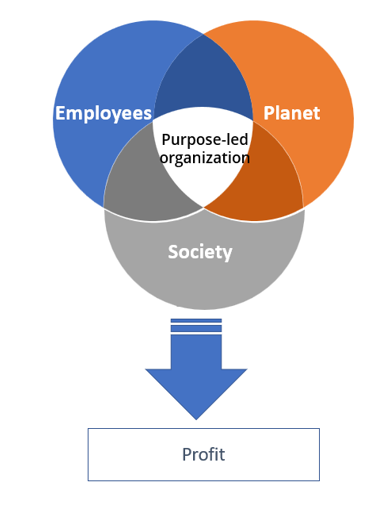
Sustainable companies do business and make profit by placing the welfare of their people, society and the environment as their core purpose. As such, unfair pay, work inequalities, “command and control” management styles and the social disconnect affecting many organisations today is foreign to them.

Companies with a sustainable purpose enjoy a more mature social contract between employer and employees. Thus, the choice of hybrid or full time in the office is actually irrelevant. What matters is that decisions are not top down but in partnership with employees.

Technology Is the Enabler

In a digital world, pursuing the North Star is far more effective (and enjoyable) when employees are given the right technology. Here are some suggestions:

  • Devices that are sustainable by design and appropriate for different workstyles
  • Digital Workspace solutions for productivity, inclusive collaboration and connection to purpose.
  • Workflow automation to free up employee time for more human work
  • Online training platforms to continuously elevate employee skills throughout their careers
  • Intelligent IT support for employee experience and productivity
  • Identity management for digital trust
  • Zero Trust security solutions for a perimeter-less workplace

In summary, placing purpose at the core of your business is most effective for employee performance and social cohesion. Numerous third-party studies show that purpose-led organisations outperform their peers.

If you would like to learn more about this and how technology enables a purpose-led organisation, join us at our IDC Future of Work Conference.

Digital technology is reshaping business models, revenue streams and operations management. At the same time, the rising number of start-ups, scale-ups and unicorns in Europe — the digital-native businesses — is helping to boost digital transformation (DX) initiatives in traditional organisations.

What Is a Digital-Native Business?

Digital-native businesses (DNBs) are highly dependent on a digital infrastructure and are built from the start around modern technologies, from cloud-native applications to artificial intelligence, with data across all aspects, from operations to business models and customer engagement. By adopting new and emerging technologies, and using platform services and marketplaces, DNBs can quickly grow and scale up their business, creating new markets and disrupting traditional business models across industries.

DNBs are also defined by their market valuation — start-ups are valued at less than $250 million, scale-ups are valued from $250 million to $999 million and mature digital natives are valued at $1 billion or more. They can also be either technology-orientated companies (e.g., innovative ISVs/SaaS providers, selling technology products, software or IT services to other businesses) or technology-driven B2B or B2C companies (offering tech-enabled products or services respectively to business or consumers).

What Impact do DNBs have on Traditional Enterprises?

DNBs are disrupting some industries more than others. Fintech companies such as Revolut in the UK and digital banks such as N26 in Germany have pushed digital innovation in the past few years into a very traditional sector, whereas Sweden-based Spotify has completely reshaped the music industry at a global level.

DNBs’ influence also extends to the way traditional companies adopt and use technology. DNBs’ tech operations are often cloud native and data driven, with a customer-centric focus, employing tech-savvy developers and data scientist teams in agile environments to grow and scale the business quickly.

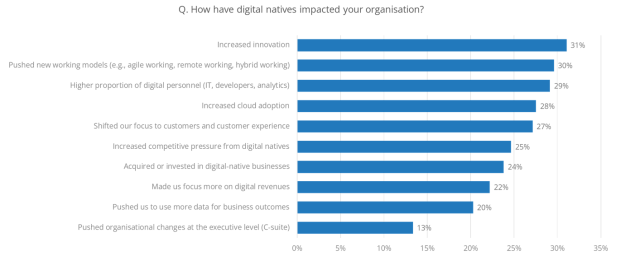
Market disruption and the growing interaction with DNBs are driving traditional European organisations to adopt some of the DNBs’ distinguishing digital features, such as shifting towards a digital-first organisational approach across the enterprise. According to IDC’s What Is the Impact of Digital-Native Businesses on Traditional Enterprises? — based on IDC’s 2022 European Industry Acceleration Survey — these impacts include:

  • Increased innovation: 35% of businesses with more than 1,000 employees cited this. Healthcare (37%), government/education (34%) and transport (34%) are the most impacted industries. Healthtech, edtech and the shared economy are the fastest-growing segments in the DNB arena.
  • Adoption of new working models: The implementation of agile, remote and hybrid ways of working pushed by the interaction with DNBs is most common in very large enterprises, government, education, and retail and wholesale industries. These extensively adopted remote working during the pandemic, and are now taking inspiration from DNBs to permanently adopt new and flexible working models.
  • Higher proportion of digital personnel: Finance respondents have increased the share of employees with digital skills (38%), and have a greater focus on customers and CX (31%), a trend influenced by the interrelationship with the fintech ecosystem. On a broader level, medium, large and very large organisations also say DNBs have had a major impact on organisational changes at the C-suite level.

Why Is it Important to Monitor the Relationship Between Digital Natives and Traditional Businesses?

IDC’s European Industry Acceleration Survey highlights growing coopetition between DNBs and traditional organisations. This is leading to a more innovative and digital-first organisational approach for the latter, such as a tighter focus on digital revenues, across all size categories, and greater competitive pressure in their respective markets, which may enable them to enter M&As or investment activities with DNBs.

This last trend is more prominent for utilities and oil/gas respondents, an industry where customer-orientated digital natives have pushed traditional companies towards improving their CX, also by acquiring entirely digital organisations in the process and with new market segments (such as renewables) being led by digital-native businesses.

Tech providers should target European DNBs, as this is a competitive, fast-growing segment populated by lean, agile and tech-enabled organisations. DNBs are built around modern technologies and digital infrastructure, and need to enter strategic partnerships with external stakeholders to meet their need for innovation. Tech providers are the first option for European DNBs, according to preliminary results from IDC’s Global Digital-Native Business Study.

Tech providers should also look to DNBs as precursors of the changes and trends that will affect traditional industries. Changes range from greater adoption of cloud services (cited especially by telecommunications and media, finance, and professional services respondents) to the adoption of a data-driven approach to business outcomes (cited by 19% of very large enterprises and 25% of retail/wholesale respondents). What DNBs need today will be what traditional businesses need tomorrow.

The relationship between DNBs and traditional organisations could span from tech supplier to potential acquisition target. This could change based on their business model, giving birth to interconnected ecosystems. For these reasons, in cultivating a long-term relationship with digital natives, tech vendors can also improve their positioning in traditional enterprises as trusted partners in their DX journeys.

To find out more about digital-native businesses in Europe, please contact Martina Longo.

Martina Longo - Research Manager, Digital Business - IDC

Martina Longo is a research manager in the IDC Digital Business Research Group. In her role she advises ICT players on how European organizations create business value using digital technologies. She also leads IDC European Digital Native Business research, focused on those enterprises born in a modern technological world in a mix of start-ups, scaleups, and more mature digital natives. Within the European Digital Business Research, the European Digital Native Business, Start-ups and Scale-ups theme advises technology suppliers on the market dynamics and segmentation, business priorities, tech buying patterns and go to market approaches (sell to/sell with) needed to engage digital native organizations in Europe.

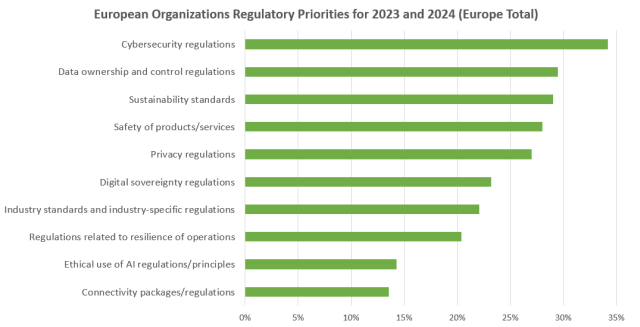
European organizations expressed their concerns and the impact the believe they will face from Regulations in the coming years of 2023 and 2024, when asked about it in the European Enterprise Acceleration Survey (n=1500). The survey was conducted in late 2022 and we found that the top three priorities for European organizations are in the domains of Cybersecurity, Data Governance and Sustainability.

However, the perception or Regulatory impact varies within European regions, as the political and economic differences reflect in organizations’ regulatory focus for the coming years.

For instance, Western Europe and Central Eastern Europe bear significant differences as the organizations from Western Europe are more concerned about Sustainability Regulations and Safety of products (quality). Meanwhile, organizations from Central Eastern Europe see a higher impact coming from Cybersecurity and Privacy regulations.

Central Eastern Europe

Given the geopolitical context with the war on Ukraine, countries like Czech Republic, Poland and Romania have the highest concern about Cybersecurity Regulations. Those countries have already felt the geo-economic impacts of the conflict in Ukraine, and organizations can find themselves in a situation of lack of compliance with both EU and local regulations.

Particularly in the Czech Republic, there has been a push for Cybersecurity regulations by the National Cyber and Information Security Agency (NUBIK) in the last 5 years, as well as a dependency reduction from foreign parties since the war started in Ukraine. Lukáš Kintr, Director of NÚKIB, commented on the progress of the new draft legislation on high-risk suppliers assessment of technology: “The Czech Republic can have a comprehensive system for reducing the state’s dependence on untrustworthy foreign suppliers within two years. In the field of information technology, we hope to avoid the situation we are currently observing, for example, in connection with oil and gas supplies from the Russian Federation.

Moreover, with the upcoming application of the NIS2 Directive, several industries included in the Critical Infrastructure category will be touched by the new security requirements. As the tighter Cybersecurity Regulations in the EU comes to place in the next 18 months, EU countries will need to transpose it into national laws and organizations will need to understand how to implement those.

Western Europe

Western Europe organizations hold the same pattern without great discrepancies and have a balanced Regulatory impact assessment profile. Some specificities can be found in France, Netherlands and the UK.

France

France has the highest concern with Ethical-AI Regulations in Europe. France has started to roll-out their policies about the topic from 2018 on, following the publication of the National AI strategy, and the creation of the French National Committee for Digital Ethics.

The country has been historically a leader in the Ethics of technology and AI policymaking, not only from a restriction and liability standpoint but also from a talent and skills investment perspective.

Netherlands

Netherlands is the country with the highest perceived impact of Privacy Regulations, given the high degree of awareness of their citizens and therefore the concern of Dutch organizations. Even if Germany is the leading country on the Privacy subject, Netherlands leads the Privacy Impact Assessments (an instrument for determining privacy risks of data processing in advance).

United Kingdom

The UK is the Western European country with the greatest focus on Data ownership and control regulations, hence the Digital Regulatory misalignment caused by Brexit and the harmonization needed for UK organizations to keep operating in European countries.

Nordics

On another sub-European region, the Nordics, we see yet another response to the contextual geopolitical challenges. The highest regulatory impact perceived by Nordics organizations is around Digital Sovereignty Regulations.

This is explained by the perceived risk of the geographic proximity to Russia, and the increase of the state-sponsored attacks to Nordic countries, especially after the beginning of the war on Ukraine. As the region has the highest digital maturity of European, the direct cyber response is in place (updated infrastructure, high cyber skills, security systems in place, etc.) and new concerns about business implications of the geopolitical context arise.

The Nordics has nonetheless the highest perception of impact coming from Sustainability Regulations in Europe. Historically, the sub-region has had the most relevant political push for green and environmental regulations.

Norway has a number of local regulations around the ESG dimension, such as the Transparency Act, which will required amendments to be compliant with the new Corporate Sustainability Reporting Directive from the EU. Organizations in the Nordics, even if very advanced in terms of compliance with ESG-related Regulations, have to juggle with tighter requirements and uncertainty of the compatibility of the national and EU regulations.

Recommendations for Tech Providers

  • Geo-based sales enablement: Base your go-to-market strategy, sales message and product offerings on the regulatory priorities of organizations for the next two years, taking into consideration not only industry but specific geography (sub-region and country).
  • Target the top regulatory concerns across the continent: European organizations will be required to comply with many new or update regulations at the EU and local level. Target the three top areas first: Cybersecurity, Data Governance and Sustainability.
  • Focus on technology to help automate compliance procedures: Technology should be a facilitator of the compliance process. Provide your customers with Digital Regulatory Intelligence Solutions, the technologies for monitoring, data processing and reporting.


If you want to know more about this Research, access the report or contact Anielle Guedes.