From its inception, the telecommunications industry has leveraged automation to enhance services and user experiences. As AI takes center stage, IDC surveys have shown that the primary use case for telco AI will be the improvement of customer experience (CX).

Telco AI: What’s Already Been Done?

The advent of telco AI can be seen as early as the beginnings of mechanical telephone switching in the 1890s. The introduction of the mechanical switch revolutionized the way callers connected, leading to faster connections and effectively managing the exponentially increasing complexity of connections as landline phone penetration skyrocketed.

“That’s not AI — that’s just automation!” you may cry. But the impact on the workforce of manual switch operators was profound. And this shares some similarities to the transformative effect that generative AI (GenAI) applications are having on creative professionals today.

In recent history, the visible face of AI in telecoms is the ubiquitous digital customer service agent — the chatbot. Examples like Vodafone’s TOBi, launched in 2017, showcase the initial steps toward automated customer interactions.

These applications, however, often struggle when customers deviate from predetermined scripts. Beneath the surface, telecom networks rely heavily on AI and automation to optimize services, rout network traffic, monitor anomalies, and analyze customer interactions to recommend tailored product bundles.

What Telco AI Use Cases Will Be Big in 2024?

The successful launch of OpenAI’s ChatGPT in 2022 significantly elevated industry expectations for AI applications. Throughout 2023, experimentation accelerated, particularly in telecom CX, software coding support, and knowledge management.

In 2024, these use cases are set to expand into production environments, with continued exploration of how predictive and generative AI can support existing telecoms use cases.

Two key CX use cases are customer-facing chatbots that have enhanced natural language understanding, and AI customer sentiment analysis and personalization. By leveraging large language models (LLMs) and retrieval augmented generation (RAG) capabilities, chatbots will be able to answer customer questions like, “Why is my bill higher this month?” Such capability was extremely rare previously. Telcos like BT, DT, Orange, and Vodafone are examples of telcos exploring these capabilities.

Beyond CX, AI will bolster coder productivity with solutions like Microsoft Github Copilot and Amazon CodeWhisperer. Investment will go toward internal chatbots and knowledge management tools across departments, including sales, HR, legal, and network operations.

How AI Will Shape Telco CX by 2030

Looking to 2030, AI’s role in telecoms will become even more customer-centric. For example, energy efficiency solutions, currently focused on macro-networks, could be extended to customer devices, prolonging battery life.

Direct changes in customer interactions will manifest in advanced chatbots offering complete digital sales experiences. These chatbots will craft personalized packages based on customer preferences and budgets, eliminating the need for human intervention.

Moreover, this evolution in chatbots will align with the rise of metaverse environments that will incorporate visual representations of AI agents and use features like AI-driven body language to boost customer engagement in a 3D environment.

In summary, 2024 sees the telecoms industry again at the forefront of significant transformations, propelled by AI’s ability to automate tasks and deliver an elevated customer experience. At IDC, we will continue to cover the development of AI technologies and the telecoms industry in depth, with some of our most recent reports focusing on the telecoms GenAI value chain and the AI-driven evolution of telco CX platforms.

Chris Silberberg - Research Manager, Communication Service Provider Operations and Monetization - IDC

Chris Silberberg is Research Manager for IDC's global Communication Service Provider Operations and Monetization research. Chris' core research coverage includes the evolution of telco monetization, customer experience, orchestration, and assurance capabilities. Telcos are at a crossroads, double down as utility providers or become digital service power houses. Both strategies demand communication service providers fundamentally transform their IT capabilities to enable customer first experiences, autonomous operations, and the capacity to innovate monetization models at scale.

The space economy has undergone a transformative evolution in the past two decades. The entry of private companies into the industry has created new avenues for business in Earth’s orbit and beyond.

This journey began with the milestone 2004 commercial spaceflight of Scaled Composites’ SpaceShipOne, funded by the Ansari XPrize, which showcased the viability of privately-funded space travel. The success laid the groundwork for pioneers like SpaceX, Blue Origin, and others to venture into commercial endeavors that span space exploration, satellite launches, crewed missions, and more.

Widely recognized examples — such as the GPS technology that shapes our navigation systems and the satellites that enable television broadcasting to our homes — show space’s impact on our daily lives.

We note the acceleration of the space economy and are taking this opportunity to delve into ICT opportunities arising from space tech and research. There’s still a vast reservoir of untapped business potential within the space economy.

McKinsey has projected the market to reach a value of $1T by 2030,  doubling its 2022 size.

This unprecedented growth is concentrated on four subdomains:

Earth Observation Technologies: Space-derived technologies have become integral to Earth observation. They facilitate precise weather forecasting, disaster management, and environmental monitoring, optimizing routes, tracking assets, monitoring infrastructure and managing supply chains. Satellites equipped with advanced ICT systems capture invaluable data, empowering diverse sectors.

In precision agriculture, satellite data is used to optimize crop yields by monitoring factors such as soil moisture levels and crop health. This data enables farmers to make informed decisions about irrigation, fertilization, and pest control, ultimately increasing productivity and reducing resource usage.

In disaster management, satellites provide real-time situational awareness during crises such as hurricanes, wildfires, and floods. By monitoring changes in weather patterns and surface conditions, authorities can effectively plan and coordinate emergency response efforts, minimizing damage and saving lives.

Companies like Maxar Technologies provide satellite imagery and analytics platforms that support industries in monitoring aspects of Earth. Airbus Defense and Space collaborates with Maxar Technologies to enhance global imaging capabilities through satellite projects. The World Bank utilizes Maxar’s expertise in satellite imagery for disaster risk management and infrastructure planning. Mining giants like Rio Tinto rely on Maxar’s solutions to optimize exploration and monitor environmental impacts.

Communication Satellites and Global Connectivity: Constellations of small satellites in low Earth orbit are transforming telecommunications. These satellites promise faster internet speeds and lower latency, disrupting traditional satellite systems and terrestrial ISPs alike.

The mesh network architecture of Starlink facilitates seamless communication between satellites and ground stations, ensuring high-speed internet access even in remote areas like the Amazon rainforest that lack technical infrastructure.

This innovative approach enhances connectivity for individuals and businesses and opens new opportunities for telecommunication providers, content providers, and ecommerce platforms to expand their outreach and services globally. Starlink’s impact spreads across industries.

For Carnival Cruise Line, Starlink facilitates crew connectivity with loved ones while enhancing guest experiences and operational functions on its world-class cruises. Brightline, a transportation company, credits Starlink for revolutionizing train connectivity, providing reliable connectivity for guests and invigorating excitement among train enthusiasts. In the education sector, Chilean school districts have experienced a significant upgrade in connectivity, with Starlink empowering teachers and students with robust and efficient high-speed internet.

Telemedicine from Space: The convergence of space technology and healthcare has sparked significant innovations in telemedicine, leveraging robotic telepresence systems for remote specialist consultations and surgeries.

Drawing inspiration from space mission requirements for remote task execution, these systems enable healthcare providers to deliver care to patients in remote or underserved areas, transcending geographical barriers. The integration of space-derived technologies into healthcare holds the potential to revolutionize patient care, address healthcare disparities, and optimize clinical outcomes.

Companies like Intuitive Surgical have been instrumental in advancing robotic surgical systems, as exemplified by the da Vinci Surgical System. This technology has significantly improved minimally invasive surgeries by enhancing precision and control.

Intuitive’s Single-Site technology, designed for specific procedures, aims to minimize scarring and enhance patient satisfaction. Intuitive’s robotic platforms utilize high-precision imaging and visualization technologies, including high-definition 3D vision and magnification capabilities. These contribute to improved surgical precision and better outcomes for patients.

Space Robotics and Automation: Specialized robots are being designed and developed for space exploration, satellite servicing, and tasks in harsh space environments. These robots handle assembly, maintenance, repair, and exploration missions, operated remotely from Earth or autonomously. Their crucial role in advancing space exploration makes them indispensable for future missions and scientific discoveries.

Honeybee Robotics leads the fusion of space robotics with terrestrial applications, revolutionizing industries spanning mining, energy, infrastructure inspection, and agriculture. Leveraging space-derived technologies, the company develops autonomous systems that enhance efficiency and safety across diverse sectors.

In mining, robotic drilling systems and sampling tools facilitate exploration and resource extraction in remote or hazardous environments, boosting productivity while minimizing operational risks. In agriculture, robotic systems streamline tasks such as soil sampling, crop monitoring, and harvesting, optimizing practices and bolstering yields.

Pacific Gas and Electric Company (PG&E) harnesses Honeybee Robotics’ robotic platforms to inspect and maintain critical infrastructure, including natural gas pipelines and electrical transmission lines. These solutions empower PG&E to conduct remote inspections, detect anomalies, and execute maintenance tasks with greater efficiency and safety.

Honeybee Robotics works with agricultural equipment manufacturers like John Deere to explore the integration of robotic technologies into farming equipment, providing farmers with innovative solutions for precision farming and crop management.

Life in Space: The Role of ICT

If we take some research applications and look into future business opportunities, shaping life in space is the way to go. During mission planning, technology tools assist in trajectory optimization, resource allocation, and risk management, ensuring efficient utilization of resources and the achievement of mission objectives in the unforgiving space environment.

From an operational perspective, tech enables real-time monitoring and control of spacecraft systems, as well as communication between ground control centers and astronauts aboard spacecraft.

Looking even further into the future, there is immense potential for ICT technologies to support extraterrestrial activities, such as mining on Mars or the Moon, where advanced robotics, AI, and data analytics will be essential for resource extraction and colonization.

As we wrap up this dive into ICT opportunities within the space economy, it’s evident we’ve only skimmed the surface. From telecommunications to healthcare, space tech is reshaping industries, offering countless business prospects.

The space economy not only fuels tech advancement and scientific collaboration but also equips businesses with cutting-edge solutions, tested in real-world conditions. By embracing space-derived tech like satellite imaging and remote sensing, industries boost efficiency, optimize resources, and make crucial decisions more effectively.

The convergence of space tech with various sectors highlights the need for a robust tech ecosystem and interconnectivity. This fusion drives demand for key ICT technologies, including data analytics, telecommunications, cloud computing, AI, and robotics.

Data analytics, powered by satellites, aids precision agriculture and disaster management. Telecom innovations, such as small satellite constellations, expand global connectivity. Cloud computing processes vast data sets from satellite imagery, fostering innovation. AI analyzes satellite data for resource optimization and urban planning. AI-driven robotics perform tasks autonomously, from infrastructure inspections to surgical procedures.

Industry collaboration, R&D investment, and further implementation of space tech applications will unlock new markets, drive innovation, and propel growth for the entire technology sector.

As we dive deeper into our space economy research, we want to hear success stories and lessons learned from early adopters. If you want to join the conversation, please contact me at.anguedes@idc.com.


On Sunday, February 25, we hosted our brunch event to kick off IDC’s Mobile World Congress (MWC) activities in Barcelona. Key executives and decision makers from leading companies in the telecoms and technology sectors attended.

We delivered presentations addressing key transformations underway in the telecoms sector. A panel discussion was held in which senior industry executives shared their perspectives on the future.

Key Overarching Challenges Across the Industry

The telecoms market is massive, with annual worldwide telco services spending of around $1.6 trillion, according to IDC’s Telecoms Services Tracker. The industry, which is showing growth after an anaemic period, makes up 27% of the overall ICT market and employs 4.5 million people globally.

The market is a critical component of the global economy, as well as a key element of public safety. This was underlined last week in the United States, when millions of people in several large states were unable to dial through to the 911 emergency system because of a telecoms issue.

Telco SPs annually invest over $330 billion to build their communication networks. These investments are made to meet several corporate strategies, including driving new network performance efficiencies and creating platforms for future revenue growth.

Given the size of these capex investments, it is important for telcos to monetize their investments and cut costs in order to compete as vigorously as possible. This has led to a wave of M&A activity across the world, especially in Europe, with massive multibillion deals involving Orange, Masmovil, Colt, Lumen, Vodafone, and others.

At the same time, we’re seeing the entry of new types of players, including satellite companies such as Starlink, making an already complex ecosystem even more so.

Value Propositions Beyond the Pipe

Understanding the multifaceted opportunities for monetization is key to thriving in the telecom industry. We identify three levels of connectivity monetization: 

  1. Network Infrastructure Enhancement: Leveraging technologies like network slicing and multi-access edge computing (MEC), and optimizing bandwidth and latency for diverse use cases
  2. Service Innovation: Offering tailored solutions such as fixed wireless access (FWA), private networks, and unified communications and collaboration (UC&C)
  3. Solution Development: Exploring avenues in automation, robotics, and the Internet of Things (IoT) for transformative business solutions

However, telecom features, services, and solutions must solve business issues to deliver material revenue gains. IDC’s 2023 Future of Connectedness Survey, conducted in June 2023, found that 42% of organizations prioritize enhanced access to critical business applications both on premises and in the cloud as their top metric for evaluating connectivity initiatives.

Following closely, 39% prioritize faster data throughput, while 36% emphasize increased levels of automation. This underscores the importance of aligning telecom offerings with the core objectives of businesses to drive meaningful value and performance.

We identify four essential strategies for elevating connectivity:

  1. Network APIs fuel successful revenue opportunities across all three levels.
  2. External partnerships are critical to integrating diverse technology sets into comprehensive solutions.
  3. Utilize differentiated, dynamic pricing models to increase adoption of connectivity-enabled solutions.
  4. Focus on business outcomes, not technologies, to court customer trust and validate meaningful ROI analysis.

Telcos Walking the Walk: Transform Internally to Lead Externally

In 2024, the transformation of telecom operators will encompass internal initiatives, such as cost optimization and the pursuit of new revenue streams through the integration of cloud data and intelligence. Externally, transformation responds to shifting customer expectations and the erosion of traditional core business models.

To navigate these changes effectively, operators are adapting to evolving partner ecosystems, leveraging synergy and agility to remain competitive in a dynamic marketplace.

The journey toward the telco cloud continues unabated. Almost three-quarters (73%) of respondents to IDC’s EMEA Telco Transformation Survey confirmed the deployment of BSS workloads in cloud environments. Similarly, 65% of respondents have already migrated OSS workloads to the cloud. Among the 150 sampled telcos, 37% have taken the significant step of transferring core workloads to cloud platforms.

The hypothesis of “telco wait-and-see” is now obsolete. We believe the success factors for telecom companies are:

  • Connectivity Diversity: Overhauling traditional business models to enable a broader range and higher volume of new services
  • Profitability: Boosting customer loyalty, generating new revenue streams, and enhancing operational efficiency
  • Automation: Adopting advanced technologies and refining processes for innovation and competitiveness

Telcos are gearing up for a transformative era of digital services and mobile applications through the deployment of open network APIs. Demonstrating a strong commitment to this evolution, telcos are actively engaged in the development of telco API standards, with 29 companies already enlisted in the GSMA’s Open Gateway initiative.

As these initiatives mature, attention naturally shifts toward monetization strategies, including the establishment of API marketplaces, and fostering engagement with a wider array of third-party developer communities.

More than half (53%) of our survey respondents indicated their primary focus for API investment lies in developing network APIs capable of being commercialized both internally and by third parties, thereby facilitating transformative changes within their business operations. An effective go-to-market strategy for exposing network APIs will hinge on factors such as segment type, specific use cases, and geographical reach. 

In conclusion, the telco industry stands at a pivotal juncture. It is undergoing a profound transformation that will shape its trajectory for the next 15–20 years. The convergence of culture, technology, internal operations, and customer experience underscores the hyper-complexity of the current landscape.

As we navigate these changes, it’s crucial to recognize that the stakes are high: There will be winners and losers, and the status quo is being redefined. Embracing a mindset of agility and experimentation is paramount.

Don’t hesitate to try and fail fast. Leverage every opportunity to learn collaboratively with your customers. Seek out strategic partnerships to enhance your chances of success in this dynamic environment.

Remember: In such complex scenarios, focus is key. Each player must define their priorities and steadfastly pursue them, recognizing that there’s no one-size-fits-all approach to thriving in the evolving telco ecosystem.

Masarra Mohamad - Senior Research Analyst, European 5G Enterprise Strategies - IDC

Masarra Mohamed is a senior research analyst specializing in analysing the connectivity and communications services markets, focusing on the changing networking requirements, trends, and competitive dynamics that support enterprises in their digital transformation. She explores how enterprise network strategies evolve to enable cloud, AI, and security.

A little over a year ago, a new phase of the digital business era began with OpenAI’s launch of ChatGPT. The generative AI (GenAI) boom is expected to roundly influence what comes next: AI Everywhere. AI is expected to become a driving force of our digital future, impacting individual lives, consumers, citizens, workers, businesses, and society.

Henry Ford said, “The only real mistake is the one from which we learn nothing.” What should we learn from the past to determine the way forward?

After the 2023 hype (see Reimagining an AI Everywhere Digital Future: IDC EMEA FutureScape 2024), 2024 is expected to be the year when AI becomes real for organizations. The focus is expected to remain predominantly on GenAI for many organizations through the first half.

When looking at the future, there are urgent actions EMEA organizations should take to accelerate their AI Everywhere readiness. And there are some useful lessons we can learn from the past.

According to IDC’s Future Enterprise Sentiment Survey, in 2022 just 9% of EMEA organizations considered their digital transformation (DX) projects to have been successful. This is a clear indicator of the multiple pitfalls that can plague a DX journey, including organizational silos, lack of ROI, unreasonable time frames for completing the initiative, lack of internal skills and change management, and gaps in infrastructure requirements.

Looking at the DX challenges of past years provides us with a clear indication regarding “things not to do/forget” when charting a successful AI Everywhere road map.

In October 2023, when we asked EMEA CIOs about their spending plans for 2024, 91% confirmed they expect to maintain or increase their budgets in 2024. That investment needs to drive a return.

If you don’t want to follow the organizations that saw digital projects fail in past years, what should (or shouldn’t) you do?

5 Lessons for your AI Business Strategy

  1. Don’t regard AI as an IT tool. It’s a business reimagination. AI should not be seen just as another tool, but as an opportunity to transform the business to become more efficient, deliver new value to customers, and innovate with products and services. Aligning technology and AI investments to business strategy and requirements is critical to achieving higher returns in the age of digital business.

The stakes are high — these decisions will determine the success or failure of businesses. From developing an overarching strategy and identifying the right business use cases, to deciding whether workloads will work best on premises, in the public cloud, or in a hybrid environment, there are numerous decision points. Dealing with the challenges of a potential proliferation of AI applications requires foresight and forward-looking leadership.

As mentioned by the CEO of a Global Professional Service organization, every leader in the organization should engage at least with the “what” of this technology, understanding what the real use cases and opportunities are. Initially, the budget for experimenting with the technology will come from the IT and data department, but business will increasing lead when progressing with the use case road map budget.

With so many decision makers, having a coordinated holistic approach is paramount. Whether through the creation of new roles (e.g., chief AI officer) or within the remit of existing ones, organizations need to manage AI initiatives through a defined organizational structure. There’s a need to have a structured and coordinated approach from the AI strategy to the use cases road map, all surrounded by strong governance to foster a responsible AI deployment.

  1. Don’t forget to measure. Quantify the digital business impact. In the past, we talked about the digital ROI gap — the gap between digital investments and the ability to generate results from them. The greater cautiousness driven by the volatile macroeconomic scenario, combined with tech pricing concerns, imposes a laser focus on ROI. It is imperative for organizations to define the business outcomes they want to achieve with AI, check them against the investments needed, and measure the progress toward their achievement to adjust the tech strategy procurement if needed.
  2. You won’t have three years to show results. Start small, think big. The use case prioritization exercise should factor in the quantification of business value, the cost and capabilities requested, and the risk of the initiative — as well as the time to outcomes. Make sure your use case portfolio is well balanced, with several smaller projects that have a shorter time to market and can better demonstrate business value, and few mid-sized ones that have a slightly longer timeline.

The CEO of a non-profit organization told us, “We have reengineered the technology road map to completely align to business requirements. What have we changed? We reprioritized projects so we are now working on fewer bigger projects and then a lot of small, more innovative projects that are creating value in the in the short term.” Particularly regarding GenAI initiatives focused on productivity, the CIO feedback is that these need to be proven within two to six months.

  1. You won’t go far without the basics. Prioritize building a secure, intelligent architecture and data foundation. If you are looking at AI as an opportunity to transform the business and not another tool to plug and play — which is the way you should approach the AI Everywhere transformation journey — you should not overlook the importance of the required foundations and the alignment with partners and the broader ecosystem.

A successful AI road map can only be realized through a solid, agile and intelligent technology backbone. This must comprise key technology enablers, foundational data and analytics, cloud for scale and agility, security technologies to ensure cyber protection and remediation, as well as regulatory compliance and smart risk mitigation.

A well-governed data system is critical to ensure data quality, trustworthiness, and actionability. According to IDC’s Digital Executive Sentiment Survey (September 2023), only 53% of EMEA organizations have integrated data sets and effectively manage them to deliver returns.

  1. Don’t underestimate the importance of change management. Humans should be at the center. As happened in the past 200 years, industrial revolutions have brought tech closer to humans, unlocking new opportunities. Similarly, we are now undergoing an industrial revolution powered by AI — and the human element should remain central to the process.

A main pitfall companies should avoid is not considering it a change management program. Developing the right culture and skills is critical. This applies to all organizational levels. According to European CEOs, the top skill to be successful in their role is AI proficiency. Engaging all stakeholders from the get-go is key for successful AI projects, as we have seen many digital initiatives fail because of organizational silos.

The CEO of a fintech company, for example, has championed the development of an AI certification program for the entire organization. The program has multiple levels and is mandatory for all employees. As a true change management program, the members of the leadership team actively drove change in the organization. They were the first to complete the certification program and developed guidelines and procedures for a responsible use of the tech.

Similarly, a member of the IDC CIO Advisory Board highlighted the employee journey as one of three critical pillars to be successful on the journey: Build transparency on upcoming tech needs and train the people to adopt and leverage future technologies.

Practical Steps to Move Forward on Your AI Journey

In a nutshell, here’s what you should do:

  • Bring the C-suite dream team together to develop an aligned strategy.
  • Create a road map for use cases.
  • Embed GenAI’s transition into a more comprehensive AI strategy.
  • Measure your AI-enabled business impact.
  • Decide on your next infrastructure approach: Build, buy, amend, or have it managed.
  • Plan for an agile yet secure digital platform with a strong data foundation.
  • Engage employees and build talent for new ways of working.
  • Build strategic and trusted partnerships and ecosystems for co-innovation.

As we have seen since the beginning of DX, IT teams and CIOs will play a central role in the AI Everywhere age. The increasing importance of the CIO role and the opportunities it brings in 2024 are unmistakable.

With the expected increase in IT investments, especially in the field of AI, CIOs face a unique opportunity to position themselves as a driving force behind the next level of transformation. However, it should be emphasized: These investments should not be made lightly.

The transition to the AI world requires careful planning, resource allocation, and implementation, and will likely impact the operating and organizational model. But as a medtech CIO put it, if you can learn from the past and embrace the future, “The future will be bright.”

Andrea Siviero - Senior Research Director, MacroTech, Digital Business, and Future of Work - IDC

Andrea Siviero leads IDC's European Digital Business and Future of Work Research group. The group provides market research insights to foster a purposeful and fair adoption of technologies supporting digital societies, businesses and workforce and empower tech providers in strategic decision making, planning and go-to-market activities. Siviero also co-leads the IDC Worldwide MacroTech Research program, focused on the intertwined connection between the Economical and Digital worlds - analyzing the impact key MacroEconomic factors have on the digital landscape and viceversa, how technologies are impacting economies around the world.

Saudi Arabia is making good on its ambition to become a global smart and sustainable tourist destination.

Not long ago, however, such an outcome seemed unlikely. When we traveled from Europe to the kingdom in 2015, for example, we were required to prepare piles of documents months in advance. We also had to make a trip to a Saudi visa application center, which existed in only a handful of European cities.

Getting through passport control at King Khaled International Airport meant standing in line for at least an hour. The quickest way to get to town was via a pre-booked car service, which invariably came in the form of a gas-guzzling SUV. After arrival in Riyadh, the entertainment options were slim.

But now, nine years later, the immigration process and airplane boarding can take literally a blink of an eye. This reflects the Saudi aviation industry’s investments in growth, customer experience, and operational excellence.

Commuting to Riyadh also comes in all shapes and forms of private transportation — and public transit is on the way. The city buzzes with museums, theaters, concerts, sport events, and Michelin star restaurants. It will host, along with partner cities across the country, the Asian Winter Games 2029, as well Formula 1, Formula E, the Dakar Rally, World Expo 2030, and the FIFA World Cup in 2034.

Obviously, these rapid changes did not occur accidentally. They are the fruits of an ambitious vision to enhance the country’s social fabric and lay the foundation for a diversified economy that leverages the full spectrum of its population’s talents and contributions. Saudi Arabia aspires to reduce its dependence on oil and ensure economic resilience by cultivating sectors such as tourism and entertainment.

Bold Vision — Sustainable Execution

The government’s Vision 2030 marks a pivotal chapter in the history of the kingdom, signaling a transformative shift towards the goals of openness, cultural evolution, and economic diversification. Travel, tourism, and entertainment are strategic priorities in this economic diversification and social reform road map.

The Digital Tourism Strategy aims to boost tourism’s contribution to GDP from 3% to 10% by 2030 and to increase the number of foreign visitors from around 60 million to 100 million annually by 2030. Investments are already paying off.

Since the opening of its doors in 2019 to international tourists, the kingdom has become the fastest growing tourism destination in the G20.

But the ambition extends beyond growth of the tourism industry. Giga projects like Neom, Diriyah, and Red Sea — backed by the $600 billion Public Investment Fund (PIF) — are being developed not only to increase capacity to host new residents, visitors, and global events, but also to reimagine the quality of life and the cultural, heritage, leisure experiences, environmental sustainability, and innovation expectations of next-generation tourists.

Saudi Arabia seeks to explore “the art of the possible” in terms of eco-friendly tourism, architectural design, and green technologies. The kingdom seeks to align these developments with the United Nations’ Sustainable Development Goals. The aim is to pioneer a responsible tourism model that safeguards the country’s rich natural and cultural heritage while fostering economic prosperity and improving Saudi quality of life.

By 2030, the kingdom plans to reduce by 50% the carbon emissions generated by the tourism industry. In parallel, it is creating wildlife sanctuaries and developing sustainable tourism initiatives that protect endangered species and the natural landscape. Planned developments at the Red Sea project are an example of authorities’ regenerative environmental approach.

Saudi Arabia largely imports its food from abroad and is running out of water. To address this, Neom plans to become food self-sufficient and source water from carbon-free desalination plants. Some resorts are exploring the concepts of biomimicry and developing nature-based architectural designs.

To accelerate the execution of such an ambitious vision, Saudi public institutions and private investors are working closely with local and global technology companies to empower them to reimagine the visitor experience and operational excellence in a sustainable manner.

Sustainable Tourism: Powered by Tech Innovation

The Saudi Tourism Authority’s (STA) traveler-centric approach and ambition to develop personalized experiences for visitors is a major differentiator from other destinations. Visitors who share their interests and preferences, for example, can receive customized recommendations during their stay in the kingdom. For world sports events like Formula E, guests can enjoy immersive experiences.

Digital technology is also powering Saudi Arabia’s long-standing tradition of hosting the annual religious pilgrimages of Hajj and Umrah, with a range of apps offered to enhance the safety and experience of millions of pilgrims from around the globe.

Plans also call for the building and operation of digital-by-design entertainment facilities that leverage digital twins and metaverse-centric solutions. These require partnering with technology companies that can deliver next-generation digital infrastructure, platforms, and user experience capabilities that align with the kingdom’s sustainable tourism and entertainment agenda.

To execute these ambitious visions, local and global technology vendors need to partner with the senior leaders driving the giga projects, as well as with national authorities like the STA and the Authority for Data and AI (SDAIA), which serves as a strategic decision maker for Saudi aspirations to leverage AI to enhance smart tourism destinations. Technology vendors and advisors can also help the kingdom leverage international best practices, such as the UNWTO framework, and to set the baseline and measure progress against sustainable tourism targets.

From personalized travel experiences to efficient resource management and environmentally and socially responsible engineering and construction supply chains, Saudi Arabia is being watched by global leaders who are also reimagining and developing new standards for sustainable tourist destinations.

Tech innovation will be critical to execute such an ambitious vision while confronting a demographic boom and limited natural resources — all while keeping a human touch that allows tourists as well as citizens to enjoy the fruits of these developments.

Making government services more people-centric is not a new aspiration, but with fast advances in technology and rising societal expectations, public sector senior leaders are re-imagining how to deliver on that promise.

Since the inception of e-government in the early 2000s (later also known as smart government and digital government), making services available through digital channels became a critical instrument to improve citizen and business experience, as well as to attract investors and tourists, and collaborate with across government entities. These initiatives yielded results in terms of operational efficiency, convenience for and engagement with constituents.

Notwithstanding the progress, siloed processes and systems, forcing people and businesses to experience time-consuming bureaucratic services, and inequality of access to e-government services are still open issues.

Public sector leaders that aim to usher in the next generation of the people-centric services should understand people’s and businesses’ needs and circumstances through intelligent use of data, simplifying and joining up services across programs, partnering with the private sector, making digital services more inclusive, and enabling trusted interactions to make the bureaucracy truly “invisible”.

Reimagining Service Delivery, Operating and Trust Models

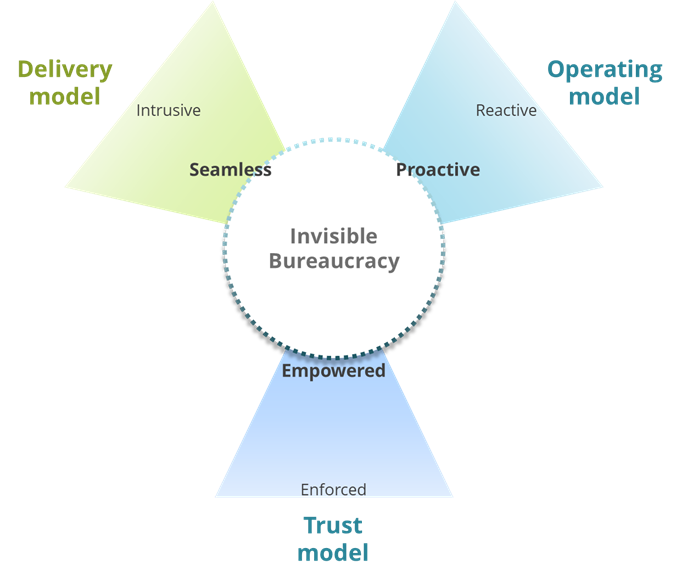
Making government bureaucracy invisible means embracing technology-powered innovation to drive proactive operations that will deliver seamless services for empowered people and businesses:

  • Service delivery model. The next generation of invisible services will be seamless. Constituents (citizens, businesses, investors, tourists, etc.) will not realize that public services are being delivered. They will not be asked to interact with the government to know what services they are entitled to or be interrupted in their daily routine because they receive a request to provide data to prove changes in circumstances.
  • Operating model. The next generation of invisible operations will be proactive. Without intruding into people’s and businesses’ daily lives, the government will know enough to understand the events that impact constituents and changes in circumstances. Governments will proactively register constituents for programs that they are entitled to and automatically deliver services.
  • Trust model. The next generation of invisible bureaucracy will shift from enforcement to empowerment. Instead of enforcing compliance after the fact, the government will make compliance easy for constituents through automated, proactive services, and simplified regulations. Government will invest in digital trust through proactive, transparent personalized notifications, and tools to see how personal data is being used across departments.

The Road to Invisible Government Bureaucracy

To accelerate the road towards Invisible Government Bureaucracy, public sector senior leaders should implement changes around the six building blocks:

  1. Building a holistic view of people, businesses, and communities. To avoid asking for the same data again and again, to understand when a change in circumstances offers an opportunity for the government to proactively deliver a service, and to empower open engagement, governments are investing to build a 360° view of people, businesses, communities.
  2. Scaling cognitive processes and services. Governments need to re-engineer processes and embed AI-enabled cognitive capabilities into systems so that they can recognize changes in the circumstances of their constituents, identify root causes and trigger operational workflows or dynamically reconfigure services and programs to satisfy the evolving constituent needs.
  3. Designing and delivering people-centric experience journeys. Increasingly, people will expect to interact with systems through conversational interfaces that can recognize their language, accent, tone of voice, instead of having to scroll through screens and fill forms. Cognitive capabilities will be embedded in every touch points throughout the user experience journey.
  4. Ensuring accessibility and inclusion for all. The non-intrusive and proactive nature of the invisible government bureaucracy will also enhance inclusion by lowering accessibility the barriers. However, as conversational and generative AI, immersive reality solutions become more pervasive, they must be designed with accessibility in mind.
  5. Investing in next-generation trust services. The public sector should invest in digital trust tools that enable citizens to conveniently access digital services across government, without having to remember multiple login credentials. Such tools will help citizens have a transparent understanding on how government use personal data and opt-in or opt-out of data sharing.
  6. Expanding collaboration with third parties. Government are working with private enterprises and community organizations to enable constituents to enjoy the lowest possible number of interactions with the government, to eliminate duplicate request for personal data, and the best possible convenience and proximity when those interactions are needed.

The latest IDC Government Insights study explores how to adapt organizational capacity and competencies, revisit policies, work with the ecosystem, and ensure public trust, to make Invisible Government Bureaucracy a reality.

Massimiliano Claps - Research Director - IDC

Massimiliano (Max) Claps is the research director for the Worldwide National Government Platforms and Technologies research in IDC's Government Insights practice. In this role, Max provides research and advisory services to technology suppliers and national civilian government senior leaders in the US and globally. Specific areas of research include improving government digital experiences, data and data sharing, AI and automation, cloud-enabled system modernization, the future of government work, and data protection and digital sovereignty to drive social, economic, and environmental outcomes for agencies and the public.

Strong Headwinds Disrupting the Built Environment Industries

The built environment sector is often seen as a laggard in productivity and technology adoption. However, this is changing: the strong headwinds of the last few years have forced companies to evolve and innovate.

The pandemic led to widespread supply chain shocks felt acutely by the construction sector and with geopolitical tensions increasing, including in the Red Sea, this issue is here to stay. Covid-19 also led to one of the largest shake ups in the real estate industry with significant drops in office occupancy rates in the move back to hybrid work.

While occupancy rates are recovering, they are not expected to return to pre-pandemic levels. Add to this potent mix, the energy crisis and increasing ESG targets and regulatory requirements.

PropTech Companies Are Injecting Innovation

Property technology (PropTech) companies are injecting much-needed innovation into the industry and driving significant changes across building life cycles from design to construction, operation, maintenance, and demolition. We have published a PropTech Innovator Report highlighting 3 Innovate companies that are providing transformative solutions across the built environment sector.

In line with the AI era,  which IDC refers to as to as AI Everywhere, each Innovator highlighted in the report is leveraging AI in their solutions.

Our research highlights that the top priorities for built environment executives are improving operational efficiency and cost reduction, enhancing environmental sustainability and improving resilience to climatic hazards. Organizations are increasingly applying technology to help support these business objectives.

For example, to meet their sustainability goals, 66% of real estate companies are investing in data and analytics including AI, and 61% are investing in space and workplace technology (IDC’s Sustainable Buildings, Homes, and Districts Survey, 2023, n = 654).

Announcing IDC’s “Worldwide PropTech Innovators, 2023”

The PropTech companies highlighted in the Innovator span the building lifecycle and reflect the diverse range of companies encapsulated in this market. The first innovator — nPlan — is changing the way in which major projects can be planned, designed, and monitored through an AI-enabled software solution drawing on over 750,000 project schedules. The second — Skandal — is providing IoT driven lighting displays that respond to building inhabitants to improve occupant experience and promote behavioral change. Finally, Xandar Kardian’s solution monitors occupant motion through the innovative use of radar technology and can also monitor resting heart rate and respiratory rate for applications in health and social care facilities.

IDC is developing further Innovator reports focused on innovation in the built environment so please get in contact if you are an SME and meet the eligibility criteria – jdignan@idc.com lbarker@idc.com

You may also be interested in:

Louisa Barker - Senior Research Manager, IDC Government Insights, Europe - IDC

Louisa Barker is a senior research manager in the European IDC Government Insights team, leading research on smart, sustainable, and resilient cities and communities. She has international experience providing analysis, policy advice, and consultancy to the public sector on disaster risk management, urban building and planning regulation, and smart cities. Previous roles have included Urban Resilience Consultant at the World Bank, focused on projects in the Caribbean and East Africa, and as a researcher at technology and innovation accelerators such as the Future Cities Catapult and the University College London City Leadership Laboratory. She is also a Specialist Advisor to the International Building Quality Centre.

Globally, cities are rediscovering the importance of their rivers as a central tenet of the health, wellbeing, and economy of a city. A river was often, if not always, the reason for a city to develop and grow, but during the 20th century city, authorities began to focus primarily on the built environment and to see water management as a less important sub issue of city management.

With the rise of environmental awareness in the 21st century, cities are beginning to relook at the interrelationship between the built environment and their rivers. We have been tracking this new direction through their research on River Cities and how technology now allows us to instrument both water and the built environment in concert.

According to our research, 28% of local governments across EMEA are already investing in smart rivers with an additional 29% considering investing in the future (IDC Survey, December 2023).

The French are Reclaiming their Rivers

France is emerging as a leader in this process, and the clearest example of this will be the opening ceremony of the 2024 Olympic Games.

Paris is the most visited city in the world, and it is impossible to imagine Paris without picturing the Seine. Olympic opening ceremonies are historically held in a stadium, but France will be using the banks of the Seine for the ceremony to increase participation and celebrate the special relationship between the river and the city.

The Digital Twin Project

A further French example of this new thinking is captured in a recently published IDC Perspective Building a River Digital Twin: A Case Study of the Port de Bordeaux. This document provides an overview of a project led by the Port de Bordeaux, an entity managing marine activities across Bordeaux and the Gironde Estuary.

The objective of the project is to create a digital twin of the Estuary – the largest Estuary in Western Europe covering around 635 km2. The Gironde Estuary is formed from the meeting of the rivers of Dordogne and Garonne and spans several cities, the main one being Bordeaux with more than 250k residents. The Port de Bordeaux manages 7 terminals is the 7th largest French port in terms of traffic.

The digital twin was built to help project participants in both their day-day tactical decision-making process (for example, information on water levels, pollution and navigation) as well as addressing longer-term and strategic challenges (adaptation and impacts of climate change). The Port de Bordeaux developed 8 core goals for the digital twin project:

  • Sharing and developing knowledge of the river.
  • Promoting the exchange of data and operational results.
  • Anticipating the effects of climate change.
  • Identifying mitigation solutions.
  • Developing economic, recreational and tourism opportunities.
  • Preserving biodiversity and environmental wealth.
  • Developing coastal and river surveillance (alert systems).
  • Fostering replicability of the platform on other rivers.


An innovative aspect of this project is that the project team looked beyond environmental challenges to a broader set of objectives, including, for example, economic and recreational activities. This approach is centred on the view of a river as a complex ecosystem of different stakeholders and an integral part of the identity of the region. The project has a wide target audience, and the use cases, outputs and goals were co-created with the relevant stakeholders at the design stage.

Digital twins are at an early stage of adoption for rivers and marine environments. However, the application of technologies to the blue economy is increasing.

We predict that, by 2027, threatened by water scarcity and extreme weather, 40% of large cities will have digital twins of their water resources to manage water supply, quality, resilience and behavioural change (IDC Smart Cities and Communities 2023 Futurescape).

The Port de Bordeaux is an early adopter and can provide a model and blueprint for others to follow as a core principle of the project was making as many aspects as possible open source. Local stakeholders can upload their own data and use the GIROS platform to visualize their results. This supports a broader community of users being able to take advantage of the model.

Crucially, the Bordeaux project team intentionally designed the solution to be replicable on other rivers; while the numerical model for the Gironde is geographically specific, the framework and architecture of the solution is being made publicly available.

We are soon to publish our first Tech Innovator report on companies involved in rivers and water management and are keen to hear of innovative technology solutions and case studies involving river management for future reports so please do get in touch with us jdignan@idc.com, lbarker@idc.com, rletemple@idc.com

Remi Letemple - Senior Research Analyst, IDC Government Insights - IDC

Remi Letemple leads IDC’s Worldwide Sustainable Transportation and Smart Vehicles Strategies service, where he provides strategic guidance and thought leadership on the future of mobility and transportation. Operating at a global level, he is recognized as a subject matter expert in smart mobility and transportation technologies—including connected, autonomous, shared, and electric mobility—enabled by software-defined vehicle (SDV) architectures, over-the-air (OTA) updates, cloud and edge platforms, and AI, including generative AI.

After much back-and-forth on work models, bold ultimatums from employers and staunch resistance from workers, European businesses are in the process of codifying different ways of where, how, when, and why we work. One of the many reasons for this change is the speed with which technology, especially artificial intelligence and GenAI, have made it possible to work equally well in varying, flexible work models.

The downside of this rapid technology development has been that European organizations simply cannot hire enough workers with current or deep skills – both technical and human. Do you manage highly distributed teams performing complex and interdependent tasks? Certainly not easy. Finding employees trained sufficiently well to safely transition to the use of Gen AI solutions? Not easy either.

Enter the promise of automation and in particular the ability of AI and Gen AI tools to both facilitate repetitive tasks like coding, data entry, research, and content creation but also to amplify the effectiveness of learning in the flow of work and secure company assets.

The following 3 predictions are examples of what work in Europe might look like in the next five years, considering the areas of work personalization, skills development and the impact of climate change on office design.

Future of Work Predictions for 2024 and Beyond

  • Prediction 1: 60% of Large Businesses will upgrade hardware and software technologies to increase worker retention with personalized work experiences and enhanced collaboration by 2025.

Rapidly evolving technologies and work methods are forcing companies to upgrade hardware and implement new software technologies that support better employee experiences, personalization and improved collaboration.

Collaboration apps are becoming more visual and continue to develop features unlike multiplayer games that enable a more personalized view of work and teams, better targeting of projects, and hands-on collaboration apps. Meetings and other work resources, including collaboration resources (workflow, meetings, new document formats, etc.) are translated and transcribed in real time, captured, analyzed and exploited by other integrated business data sources. The results enable faster and more personalized decisions and collaboration, including summaries using generative AI. AI solutions are gradually increasing the ways people consume content and data, and AI itself will become a digital collaborator.

  • Prediction 2: Enterprises will leverage personalized technology skills development to drive $1T in productivity gains by 2026, enabled by GenAI and automation everywhere.

As the development and use of technology in everyday work environments becomes more complex, organizations struggle to find experts for programming, security, architecture, operations, management and many other roles. IDC data from 2023 shows that 43 % percent of organizations lack the capability support needed to successfully implement automation.

One of the reasons Gen AI adoption and experimentation has grown so rapidly is that everyday workers can see its immediate value. As new jobs come online due to new automation requirements and workers learn new skills, Gen AI is being incorporated into tools that create employee training. Workers with entry-level skills can better target individual learning needs based on the speed with which Gen AI can generate code, summarize data, and create first-draft multimedia products. This customized approach ensures that people (including IT staff) receive the most appropriate training, optimizing efforts to increase their skills and competencies as jobs evolve, plus the need to program GenAI applications themselves.

  • Prediction 3: By 2028, organizations will invest in office climate havens, using asset-based/renewable energy to defray 30% of their ongoing operating costs.

It is not just work patterns that are rapidly changing. The environment we live and work in is rapidly changing too. As uncontrolled wildfires, climate change and extreme weather events become more common in Europe, the consequences are affecting human health and the ability to work effectively. Sustainability measures are no longer considered optional as organizations worldwide recognize them as necessary components of strategic planning and sustainable operational excellence.

In future, progressive companies will adopt a combination of innovative building design, digital twins, robotics and integrated climate systems to create climate havens where workers and their families can both find relief and focus on work. Unfortunately, simply rebuilding existing buildings with AI or robotics adds energy demand to an already struggling European energy infrastructure.

Companies that invest heavily in asset-based energy (hydro/tidal, geothermal, solar and wind) on-site in their climate havens, support both their operating costs and potentially create a secondary revenue stream when they feed electricity back into the grid. This is reversing the long-term trend of digital organizations threatening their local communities through excessive power usage, while improving community relations, employee retention and talent recruitment.


All the above predictions have much in common – they seek to better understand the intersection of technology and human behavior. Science fiction predicts dystopian visions of mechanized and artificially controlled societies where human efficacy is threatened. IDC far from that point of view, but we also see how the concerns raised by new technologies such as Gen AI can play a big role in hindering adoption—for better or for worse.

Organizational leaders must invest time and money in the strategic planning for the adoption of AI and GenAI technologies, as well as the new roles and ways of working they create. This is not just a technology issue that affects computing, security, hardware, infrastructure, and integration requirements. It is also a human issue that must be addressed employee empowerment through skill development and the development of appropriate, re-imagined career paths.

For more information on the impact of Automation on the European Future of Work, please access the following resources:

Meike Escherich - Associate Research Director, European Future of Work - IDC

Meike Escherich is an associate research director with IDC's European Future of Work practice, based in the UK. In this role, she provides coverage of key technology trends across the Future of Work, specializing in how to enable and foster teamwork in a flexible work environment. Her research looks at how technologies influence workers' skills and behaviors, organizational culture, worker experience and how the workspace itself is enabling the future enterprise.

This year’s Enlit Europe, which took place between November 28 and November 30 in Paris, attracted almost 12,000 visitors,700 exhibitors from 100 countries and 500 speakers, — proving once again to be a reference point for the European (if not worldwide) utility sector.

Sessions on the energy transition (energy efficiency, electrification and decarbonization), flexibility, and digitalization, as well as numerous hub sessions, provided a great opportunity for knowledge sharing during the three-day event. Here are our key takeaways from discussions and debates with technology providers and utilities.

Among the conversations with various utility leaders, three key themes emerged that outline the direction in which this industry is moving.

  • Flexibility at the heart of energy transformation. One of the dominant conversations that continued this year at Enlit is the growing criticality of flexibility for the utility industry. With increasing renewable energy sources and the need to integrate distributed energy resources more effectively, utilities are increasingly focusing on operational flexibility. Additionally, booming electrification requires demand flexibility to mitigate the impact of the energy transition on grids, which are the invisible enabler of it all. Industry representatives stressed the importance of investing in technologies and systems that enable more dynamic grid management, ensuring more efficient and sustainable energy distribution and consumption.
  • The imperative of marketing. Another interesting aspect that emerged during the event was the growing success of utilities that understand the value of marketing, to change customers’ perception of their company and the industry as a whole, while improving their relationship with consumers. Utilities that have invested in understanding consumer needs and have built strong brands are reaping the benefits. Utilities are at the heart of a transformation that impacts everyone and will set the stage for the next generations, if done right and marketed well, companies can turn misconception of the industry on its head, leading to newfound success.
  • What about Generative AI? Despite growing interest over the last year, the topic of GenAI was not as apparent as we would have expected. Discussions we had were more focused on the benefits of horizontal applications of GenAI and very rarely on industry specific use cases that utilities should be digging into. Currently, the discourse on GenAI tends to be more high-level than practical, with utilities trying to figure out how to integrate this technology effectively into their daily operations. The largely uncharted territory of GenAI also raised additional conversations around artificial intelligence and machine learning overall and the untapped potential that still exists. And it all came back to the topic of “data” … the quality of the data, the frequency of the data, the amount of data, etc. The challenge now is for utilities to translate high-level discussions into concrete and practical action, successfully addressing industry challenges and capitalizing on emerging opportunities. And for this they need the help of their peers and the technology ecosystem that surrounds them.

Overall, it was positive to see an Enlit returning to its pre-COVID bustle, with a diverse pool of companies exhibiting on the floor, both from a software and a hardware perspective. Let’s hope the onsite enthusiasm trickles into utilities daily activities fostering more drive to the energy transition.

Here’s to quickening progress in 2024 to be discussed when we meet in Milan at next year’s Enlit Europe.

For more of our coverage on the energy market, visit our website.