Overcoming GenAI Pilotitis and Acute POC Syndrome

Welcome to the wild world of AI adoption, where companies are caught in a whirlwind of buzzwords, shiny new toys, and the constant fear of missing out. Today, we’re looking at a peculiar plague sweeping across Western Europe’s businesses: pilotitis and its close cousin, acute proof of concept (POC) syndrome.

Picture this: eager companies, bright-eyed and full of hope, diving headfirst into the AI pool. As a recent IDC survey showed, companies are running an average of 40 GenAI POCs annually. Forty! That’s a lot — and given their limited experience and expertise, it’s impressive. But is it really getting them anywhere?

Out of FOMO, these companies sometimes act like kids in a toy store, grabbing every shiny AI gadget they see. “Ooh, look at this LLM! Check out that ML algorithm!” But as any parent can tell you: Too many toys may make you miss out on the real fun.

AI Adoption Problems

The diagnosis? Experimentation is great. It’s how we learn and grow. But when you’re running more POCs than there are weeks in a year — and some companies really do, with 7% reaching up to 99 POCs annually — you might have a case of pilotitis. Symptoms include:

  • An insatiable appetite for new AI projects
  • An inability to follow through on successful pilots
  • A severe allergy to scaling anything beyond the POC phase
  • Chronic “shiny object” syndrome
  • KPI amnesia, or forgetting to define or measure success metrics for AI initiatives

The Consequences of Unstoppable Pilots

The prognosis? Well, not great. Just one-third of companies report highly successful GenAI POCs. The rest achieve mediocre results, with nearly half achieving success rates of 50–70%. It’s like getting a C+ in school — not failing, but not exactly something that makes mom proud.

And there’s more: Some companies aren’t even evaluating their POCs’ success. It’s like they’re running around in circles, not knowing if they’re making progress or just getting dizzy.

So what’s the cure for the pilotitis epidemic? First, we need to identify the underlying causes:

  1. The “AI is Hot and New” Factor: Companies are so smitten with the idea of AI that they forget to ask, “But does it actually solve our problems?”
  2. Cost Confusion: AI projects can be expensive. Without clear ROI metrics, it’s easy to keep throwing money at pilots without seeing returns.
  3. Skills Shortages: Finding the right talent to implement AI solutions is tough. Competences are in high demand, experts are scarce, and it may take forever to find someone you can afford.
  4. Coordination Chaos: IT and business teams often struggle to work together effectively, leading to a disconnect between tech capabilities and business needs.
  5. Fear of Commitment: Some companies are so afraid of making the wrong choice that they’d rather keep piloting forever than commit to a full-scale implementation.

How Tech Providers Can Help Their Customers

The treatment? AI technology providers and their partners have a unique opportunity to play doctor and help clients overcome pilotitis. After all, healthy clients support long-term business relationships. How can “tech doctors” cure their ailing patients?

  1. Offer Scalable Proof-of-Value Approaches: Help clients quickly demonstrate value from GenAI in specific use cases, then provide a clear path to scale. It’s like a doctor helping to expand a toddler’s diet — we start with grated carrots and end up eating a full-course meal in a Michelin-starred restaurant.
  2. Differentiate Between Experimentation and POC: Establish clear guidelines for each stage. It’s like the difference between medical research and clinical trials — in research, we’re exploring possibilities, but in trials, we’re testing specific hypotheses with measurable outcomes.
  3. Outcome-Based Pricing: Link fees to project success. It’s like being a personal trainer and only getting paid if your clients actually lose weight — suddenly, everyone’s motivated to see results!
  4. Introduce Integrated Cost Management Tools: Help clients track and control expenditures throughout the AI project life cycle. It’s like giving them a financial fitness tracker for their AI projects.
  5. Provide Post-POC Support and Road Mapping: Offer comprehensive guidance for scaling successful POCs. It’s like offering post-op doctor’s recommendations.
  6. Offer End-to-End Change Management Support: Go beyond tech implementation and help with the human side of AI adoption. It’s like being both a personal trainer and a therapist for your client’s AI journey.


These approaches will help you remember that pilotitis and POC syndrome are just growing pains. With the right approach and a little help from their “tech doctors,” companies can overcome these challenges and move from endless experimentation to meaningful AI implementation.

To all businesses out there drowning in pilots and POCs — it’s time to start turning those experiments into real-world solutions. And to tech providers: Your mission is to be the best AI doctors you can be. Help your clients understand and manage their symptoms — and watch them grow healthier and stronger.

Ewa Zborowska - Research Director, AI, Europe - IDC

Ewa Zborowska is an experienced technology professional with 25 years of expertise in the European IT industry. Since 2003, she has been a member of the IDC team, based in Warsaw, researching IT services markets. In 2018, she joined the European team with a specific emphasis on cloud and AI. Ewa is currently the lead analyst for IDC’s European Artificial Intelligence Innovations and Strategies CIS.

In the realm of data platform decision-making, organizations typically consider several dimensions when making their choices. These encompass aspects including functionality, performance, scalability, cost, flexibility, and alignment with specific use cases.

The following are some of the key criteria of data platform decision-making. It’s worth noting that one of the most-hyped databases right now, in support of AI, is vector databases. We’ll explain why.

Data Model and Schema Flexibility

Organizations assess whether the database supports their data model requirements. Some may need the flexibility of schema-less or schema-on-read models. Others may require the rigidity of a relational model. The choice depends on factors like the structure of the data — is it simply rows and columns of numbers? is it a mix of images, videos, and documents? — and the need for agility to adapt to evolving schemas.

With the rise of Hadoop, many organizations began to store more of their data for analysis, now or in the future. Open source Hadoop offered data storage on commodity hardware, while more traditional proprietary data warehouses were almost certainly far more expensive. The trouble is that Hadoop lacked a schema — a structure for the data warehouse — making it harder to extract the data when you need it (though workarounds are now available).

As mentioned above, vector databases are garnering a lot of attention because of the rise of AI. Reasons for this include:

  • Efficient Similarity Search or Nearest Neighbor Search: Vector databases are optimized for nearest neighbor search, a fundamental operation in many AI applications such as recommendation systems, image retrieval, and natural language processing.
  • High-Dimensional Data Handling: AI models, especially in NLP and computer vision, generate high-dimensional embedding vectors. Vector databases can store and index these vectors efficiently, allowing for rapid querying and analysis.
  • Semantic Search: By leveraging embedding vectors that capture semantic information, vector databases enable more intuitive and relevant search results compared to traditional keyword-based searches.
  • Multimodal Search: Vector databases support the integration of various data types (text, images, audio) by converting them into a common vector space, allowing for unified search and analysis across different modalities.
  • Clustering and Classification: Vector databases support operations like clustering and classification directly on the stored vectors, aiding in tasks such as customer segmentation, anomaly detection, and pattern recognition.

Vector databases are pivotal for AI because they provide the necessary infrastructure to store, manage, and query high-dimensional vectors efficiently. This capability is foundational for enabling fast, scalable, and intelligent AI systems across various applications and industries.

Performance and Scalability

Performance considerations include factors like query speed, throughput, latency, and concurrency. Scalability relates to the ability of the database to handle growing volumes of data and increasing user loads without sacrificing performance. Organizations evaluate whether the database can scale horizontally (adding more servers) or vertically (upgrading existing servers).

Consistency and Durability

Consistency refers to the degree to which data remains in a consistent state across distributed systems, especially in the event of failures or concurrent transactions. Durability relates to the ability of the database to ensure that committed transactions persist even in the face of system failures. Organizations weigh the trade-offs between consistency, availability, and partition tolerance based on their application requirements.ACID is key to relational, transactional databases. ACID compliance refers to a set of properties that ensure the reliability and integrity of transactions in a database system. The acronym ACID stands for Atomicity, Consistency, Isolation, and Durability, each representing a fundamental aspect of transaction management.

ACID is spoken of in somewhat hushed tones by NoSQL vendors. When pushed, some will say they offer “ACID-like” compliance. For many modern use cases, ACID-like is good enough. But speak to a database developer dealing with transactional systems — like core banking systems — and they will tell you their regulators and other stakeholders require “pure” ACID compliance. Compliance with ACID standards can help organizations meet regulatory requirements and maintain data governance.

Data Integrity and Security

Organizations prioritize databases that provide robust mechanisms for maintaining data integrity (e.g., through constraints, transactions, and validations) and enforcing security (e.g., encryption, authentication, authorization, and auditing). Compliance with regulatory requirements such as GDPR, HIPAA, or PCI-DSS may also influence database selection.

Ease of Development and Maintenance

This encompasses factors like developer productivity, ease of learning, availability of tools and libraries, and support for programming languages and frameworks. Organizations seek databases that streamline the development process, facilitate debugging and monitoring, and minimize operational overhead.

Total Cost of Ownership (TCO)

TCO considerations include both up-front costs (e.g., licensing fees, hardware costs) and ongoing expenses (e.g., maintenance, support, scaling). Organizations evaluate databases based on their ability to deliver value relative to their costs over the entire life cycle of the system.

Ecosystem and Integration

Organizations assess the database’s ecosystem, including its compatibility with existing infrastructure, integration with other systems (e.g., data warehouses, analytics platforms, the cloud), availability of third-party tools and services, and community support. Integration capabilities influence factors such as data migration, interoperability, and extensibility. There is also the issue here of deployment venue: on premises, in the cloud, hybrid, or multicloud.


By evaluating data platforms along these lines, organizations can make informed decisions that align with their business objectives, technical requirements, and constraints. Vector databases are certainly one of the hottest tickets in town in support of AI — but different use cases have different priorities.

Cybersecurity threats continue to increase. According to ENISA’s 2023 Threat Landscape report, there were around 2,580 observed incidents in the EU between July 2022 and June 2023. In the previous reporting period, there were less than 800. ENISA reported that 19% of events targeted public administrations, by far the largest industry.

Government chief information security officers (CISOs) are not resting on their laurels. They understand that cybersecurity is important.

IDC’s EMEA Cross-Industry Acceleration Survey, conducted in December 2023, found that 91% of government executives were planning to maintain or increase their level of spending in cybersecurity. In the many one-on-one conversations that IDC Government Insights analysts have had with government CIOs, CISOs, and other IT executives, cybersecurity always stands out as a “ring-fenced” item protected from budget cuts.

But given the rising volume, variety and velocity of threats, ring-fencing budgets is not enough — a change of paradigm is in order.

Paradigm Shift: From Protecting the Perimeter to National Survivability

The most forward-looking governments understand that the old mindset focused on protecting the individual government agency, or even the individual system or digital citizen service app, is insufficient. They understand that governments play a key role in national digital and physical services and infrastructure resilience and survivability.

To deliver on this higher purpose, government CISOs need to look beyond their organizational boundaries, take a whole life-cycle approach to cybersecurity, and provide knowledge to non-security experts to enable them to act responsibly.

Looking beyond organizational boundaries means collaborating across public administrations and the private sector to create a resilient ecosystem. Beyond the NIS2 Directive’s mandatory obligations — such as establishing at least one computer security incident response team (CSIRT) in each EU member country — resilience comes through the collective effort of cybersecurity specialists within ministries of defense, police forces, intelligence agencies, and all other public administrations.

In a recent IDC conversation with a regional government institution’s senior IT leader, it was emphasized how important it is for all levels of government to collaborate in the ecosystem to protect against the spike of attacks that usually occurs in the months prior to and during major events like the Olympics, the World Expo, the FIFA World Cup, or a G7 meeting. Participants should include transportation operators, payment and banking service providers, telcos, utilities, and travel and hospitality companies.

Taking a life-cycle approach to cybersecurity means caring for the hygiene of systems, protecting them and responding to events from development through termination. Hygiene starts with security by design, DevSecOps and application security best practices, and vetting hardware and software supply chain bills of material for security and compliance requirements.

Data hygiene is paramount — not only to comply with regulations that protect sensitive data, but also to increase the resilience and visibility of all data sets critical to government operations. Holistic protection requires enhancing the observability of the broader landscape.

CISOs should demand that their cybersecurity solution providers make available AI/ML solutions and AIOps practices that can increase the productivity of observability and detection.

Incident response must be grounded on governance processes and structures that enable timeliness and coordination. Throughout the life cycle, government CISOs should regularly upgrade their team’s skills, not only traditional cybersecurity skills but also legal skills, AI ethics, bias testing, and prompt engineering.

Ensuring that security and non-security experts have the right knowledge to act responsibly is a major people and organizational transformation effort. Investing in programs to raise the cybersecurity awareness of civil servants, other industries, and the general public is critical.

It is also important for CISOs to articulate the value of cybersecurity to the elected and appointed officials who make budget decisions. CISOs and their teams that are able to articulate the value of cybersecurity in terms of business risks will raise their profile internally and be recognized as strategic decision makers.

Technology developments will help CISOs accelerate the paradigm shift. In particular, the automation and orchestration of processes related to security and privacy will help address the skills gap and accelerate the detection of malicious behaviors, threat response, and remediation actions.

European government CIOs and CISOs that combine tool investments with a holistic approach to cybersecurity will boost the resilience of their organizations, of the communities they serve, and increase citizens’ trust in government. Those that focus on siloed system protection and legacy operating models and competencies will not be able to respond to threats and will be relegated to the role of gatekeepers who eventually lose influence and budget.

To learn more, explore the latest IDC research

Massimiliano Claps - Research Director - IDC

Massimiliano (Max) Claps is the research director for the Worldwide National Government Platforms and Technologies research in IDC's Government Insights practice. In this role, Max provides research and advisory services to technology suppliers and national civilian government senior leaders in the US and globally. Specific areas of research include improving government digital experiences, data and data sharing, AI and automation, cloud-enabled system modernization, the future of government work, and data protection and digital sovereignty to drive social, economic, and environmental outcomes for agencies and the public.

IDC’s annual CEE Summit was held in Vienna on June 9-11, with the theme of “Unlocking Performance Potential.” It highlighted the opportunities and challenges for organizations currently embracing AI.

Digital transformation continues to reshape industries and economies worldwide, and Central and Eastern Europe (CEE) is no exception. This vibrant region, with its technology hubs and innovative spirit, has the potential to become a key player in the global tech landscape.

In this blog post, we offer insights from industry experts on the pivotal factors driving this transformational change. From building IT spending transparency and making a compelling case for artificial intelligence to the critical roles of culture, change management, and sustainability, we explore how CEE can harness its full transformation potential. Moreover, we emphasize why cybersecurity remains a top priority in this rapidly evolving digital era.

Key insights include:

Making the Case for AI and Building IT Spend Transparency

AI use cases are widespread and growing, in industries including financial services, pharma, manufacturing, and more. However, IDC research shows that GenAI investments are putting increasing pressure on IT budgets.

For organizations with tight IT budgets, our advice is to build a transparent IT spending management capability that provides a financially sound platform on which to base investment decisions.  Avoid reliance on high-level benchmarks that provide no visibility on the organization’s future state. Mapping spending to clear cost pools and defined services provides great insights into spending and helps identify opportunities to cut costs and improve efficiency.

Culture and Change Management Are Key for Any Kind of Transformation

No matter the company size or sector, winning over hearts and minds is crucial for success. This is true whether the organization is consolidating its regional IT services delivery, looking to fully leverage the benefits of GenAI, or adopting SAP HANA across the business. 

Key elements in building a positive culture include solid backing from senior management, empowerment of teams to make their own decisions and fail fast, finding the right ambassadors of change, and rooting out toxicity.

Given all the different elements involved in change, organizations need to consider a change management function focused on the successful adoption of new tools, processes, and behaviors. This helps with communication, building transparency, and creating buy-in during periods that are often riddled with uncertainty.

Sustainability and Tech for Good

Sustainability and IT optimization are becoming critical in Europe and hot topics of discussion among IT users. Driven by the increasing number of European regulations and directives, sustainability is seen as a viable approach to stay competitive, enhance brand image, and boost customer trust. However, like IT optimization (or FinOps), sustainability can also help to streamline operations, reduce costs, and increase business value.

Cybersecurity Remains High on the Agenda

Cybersecurity remains a high priority for European executives, in particular with activities such as building resilience and business continuity, regulatory compliance and governance, and positioning security as a enabler.

Focus is increasing on cloud-native security capabilities, such as endpoint protection, threat intelligence, and application security. However, there are many industries where legacy infrastructure is widespread, resulting in security capabilities that must be adapted for cloud .

Recommendations

Many organizations are at the AI exploration stage, testing out use cases that often focus on productivity, such as chatbots and digital assistants with GenAI. For many organizations, the worry centers around the ROI gap and the real impact of AI on business.

However, real commercial differentiation with the use of AI can only be driven with function-specific (CFO, CMO, CHRO) use cases or industry-specific use , but those are more complex and investment-. Effectively, organizations are looking at the trade-off between ease of implementation vs. cost with less/more differentiation. Impacts from this investment can be achieved at all levels in the organization, but the level of impact will depending on the chosen trade-off.

We advise more holistic thinking: Organizations need a responsible AI strategy and prioritized use case roadmap with C-suite buy-in. Challenges such as AI pricing, governance, and organizational change must be considered. The broader ecosystem — including supply chain, tech vendors and other strategic partners — must also be considered. in mind, however, that GenAI or broader AI doesn’t offer a short cut to the holistic thinking noted above: you need to start with a data strategy.

IDC’s 2024 CEE Summit

Over three days, participants gathered to discuss technology opportunities and challenges from a distinctly CEE perspective. The Summit had wide representation from across the region, with participants from Czechia, Slovakia, Poland, Croatia, Serbia, Slovenia, Greece, Austria, Hungary, Romania, and Bosnia Hercegovina.

The location — in the historic town center of Vienna — evoked the Vienna Circle of the early 20th Century,  where discussions among mathematicians, scientists, and philosophers laid many of the logical foundations for the Information Age of the second half of the century.

One highlight of the event was an innovation challenge, where teams had to swiftly create and propose a GenAI-enabled initiative. This generated collaboration and many creative investment pitches, with the winner focusing on AI to improve predictive maintenance for electric vehicles.

As attendees departed Vienna, they did so with more than a fridge magnet and the strains of Mozart in their ears — they took with them new knowledge, new contacts, and the inspiration that comes from setting aside the daily routine long enough to exchange ideas with industry peers.

If you want to find out more about this and other events we host, please visit our website here.

Thomas Meyer - General Manager and Group Vice President, IDC EMEA - IDC

Thomas Meyer joined IDC in January 1999 and is currently responsible for managing IDC's Research Division in EMEA. This includes Practices focused on Digital Transformation, Cloud, Artificial Intelligence, IoT, Blockchain, Intelligent Process Automation and Accelerated Application Development as well as Core ICT (Software, Services, Infrastructure and Devices) and Industry-specific teams (Financial, Manufacturing, Energy, Retail, Healthcare, Government and Telco Insights)

The Hybrid Cloud Imperative

In today’s rapidly evolving digital landscape, the hybrid cloud has become an indispensable strategy for organizations aiming to maximize their IT investments. Our insights reveal that hybrid cloud is not just a trend but a critical component of modern IT infrastructure, blending the strengths of private and public clouds to foster efficiency, performance, and agility.

The complexity of implementing and operating such environments makes the role of managed service providers (MSPs) critical. These partners not only help smooth out the technical and operational challenges, but they also play a pivotal role in unlocking the true value of hybrid cloud investments.

As European organizations increasingly lean towards hybrid cloud solutions, understanding the importance of selecting the right MSP partner becomes paramount for achieving the desired business outcomes.

Overcoming Hybrid Cloud Hurdles with MSPs

Europe’s hybrid cloud landscape is experiencing a significant transformation, marked by rising investments and a clear growth trajectory. IDC’s 2023 EMEA Managed Cloud View Survey illustrates that, while hybrid cloud accounted for 31% of total IT budget in 2023, IT leaders expect a significant increase (up to 48%) of their total IT spending in Europe over the next two years.

The appeal of hybrid cloud in Europe is underscored by its compelling benefits. Organizations are drawn to the promise of enhanced cloud performance, streamlined backup and recovery processes, and more efficient cost management. These advantages position hybrid cloud as a cornerstone for building resilient, cost-effective, and optimized IT infrastructures.

However, the journey to harnessing these benefits is fraught with challenges. Skill shortages, particularly in cloud security and public cloud specific competencies, emerge as significant hurdles. The complexity of managing across diverse cloud environments adds another layer of difficulty, with operational visibility and governance among ongoing concerns.

As organizations progress in their cloud journey, they start to encounter more complex technical challenges, spanning security and data interoperability, as well as difficulties in meeting compliance and regulatory requirements.

To smooth out the edges of hybrid cloud adoption, many organizations are leaning towards managed service providers (MSPs). MSPs are pivotal for guiding customers to the right cloud types and orchestrating the ecosystem components to streamline operations, drive IT efficiency, improve agility, and increase business value.

Choosing the Ideal MSP for Hybrid Cloud Success

Understanding Your Unique Needs

When embarking on the hybrid cloud journey, understanding your organizational needs is paramount. Identify your objectives in the cloud landscape and the core IT challenges to these objectives. This clarity will guide you in selecting an MSP with the requisite cloud expertise, one that is capable of aligning the right cloud solutions with your specific workloads’ requirements.

The Crucial Role of Expertise

Expertise in various cloud environments is non-negotiable. An MSP must offer comprehensive services, from consulting to management, ensuring a seamless transition to the cloud. Their knowledge should span different cloud types, facilitating a match between cloud platforms and workloads that optimizes performance and cost.

Unified Management: A Must-Have

A unified management approach simplifies the oversight of diverse cloud environments, enhancing visibility, security, and compliance. Opt for MSPs that propose a platform-centric model for managing hybrid and multicloud scenarios. This model should streamline operations across your IT estate, fostering standardization and operational efficiency.

Empowering Your Hybrid Cloud Journey

In conclusion, the journey to mastering hybrid cloud in Europe hinges on the strategic selection of an MSP that aligns with your organization’s unique needs and goals. This journey, while complex, is made significantly smoother and more rewarding with the right partner by your side. As we’ve explored, the right MSP partner is not just a vendor but a pivotal collaborator in unlocking the full potential of hybrid cloud-enhancing efficiency, agility, and security across your IT operations.

If you want to learn more, please refer to this IDC document: Managing Hybrid Cloud: Considerations for European IT Buyers when Selecting Managed Service Providers

Francesca Ciarletta - Research Manager, European Services - IDC

Francesca Ciarletta's research covers how European organizations use managed cloud services on the infrastructure (IaaS), platform (PaaS), and software (SaaS) layers to be successful with their cloud journeys. How do managed cloud service providers ensure that customers reach their business outcomes from cloud? What are customer's expectations of their managed cloud services providers at each step of the journey? What is the role of managed cloud service providers in the broader cloud ecosystem? Which cloud provider ecosystems should they prioritize? Consequently, Ciarletta also covers the evolution of IT services towards cloud-based models, with a particular focus on managed cloud services. Her research analyzes market dynamics, challenges, and opportunities for IT service providers as they embrace digital-first delivery models.

Often, I hear that the business communications market will witness more consolidation because it’s overcrowded, meaning some vendors will either exit by divesting their operations or merge with another. There is some weight to this speculation, but by leveraging AI, vendors can reinforce their positions in the market.

When I say “leveraging AI,” I don’t mean just adding new features, but also overcoming some of the hurdles that are holding back end-user adoption. To make their AI strategies a success, it is necessary for vendors to understand and address these challenges.

Key Challenges for Businesses Trying to Gain the Full Value of AI

  1. Data silos are inhibiting AI’s full potential.

Our data reveals that businesses are at different stages of their AI journey, and the majority are still exploring, trying to determine use cases and how to extract value. Actual adoption will be determined by AI efficacy, which depends on backend data and AI training.

One challenge that limits the full value of AI is data being locked in disparate sources. Businesses often use separate systems for customer databases and CRM and utilize multiple communication and collaboration channels, creating data silos that hinder AI’s comprehensive system view.

Furthermore, these systems have different deployments, some on-premises and others in the cloud, making silos even harder to overcome.

Aggregating the different data sources, cleaning and structuring data, and training AI are the first steps in developing AI efficacy. Businesses need a connected IT stack, but this begs questions such as: Should solutions come from a single vendor who can provide a unified system in a common environment or a provider who is able to integrate different systems into a unified stream of data flow?

Many businesses are not able to adopt a unified solution from a single provider, because their investments are locked into existing IT systems and workflows. Even if systems are at the end of life, migration may not be an option due to the deep integration of workflows and strong relationships which the businesses may share with their existing providers.

Our data shows that businesses have concerns about migrating to new systems. Among other things, they are uncertain about the ultimate ROI the new system will deliver.

  1. Data privacy is a concern.

How much data should be exposed to AI is an issue for end-user organizations as well as government regulatory agencies.

Among the many benefits of data integration is the enablement of AI to drive personalized and targeted service in customer support, as AI can view and summarize customer information from different systems. This can range from listing a customer’s name and intent on agents’ desktops to providing buying history to support agents’ upsell efforts based on customers’ past preferences.

There is, however, a fine line between personalized service and violating a customer’s privacy. While some elements of personalization can feel special and help to create a sense of emotional connectedness, it’s important not to pass the point where knowledge about the customer creates a sense of invasion.

Another concern is the need to move operations to the cloud, as most AI is cloud based. Some businesses may be unable to do this due to regulatory compliance requirements for customer databases to remain on premises. For example, healthcare providers must keep patient data on premises to maintain security and privacy .

Additionally, some businesses are concerned about losing control and visibility of their IT infrastructure and customer databases by moving them to the cloud. Data sovereignty is also a factor, as some governments (including those in Europe) require businesses to keep data within the country, forcing AI solution providers to base their solutions in local datacenters.

Strategies to Overcome Challenges Impeding AI Adoption

  1. Base AI capabilities on integration and training, but also customer privacy and data governance.

Efficacy is critical for driving end-user adoption. This involves connecting different data sources and enabling closer and more far-reaching integrations within the ecosystem.

To this end, the market is witnessing a shift from SaaS-based to platform-based solutions, which allow integrations across different systems and third-party providers. Vendors also need to ensure compatibility with different IT environments, including integrating on-premises with cloud environments to enable business in different stages of their DX journey to access AI benefits.

The next step should be cleaning and structuring data, which can be overwhelming for businesses with particularly large/extensive data pools. This could present a business opportunity for professional service providers and systems integrators.

AI innovations should also incorporate guardrails to prevent misinformation, since AI is only as good as the data behind it and the training it receives. There should always be an option for human intervention to monitor and rectify AI-based results. Customers should be able to opt for how much of their information they want to be exposed to AI and other parties.

AI should be available for businesses who are mandated to run their operations on premises. And communications and collaboration solution providers should develop partnerships with other service providers that have widely distributed or local datacenters, thus making it possible to base their solutions in datacenters stipulated by data sovereignty requirements.

  1. Handhold customers during the process.

Developing suitable solutions is just one part of the story. It is also necessary to educate customers who are still familiarizing themselves with AI. Our data reveals that many businesses are unsure about use cases and how AI will fit into their overall operations. It is therefore necessary to drive conversations with relevant business leaders.

IDC data shows that while IT is still an integral part of sales discussions, business leaders are becoming more involved. Deploying AI is not just about new technology but changing business culture around it involving managers, and employees at all levels.

Making AI successful within organizations requires hand-holding through the process, from education to implementation and change management.

  1. Pay close attention to pricing.

Pricing is another important consideration, and pricing trends are wide ranging. Some vendors include AI features in their solutions without charging extra, while others offer them as add-ons at an additional price.

Not surprisingly, customers’ willingness to pay for AI solutions varies, depending on their perceived value versus price. While the unique and sophisticated functions AI can perform will influence pricing strategies, common features like meeting summarization and message composition are likely to face commoditization.

A federated approach to AI is helping to keep costs down and make it possible to offer AI as part of overall communication solution bundles. In the long run, it is likely that basic GenAI-based features will be part of overall communications solution bundles.

  1. Work closely with partners for go-to-market motions.

Go-to-market strategies are also crucial, particularly in Europe, where much of the IT communication stack is sold through partners, some of whom need training to communicate effectively with relevant business stakeholders. Channel partners should be incentivized for go-to-market initiatives, including monetary incentives and ownership of commercial relationships.

Vendors need to provide high-touch support during the sales process but leave ownership to channel partners post-sale. Market dynamics require vendors and partners to work hand-in-hand.

Conclusion

Succeeding in the business communications market involves more than introducing new AI features. It requires ensuring data efficacy by connecting different data sources, effectively training AI, and implementing guardrails to prevent misinformation.

Vendors need to understand where businesses are in their AI journey and customize solutions to meet their needs, including integration with unique IT environments and compliance with data governance and security requirements. Educating businesses about AI benefits and helping them implement AI in a compatible IT environment is essential.

The partner community plays a crucial role in the go-to-market process, and success will necessitate close collaboration between vendors and partners.

Oru Mohiuddin - Research Director - IDC

Oru Mohiuddin is a Research Director in the European Enterprise Communications and Collaboration team. Based in London, she is responsible for IDC’s coverage of Unified Communications and Collaboration in the region. Her work focuses on tracking the markets for premise-based and cloud solutions and new developments and trends, particularly in the light of changing work patterns impacting the traditional mode of enterprise communication. Prior to joining IDC, Oru worked for Euromonitor International, where she focused on Future of Work and technology in the SMB context. She also worked in New York and Bangladesh and speaks English and Bengali. Oru was awarded Chevening Scholarship by the British Foreign and Commonwealth Office to pursue her MSc in International Development from the University of Birmingham. In addition, Oru has a BA from Marymount Manhattan College in New York.

In the digital business and AI-everywhere era, technology is now a strategic enabler that permeates every aspect of business operations. According to IDC’s Worldwide CEO Survey (February 2024, n = 67), 48% of CEOs in Europe, the Middle East, and Africa (EMEA) now report regularly to the board on the status of digital initiatives, highlighting the strategic nature of digital technologies among businesses.

In this context, the chief information officer (CIO) is assuming a pivotal role as business leader, with digital technologies driving innovation, growth, and competitive advantage. Increasingly, the main KPIs on which CIOs are now measured are business-related metrics, from revenue growth to improving customer and employee experience, in a close relationship with other functional business leaders.

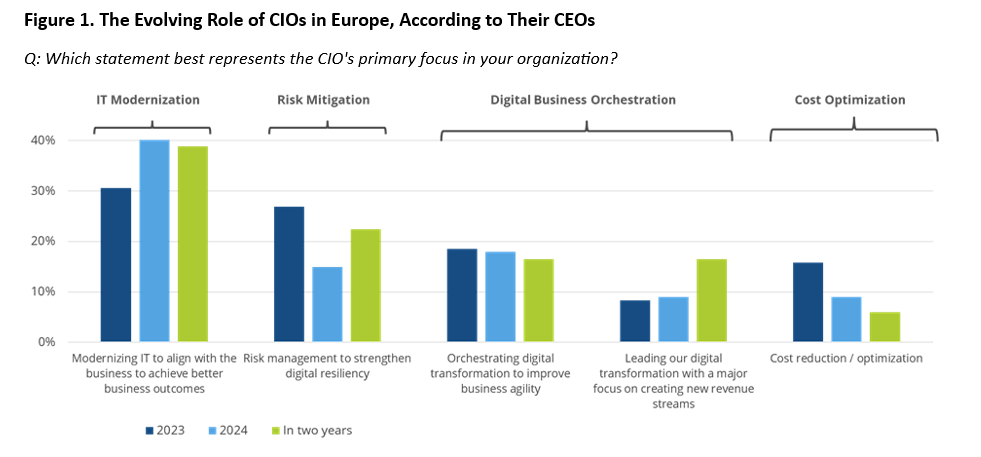
Historically, the CIO was primarily responsible for managing the IT infrastructure, ensuring its reliability, security, and efficiency. However, in today’s digital business era, European CEOs are assigning their CIOs multiple responsibilities, each one building upon the other to an increasing level of complexity:

  • IT Modernization: This will be the primary responsibility for CIOs for the next two years, with the aim of making IT systems and solutions up to date and capable of providing the necessary speed, efficiency, and flexibility to improve business results. The expansion of artificial intelligence and generative AI — and the drive to generate value from these technologies — is drawing attention to the fundamental aspects of foundational IT. Modernizing IT systems and processes also requires significant organizational change, addressing concerns and resistance from stakeholders and ensuring a smooth transition to new systems and technologies. This involves training and support for employees to help them adapt to new ways of working, which requires collaboration from other C-suite roles.
  • Digital Business Orchestration: In the next two years, as organizations mature into digital businesses, CIOs will be increasingly expected to orchestrate digital business initiatives across different functions, with a view to generating new revenue streams from digital business models, such as ecommerce or servitization. While C-Suite buy-in and stakeholder management are key for this progress, they will be even more essential for IT modernization. For instance, in the majority of organizations, investment decisions around artificial intelligence entail joint accountability. IDC predicts that in 2024, as part of a responsible Al strategy, 40% of CIOs in EMEA organizations adopting Al will team up with line-of-business CxOs to ensure a clear ROI on prioritized use cases (IDC EMEA Futurescape, 2024).
  • Risk Mitigation and Management: Macro-shocks such as the Covid-19 pandemic, geopolitical and economic uncertainties, and supply chain disruptions have underlined the need for digital technologies to strengthen overall organizational resiliency. CIOs are tasked with ensuring business continuity and defining disaster recovery plans in the face of risks ranging from cyber attacks to unpredictable external events. Investing in security technologies to improve organizational risk posture is first priority for European CEOs and CIOs. Moreover, attention to regulatory compliance and corporate trust is on the rise, as reflected in the European Union, for example, with directives such as the Corporate Sustainability Reporting Directive (CSRD). Technology can play a key role in such areas as integrating and automating environmental, social, and governance (ESG) compliance reporting. This is why IDC also predicts that, by 2025, CIOs in at least 60% of large EMEA organizations will have components of their compensation package tied to ESG targets.
  • Cost Optimization: Despite persisting macroeconomic uncertainties, European CEOs do not expect to reduce IT budgets, as digital investments are key to driving business growth. In fact, according to IDC Worldwide Black Book Live Edition (March 2023), IT spending in EMEA will grow four times faster than GDP in 2024. However, with the number of digital initiatives increasing steadily and IT modernization efforts requiring significant financial investments, CIOs are in charge of resource allocation and are often being accountable for cost control when orchestrating digital business initiatives across functions.

As the role of CIOs expands to encompass broader strategic responsibilities, these leaders are increasingly claiming their seat on the Board as digital business leaders.

To learn more about IDC EMEA CIO Predictions, download our ebook IDC FutureScape “What If You Could See Around the Corner — EMEA Perspective” or reach out to discover more on IDC EMEA C-Suite Tech Research.

Martina Longo - Research Manager, Digital Business - IDC

Martina Longo is a research manager in the IDC Digital Business Research Group. In her role she advises ICT players on how European organizations create business value using digital technologies. She also leads IDC European Digital Native Business research, focused on those enterprises born in a modern technological world in a mix of start-ups, scaleups, and more mature digital natives. Within the European Digital Business Research, the European Digital Native Business, Start-ups and Scale-ups theme advises technology suppliers on the market dynamics and segmentation, business priorities, tech buying patterns and go to market approaches (sell to/sell with) needed to engage digital native organizations in Europe.

The European cybersecurity landscape is evolving at an unprecedented pace, driven by an increase in cyberthreats, stricter data privacy and GDPR compliance, and the widespread adoption of cloud technologies.

For security vendors, this dynamic environment presents a unique set of challenges and opportunities. A well-defined cybersecurity strategy tailored to the specific needs of European businesses is crucial for success.

Cloud Security: Compliance and Differentiation

As cloud adoption continues to rise, so too does the need for robust cloud security measures. A strong cloud security positioning, aligned with emerging EU regulations, is essential for building trust and credibility with European customers. Vendors should equip their sales teams with buyer intelligence that highlights the strengths of their offerings and demonstrates how their solutions address industry-specific cybersecurity challenges.

Endpoint Security: Tailored Messaging for Maximum Impact

With the increase in remote work, endpoint security has become a top priority for businesses across industries. To resonate with potential customers, security vendors should develop targeted content addressing unique endpoint security concerns in sectors such as healthcare and finance. Training sales teams to effectively address objections related to the complexity and cost of managing endpoint solutions is key to success.

Managed Security Services (MSS): Catering to Diverse Needs

MSS are increasingly in demand as organizations struggle to keep up with the ever-changing threat landscape. To effectively serve the European market, vendors should define a diverse MSS portfolio that caters to both midmarket companies and large enterprises and that addresses their varying resource constraints and needs. Highlighting successful MSS implementations across different European countries, with a focus on compliance and operational benefits, can be a powerful way to demonstrate value and build trust.

IT/OT Convergence: Bridging the Gap

The convergence of IT and operational technology (OT) presents a unique challenge in the cybersecurity landscape. Industrial sectors face unique challenges, and vendors should develop clear road maps to address the integration of IT and OT security. Sales enablement should focus on equipping teams with the knowledge and tools to articulate the value proposition of converged security solutions to IT, OT, and business decision-makers.

Network Security: Staying Ahead of Emerging Threats

As network infrastructure becomes more complex and interconnected, so do the threats targeting it. Security vendors can establish thought leadership by creating content that highlights emerging network security threats, such as 5G vulnerabilities and IoT attacks.

Demonstrating how their solutions effectively mitigate these threats can be a powerful way for vendors to differentiate in a crowded market. Equipping sales teams with ROI calculators can help showcase the cost savings associated with proactive network security measures.

Data Security and Privacy: Adapting to a Changing Landscape

The evolving privacy landscape in Europe, with its focus on data sovereignty and cross-border data transfers, requires a proactive approach to data security. Vendors should align their solutions with the latest European cybersecurity standards and educate prospects on best practices and the legal implications of noncompliance. Webinars, white papers, and other educational content can help build awareness and drive demand for data security solutions.

Conclusion

By following these best practices and leveraging market intelligence, security vendors can effectively navigate the complexities of the European cybersecurity market and achieve long-term success. Building a robust cybersecurity strategy that addresses GDPR compliance, industry-specific challenges, and emerging threats will position vendors as trusted partners in the eyes of European businesses.

Interested in a deeper understanding of the issues discussed here? Contact Dominique Bindels at dbindels@idc.com.

Also, you might be interested in the following complimentary IDC guides:

Increase Customer Lifetime: The B2B Growth Marketing Guide for Tech Vendors
B2B Marketing & Sales Guide to Outcome-Focused Conversations

Don’t miss our webinar “The New Cyber Security Opportunity in an ‘AI Everywhere’ World”

Dominique Bindels - Consulting Manager, Custom Solutions Europe - IDC

Dominique Bindels is a consulting manager in the IDC European Custom Solutions team, partnering with companies in the AI/ML, security, process automation, and Big Data analytics spaces. He has a background in strategic consumer market research for consumer electronics and related services and ecosystems, providing leading consumer electronics companies with insights and analysis. He is a regular speaker at industry and client events. He studied in the U.K. and Germany, and has master's and bachelor's degrees in international business with finance.

The success of any organization is inextricably linked to the experiences of its employees. Positive employee experiences (EX) generate favorable results, contributing to the overall health and success of businesses. Conversely, employee dissatisfaction can cascade through the organization, leading to stagnation in innovation, declining client satisfaction, and reduced profitability. Thus, employee dissatisfaction serves as an early warning sign of deteriorating organizational health.

According to IDC’s latest Future of Work Employee Experience EMEA Survey, 63.6% of employees in the Europe, Middle East, and Africa (EMEA) region are unhappy with their employers. This alarming statistic indicates that nearly two-thirds of businesses in EMEA are vulnerable to the risks associated with poor employee experiences.

Employee dissatisfaction often manifests in suboptimal customer experiences (CX). Happy, engaged employees are more likely to deliver exceptional service, driving customer loyalty and business growth. Therefore, improving EX is a strategic imperative for enhancing CX and achieving sustainable success.

This blog highlights five practices that organizations must avoid in order to prevent the negative domino effect of poor employee experience on business success.

  1. Reliance on Outdated Technology

Organizations often upgrade their technological solutions to improve compatibility and strengthen security. However, the impact of outdated technology on employee experience is frequently overlooked. When employees are forced to use obsolete systems, their efficiency suffers, leading to frustration and disengagement. This hampers their ability to solve problems creatively, as well as their ability to innovate.

Reliance on legacy systems also increases the likelihood of technical failures, slowing down workflows, escalating operational costs, and eroding the organization’s competitive edge.

  1. Inefficient IT Support

IT support is the backbone of a well-functioning modern workplace. Inadequate IT support results in lingering technical issues, causing disruptions and prolonged downtimes. This frustrates employees, leading to decreased morale and productivity.

Employees expect prompt and effective solutions to their technical problems. When these expectations are not met, trust in the organization erodes, resulting in higher turnover rates, increased absenteeism, and a general decline in workplace engagement. An underperforming IT department thus becomes a critical vulnerability, impacting overall employee experience, client satisfaction, and profitability.

  1. Excessive Surveillance and Monitoring

The rise of employee surveillance and monitoring technologies is a double-edged sword. While intended to boost productivity and security, excessive monitoring can severely damage workplace culture. Employees who feel constantly watched are likely to experience heightened stress and anxiety, reducing job satisfaction and productivity.

A culture of surveillance undermines trust between employees and managers, fostering a punitive environment where employees feel undervalued and demoralized. This stifles collaboration and creativity, both of which are essential for innovation. Moreover, a culture of mistrust can tarnish the organization’s reputation, hindering its ability to recruit and retain top talent.

  1. Insufficient Communication and Productivity Tools

Effective communication is vital to any organization. Insufficient communication tools impede the flow of information, leading to misunderstandings, errors, and delays, which disrupt workflows and diminish overall productivity.

Without robust communication platforms to facilitate collaboration, organizations risk creating silos within departments. Poor communication tools not only hinder day-to-day operations but also stymie strategic initiatives, affecting long-term organizational goals.

  1. Lack of Structured Training and Development Programs

Top talent across all sectors seek opportunities for personal and professional development. Organizations that neglect employee training and development risk losing valuable talent to competitors offering better development opportunities. Additionally, a lack of training leaves employees ill-equipped to adapt to new challenges and technologies, leading to stagnant growth and diminished innovation.

Employees view training and development as crucial to their career growth. Organizations that invest in their employees are more likely to earn their loyalty and engagement. Conversely, businesses that fail to provide these opportunities face higher turnover rates and reduced employee loyalty, incurring significant recruitment costs and disrupting continuity and team cohesion, further impacting productivity and client satisfaction.

Conclusion

The interdependencies within an organization mean that poor employee experiences can trigger a cascade of negative outcomes. To mitigate these risks, organizations must prioritize employee experience. Investing in employee experience not only enhances organizational health but also drives business success. Organizations in EMEA recognize this: in 2023, 62% of businesses in the region reported that they were investing in employee experience (Source: IDC’s Future Enterprise Resilience Survey, June 2023, n = 1,014).

Addressing these five common areas that cause poor employee experience is a critical step toward achieving better organizational health and overall success.

Find out more about IDC’s research on factors that influence employee experience here.

Gala Spasova - Senior Research Manager, Europe Smart Office and EMEA Content & Knowledge Management Strategies - IDC

Gala Spasova is a senior research manager in IDC's Future of Workplace & Imaging team. Her research focus is on Hybrid working, Smart Office technology and Content & Knowledge Management Strategies in EMEA. Spasova is also part of the European Technology for Sustainability and Social Impact Practice, in which she offers strategic direction and advice to ICT players on the business value of sustainability. In her role, she is involved in providing market analysis and insights and business planning advice and delivering consulting projects. Gala's experience enables her to aid the development of new products and services for customers of IDC Europe.

In today’s rapidly evolving digital landscape, one concept is consistently making waves across all sectors: digital twins. Digital twins serve as virtual replicas of physical entities, systems, processes, organizations, or ecosystems, offering real-time insights into their operations.

Unlike static representations, digital twins dynamically mirror in real time the life of their physical counterparts. Twins empower organizations to optimize performance, predict issues, and uncover valuable insights previously out of reach.

Previously mostly confined to sectors like manufacturing and energy, digital twins now span diverse industries. Evolving from specialized solutions, they’ve become versatile tools for enhancing operations and guiding decision-making processes.

Digital twins facilitate ongoing operational improvements by dynamically adjusting to evolving operational parameters, environmental factors, and human input. This synergy of digital capabilities and human expertise fosters a culture of continuous operational excellence and refinement.

But with this rapid expansion comes the challenge of defining, implementing, and maximizing the true value of digital twins.

Industry Transformation: Innovative Applications of Digital Twins

In today’s ecosystem-driven world, digital twins are key to industry transformation. Inherently flexible, digital twins scale from entity representations to encompass entire interconnected enterprises and ecosystems, offering a comprehensive view of assets, operations, and partners. They enable organizations to model, monitor, and predict the behavior of the various components of the ecosystem to facilitate adaptation as conditions change and to drive innovation.

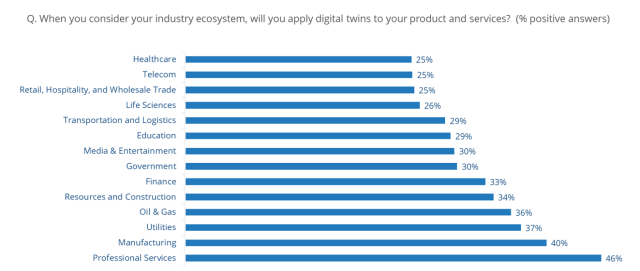
Our research shows how, quite consistently, organizations across different sectors are harnessing digital twins to innovate products and services within their ecosystems.

Healthcare Innovation through Digital Twins

In healthcare, optimizing care and clinical outcomes requires a deep understanding of the broader ecosystem in which patients live and how they access services, adhere to prevention initiatives and treatment plans, and what resources they need. To innovate care services, healthcare organizations need to collaborate with various stakeholders across multiple processes.

The European Commission’s VHT Initiative promotes digital twin technology in healthcare through research and deployment activity. This includes funding for computational models, infrastructures, and projects like the European Virtual Human Twin (EDITH), which among its objectives aims to create a federated cloud-based repository for cataloging resources and designing a simulation platform that provides users with a one-stop shop to design, develop, test, and validate digital twins for healthcare.

Transforming Supply Chains: The Case of Catena-X

New use cases are emerging, particularly in complex areas like supply chains. Digital twins can, for example, be used in vehicles and their components to map the entire value chain from creation to disposal and to improve parts traceability.

Catena-X, an open data ecosystem for the automotive industry, has been designed to ensure secure data exchange and data sovereignty among all stakeholders in a supply chain.

Based on the Catena-X framework, digital twins of vehicle components (e.g., battery modules/packs) can be utilized to facilitate the digital flow of information from battery manufacturers to vehicle OEMs and back.

The important thing here is that when data is exchanged between two parties, access is managed in a way that only reference information is shared. Part-specific data remains with the manufacturer.

IDC’s Cross-Industry Digital Twin Framework

As adoption rates rise and new use cases emerge, organizations must navigate the rapidly evolving landscape with strategic clarity. IDC offers a comprehensive framework to support industry-specific digital twin strategies.

The framework provides guidance on defining entities, systems, and processes eligible for digital twinning. We analyze market drivers, challenges, and benefits, and identify and analyze key industry use cases and examples of best practices.

Through tailored industry reports, IDC delves deep into digital twins across sectors like financial services, healthcare, and transportation (to mention just a few), providing insights and recommendations for transformative impact. For end users, the framework offers ready-to-use templates to assist strategy definition and market analysis. Tech providers can gain industry-specific insights to tailor offerings and drive adoption.


As the digital twin revolution unfolds, organizations must seize the opportunity to unlock the full potential of twins. Industry stakeholders must confidently navigate the complexities of digital twins to foster innovation, collaboration, and resilience within their organizations and across industry ecosystems.

Whether you’re just starting or are refining your approach, IDC Insights teams are eager to discuss your experiences and plans regarding digital twins across industries.

Silvia Piai - Research Director, IDC Health Insights - IDC

Silvia leads the team of analysts covering the European healthcare market and the Worldwide Medical Devices Industry. Her research provides strategic advice to end users and vendors in healthcare and life sciences, assisting organizations in understanding how technologies are disrupting and transforming traditional business models. Silvia Piai's research offers a comprehensive perspective on the foundational elements shaping the health industry's evolution. Her analysis delves into the implication of key industry trends like evidence-based medicine, personalization and integration of care services and the transformation of health industry ecosystems. Through these overarching themes, Silvia Piai offers in-depth analysis of ongoing innovations and best practices in pivotal technological domains such as AI, IoT, Cloud and industry-specific solutions.