The deployment of 5G networks has reached a crucial point: We now have spectrum assigned, rollouts are nearly complete, devices are 5G compatible, and 5G Standalone (SA) is gaining ground.

Uncertainty remains, however, regarding monetization. The telecommunications sector is still searching for innovative use cases that can justify the massive investment. Finding that definitive “killer” use case has not been easy.

We need to understand, however, that 5G isn’t about a single blockbuster application. Instead, it’s about enabling multiple opportunities in a dynamic ecosystem where technologies like OpenAPIs will play a key role in success.

Show Me the Use Case — Where’s the Killer App?

Historically, each new generation of networks has been driven by a killer app that fueled its adoption. 2G was driven by voice, while 3G and 4G saw data and mobile browsing become the catalysts.

But with 5G, the industry is learning there won’t be a single, all-encompassing app to justify the investment. Such a mindset no longer applies.

With 5G, we aren’t looking for an application that will endure for decades. Instead, we need a network that enables a flexible range of services that can evolve over time.

The Real 5G Use Case: Flexibility and OpenAPIs

The true value of 5G lies in its flexibility. What’s pivotal isn’t a killer app but an infrastructure that can capitalize on a continuous flow of opportunities.

This is where innovation driven by network OpenAPIs comes into play. These open interfaces allow operators to provide a technological foundation on which third parties can build and monetize their services, creating a far more dynamic and diversified ecosystem.

Recently, Ericsson, in collaboration with 12 leading global operators, launched a joint initiative to enable the commercialization of network OpenAPIs, further solidifying their role in shaping a dynamic 5G ecosystem. This collaboration aims to redefine the industry by creating open interfaces that allow third parties to develop, deploy, and monetize their services on 5G infrastructure.

By fostering interoperability and innovation, this initiative positions OpenAPIs as a critical enabler for unlocking the full potential of 5G, allowing businesses across industries to tailor solutions that maximize their 5G investments.

Network OpenAPIs enable businesses to develop specialized, customizable solutions tailored to specific needs across industries such as manufacturing, healthcare, smart ports, and logistics. The key is that this ecosystem of services can be monetized collectively, allowing 5G networks to capture value from multiple sources simultaneously.

5G: A Technology for the Enterprise World

5G is primarily designed for the enterprise world, in which each company has unique requirements and seeks differentiation in the market. This creates the scenario in which a single use case may not justify the investment.

Companies must therefore leverage 5G and OpenAPIs to deploy tailored solutions that meet their specific needs. A hospital, for example, will have entirely different latency and reliability requirements than a factory or a smart port.

It’s 5G’s ability to meet these demands that brings real value. The possibility of real innovation lies in the ability of 5G networks to adapt to the specific challenges of each business sector and to do so in a scalable, flexible manner.

This agility is central to monetization, as it allows for the creation of custom solutions in an ecosystem that’s constantly evolving.

Enabling Technology: The Challenge and the Opportunity

We need to keep in mind that 5G is an enabling technology. This sets it apart from previous network generations. Instead of being the direct star, its success depends on services and solutions that can take advantage of its capabilities.

Here, OpenAPIs play a fundamental role: They allow businesses to integrate with the network and create their own applications using the operator’s infrastructure as a platform. The success of enabling technologies will be directly proportional to how easy they are to implement and how well they connect with customer needs.

5G monetization will not rely on finding a killer app but rather on enabling an ecosystem in which multiple services can thrive simultaneously. Collaboration between operators and developers is critical to unlocking the value of 5G.

OpenAPIs enable precisely this. They open access to the infrastructure, allowing each industry to design and deploy its own solutions.

The Key to Monetization: A Shift in Mindset

Successfully monetizing 5G requires a shift in mindset on how networks are operated and monetized. It’s no longer about searching for a central application to justify the investment, but about creating a flexible architecture, supported by OpenAPIs, that enables companies to innovate and fully leverage 5G’s capabilities.

This change is already happening. Complementary technologies such as GenAI and edge computing are accelerating the transformation.

As organizations adapt to this mindset, they will identify and capitalize on real-time opportunities. At that point, the flexibility and service ecosystem enabled by OpenAPIs will unlock the true monetization potential of 5G.


For more info on addressing growth in the telco space, please register for the following webcast: Addressing the telco growth imperative in EMEA

Alejandro Cadenas - Associate Vice President - IDC

Alejandro Cadenas leads the European Telco Mobility unit, comprising the CISs European 5G Monetization and Adoption Strategies, European Consumer Telecoms Strategies, and European Internet of Things Ecosystem and Trends. The focus of these three programs is to address the Monetization strategies, best practises, challenges and recommendations for all players across the telecom sector. The key areas addressed include, but are not limited to, OpenAPis monetization, 5G monetization in the Enterprise (Mobile Private Networks, Slicing) and Consumer (digital products categories) segments, Partnerships, Commercial stratregies, key customers and pain points, LEO satellite connectivity, Mission Critical systems, as well as all strategies to take these to the market.

Regulations Are Reshaping the Way Companies Transact with Each Other

In the first blog of our e-invoicing series, we explored the pivotal role of e-invoicing in pioneering the transformation of business-to-business (B2B) transactions. This foundational piece highlighted how e-invoicing is reshaping the landscape of business interactions by streamlining processes, enhancing accuracy, and driving efficiency. In the current post, we delve deeper into the regulatory frameworks influencing these digital transformations, examining the opportunities and challenges that arise as businesses adapt to evolving compliance requirements.

The Emergence of a New Transaction Ecosystem

After decades of paper-based dominance, business-to-business transactions are digitalizing and digitally transforming. e-Invoices and digital networks are streamlining accounts payable and receivable processes, enhancing efficiency and accuracy. Transactions are also becoming enriched with data, especially to display sustainability-related information.

Prompted by new regulation, digital-first thinking, and good corporate governance, businesses are changing how they collaborate and transact. This presents an opportunity for vendors to develop innovative solutions that meet the needs of today’s B2B landscape.

Regulators face the constant challenge of implementing measures that ensure market integrity, consumer protection, and alignment with public interests, while simultaneously fostering innovation and economic growth.

Regulations and the Burden of Responsibility

Reducing costs and improving efficiency are constant concerns for businesses. Companies explore every avenue to achieve these goals, from leveraging technology to optimizing workflows.

However, businesses must also contend with numerous external factors that can influence their operational effectiveness. Regulations are one of these external factors. Enterprises and their leadership are entrusted with the responsibility of ensuring compliance, which requires investments in personnel, technology, and training — oftentimes, all three.

Personnel

To stay compliant with evolving laws and regulations, companies must proactively recruit, train, and retain specialized personnel. These experts ensure adherence to current legal frameworks and monitor upcoming changes, like the introduction of new regulations or amendments to existing ones.

For example, the General Data Protection Regulation (GDPR) mandates that companies handling large volumes of personal data appoint a Data Protection Officer (DPO).  Highly regulated industries like banking and healthcare often require multiple layers of compliance personnel throughout their organizations, in addition to industry-specific regulations and overarching ones.

As digital businesses increasingly rely on complex technologies, leadership must ensure their workforce possesses the necessary skills to navigate both current and future regulatory landscapes. This involves establishing management structures that can anticipate staffing needs and strategically invest in technology and training to maintain compliance. Public and private companies have distinct compliance needs and requirements. While technology can assist in meeting these needs, it cannot replace dedicated teams responsible for ensuring operational compliance. That is why technology and training is so important.

Technology

Technology and regulations are intertwined, existing in a state of interdependency with stronger linkages than often recognized. Regulators face the constant challenge of fostering innovation and economic growth, simultaneously safeguarding consumers and the public interest. This requires ongoing assessment of the benefits and drawbacks that new technologies bring to society.

In the European Union (EU), policymakers understand the importance of this dynamic and actively foster dialogue and collaboration between regulators, industry leaders, enterprises, technology experts, and vendors. To facilitate change management within organizations when it comes to regulation and technology, the EU provides support and self-service tools.

This collaborative approach is crucial, because while regulatory changes drive transformations in business-to-business transactions, technology provides the tools and solutions for effective compliance.

By understanding and proactively adapting to this interplay, businesses can leverage technological advancements to navigate the evolving landscape of B2B transactions and gain a competitive advantage. Vendors will play their part by supporting their clients in ensuring that they bring the right systems online at the right time.

Training

Sustainable compliance requires more than just training; it demands a culture of open communication and employee empowerment. Management must proactively inform employees about evolving regulations and the rationale behind them, providing the necessary resources and support to adapt without disrupting workflows.

Ensuring that the training covers both the law and technologies that are either being regulated or used to ensure regulation is key. This transparent approach fosters trust, reduces resistance to change, and enables employees to confidently contribute to a compliant organization.

Regulators must ensure a level playing field for businesses of all sizes, as multinational corporations have greater resources to invest in compliance compared to smaller enterprises. While not always perfect, European regulators have been leaders in promoting inclusive dialogue and collaboration among stakeholders to address these challenges.

Regulation as an Innovation Driver in B2B

At first glance, new invoice-related regulatory changes may easily be perceived as an added burden, however, within these changes there exists a significant area of opportunity if organizations successfully broaden the scope to include finance process improvements.

e-Invoicing could serve organizations as a catalyst for organizations to spearhead the introduction of more efficient practices for finance departments, facilitated through process automation.

Additional protocols in B2B document exchanges, particularly invoices, increase data accuracy while reducing manual intervention, which then enhances operational efficiency.

Fraud prevention

e-Invoicing unlocks new potential for tax authorities to combat value added tax (VAT)- related fraud, addressing the blind spots for VAT evasion and avoidance. The starting point for EU tax authorities begins with invoking greater controls in monitoring the integrity of VAT data being reported by organizations. For this tax enforcement modernization effort to serve its true purpose, several European tax authorities are establishing their own document exchange screening and approval processes, commonly referred to as continuous transaction control (CTC).

This is an important step in the future of the transaction that veers towards creating transparency and mitigating fraud at the point of the transaction. This involves new technical elements requiring organizations to submit invoices to designated regulatory platforms for approval prior to delivery to the end recipients.

Audit readiness

An advantage for both organizations and tax administrations that arises through e-invoicing is advanced audit readiness.  European governments are tasked with, among other things, implementing two of the common transaction control models: the post-audit and clearance models.

Each having their own benefits, tax authorities will have more control in performing audits at will. Previously performed solely after the event, tax authorities that have adopted clearance models are able to carry out audits in real-time and/or upon request for each transaction. This removes the need to request and wait for information from taxpayers. Some European tax authorities are using this as an opportunity to explore new ways of incentivizing organizations.

For example, the Italian government initially introduced e-invoicing for B2G transactions in 2014; now it has gone on to introduce remote audit checks that will lower government interference with tax remittances for B2B exchanges.

Organizations looking to deploy e-invoicing will need to overcome significant hurdles such as breaking down data silos, improving data quality and consistency, and, in some instances managing high volumes of complex data, to avoid non-compliance penalties

Conclusion

As the landscape of B2B transactions evolves under the influence of new regulations, businesses must embrace the opportunities presented by e-invoicing and digital transformation.

This transition not only meets compliance needs, but also drives efficiency and innovation within organizations. Businesses must actively leverage the interconnectedness of technology, personnel training, and regulations to shape the future of transactions and drive growth.


Ready to elevate your solutions and empower your teams? Contact us for a deeper dive on how IDC can help.

Building strong detection and response capabilities is vital for organizations seeking to improve their cybersecurity posture and business resilience.

Many organizations do not have the in-house skills or resources to make the required improvements in detection and response. For example, just 15% of large organizations in Europe have sufficient security operations center (SOC) analyst skills in house, and churn and burnout among these analysts are often high. These challenges can have a strong negative impact on a company’s cybersecurity posture.

Consequently, many organizations are turning to service providers to fill specific gaps in their detection and response capabilities or are outsourcing their requirements in full.

The high level of interest in managed detection and response (MDR) has led to many service providers entering the market, which has now become highly competitive, providing customers with a greater range of services. This is not always the case for IT services markets, some of which are dominated by a handful of players.

The choices for detection and response include telecom and network players, IT services companies, systems integrators, cybersecurity specialists, professional services companies, and vendors with services offerings. Each has something different to offer enterprises.

Many of the service providers in this market have a global presence, others have a more regional focus. Service providers have different types and levels of skills and knowledge, and so there are differences in the ways they can support the unique needs of European organizations.

Europe is a complex patchwork of numerous factors, including cultural, language, economic, and regulatory  factors (among others)meaning that in-region (and sometimes in-country) capabilities are vital to meet customers’ objectives.

The IDC MarketScape: European Managed Detection and Response Services 2024 Vendor Assessment examines the strengths and weaknesses of leading providers of European MDR services. We have identified eight leaders and nine major players in this market, providing a detailed analysis of the services offered by each; this is aimed at providing European organizations with clear guidance to assist them in their purchasing decisions.

There are marked differences between providers in terms of target customers, technical capabilities, and detailed expertise in addressing the needs of European organizations. Organizations should evaluate all these aspects carefully to ensure they choose a service provider that delivers on their business and technology objectives. This will include making optimal decisions that relate to technical capabilities, services and skillsets, target markets, and strategic roadmaps.

One critical area to consider is onboarding and time-to-value. Customers should ensure they are clear on delivery capabilities and the desired operating model. They should be fully informed by their provider in advance how they will be onboarded and the timing of key steps.

As the threat landscape is becoming ever more complex, with a growing ecosystem of actors, the need for proactive detection and response capabilities is becoming essential for all organizations across the region. According to IDC’s EMEA Security Services Survey, MDR is now a priority for 65% of organizations, with the market in Europe forecast to record a compound annual growth rate of 29.2% from 2022 to 2027.

The way businesses transact with one another is transforming. This presents an opportunity for vendors to develop innovative solutions that meet the needs of the modern B2B landscape.

The Emergence of a New Transaction Ecosystem

After decades of paper-based dominance, business-to-business (B2B) transactions are digitalizing and digitally transforming. e-Invoices and digital networks are streamlining accounts payable and receivable processes, enhancing efficiency and accuracy. Transactions are becoming enriched with data, especially to display sustainability-related information.

Spurred by new regulation, digital-first thinking, and good corporate governance, these developments are changing how businesses collaborate and transact with one another. Vendors have the opportunity to seize the moment and develop innovative solutions that meet the needs and requirements of today’s B2B landscape.

Transformation Drivers

What’s driving the transformation of business transactions? What is the future of the transaction?

Some 70% of businesses regard e-invoicing as an opportunity that goes beyond compliance and can unlock benefits like greater efficiency and faster payments.

According to IDC, regulations, digitalization, and sustainability are the three primary drivers of B2B transformation.

  • Regulation: The introduction of e-invoicing regulations is accelerating the shift toward digital processes in B2B interactions. European and global businesses will need to adopt new technologies and workflows to ensure compliance with current and future regulations. The EU is already mandating the use of e-invoicing in business-to-government (B2G) transactions through Directive 2014/55/EU. The directive aims to streamline public procurement processes, reduce administrative loads, and improve transparency. Countries like Italy and Hungary already require e-invoicing for B2B transactions. Other member states like Germany are steadily advancing their frameworks for eventual legislation. 
  • Digitalization: Digitalization is the process of converting analogue data into digital formats. Automation and AI tools are helping organizations digitalize and transform the way they handle external transactions, increasing the accuracy, speed, and real-time visibility of transactions.
  • Sustainability: The environmental impact of delivering products and services accumulates along the value chain. For most European organizations, much of the environmental impact of their products occurs upstream in their supply chains. European organizations are now beginning to record ESG (environmental, social, and governance) data associated with their purchases. Invoices will start to feature financial and ESG data, with ESG metrics specific to individual products.


“New transaction ecosystems will make B2B transactions faster, more secure, and efficient while enhancing transparency and compliance.”

Tom Seal, Senior Research Manager, IDC


IDC’s Recommendations

The digital transformation journey, while indeed complex, unlocks a future of frictionless information sharing between businesses. The transition to business networks presents a prime opportunity for vendors.

The Future of B2B Transactions is Digital

  • Organizations that share an increasing amount of data with their customers will require a new array of data from vendors to track sustainability performance.
  • Much of the new data that will be shared among organizations will follow the existing transaction pathway. However, this pathway must be updated to meet new demands.

Transactions Will be Data-Rich

  • e-Invoicing and other pressures will compel organizations to move beyond “paper thinking” during the 2020s.
  • A new transaction ecosystem will evolve, enabling organizations to build a transaction workflow that meets the needs of their industries, operations, and legislative requirements.

Network-Enabled

  • Future transactions will rarely be point to point. Rather, they will typically occur over a platform or network.
  • The future will be a network of networks, rather than an array of competing networks.

What It Means for Vendors

  1. Beyond complying with legislation, application vendors must develop strategies that help them thrive within the new transaction ecosystem.
  2. Application vendors have an opportunity to win the race to be the conduit for new data flows, capitalizing on the growth opportunities they represent.
  3. Every application vendor must think about their networks or network connectivity. Network access will be critical but equally commoditized. 

Conclusion

The new transaction ecosystem offers significant benefits, and organizations will increasingly rely on vendors to provide the necessary expertise and solutions to unlock these advantages. For tech vendors, the future of e-invoicing and B2B transactions is not just about compliance — it’s about leading digital transformation and setting new standards of efficiency and sustainability in the industry.

Watch out for Part 2 of our Blog Series on e-Invoicing in the coming weeks.


Ready to elevate your solutions and empower your teams? Contact us for a deeper dive on how IDC can help.

For IT vendors, understanding vertical markets’ dynamics and the associated risks and opportunities relating to their clients’ industries is fundamental for success. But in an economy shaken by wars, volatile political landscapes, and inflation, it may be challenging to pin the pockets of growth.

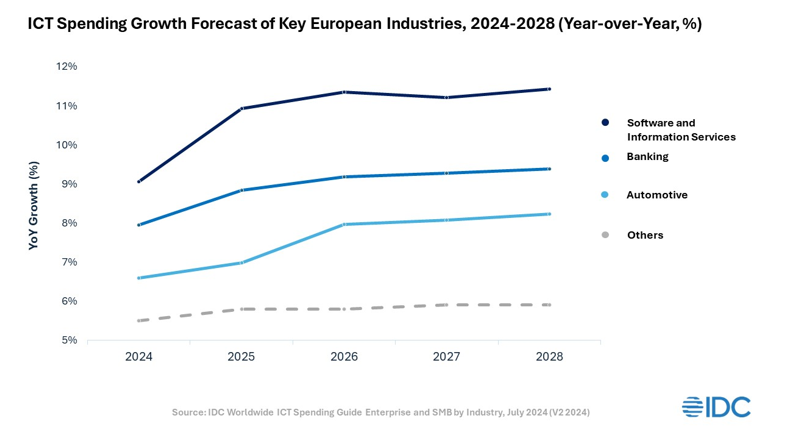
This blog explores recent developments and ICT spending trends of three key European industries — automotive, software and information services, and banking — to help IT vendors identify key areas where their products and services are essential for customers to achieve their strategic goals.

These three industries play a key role in shaping the European economy but are equally important in terms of their ICT spending. The automotive industry is the backbone of the European economy, representing over 7% of the European Union’s GDP. Software and information services, which includes cloud services providers, will continue to be a crucial industry in the years to come as it utilizes the most innovative and disruptive technologies. Banking, the industry with the largest ICT spending in Europe, continues to transform to meet the needs of an ever-changing and digital-savvy customer base.  

ICT Spending Retains Robust Growth amid Ailing Economy

Europe’s economy has been weakened by the developments of the last couple of years, and while many indicators are improving, industrial activity is lagging, investments are being reevaluated, and exports have declined, reflecting asluggish foreign demand. On top of this, the conflicts in the Middle East and in Ukraine, the upcoming U.S. presidential election, and the fear of a global recession are fueling business uncertainty.

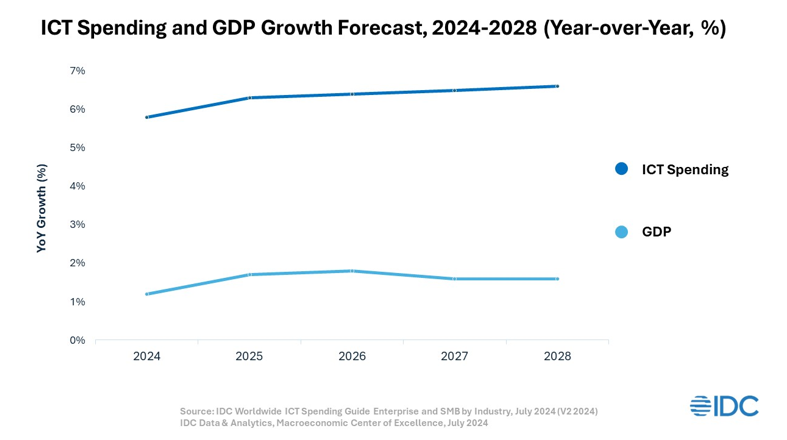
Yet, despite the ailing economy, the European ICT market is expected to reach $1.16 trillion this year, reflecting 5.8% growth compared with 2023, according to IDC’s Worldwide ICT Spending Guide: Enterprise and SMB by Industry. In contrast, the European GDP is expected to grow by 1.2% year on year in 2024.

ICT spending has historically been more resilient to disruptions than Europe’s overall economic performance. This is because organizational strategic priorities, such as efficiency, profitability, and sustainability, require companies to expand their digital capabilities, which cannot be done without investments in new technologies.

As a result, budgets allocated for some technologies, such as software, remain intact even during times of headwinds. Pharmaceutical companies focused on vaccine innovation have ramped up their investments in AI to accelerate drug development processes. Retailers are enhancing ecommerce platforms and in-store experiences as they respond to shoppers’ new behaviors. Central governments are stepping up physical and digital security, to avoid cyberattacks that could compromise the security of citizens’ data.

While IDC forecasts positive ICT spending growth for all European industries, the nature of the impacts and the level of resiliency will vary among them. In the following sections, we will dive into some of the technology spending trends of the key verticals in more detail.

Automotive: Legacy Carmakers Challenged by Lack of Software Capabilities

Automotive is among the European industries that were most impacted by recent headwinds. The Russia-Ukraine war and the Red Sea attacks have been causing supply chain disruptions, skyrocketing energy and material prices made production more expensive, and high inflation and the deterioration of consumer purchasing power slashed demand for both new and used cars. In addition, legacy automakers are dealing with slower-than-expected adoption of electric vehicles (EVs), fueling concerns about the return on their investments in EV development and production. At the same time, more advanced and cheaper products coming from Chinese manufacturers are challenging competitiveness of the European auto industry.

While the business conditions are far from favorable, automakers are still required to comply with the European Union’s sustainability and environmental regulations, which will result in large-scale investments along the entire value chain, leading to a profound transformation of the industry. Enterprise resource management (ERM), supply chain management (SCM), and engineering applications continue to be at the forefront of technology investments, as carmakers are working to reduce the cost, time, and complexity of production while developing safer, more intelligent, and more connected cars.

In parallel, organizations are seeking partners to reduce development costs and tackle the lack of expertise. Several recent announcements indicate that European legacy automakers are turning to technology companies or industry startups that have more experience with automotive software. For example, Volkswagen and Rivian intend to enter a joint venture to create next-generation software-defined vehicles (SDVs) with best-in-class software technology. BMW Group also announced collaboration with Tata Technologies, which will allow the Bavarian manufacturer to leverage its Indian partner’s talent pool and expertise in coding. BMW aims to strengthen its digital capabilities and improve its product portfolio with more advanced automotive software, including automated driving, infotainment, and digital services, which are gaining importance among customers.

Today’s vehicles are software-defined vehicles, often referred to as ‘computers on wheels’, and customers increasingly expect advanced driving assistance systems, in-car virtual assistants, broadband connectivity, over-the-air (OTA) software updates, and other digital functions. However, legacy automakers lack software development expertise and encounter software-related issues more frequently, resulting in postponed product launches. To avoid this, the industry needs to scale up its software capabilities, which will lead to growing investments and new partnerships.

Software and Information Services: Generative AI (GenAI) Remains in Focus to Deliver Increased Value to Clients

The software and information services industry, which includes software vendors, has a long history of bringing disruptive technologies to the market, as well as implementing innovative approaches within their internal processes. This will be the fastest-growing industry by 2028, posting a 10% five-year compound annual growth rate (CAGR). However, the recent crash of tech stocks not only indicates a growing concern about the future of the U.S. economy, but also a shaken confidence in AI projects, as their monetization is taking longer than expected. While some call this crash the long-awaited correction of the overpriced tech stocks, it is unlikely to stand in the way of the ongoing AI hype and technology investments aimed at innovation and bolstering the competitiveness of technology service providers.

GenAI remains the key driver of growth as technology giants aim to accelerate and simplify tasks while delivering extended customer experiences. Tech companies will continue to commit significant resources to refining GenAI deployment, and this will accelerate spending in AI solutions across all verticals. The list of GenAI use cases is extensive, but European businesses are largely using GenAI to generate sales and marketing content, optimize predictive asset operations, support planning and design, and streamline claim-handling processes.

Banking: Cloud Paves a Safe Way Forward

The IDC Worldwide ICT Spending Guide Enterprise and SMB by Industry forecasts that ICT spending in the banking sector will reach almost $120 billion in 2024, higher than in any other industry. In recent years, banks have rushed forward with their digitalizing efforts, prioritizing the optimization of existing systems to save costs and generate more value for clients. This paid off, with many European banks reporting strong H1 2024 and Q2 2024 results, while also catalyzing a surge in cloud spending and datacenter investments across Europe.  

One of the most prominent recent examples of cloud investments is Denmark’s Danske Bank, which signed a multi-year agreement with AWS in March. By applying AWS’ technology in the cloud environment, the bank expects to optimize and modernize its applications. UniCredit Group, based in Milan, Italy, announced the acquisition of Vodeno and Aion Bank, with the aim of using cloud platforms to strengthen its competitive advantage in the banking as a service (BaaS) space. According to IDC’s Worldwide Software and Public Cloud Services Spending Guide, the industry’s public cloud spending will record a CAGR exceeding 23% by 2028.

Banking has been implementing AI solutions to support strategic goals, including increased productivity, improved customer experience, enhanced security, and optimized pricing. AI-enabled customer service and self-service is among the top five AI use cases in the banking industry. Banks are also implementing advanced virtual assistants to revolutionize customer engagement and self-service banking. For instance, Romania’s Alpha Bank is now using Druid AI’s conversational AI technology that allows customers to perform various banking operations autonomously.

Conclusion

Rapidly evolving vertical markets and the overall European economy present both opportunities and challenges. More than ever, IT vendors must now fine-tune their go-to-market strategy by aligning to the customers’ vertical-specific needs and priorities. This requires understanding the dynamics, risks, and opportunities of each sector.

Essential Guidance for IT Vendors:

  • Adapt rapidly to new dynamics. In an economy dominated by market volatility, IT vendors must remain agile and responsive to market shifts. Understanding how geopolitical developments, economic uncertainty, and inflationary pressures affect industries will help vendors align their offering to their customers’ needs.
  • Leverage the power of emerging technologies. IT vendors should continue to drive innovation, investing in solutions such as GenAI to disrupt the market. New tools will allow businesses to unlock new use cases and keep pace with evolving business needs.
  • Align your vertical market strategy to customer needs. By focusing on vertical market dynamics and aligning product offerings to meet specific industry needs, IT vendors can position themselves as key partners, driving digital transformation and helping customers achieve their strategic goals even in challenging economic climates.

For a more detailed view of ICT and cloud spending forecasts by industry and company size segments, check out IDC’s Worldwide ICT Spending Guide: Enterprise and SMB by Industry, or Worldwide Software and Public Cloud Services Spending Guide.

Most of the hype related to GenAI in the industrial environment centers around applications and use cases. I call this output-driven.

Users and internal sponsors find it easy to understand this approach because they can see the benefits and ROI of the solutions. There is a tool, clear CAPEX and OPEX, and an obvious result.

The approach is transparent and straightforward: Do you need an industrial co-pilot? You got it. Do you need a knowledge management tool? Here it is.

And it does not require a redesign of processes. You can simply create a new process or add the AI-powered app to a current process (e.g., as a recommender for a service desk operator).

But what about improving the entire process using GenAI, ML, and automation? In such a case, the journey itself can be regarded as the goal.

This, of course, requires process redesign — and your organization has likely undergone such an exercise several times over the last 10 years.

However, this time around, there is a technological leap provided by GenAI, which enriches a powerful tandem of AI and automation.

Take, for example, the production planning process in an engineer-to-order environment. Workflows include complicated order management, production planning, material management, logistics, and information flowing across stakeholders from different departments as well as sales and even customers. Software handles the situation by passing information smoothly among participants and by leveraging the data warehouse and real-time data from OT systems.

Using lean approaches and digital technology convergence, such transitions have delivered successful initial results including first-time-right outcomes, absolute transparency, and customer satisfaction.

Nevertheless, the software was, typically, heavily customized to fit the company’s needs, process owners, and other software.

The next step involves redesigning processes to apply robotic process automation (RPA) and enable the automation of repetitive and rule-based tasks to make them more efficient and fault-proof.

AI can now come into play.

Important: Do not consider a process optimized and efficient until it is super-optimized and super-efficient. All the people involved in the process, the data inputs and outputs, and the value obtained by the process’s customers, must be considered.

If process stakeholders need decision-making support, consider deploying AI chatbots and GenAI assistants to enable quick access to information and data analysis.

Collaboration is the new holy grail of time to value. Think about deploying AI-based collaboration tools to enhance communication and coordination among different departments involved in the process.

AI can optimize the allocation of resources (materials, labor, machines) in the planning process to maximize efficiency and minimize costs. Planners can benefit from AI-powered simulations of various “what-if” scenarios to understand the impact of different variables on production and customer delivery dates.

The entire process can be virtualized in a digital twin or an industrial metaverse. These will simulate different production scenarios to help find the best strategies without disrupting actual operations.

In addition, a trend to monitor closely is the emerging LLM agent technology, which serves as the “glue” between various process components. Dr. Michael May, Head of Technology Field Data Analytics & AI at Siemens Technology, advises that selecting appropriate use cases is crucial. This is due to the early stage of the agent approach (or any method integrating LLMs across a workflow), making it challenging to trace errors within a complex chain.

The Bottom Line

I believe organizations are too focused on single use cases and are missing the broader goal of becoming more efficient and resilient. They need to build AI-enabled processes that are still people-centric at some point and resilient.

Sparse data, data quality, trust issues, and transferring best practices across factories are some of the key challenges that must be faced. The good news is that there are solutions.

Sparse data can be addressed using synthetic data and reinforcement learning. Another crucial point is making AI accessible to non-experts. This can be achieved by using pre-trained models.

Ultimately, success requires close collaboration between process owners, hands-on users providing feedback, process optimization teams (focused on lean, efficient processes), technology experts (sharing their knowledge), and systems integrators (bringing the process to life).

The day is approaching when AI will design processes, automate tasks, and train both ML models and people. We’re not there yet, but it’s on the horizon!

If you’re a cloud provider that can offer high-caliber solutions for security and compliance, then cloud users in Europe need you. This is the most important factor organizations on the continent consider when selecting a cloud platform for migrating and modernizing applications, according to our research (IDC’s EMEA Cloud Survey 2023, August 2023, n = 1,610).

This is also borne out in IDC’s MarketScape: European Public Cloud IaaS 2024 Vendor Assessment report that has just been published. Following extensive research, this new study rates Europe’s top infrastructure-as-a-service (IaaS) providers, and those positioned in the uppers ranks were the ones that gained the highest points for a variety of criteria, including security.

What our report highlights is that when compared to other markets, Europe has very different requirements when it comes to choosing and using cloud solutions, with security and compliance emerging as the most coveted attributes that organizations seek when it comes to their cloud migrations.

When evaluating each IaaS provider as part of our MarketScape, the criteria that were given the greatest weight included their strategies and capabilities in security and compliance, as well as digital sovereignty. These are all interlinked, with the latter being the European cloud market’s most distinguishing characteristic.

Indeed, our research reveals reduced risks related to data security and regulations/digital sovereignty is one of the top business outcomes organizations in Europe expect from cloud use. Concerns over data privacy in Europe — especially in the EU — paved the way to the enactment of the General Data Protection Regulation (GDPR) in 2018, but as the continent’s regulatory and legislative landscape continues to develop and evolve, calls for greater data protection and robust cybersecurity have become louder. 

All of this is also allied to the EU’s efforts to address issues related to the market dominance of cloud players from outside the region and set more rigorous standards for online services with the goal of creating a more transparent and user-centric digital environment.

While we are seeing increased interest in digital sovereignty — which includes solutions for data sovereignty and sovereign cloud — in other parts of the world, Europe can be regarded as the frontline market here, and many cloud providers are finding they must include sovereign offerings in their portfolios to support customers in this region.

ESG is also high on the agenda for most cloud customers in Europe. While this is a concern for many organizations globally, when asked specifically about sustainability considerations, a combined 79% of the survey respondents in Europe (IDC’s EMEA Cloud Survey 2023) said they are either “moderately,” “very,” or “extremely” important when choosing a cloud solution.

As a result, an IaaS vendor’s ESG and sustainability plans and goals also played a significant role when determining their position in our MarketScape rankings. One observation that emerged here is that there is room for improvement for all providers when it comes to their ESG activities, especially in relation to transparency and their ability to prove the results of any initiatives.

What’s clear in all this is that not only do cloud providers need to cater to Europe’s specific needs, they also need to be able to support the needs of specific industry sectors. IaaS vendors were therefore also assessed on the availability of industry cloud services and the number of industries supported.

Despite cloud computing as we know it today having been around now for 18 years or so, many organizations in Europe are still at the beginning of their migration journeys. When asked to describe their current cloud maturity levels, only 10% of the organizations we polled in Europe (IDC’s EMEA Cloud Survey 2023) selected “optimized” as their response, meaning they have broadly implemented a substantial cloud team that is proactively managed and resourced well. Most users said they are “opportunistic” when it comes to cloud, meaning they are driven by business needs when requested by internal stakeholders, and that their employees have no significant training or certifications.

Of course, these maturity levels vary according to industry sector. For instance, those in the life sciences and telecommunications, media, and entertainment sectors chose “ad hoc” as their top response (i.e., their cloud usage is focused primarily on pilot projects and validation activities driven by the needs of individual projects), while those in the education sector selected “managed” (i.e., cloud is offered across the business and supported by proactive business leadership).

To add to all this, organizations will also be encountering challenges unique to their industry’s needs. These may include regulatory requirements, cost concerns, limited budgets, and/or a lack of skills and know-how around implementing cloud specific to their business activities.

To add to all this, organizations will also have challenges unique to their industry’s needs. Such challenges may include a lack of skills and know-how around implementing cloud specific to their business activities, regulatory requirements, cost concerns, and limited budgets, etc. 

The cloud providers that will ultimately succeed in Europe will therefore be the ones who not only score the highest in all the capabilities highlighted above but can also demonstrate the expertise needed to support the disparate needs of these industry users, as well as the disparate needs of Europe and each market within it. One size will not fit all.

To find out more, check out our latest report here: IDC MarketScape: European Public Cloud IaaS 2024 Vendor Assessment

Rahiel Nasir - Research Director, European Cloud Practice, Lead Analyst, Digital Sovereignty - IDC

Rahiel Nasir is responsible for leading and contributing to IDC's European cloud and cloud data management research programs, as well as supporting associated consulting projects. In addition, he leads IDC's worldwide Digital Sovereignty research program. Nasir has been watching technology markets and writing about them throughout his professional life.

Customer buying behavior is changing. Sales cycles are lengthening, and budgets are tight. Now, more than ever, you need to quickly and effectively generate leads to meet your business goals.

Events are one of the shortest and most effective lead generation paths. Here are five reasons events partnerships should be part of your lead generation strategy.

  1. Events Raise Your Profile

Your brand is the single most important investment you can make in your business.

  • Steve Forbes, editor-in-chief, Forbes

When your target audience is looking to purchase tech tools, you need to ensure your business is front of mind. Customers now source their own information before approaching a company to make purchasing decisions. Ensuring your business is part of the conversation around the markets you serve is crucial to making an ICT buyers shortlist.

Events are a good way to introduce and/or position your business to new and existing clients. An event is an opportunity to engage with key decision makers and influencers and demonstrate your expertise in the context of the market. Being part of an industry event gives you a chance to shine as a thought leader and display your authority to your target audience.

  1. Thought Leadership Influences Buying

It’s not enough to just put out information on your products and services. Tech buyers have rising expectations about the quality of the information they receive. In IDC’s 2023 B2B Tech Survey, vendors ranked thought leadership as one of the top 3 buying influencers. Foundry’s 2023 Customer Engagement Survey found that 71% of IT decision makers may get a negative impression if a vendor does not supply valuable educational content.

Thought leadership is about demonstrating expertise in your market. You should educate prospective buyers not just on the benefits of your products and services but also about the market. This provides value to buyers and increases your authority in your markets.

Industry events enable you to be front and center with your target buyers. An event grants you space to demonstrate your thought leadership to an engaged audience. It allows you to follow up with audience members in person, giving them a chance to ask you questions.

Explore the key points to consider in the IDC eBook,

Empowering Lead Generation: The Quickest and Most Effective Path to Building a Strong Pipeline

  1. Get in Front of Key IT Decision Makers

IDC’s B2B Tech Buyer Survey revealed that B2B tech buyers expect to buy more through ecommerce and deal less with salespeople over the next three years.

With fewer face-to-face engagements occurring, you need to take advantage of any opportunity to get directly in front of decision makers and influencers. Such exposure allows you to personally engage key personnel on the benefits your business can provide during a digital journey. This omni-channel approach gives you a chance to differentiate yourself from your competitors and build relationships.

  1. Obtain Customer Insights

People attend events to network with peers and gain insights into the markets in which they operate. They want to understand the trends and drivers that are impacting them. They want to benchmark themselves against the market and competitors.

Directly engaging with decision makers at events offers you a window into their thinking and a view of the factors influencing their buying decisions. These insights and knowledge will help you further define the needs and goals of your target audience and help you position your business in alignment with their priorities.

  1. Measurable ROI

ROI is a key metric for all your marketing and engagement strategies. It is often said that B2B marketing does not push for the immediate sell but is aimed at positioning your business at the top of mind for when the buyer is ready to purchase. As such, ROI can be a tricky topic for marketers.

Getting budget for activities that do not directly link to ROI can be a struggle. Event partnerships give you the ability to demonstrate measurable return. They enable you to link events to opportunities obtained through networking and meetings with event attendees.

More Important Than Ever: Events Partnerships

To summarize: Events offer you space to demonstrate your thought leadership directly to key decision makers. They provide you opportunities to network, learn market information, and raise your brand awareness by talking directly to customers and prospects. Such contacts can give you insight into customer needs and goals, enabling you to better align your business. And events allow you to show ROI through opportunities gained through these activities.

Explore how IDC | Foundry events can help you get in front of key IT decision makers and build a strong, effective lead generation pipeline that converts. Download the 2025 events portfolio and contact us today.

Today’s business leaders have a new area of priority: environmental, social, and governance (ESG), which is a hot topic from boardroom to blog page. In the recent IDC Worldwide CEO Survey conducted in February 2024, 42% of European CEOs stated that meeting ESG goals is among their top 3 business priorities and requirements, with social sustainability representing a pivotal point.

Moreover, CEOs think that the changing ESG targets and regulations are among the top three external factors impacting organizations over the next 12 months.

However, we haave noted a sharper focus on the environmental and governance aspects than on the social side. Even when the social side is the subject of focus, the initiatives considered most often typically relate to gender diversity, belief respect, cultural integration, and similar areas.

One important aspect that has been and is still too often neglected is the accessibility of organizations’ digital workspaces and workplaces.

Addressing the vast aspect of digital accessibility is complex.

The Future of Work Must Be All-Inclusive

We define digital accessibility as digital technologies and services being accessible to everyone, including people with physical impairments, regardless of whether they are related to motor function, vision, hearing, speech or neurodivergence.

Until now, the breadth and complexity of digital accessibility has slowed down development in areas such as regulation, as well as an understanding of how to include in the workplace people with disabilities. Today there is a sharper focus on levelling the ground in the job market, vendors are specializing in transformation, certification, and training or taking the first steps in implementing them in their products. Some were even created with this purpose in mind — i.e., funded to assist with digital accessibility mandates and requirements.

Digital accessibility evaluates the accessibility of technologies, but technologies are also the key solution for organizations to address their digital accessibility implementation gaps. Advances in technologies, especially in generative AI, will be beneficial in further integrating digital accessibility into internal and external process, products, and services, supporting mandates on digital accessibility for consumers and the workforce – as the workforce is the organization’s internal technology “consumer”.

A plethora of hardware and software has been delivered to assist organizations in closing the digital accessibility gap, but there are even more technologies that have not been designed for this purpose, but which in everyday use will contribute to closing the digital accessibility gap.  The latter includes AI and generative AI, which were designed as general-purpose technologies, but which can support closing the dig accessibility gap across numerous use cases.

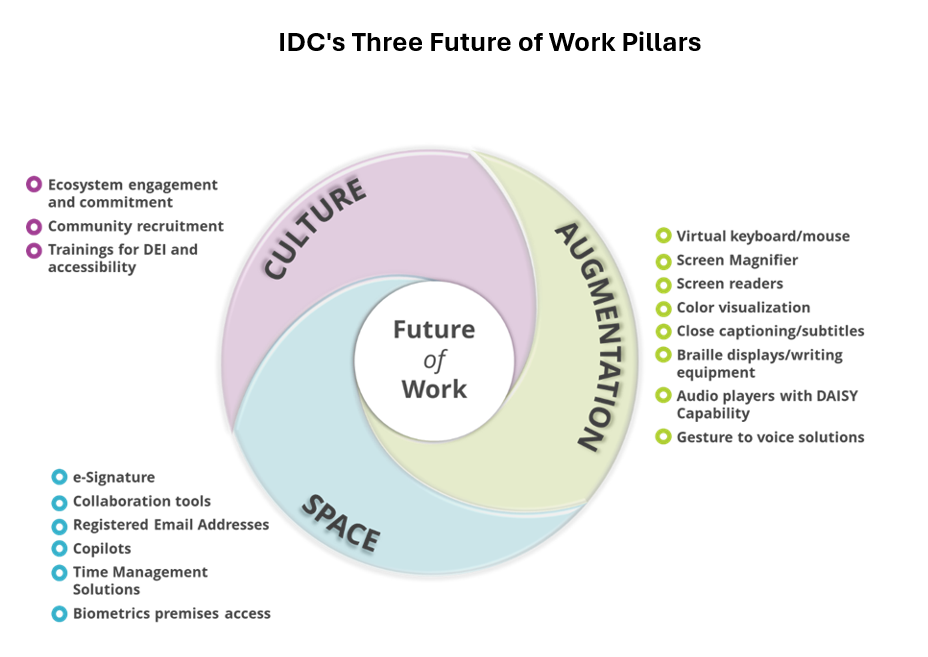
The figure below showcases technologies and initiatives that could be implemented for digital accessibility across IDC’s three main Future of Work pillars.

Within the augmentation pillar, technologies support people with different disabilities, with the clear objective of augmenting them. Gesture-to-voice solutions help people with phonological difficulties to integrate in the workplace and workspace, as the technology facilitates communication with people not versed in sign language.

Technologies in the space pillar have the objective of supporting people with impairments in accessing the organization’s resources and other daily activities and tasks. eSignature, for example, helps people with impaired physical dexterity or loss of touch (hypoesthesia) to sign documents digitally, removing the need for pens or physical documents.

Within the culture pillar, technology plays a side role, but numerous initiatives must be implemented by organizations to create a more digitally inclusive environment. For example, with trainings and firsthand experiences or community recruitment for testing and allies.

5 Recommendations to Improve Digital Accessibility

Guidance in this area is clearly needed, especially as the European Accessibility Act will be enforced across the entire European Union in 2025. Here is our short to-do list for initiating or improving your organization’s approach to digital accessibility:

  1. Assess and audit internal and external products, tools, and services for accessibility and remediate to ensure everyone is onboard and no one is left behind.
  2. Create a solid community to help the organization meet accessibility requirements through firsthand experience.
  3. Educate your internal and external communities on accessibility and DEI with general mandatory training for the entire workforce and tailored learning paths that are function- or role-specific.
  4. Keep up with changing technologies and regulatory requirements, ensuring full local and international compliance, and make certain that worker and customer experience meet generally accepted standards.
  5. Shift to an accessible-by-design mindset, ensuring that apps, platforms, and software developed for internal use — as well as products, services, customer experience — are accessible-by-design.

Digital accessibility is a goal we are approaching incrementally, but if you are interested and want more information, you can check out our report “Digital Accessibility in Europe in a Nutshell” or reach out to the IDC Future of Work team and stay tuned for future details.

Erica Spinoni - Senior Research Analyst, European Research - IDC

Erica Spinoni is a senior research analyst for the European Research Team. Based in Milan, Spinoni supports IDC’s European Digital Business Strategies and IDC’s European Future of Work practices. In her role she advises ICT players on European digital business and future of work market trends, supporting them in their planning, go-to-market and sales cycles with market research, custom projects, as well as honoraria.

On June 6th, 2024, we held an award dinner at a prestigious location in central Copenhagen and announced the CIO of the Year in Denmark.

The job of a Chief Information Officer (CIO) is often a challenging one. In some organizations, the job is mostly centered around helpdesk, running Microsoft Office packages, and being a steward of antiquated systems. Sarcastic observers even renamed the role as “Careers Is Over” to reflect the legacy aspect of the job. However, a CIO also has an expanded role as organizations transform digitally with a much wider potential influence and career upside. This was well illustrated when examining the five shortlisted CIOs.

In each of the organizations of the five shortlisted CIOs, we interviewed the CEO, the CFO, and the candidate CIO themself in separate, in-depth interviews and these interviews yielded multiple interesting lessons learned.

Lesson 1: The modern, high-impact CIO reports to the CEO and is part of the executive leadership team.

Gone are the days of IT being a cost center and reporting to the CFO. All five organizations were transforming traditional businesses into digital businesses and viewed the CIO as a key enabler of overall strategic change process. These modern CIOs facilitated change by setting up ‘digital boards’ to help prioritize digital initiatives across the entire business and to ensure buy-in from non-IT stakeholders.

We also saw many examples of the CIO enabling change through educational activities involving other executive leaders, to provide them with a better understanding of what technology can do for core business activities.

Lesson 2: The successful CIO often has a dual profile that balances technical IT foundation with business acumen.

The traditional CIO often had a technical background and aimed for traditional IT goals such as system availability and reliability, issue resolution time, total IT cost, etc. but were unable to effectively contribute to digitalization of business processes.

Newer, more business savvy, CIOs have since appeared with business backgrounds, but were often not able to properly understand and control major IT initiatives due to the lack of technical understanding. Many of today’s successful CIOs have a dual background with a strong technical foundation with a business overlay (e.g. shorter business degree) or vice versa.

Lesson 3: Successful CIOs balance pragmatism with boldness

The organizations we spoke to clearly aimed to purchase standard software where possible, cloud / Software-as-a-Service solutions where possible, and to adopt out-of-the-box processes where possible. We found no desire to reinvent the wheel. However, in many cases, the organizations took a bold approach where it made business sense.

They insourced systems and application development of differentiating nature, where many iterative changes were expected. Other critical areas, such as cyber security and data management, were also managed with strong in-house expertise.

Finally, new solution areas using emerging technologies, such as artificial intelligence and machine learning, were developed in-house and used actively to brand the organization as innovative.

Lesson 4: Instead of asking for money, new CIOs save their way to resources and credibility.

New CIOs are often met with high IT ambitions coupled with flat IT budgets at best – a difficult situation indeed. Instead of asking for new budgets, the new CIOs typically identified substantial IT savings and spent their first six to 12 months carving out savings, streamlining and consolidating contracts and employees. They then reinvested the resulting savings into new digital initiatives without having to ask the executive committee for an additional budget. In other words, they provided new services and capabilities within the existing IT budget and gained respect and reputation this way.

As more organizations use more and more technology the role of the CIO has expanded with it. CIOs have to combine both technical knowledge with business acumen to help drive their organization’s digital and IT ambitions.


IDC’s CIO of the Year 2024 Award, in Denmark

The five shortlisted organizations of the award represented diverse sectors, including insurance (TopDanmark), public sector (Danish Courts Agency), manufacturing (Finland-based consumer brand conglomerate Fiskars), membership organization (Danish Industry), and professional services (Ramboll).

Martin Wood, the CIO of Danish Courts Agency was awarded the title of CIO of the Year in Denmark. Martin heads up an IT function in a public sector agency and has managed to deliver a string of highly visible digital initiatives that are turning cumbersome legal processes digital, automated, and accessible. All projects were delivered via in-house resources (as opposed to the traditional public sector RFPs), within budget and within the allocated time. A worthy winner indeed.

If you want to know more about the CIO of the Year award, please visit the CIO event site (site in Danish).

We have an eBook which is designed to provide CIOs and digital business leaders with a comprehensive understanding of the critical shifts, strategic imperatives, and emerging opportunities that will shape the digital landscape over the next five years, download here.

Explore more of our coverage:

Bo Lykkegaard - Associate VP for Software Research Europe - IDC

Bo Lykkegaard is associate vice president for the enterprise-software-related expertise centers in Europe. His team focuses on the $172 billion European software market, specifically on business applications, customer experience, business analytics, and artificial intelligence. Specific research areas include market analysis, competitive analysis, end-user case studies and surveys, thought leadership, and custom market models.