We have just released our latest report, highlighting 10 critical predictions for CIOs worldwide. As we look toward 2025, the pivotal role of technology in driving business success in Europe has never been more apparent. 
In a new era of rapid technology-driven transformation, CIOs must be at the forefront, managing new cybersecurity threats while navigating the fundamental uniqueness of AI innovation and the complexities of evolving regulations.

The Unprecedented Imperative

As European organizations head into an uncertain future, they are facing unprecedented challenges and opportunities. The rapid evolution of AI technologies, coupled with increasingly stringent regulatory requirements and political uncertainty, is reshaping the landscape in which businesses operate. With data privacy laws expanding, particularly in Europe, and the growing demand for responsible AI, CIOs are being called upon to not only drive business advantage but also to ensure that innovation aligns with ethical standards and compliance frameworks.
These shifts require CIOs to adopt a more strategic role, balancing the pursuit of organization-wide innovation with the need to manage risk and maintain regulatory compliance. According to our research, by 2025, over 85% of organizations will formalize AI governance policies to align with business goals, a clear indication that the governance of emerging technologies is a top priority.

Increasing Responsibility Demands a Different Approach

Looking ahead, the role of the CIO is expected to expand even further. The increasing threat landscape is driving organizations to diversify their cybersecurity strategies, with 55% of CIOs expected to broaden security measures by 2026 to protect against new and evolving threats and attackers. Additionally, by 2027, we predict that 65% of CIOs will be directly responsible for integrating sustainability goals into technology projects, reflecting the growing importance of environmental, social, and governance (ESG) considerations.
These predictions highlight the need for CIOs to stay agile and proactive. The focus is not only on driving business success through technological innovation, but also on aligning these initiatives with longer-term strategic objectives, such as eliminating legacy infrastructure, introducing new skills, and developing the workforce to harness newly available opportunities. The ability to navigate this complex environment will differentiate successful organizations from those that struggle to keep pace.

Opportunities for CIOs in 2025

The future presents a few opportunities for CIOs to drive strategic changes within their organizations:
• Stay Abreast of the Evolving Regulatory Landscape: For multinational enterprises, navigating the patchwork of regulations across Europe and beyond is increasingly complex. By 2025, half of the G1000 will struggle with divergent regulatory changes that could hinder AI innovation. These changes require CIOs to adopt robust compliance strategies, ensuring that their technology deployments are aligned with both local and international standards.
• Technical Debt Reduction: By 2025, 40% of CIOs will prioritize initiatives to reduce technical debt, leveraging modernization efforts to gain a competitive edge. This shift will enable faster time-to-market and greater operational efficiency.
• Moving Beyond AI Experimentation: This means shifting from pilot projects to implementation, where AI drives tangible business outcomes. By focusing on the ROI of AI investments, CIOs can guide the organization towards unlocking real value, streamlining operations, and gaining competitive advantage. The key will be to transition from isolated tests to integrated AI strategies and platforms across and with ecosystem owners.
• AI and Cyber Resilience: As AI becomes integral to incident management, organizations that effectively integrate AI-infused applications will significantly improve their resilience. By 2027, only half of organizations will fully leverage AI for proactive incident detection, highlighting a significant area for CIOs to focus on.
• Strategic Workforce Development: With 80% of G1000 CIOs expected to be hired from outside their current organizations by 2028, there is a clear trend toward bringing in fresh perspectives and skills to lead digital transformation. This represents opportunities for CIOs who can demonstrate increased business value and risk reduction early. Across Europe, upskilling and reskilling current teams will be crucial to maintain competitiveness.
• Shift Sustainability from Corporate Buzzword to a Strategic Imperative: By embedding sustainability goals into technology projects, CIOs can drive both cost efficiencies and stimulate brand loyalty across Europe. The push toward ESG integration is not only about compliance reporting but also about future-proofing organizations against environmental and societal risks.

The 10 Predictions for 2025

1. Regulatory Complexity: By 2025, 50% of the G1000 will face challenges adapting to divergent regulatory changes, impacting their AI strategies.
2. AI Governance: By 2025, 85% of organizations will formalize AI risk management policies to align with business goals.
3. Technical Debt: By 2025, 40% of CIOs will focus on reducing technical debt for competitive advantage.
4. AI Experimentation: By 2026, over one-third of organizations will need to move beyond experimental AI projects to realize ROI.
5. Responsible AI: 80% of CIOs will establish roadmaps for responsible AI by 2026.
6. Cybersecurity Expansion: 55% of CIOs will diversify security strategies by 2026 to address new threats.
7. Sustainability Goals: By 2027, 65% of CIOs will embed sustainability into technology projects.
8. AI-Infused Incident Management: By 2027, only 50% of organizations will fully leverage AI for incident management.
9. CIO Hiring Trends: 80% of G1000 CIOs will be hired externally by 2028, emphasizing the need for digital innovation and strategic leadership skills.
10. Bridging the Skills Gap: By 2028, 50% of G1000 will adopt tools to address digital and AI skills shortages.

Recommendations for CIOs

To successfully navigate these trends and drive organizational success, CIOs should consider the following strategies:
• Invest in AI and Automation: Focus on scalable AI solutions that deliver clear ROI and enhance operational resilience.
• Prioritize Technical Debt Remediation: Embed debt reduction into digital roadmaps to accelerate innovation and efficiency.
• Develop a Strong Compliance Framework: Align technology initiatives with global regulations, particularly around AI governance and data privacy.
• Embrace Sustainability: Integrate ESG goals into all technology projects to enhance both environmental impact and operational efficiencies.
• Focus on Workforce Development: Upskill existing talent and leverage low-code platforms to close the digital skills gap.
• Strengthen Cybersecurity: Diversify security strategies to protect against evolving threats, ensuring both resilience and compliance.

As we move into 2025 and beyond, the role of the CIO is more critical than ever. By aligning technology initiatives with strategic business objectives and embracing a proactive approach to regulatory compliance, sustainability, and workforce development, CIOs can position their organizations for sustained growth and success in a rapidly changing digital landscape.

As we stand on the brink of a new era in energy, a surprising shift is taking place in the tech world, one that is raising eyebrows: Hyperscalers are turning to nuclear power.

Yes, nuclear power. Use of this energy source, often associated with controversy and disasters, is being considered by Big Tech to meet its enormous AI-driven power needs while staying on track with net-zero goals. Major players like Google, AWS, and Microsoft are exploring nuclear as a way to support their ambitions in AI.

The rapidly rising energy needs of datacenters worldwide could surpass 1,000TWh by 2026 — a figure roughly equal to Japan’s total electricity use, according to the International Energy Agency (IEA). In Ireland, datacenters already strain the national grid, consuming around 21% of the country’s electricity.

As AI usage continues to expand, these energy demands are set to intensify, pushing hyperscalers to consider nuclear as a stable, high-capacity option.

In this way, the rise of AI is not just a technology trend — it’s a driving force in the energy transition, reshaping the power requirements of datacenters and challenging traditional energy sources.

But this AI-driven shift raises a critical question: Are hyperscalers truly prepared to handle the complexities and safety requirements of nuclear energy?

Balancing Sustainability with AI Power Needs

For hyperscalers, AI is creating an unprecedented demand for energy. Generative AI (GenAI), in particular, can use up to 33 times more energy than traditional software for a single task.
Given this surge in energy demand, hyperscalers face a major dilemma: how to secure a reliable power supply that aligns with their sustainability commitments.

Expanding grid connections to meet this demand is not a viable solution in many instances. In the U.S., for instance, about 1.5TW of generation capacity, mainly from low-carbon power sources such as solar and wind, is waiting for grid access. This backlog underscores the growing strain on the grid and the challenge of meeting rising energy demands in a sustainable manner.

In response to these challenges, hyperscalers are looking at restarting existing reactors already connected to the grid, as well as at the potential of off-grid small modular reactors (SMRs), which are faster to build and, according to proponents, safer.

However, a key question persists: Will nuclear power truly meet hyperscaler needs in a sustainable way — or will it cause more problems than it solves?

Why Nuclear?

Nuclear power offers reliable, low-carbon energy 24 x 7. A steady power supply is vital for datacenters, which need to operate continuously. Unlike solar or wind power, which depend on weather conditions, nuclear energy can provide power without interruptions.

For hyperscalers, reliability is crucial. A power failure at a datacenter could lead to major financial losses and service disruptions — making nuclear power’s dependability especially attractive.

Examples of hyperscaler investments in nuclear energy include:

  • Google has partnered with Kairos Power to install SMRs, with a target of 500MW of capacity by 2035.
  • AWS is working with Dominion Energy and X-energy on SMR projects that could provide up to 5GW by 2039.

Is nuclear energy as clean and safe as it needs to be? Opinions on nuclear safety are still divided. Our World in Data says nuclear is among the safest energy sources, with just 0.03 deaths per terawatt-hour, much lower than coal or oil. It’s also one of the cleanest, producing only six tons of CO2 per gigawatt-hour.

However, many members of the public continue to have serious concerns about nuclear safety, especially in countries like Germany and Japan, where memories of nuclear incidents remain fresh.

Risks and Complexities

Nuclear energy projects often face delays and budget overruns. SMRs promise lower up-front costs, but their economic viability is still unproven in practice. NuScale, the first U.S. company to gain SMR design approval, recently cancelled its first commercial project due to unexpected costs. With just two SMR designs in commercial operation so far, their ability to meet both cost and performance expectations remains largely untested.

There are also safety and security challenges. Relying on imported uranium (20–30% of which comes from Russia) may be risky geopolitically. Additionally, nuclear sites can be vulnerable to cyberattacks. A recent court case against the Sellafield nuclear waste site in the U.K., for instance, exposed cybersecurity weaknesses that could have had serious consequences.

For those uneasy about nuclear energy’s history and the associated security and safety concerns, the risks may be difficult to ignore. And with a history of budget overruns and regulatory obstacles, can nuclear realistically meet the short timelines hyperscalers need for their AI-driven power demand?

Hyperscalers as Energy Companies

The bottom line: As hyperscalers move toward nuclear power, they start to look more like energy suppliers than traditional tech firms. Building off-grid nuclear plants, investing in energy infrastructure, and complying with new regulatory requirements are pushing them into unfamiliar territory. But they may have little choice.

The Way Forward

Where does it all lead? Hyperscalers that want to move into nuclear energy face a tough decision. On the one hand, nuclear power might provide the energy they need to support AI’s growth without compromising low-carbon goals. On the other, such a step brings significant risks and challenges that go far beyond their core business.

The hyperscaler shift to nuclear could mark a new chapter in which Big Tech becomes deeply involved in energy transition policy and infrastructure. Whether this will lead to a more sustainable future is uncertain — but the decision could set a precedent that others will follow … or at least learn from.

Learn More
Curious about the energy transition? Discover IDC’s new Worldwide Energy Transition Strategies program, which builds on our utilities research to explore how this evolution impacts various industries.

As part of our Smart Cities research, we have been documenting the expanding role of architecture, engineering, and construction (AEC) firms, commercial real estate (CRE) companies, and developers as key orchestrators of these initiatives.

The Ellinikon project in Greece provides a compelling example of this burgeoning ecosystem. The Ellinikon is set to become Europe’s largest urban redevelopment initiative, transforming the Athens’ former international airport into a green Smart City district on the Athens Riviera.

The project is not spearheaded by the municipal government but by Lamda Development. Although the government has provided coordination for this megaproject, it has not provided any financial backing.

Covering over six million square meters, the multibillion-euro project aims to set new global standards for Smart Cities.

We sat down with Manthos Papamatthaiou, Lamda Development’s business development director for Smart City and ICT, Dimos Panagiotis, business development senior manager, and Paraskevi Panagopoulou, business development associate, to learn more about the project and the organization’s Smart City expertise.

[The responses below are some of the highlights of the interview. The full interview is available here for subscribers to Worldwide Smart Sustainable Cities, States, and Spaces: AI, Cloud, and Edge Strategies.]

What is your vision for The Ellinikon project?

Our overarching goal, as outlined in The Smart Ellinikon Vision, is to create “a state of-the-art smart district that pioneers the future of home, work, and entertainment; utilizing technology to deliver sustainability and serve the people of tomorrow.” We are following an integrated approach where solutions merge seamlessly into daily life without causing disruption. These solutions are designed to be outcome-focused rather than technology-driven, ensuring that each bit of technology either adds value and enhances the experience of residents, tourists, and employees or serves our sustainability and environmental protection targets. As part of this initiative, we have already completed the technology master plan and are entering the build phase of digital infrastructure and smart use cases across various domains such as smart infrastructure, mobility, energy, and waste management.

At the heart of our project lies sustainability, guided by The Ellinikon Sustainable Development Strategy and Lamda Development’s ESG goals and commitments. This approach aligns with the expectations of future residents and visitors as well as EU regulations.

Which cities are you looking to for examples of best practice?

We’ve thoroughly studied all major Smart City initiatives worldwide, focusing on both the success stories and lessons learned. The 15-minute city idea from Paris, for instance, significantly influenced the masterplan developed by Foster + Partners. The location suits perfectly the “city within a city” concept, with the mountains behind, the sea in front, and excellent connectivity to downtown Athens. One takeaway from other Smart City projects is the importance of having the right internal skills to ensure seamless operations.

How did you build the business case and determine the ROI of integrating smart technologies into the urban redevelopment project?

To establish the business case, we cooperated with international consultants like Deloitte and AFRY and conducted a feasibility study to define the sizing, costing, and benefit of each solution. We leveraged a large pool of relevant data from comparable projects to shape a solid set of assumptions. The feasibility study successfully quantified both the direct and indirect benefits of building a Smart City. The indirect value was reflected as a tangible premium in the real estate value prices, attributed to the appeal of having a residence or a business located within a smart district. This value of living in one of the leading smart districts in Europe ends up with a very interesting figure that significantly supported our decision-making processes.

When did Lamda Development establish its Smart City team?

The department was established over three years ago, at the urban planning phase and prior to any construction works. We started by defining the principles and vision for Smart Ellinikon, and then moved on to the identification of opportunities. What began as just a high-level concept has now evolved into an ambitious, approved, large-scale project. We are currently refining the design and initiating the implementation of the city’s “digital layer.” Given the breadth of available solutions and the potential for value creation, it’s clear that investing in dedicated Smart City teams early on is a wise move for all large-scale developers.


The Ellinkion’s Smart City team is ambitious. The project represents both a major advance in urban planning and a testing ground for the latest innovations in Smart City technologies. By incorporating digital technologies across every layer of the development — from energy management and transportation to waste management — the initiative aims to set new global standards for Smart Cities.

As demonstrated by Lamda Development, the role of developers, AEC firms, and CRE companies is shifting within the urban innovation ecosystem. IDC has found that 40% of AEC and 50% of CRE companies have established dedicated technology and innovation departments — numbers that are set to increase significantly over the next two years. These organizations are also increasingly partnering with technology companies in arrangements such as preferred partners in support of urban innovation initiatives.

As exemplified by Papamatthaiou and his team, building in-house Smart City expertise is becoming more common among developers. These organizations should be seen as key players in the Smart City ecosystem.

We expect these companies to have a noticeably large presence at this November’s Barcelona Smart City Expo, which we will attend.


Read the full interview here

Further reading: IDC Government Insights: Worldwide Smart Sustainable Cities, States and Spaces: AI, Cloud and Edge Strategies

Louisa Barker - Senior Research Manager, IDC Government Insights, Europe - IDC

Louisa Barker is a senior research manager in the European IDC Government Insights team, leading research on smart, sustainable, and resilient cities and communities. She has international experience providing analysis, policy advice, and consultancy to the public sector on disaster risk management, urban building and planning regulation, and smart cities. Previous roles have included Urban Resilience Consultant at the World Bank, focused on projects in the Caribbean and East Africa, and as a researcher at technology and innovation accelerators such as the Future Cities Catapult and the University College London City Leadership Laboratory. She is also a Specialist Advisor to the International Building Quality Centre.

AI is the latest focus of the corporate world’s pursuit of innovation. Executives are understandably eager to harness AI’s potential for efficiency, cost-cutting, and a competitive edge. But here’s a radical notion: Perhaps we shouldn’t approach AI projects with the haste of a start-up chasing its first unicorn valuation.

The “move fast and break things” ethos, once Silicon Valley’s battle cry, is about as appropriate for AI implementation as using a sledgehammer for neurosurgery. You might make an impact, but the collateral damage could be catastrophic.

Let’s be clear: AI isn’t just another IT project you can cobble together with clever coding and optimistic projections. It’s a sophisticated, data-dependent set of technologies that demands respect, thorough preparation, and patience. However, while meticulous preparation is essential, it should not paralyze organizations from embarking on their AI journey. Finding a balance is key.

The Data Foundation: Quality Over Quantity

Imagine your company has invested heavily in AI technology, assembled a crack team of data scientists, and your board is salivating for results. There’s just one snag — your data is a mess. It’s like building a Formula One car and fueling it with crude oil.

AI’s effectiveness is directly proportional to the quality of data used in its implementation If your company’s information is fragmented across incompatible systems, riddled with errors, and as organized as a toddler’s playroom, your AI project is doomed from the start.

Building a robust data foundation isn’t glamorous. It doesn’t generate exciting headlines or impressive slides. But it’s the bedrock of successful AI initiatives. This means time and resources must be dedicated to data cleaning, integration, and governance. It means creating a unified, reliable data source for your AI. This preparatory work may delay your AI launch, but it ultimately delivers value across your entire organization.

Still, organizations shouldn’t wait indefinitely before launching AI initiatives. Many successful companies have begun with targeted use cases while simultaneously improving their data quality. This dual approach allows them to learn and adapt as they go.

Knowledge: The Critical Superpower

Ask yourself: Does your organization truly understand AI? We’re not talking about buzzword-laden superficiality. I mean a deep, nuanced comprehension of AI’s capabilities, limitations, and pitfalls. Without this understanding, you’re navigating treacherous waters blindfolded.

Building AI literacy isn’t just about sending your tech team to conferences; it involves fostering company-wide understanding. Educate everyone from the C-suite to frontline staff on AI’s real-world applications and limitations. Tackle ethical implications head-on and establish robust governance.

It also involves ensuring compliance with regulations such as Article 4 of the EU’s AI Act. This article states that providers and deployers of AI systems shall take measures to ensure a sufficient level of AI literacy of their staff. This highlights the importance of tailoring education to the technical knowledge and experience of staff involved in operating these systems.

This educational journey takes time and resources, but it shouldn’t deter organizations from initiating AI projects. A phased approach enables companies to build knowledge while actively engaging in practical applications of AI.

Preparing Your Workforce: Beyond Technical Skills

Here’s where many companies falter: They focus solely on technical AI skills, neglecting the broader organizational and cultural shifts necessary for successful AI adoption.

Effective AI integration requires more than just data scientists and machine learning engineers. It demands a workforce that can collaborate with AI systems, interpret their outputs, and make informed decisions based on AI-generated insights.

This means cultivating a range of “AI-adjacent” skills:

  1. Critical Thinking: Employees must be able to question AI outputs and understand their limitations.
  2. Data Literacy: A basic understanding of data analysis and statistics is crucial across roles.
  3. Ethical Reasoning: Staff need to recognize and address potential biases or ethical issues in AI systems.
  4. Adaptability: As AI reshapes job roles, employees must be willing to evolve and learn continuously.

Truly strategic AI implementation may require organizational restructuring. Traditional hierarchies may need to flatten, allowing for more rapid decision-making based on AI insights. Cross-functional teams become essential, breaking down silos between IT, data science, and business units.

Cultural shifts are equally critical. Foster a culture of experimentation and learning from failure — this is essential when working with evolving technologies. Encourage transparency about AI’s capabilities and limitations to build trust. Address fears of job displacement directly, emphasizing AI as a tool to augment human capabilities, not replace them.

Importantly, these changes can’t be afterthoughts; they should be integral to your AI strategy from day one. Involve HR, change management specialists, and department heads in planning.

In a World of Tortoises and Hares, Be a…

Imagine two companies: The hare races to implement AI everywhere without proper preparation. The tortoise methodically builds its data foundation, educates its workforce, and carefully plans its strategy.

Initially, the hare makes headlines with rapid implementations. However, over time it grapples with inconsistent results due to poor foundational work. Meanwhile, the tortoise rolls out its first meticulously planned project after thorough preparation.

Fast forward a few years. The hare has scaled back its ambitions due to high-profile failures. But the tortoise enjoys consistent improvements in efficiency driven by well-implemented solutions.

What if neither the tortoise nor the hare resonates with your organization?

Enter the bat — a creature that thrives in darkness and is adept at navigating complex environments using echolocation.

Just as bats use their acute senses to adapt quickly and effectively to their surroundings, organizations should embrace a flexible approach to AI implementation. This means being agile enough to pivot based on real-time feedback while ensuring a solid foundation is in place. Bats can fly swiftly when needed — but they also take time to explore and understand their environment.

The moral? In AI, being Batman, aka Bruce Wayne, is often the winning strategy.

The Virtue of Thoughtful Progress

In a business world obsessed with speed, advocating for patience might seem naïve. But with AI, it’s essential for long-term success.

Effective AI implementation often isn’t about being first. It’s about building the strongest foundation while understanding technology deeply and integrating it effectively into business processes and culture. It’s about creating sustainable solutions that deliver real value — not just flashy demos.

To companies feeling pressured to jump into AI: Resist the urge to rush blindly forward or become paralyzed by over-preparation. Focus on getting your data right while simultaneously exploring use cases that allow you to learn iteratively. Plan carefully; execute methodically; prepare for a marathon, not a sprint.

The winners in this race won’t be those who move fastest but those who skillfully navigate between thoughtful preparation and timely execution.

Ewa Zborowska - Research Director, AI, Europe - IDC

Ewa Zborowska is an experienced technology professional with 25 years of expertise in the European IT industry. Since 2003, she has been a member of the IDC team, based in Warsaw, researching IT services markets. In 2018, she joined the European team with a specific emphasis on cloud and AI. Ewa is currently the lead analyst for IDC’s European Artificial Intelligence Innovations and Strategies CIS.

Enterprise applications are the foundation of modern business operations. In 2023, the market expanded by 12%, reflecting its continued importance. 

We can attribute this market growth to the following drivers: 

  • AI and Generative AI: The integration of AI and generative AI (GenAI) is transforming enterprise applications. From predictive analytics in CRM systems to personalized recommendations in ecommerce platforms, these technologies are making applications more intelligent and insightful. 
  • Cloud Dominance: Cloud technology is the present and the future of enterprise applications. Its ability to support technologies such as AI, machine learning, and the Internet of Things ensures that businesses can continue to evolve and adapt to internal and external needs and requirements. 
  • Ongoing Investments in Digital Transformation: Continuous digital transformation efforts are driving the adoption of enterprise applications, with organizations modernizing outdated systems and implementing innovative solutions across all business functions.

The Imperative of Enterprise Application Modernization 

With more legacy systems reaching the end of their lifecycle — if only from a support perspective — and older platforms faltering under demand for increased agility, flexibility, and resilience, the modernization of enterprise applications has swiftly ascended organizations’ priority lists. In EMEA, application modernization has become a central focus, with an impressive 96% of surveyed organizations planning to undertake this essential transformation.

Challenges in Modernization

Each organization possesses a distinct approach to application modernization; no singular path forward exists. The complexities involved in modernizing applications across an enterprise demand a variety of tailored strategies — and this will likely remain the case.

Specific routes to modernization differ significantly by market, sector, and organization, with varied strategies emerging to address the diverse needs of different departments and their respective applications.

The Role of Cloud

While these strategies may differ, cloud technology stands out as the unifying force, having rapidly established itself as the preferred framework for both new and existing enterprise applications. Organizations are exploring multiple routes to modernization, with nearly half of those surveyed in EMEA expressing a desire to lift and shift their existing applications to the cloud.

Moreover, 43% aim to migrate to new cloud-based versions of their current applications, while 42% are eager to embrace entirely new cloud solutions.

Cloud: The Catalyst for Enterprise Transformation

Cloud technology is increasingly the foundation of organizations’ efforts to modernize their business applications. It empowers enterprises to swiftly adapt to shifting business needs, deploy updates seamlessly, and leverage cutting-edge technologies such as AI/GenAI, advanced analytics, and next-gen security.

Growth of Cloud-Based Applications

Cloud computing has massively fueled the growth of enterprise applications throughout EMEA. According to IDC’s May 2024 release of its software and public cloud services forecast, the enterprise apps market will continue to expand hugely — from $27.2 billion in 2019 to an estimated $63.7 billion in 2028 — reflecting a significant shift from on-premises to cloud-based applications.

The proportion of enterprise applications in public cloud surged from 36% in 2019 to an astonishing 68% in 2023, reflecting a marked acceleration in the growth of public cloud usage throughout the region. By migrating to cloud, companies can enhance performance, bolster security, and ensure superior disaster recovery. Cloud’s role as a crucial component of modern IT strategies has solidified.

Factors Driving Cloud Adoption

Additionally, the rise of remote work — especially during the pandemic — alongside regulatory compliance needs and the integration of emerging technologies, has further catalyzed cloud adoption. With the ongoing establishment of local cloud datacenters and numerous partnerships formed by enterprise application providers, we predict that cloud-based enterprise applications will continue to expand, reaching nearly 77% of all enterprise applications in 2028. 

Regional Insights: EMEA Market Dynamics

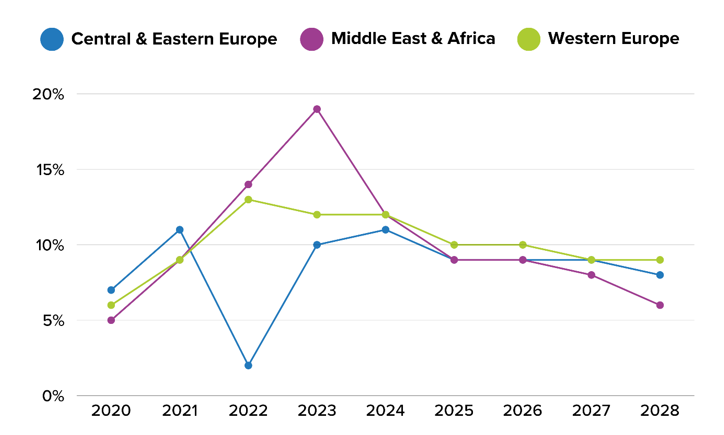
From a subregional perspective, Western Europe commands a dominant position in the region, holding EMEA market share of 88%. This dominance can be attributed to the strong presence of companies like Visma and DATEV, which primarily focus on financial applications, payroll management, and HCM within Western European markets. Global giants such as SAP, Oracle, and Sage also maintain significant footholds in this subregion. 

In contrast, each of the Central & Eastern Europe (CEE) and the Middle East & Africa (MEA) subregions accounts for EMEA enterprise applications market share of 6%.

However, CEE has recorded a decline in spending due to several challenging macroeconomic factors.

The protracted Russia-Ukraine War, which began in February 2022, has introduced notable economic instability in the subregion. High inflation rates have diminished the spending power of businesses, while stringent monetary policies have adversely impacted software investments, resulting in a significant decline in 2022 and sluggish recovery in 2023.

On the flip side, MEA has experienced substantial growth over the past four or five years, largely driven by the emergence of cloud and cloud-based services in 2018 and 2019. This growth has been bolstered by considerable investments from cloud providers.

Organizations and large family-owned enterprises in MEA, previously reliant on monolithic legacy applications, have begun adopting SaaS solutions for non-critical workloads such as HCM, procurement, and asset management. They have thus far been successful in their overall application modernization efforts, with a growing number of businesses re-architecting, re-platforming, and re-engineering their in-house legacy systems.

Navigating the Complexity of Cloud Migration

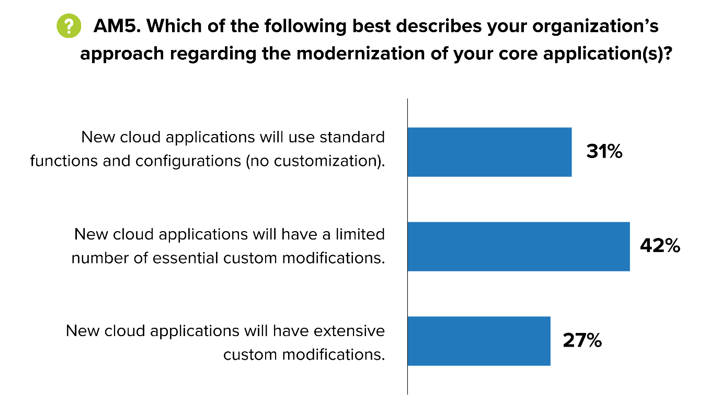
As organizations consider their enterprise application investments and modernization opportunities and the advantages of cloud migration, they are exploring the most effective implementation paths for their new cloud-based applications. In the past, heavily customized implementations were the preferred route, as organizations sought to tailor their applications to better suit their operations.

However, a noticeable shift is occurring as organizations increasingly embrace a more standardized implementation approach.

Approximately 31% of respondents plan to rely solely on standard functions and configurations for their new cloud-based applications, while 42% are contemplating only essential modifications — typically, those focused on sector-specific functionality — to maintain otherwise predominantly standardized implementations.

The Benefits of Standardization

The preference for standardized approaches is motivated by clear and tangible benefits. For instance, as new security patches are released, organizations with more standardized implementations can rapidly update their systems without necessitating further testing. This capability ensures the most robust protections are in place as quickly as possible, without requiring additional investments in IT, security, or implementation capabilities. 

Accessing New Features Quickly

Access to new features is another crucial factor. As the pace of change accelerates, organizations are eager to leverage new functionalities — such as GenAI and sustainability tools — immediately upon their release.

Typically, these enhancements are first introduced in cloud-based SaaS versions, with vendors maintaining slower update cadences for on-premises editions. Consequently, a more standardized implementation offers the quickest and most straightforward access to these emerging features and functionalities.

This inclination for less customized implementations ensures that organizations stay current with vendor innovations — ultimately, helping them maximize the benefits of their enterprise application modernization investments. 

Conclusion

Enterprise application modernization is essential for businesses competing in the digital age. Cloud technology is key to this process, enabling agility and innovation. While modernization approaches vary, a trend is clear toward standardized solutions that maximize the benefits of cloud and AI, including GenAI.

To be successful, increase efficiency and competitiveness, and future-proof operations, organizations must take a comprehensive approach to modernization, considering not only specific business needs and appropriate technologies, but also data governance and sustainability.

This blog serves as a summary of the valuable insights shared during our recent webinar on enterprise application modernization. If you found this discussion on the transformative power of cloud technology and AI interesting, we invite you to access the full webinar on demand.

Ashok Patel - Research Manager, European Enterprise Applications - IDC

Ashok Patel is a research manager in IDC’s European enterprise applications team. Prior to joining IDC, he led the Market Trends programme at Source Global Research, providing insights into the latest trends and developments across the professional services market, and has previous experience exploring clients’ perceptions of consulting firms. Prior to working in professional services, Ashok was an editor and consultant in the commodities market, as well as working in the automotive industry.

In three years, I anticipate that around 40% of global engineering-oriented manufacturing companies will leverage digital twins within the industrial metaverse to enhance collaboration and accelerate time to value.

What leads me to this prediction? Let’s start with IDC’s definition of the industrial metaverse as a highly immersive environment that seamlessly integrates the physical and digital worlds, fostering shared presence, interaction, and continuity across engineering, operations, supply chains, and business functions.

In engineering domain, the industrial metaverse functions as a cloud-native, multi-domain platform for 3D visualization and collaboration, bringing products to life through integrated, physically accurate simulations. It acts as a “digital twin of digital twins,” utilizing real-time data from multiple domains such as mechanical, electrical, and software interactions.

Building this environment requires collaboration among key players, including hyperscalers and providers of simulation platforms, 3D visualization, and digital business tools. New partnerships are constantly emerging, involving major companies in digital infrastructure, cloud computing, engineering platforms, visualization technologies, and artificial intelligence — all working together to push the industrial metaverse beyond the traditional digital twin model.

What Do the Numbers Tell?

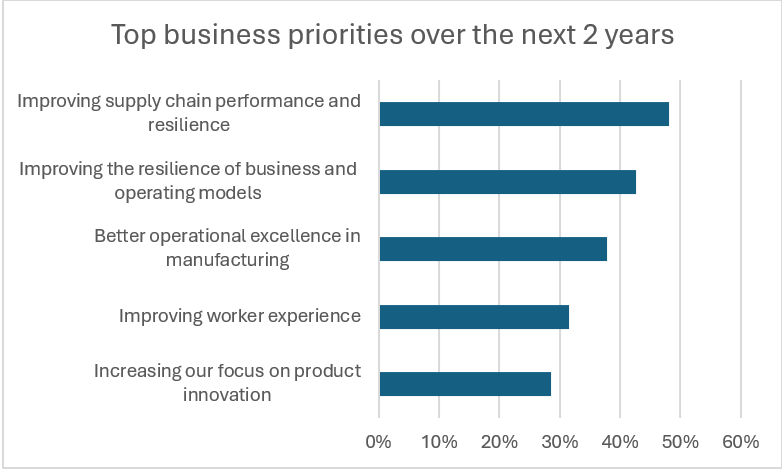
Product innovation remains a key business priority for engineering-focused manufacturing organizations, as highlighted in IDC’s 2024 Global Manufacturing Industry Core Survey (Figure 1).

Figure 1: Question: What are your company’s top business priorities over the next 2 years?

According to IDC’s 2023 Global Product and Service Innovation Survey, 25% of manufacturing respondents considered industrial metaverse technology to be “very important” for product and service innovation. This number was even higher among engineering respondents, with 34% rating it as very important.

Furthermore, 38% of respondents from companies with over 1,000 employees in IDC’s 2024 Global Manufacturing Industry Core Survey stated that Industrial Metaverse technology plays a “moderate to very high” role in supporting their company’s achievement of key operational KPIs.

 As a result, the adoption of the industrial metaverse in engineering-focused manufacturing organizations is anticipated to grow steadily over the next three years.

In Conclusion

My advice for early adopters is to keep a close eye on hyperscalers, leading technology vendors, and the startup ecosystem — to stay up-to-date with the rapidly evolving landscape of industrial metaverse development. Additionally, remember that integrating real-world data with IT data to create advanced simulation and collaboration tools requires time and careful planning.

Building and nurturing digital communities and ecosystems is essential, as they will be key to future success in the industrial metaverse. Lastly, recognize that the value of the industrial metaverse extends beyond product design and engineering, reaching areas like operations, maintenance, quality, procurement, and the supply chain, among others.

As the January 2025 deadline for the EU Digital Operational Resilience Act (DORA) approaches, financial institutions and ICT providers across the European Economic Area (EEA) must urgently assess their readiness, address regulatory gaps, and implement the necessary tools and processes to ensure compliance and safeguard digital resilience.

On January 17, 2025, the EU Digital Operational Resilience Act will take effect across all European Economic Area countries. It will impact financial institutions and their ICT service providers even beyond these borders in certain circumstances.

With only three months remaining, more than 20,000 financial entities must comply with DORA’s regulatory requirements. However, in IDC’s European Security Technologies and Strategies Survey 2024 (May 2024), 49% of respondents stated, “We are aware of DORA but have not yet undertaken exploratory work,” and 14% admitted, “We are not aware of DORA.”

Since then, progress has hopefully been made, driven by active market debates and numerous educational initiatives aimed at increasing awareness. Still, with just a few weeks before the deadline, financial entities and ICT providers must assess their current standing and identify the efforts required to bridge the gaps. Now is the time to prioritize, plan, and comply:

  • PRIORITIZE the gaps that need addressing
  • PLAN for tools and process improvements (extending beyond January 2025)
  • COMPLY with the deadline

Let’s take a step back to recap the scope and objectives of this EU regulation.

Scope: Harmonization and Augmentation

DORA introduces two key innovations:

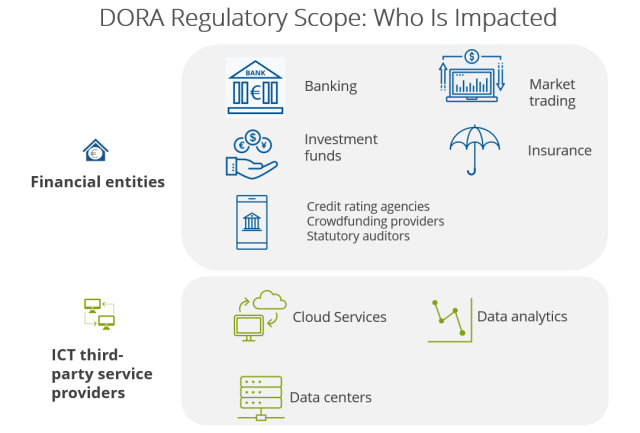
  • Harmonization: DORA harmonizes regulatory requirements across different financial industries, covering banking, insurance, capital markets players, and adjacent players such as credit rating agencies. This harmonization eliminates fragmentation across jurisdictions by implementing a regulation (not a directive), ensuring common requirements across all member countries.
  • Augmentation: DORA marks a paradigm shift, bringing ICT third-party providers under the direct scrutiny of the European Financial Supervisory Authorities. As previously discussed in our blog, EU regulators have acknowledged the growing dependency of financial organizations on ICT and cloud service providers. Given that digitalization and operational resilience are two sides of the same coin, implementing a robust digital operational resilience framework significantly enhances security for banking operations. By placing critical third-party ICT service providers under direct supervision, regulators have reshaped the dynamics between financial entities and their ICT partners.

For financial entities, DORA provides the framework for tighter collaboration with ICT partners to ensure end-to-end operational robustness. For ICT partners, DORA is not just a new regulatory burden, but an opportunity to deepen relationships with clients and explore new business avenues, as financial entities are required to conduct market research and define alternate solutions for each critical function.

Objectives: Mitigating Systemic Risk

The primary objective of DORA is to address the systemic risk posed by critical ICT service providers in the financial industry. By involving European supervisory authorities (e.g., EBA, ESMA, EIOPA) directly, regulators aim to mitigate this risk and enhance the overall digital resilience of the financial sector.

DORA’s requirements fall under five pillars:

  • Risk management
  • ICT third-party risk management
  • Digital operational resilience testing
  • Mandatory incident reporting
  • Voluntary information and intelligence sharing

Additionally, financial entities must define clear exit strategies to mitigate systemic risk in the event of operational issues with an existing ICT partner. Each entity must identify and choose alternative solutions and service providers to ensure the smooth transfer of critical services, if necessary.

For ICT vendors, DORA is a double-edged sword: While it opens up new opportunities and makes the market more fluid, it also imposes additional compliance obligations.

It is important to note that many DORA requirements are not new to large institutions, particularly significant banks subject to the ECB’s Single Supervisory Mechanism. The principle of proportionality still applies under DORA. Nonetheless, its impact is extensive, as evidenced by the IDC survey, wherein 38% of respondents cited digital operational resilience testing as their biggest challenge, while 33% identified ICT third-party risk management as a major hurdle.

Final Steps: Self-Assessment and Planning

With the deadline approaching, each institution must conduct a self-assessment to identify gaps. Where significant gaps remain, organizations must prioritize efforts to meet compliance requirements. Meanwhile, financial entities should plan for the adoption of new tools and processes, such as integrated procurement solutions, to enhance third-party governance and address DORA holistically as part of their ongoing journey toward digital operational resilience.


Are you ready for DORA? Discover the 10 critical steps financial entities must take before the regulation comes into effect in January 2025: IDC PlanScape: Last-Call DORA Compliance Checklist to Achieve Digital Operational Resilience

Maria Adele Di Comite - Research Director, IDC Financial Insights Corporate and Retail Banking - IDC

Maria Adele is Research Director for IDC Financial Insights European research team and is responsible for the IDC Financial Insights Corporate Banking Digital Transformation Strategies program. She has strong competencies in financial services strategy, cybersecurity, and regulatory evolution. She has been living and working in three different countries (Germany, Belgium, and Italy) and she speaks 5 languages. She is an expert in B2B business strategy, with significant experience in Financial Services, System Integration, and Consulting.

On October 3, I had the privilege of participating in a thought-provoking panel at DTX London 2024. The discussion revolved around one of the most pressing questions in the telecommunications industry: 5G versus Wi-Fi: Which technology will drive the future of connectivity?

As a 5G/mobility analyst at IDC in Europe, I was invited to join Paul Ridge, Director Consultant at 4C Strategies, and Dan Jones, Technologist at Hamina Wireless, to explore the opportunities, challenges, and future landscape of these two critical technologies.

The European Telecom Market: Facing Stagnation and Seeking New Growth

Before diving into the core debate, it’s essential to acknowledge the broader telecom market dynamics. The European telecom sector faces an array of challenges, including stagnating revenues, intensified competition from both traditional telcos and OTT players, and strict regulatory pressures.

Working closely with our telco colleagues around the world, IDC covers these issues across a range of research programs. As shown in IDC’s European 5G program (European 5G and Internet of Things Monetization and Adoption Strategies), price wars have squeezed margins, leaving telcos struggling to raise prices while shouldering the costs of 5G and fiber rollouts.

Telecom operators are pivoting toward service diversification, investing heavily in digital services, and shifting their strategies to seek new revenue streams beyond connectivity. This is where the conversation around 5G and Wi-Fi becomes especially significant.

5G: A Game-Changer for Telecoms

5G, particularly standalone (SA) networks, offers a lifeline for operators seeking to overcome revenue stagnation and expand into new business models. During the panel, I emphasized five key aspects of 5G SA that make it a cornerstone of future connectivity.

  1. Clean-Slate Architecture: 5G SA doesn’t rely on legacy technologies. This enables optimized network design, enhanced innovation, and greater flexibility.
  2. Cloud-Native Core: With a cloud-native foundation, operators can scale services dynamically, implement tailored network slices, and respond in real time to evolving user needs.
  3. Mobile Private Networks (MPNs): These enable businesses to deploy their own secure, private 5G networks that offer enhanced security, control, and reliability. MPNs also enable enterprises to run mission-critical applications independently from public networks.
  4. Network Slicing: This enables the creation of virtual, customized networks that cater to specific application requirements, such as ultra-reliable connectivity for autonomous vehicles or low-latency service for Smart Cities.
  5. Support for Key Traffic Types: The flexibility of 5G SA accommodates enhanced mobile broadband (eMBB), massive machine-type communications (mMTC), and ultra-reliable low-latency communication (URLLC), optimizing the network for a wide variety of use cases.

5G’s potential is immense — but its deployment in Europe has been slower than anticipated. To date, just 18 operators have launched 5G SA networks in Western Europe, and only a handful have commercialized network slicing capabilities.

Wi-Fi: The Complementary Force

5G offers compelling advantages, but Wi-Fi continues to be a dominant force, especially in residential and enterprise environments. The ubiquity of Wi-Fi, its ease of deployment, and lower cost make it an attractive option for fixed-location connectivity. However, Wi-Fi has limitations in mobility, security, and reliability — which is where 5G shines.

During the panel, we discussed how Wi-Fi remains ideal for specific customer requirements, such as indoor environments or smaller businesses with less demanding connectivity requirements. However, when mobility, low latency, and security are paramount, 5G emerges as the superior choice.

When 5G Outshines Wi-Fi

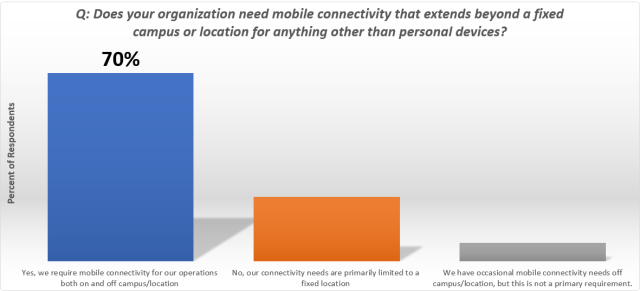
The results of IDC’s European 5G/IoT Survey 2024 highlighted that organizations are increasingly demanding mobile connectivity that extends beyond fixed locations. Nearly 70% of respondents said yes when asked, “Does your organization need mobile connectivity that extends beyond a fixed campus or location for anything other than personal devices?”

Businesses are looking for mobile solutions that enable them to monitor supply chains, manage remote operations, and ensure connectivity in dynamic environments.

Security remains a top concern, with 33% of survey respondents identifying enhanced security for data transmission and communication as their primary challenge. This has led to an increasing preference for keeping data in-house: Almost 49% of businesses cited trust and security concerns as a key reason for this choice.

This is where 5G MPNs come into play, offering businesses the security and control they need to manage sensitive data while generating new revenue streams through advanced digital services. According to IDC’s forecasts, the European MPN managed services market is expected to expand to a value of $818 million in 2028, with the MPN professional services market (including integration and consulting) projected to reach $615 million the same year.

In industries where deploying MPNs may not be feasible — such as public transportation or emergency services — 5G SA network slicing offers a flexible, secure alternative. With 5G network slicing, operators can create customized virtual networks, guaranteeing service-level agreements (SLAs) and ensuring reliable service for applications like connected ambulances or public transport vehicles. More than one-third (36%) of respondents in IDC’s European Telco Survey 2024 identified network slicing as a key driver of implementing 5G SA.

The reasons why businesses might choose 5G over Wi-Fi in certain campus or short-range scenarios include:

  • Security and End-to-End Control: 5G operates on licensed spectrum, offering higher levels of security compared to Wi-Fi, which uses unlicensed spectrum and is more vulnerable to interference and attacks. 5G networks enable operators to control and secure every part of the network from end to end, making it ideal for industries in which data protection is crucial.
  • Mobility: When mobility is important — such as in scenarios involving moving machines or vehicles — 5G excels due to its ability to maintain seamless connections during handovers between cells. Wi-Fi struggles with handover scenarios, leading to potential service drops when devices move across different access points. This makes 5G the better option for uninterrupted service in mobile environments.
  • Reliability in Aggressive Radio Environments: In radio-aggressive environments like factories, with machines and boxes creating interference, 5G’s micro-diversity and advanced signal handling capabilities make it more reliable than Wi-Fi. 5G’s ability to handle dark zones (areas with poor signal coverage) through reconfiguration also ensures consistent performance. Wi-Fi, however, may struggle in these areas.
  • Ability to Offer SLAs: 5G allows network operators to guarantee SLAs, providing commitments on performance, uptime, and latency. Wi-Fi cannot consistently offer these assurances. This is especially important in industrial applications requiring high reliability and low latency. 5G can provide predictable and measurable outcomes.
  • Control Over Different Parts of the Network: In 5G networks, operators have full control over network slices, traffic, and reconfigurations. This is essential in environments like manufacturing, where specific areas may need different levels of service or control. Customization at this level is difficult to achieve with Wi-Fi.

Blending 5G and Wi-Fi: The Future of Connectivity

Ultimately, the future of networking lies in the integration of 5G and Wi-Fi technologies. Each serves a distinct role in addressing the varying demands of consumers and businesses. Smartphones, for example, effortlessly switch between Wi-Fi and 5G depending on network quality, and this hybrid approach will likely become the norm across multiple industries.

Looking ahead, the combination of 5G’s robustness and Wi-Fi’s accessibility will enable a more flexible, efficient, and connected future. Telecom operators will continue leveraging both technologies to build the next generation of networks that deliver high-speed, secure, and reliable connectivity for all.


For more info on addressing growth in the telco space, please register for the following webcast: Addressing the telco growth imperative in EMEA

Masarra Mohamad - Senior Research Analyst, European 5G Enterprise Strategies - IDC

Masarra Mohamed is a senior research analyst specializing in analysing the connectivity and communications services markets, focusing on the changing networking requirements, trends, and competitive dynamics that support enterprises in their digital transformation. She explores how enterprise network strategies evolve to enable cloud, AI, and security.

Telcos in Europe, The Middle East, and Africa (EMEA) are coming under increasing investor pressure to deliver stronger growth. The average year-on-year (YoY) revenue growth rate among the “big 5” European telcos — BT, Deutsche Telekom, Orange, Telefonica, and Vodafone — in 2023 and the first half of 2024 was 0% and 1%, respectively.

The group of four leading Middle East and Africa telcos, namely Etisalat, MTN, Mobily and STC, are doing better, with a collective year-on-year revenue growth rate of 5% in H1 2024, but investors are noting that this is slower than their collective 9% year-on-year revenue growth in 2023.

What is going on here? First, the core telco business of providing network connectivity and communications services to consumers and business — which accounts for over four fifths of the revenues of most telcos — is challenged by a new breed of competitors. Users increasingly rely on the more convenient MS Teams and Zoom apps for their business calls, and WhatsApp or Viber apps for their personal calls and messages, which is hurting telco revenues.

And a whole host of disruptive players are challenging telcos’ broadband and enterprise networking business, from new entrant fibercos offering full fiber at attractive prices to consumers and small businesses to systems integrators pitching SD WAN and private 5G solutions to large enterprises.

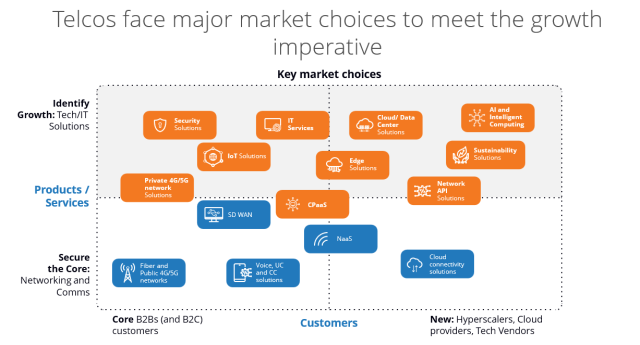
Second — and more important — is the fact that EMEA telcos’ efforts to expand into “beyond connectivity” solutions have not had a major impact on the growth needle so far. Telcos have a bewildering range of market positioning, customer, and technology choices to make in this area, as we show in this diagram:


From a customer perspective, telcos need to not only find ways to serve existing consumer and business customers better, but they also need to consider targeting new customer segments in the broader ICT ecosystem. But the real maze of choices is in the top part of this growth diagram, where telcos need to decide if and how they play effectively in technology areas such as security, CPaaS, cloud/datacenter, and sustainability.

The complexity is compounded by the myriad of sub-segment (i.e., IoT software and services versus IoT connectivity), vertical (manufacturing versus healthcare), and geographic considerations.

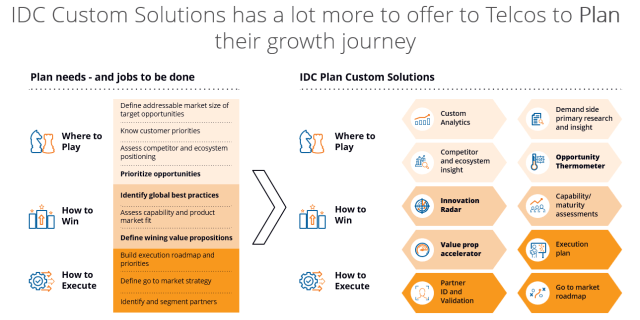
As it stands, telcos need to address dozens of “where to play,” “how to win,” and “how to execute” jobs to be done — and do these extremely well — as they seek to address the growth imperative, illustrated on the left-hand side of the diagram below:

And yet, there are three big jobs that telcos need to do particularly well:

  • Prioritize Growth Opportunities: No telco will have the capacity to address every segment in every solution box outlined in the growth matrix above, so either/or choices will have to be made.
  • Identify and Incorporate Global Best Practices: Telcos do not need to reinvent the wheel in each of the adjacent growth opportunities, innovative solutions by both telcos and non-telcos across the world offer valuable lessons for those willing to look.
  • Define Winning Value Propositions: Telcos often have good value propositions in a range of “beyond connectivity” areas, but crucial ingredients that would make them great and irresistible to clients are often lacking.

IDC can help telcos address these critical growth jobs to be done with three well-established custom solutions:

  • IDC’s Opportunity Thermometer helps CSPs identify, select and prioritize the best and most attractive growth opportunities within or outside current product and geographic markets — that are within client’s capabilities to exploit.
  • IDC’s Innovation Radar helps CSPs identify and integrate inventive best practices and/or value propositions — and leverage the insights from these to accelerate revenue growth and boost customer loyalty.
  • IDC’s Value Prop Accelerator solution helps CSPs build or validate winning value propositions in target growth areas that often sit outside the connectivity and communication perimeter (e.g., cloud, security, APIs).


Should you wish to learn more about these and other IDC Custom Solutions, please get in touch.

For more info on addressing growth in the telco space, please register for the following webcast: Addressing the telco growth imperative in EMEA

Angel Dobardziev - Senior Consulting Director, European Consulting - IDC

Angel Dobardziev is a senior director, consulting, for IDC’s European Telecoms, IoT, and Infrastructure Groups. Based in London, Dobardziev works with IDC’s clients to define and deliver custom advisory solutions to their critical business and technology problems. Angel has consulted for global technology vendors and service providers on a range of areas including recent work on 5G, IoT, and cloud services. Recent engagements include extensive work for a global mobile operator trade body on developing its 5G program, helping to develop its in-depth (300 page) 5G Operator Guide, and more recently, its 5G Cost Optimisation study. He also led an engagement assisting a global mobile operator with its IoT go-to-market strategy, as well as numerous projects for a tier one software vendor supporting its on-premise-to-cloud migration strategy.