With continuously rising healthcare costs, there is a fundamental need to adopt a more preemptive strategy towards healthcare. Many questions are being asked. What can one do to improve population health outcomes and reduce the burden of disease? Would preempting illness not be a better option than treating it?  Can the life sciences industry leverage innovative strategies to design personalized solutions to improve health and prevent disease? Will this create a paradigm shift in healthcare strategy and R&D innovation?

Preemptive health focuses on anticipating and preventing diseases before they manifest, leveraging technological advancements to enhance early detection and intervention.  Preemptive health not only calls for innovative solutions, but it calls for an innovative mindset as well.

Various innovative solutions are being developed across the industry. Etiome (a Flagship Pioneering company) recently launched its AI-powered Temporal Biodynamics platform to forecast how individuals are likely to progress along the disease continuum, confirm disease biostages with temporally relevant markers, potential disease stage–specific targets, and develop Biostaged Medicines to halt or reverse disease, and is focusing on metabolic, neurodegenerative, pre-cancerous and autoimmune diseases.

Twin Health is creating digital twins, digital replicas of a person’s metabolism   to address the root causes of metabolic conditions like obesity, prediabetes, and type 2 diabetes. The focus is on analyzing an individual’s gut microbiome to understand its impact on the person’s overall health. Harvard has highlighted the importance of ‘precision nutrition’, wherein an individual’s DNA, microbiome, and metabolic response to specific foods or dietary patterns are evaluated to develop tailored diets. The concept of ‘Food as a Medicine‘ is gaining importance. Companies such as Brightseed are using AI-driven platforms to identify the health benefits of plant-based bioactives which have the potential to influence the microbiome.

The Glucagon-like peptide-1 GLP-1 receptor agonists (GLP-1RAs) market is booming as managing obesity and reducing the risk of developing type 2 diabetes takes center stage. The US Preventive Services Task Force (USPSTF) is reportedly developing a draft research plan to determine whether to grade anti-obesity medications (AOMs) as preventive medications for chronic weight management.  

Eko Health has developed AI-enabled digital stethoscopes with FDA-cleared algorithms to detect cardiovascular and pulmonary diseases during routine physical exams, facilitating early intervention and improved patient outcomes.

Genomic, Inc. has developed a test called Health Insights, which carries out polygenic risk scoring for the early detection of conditions such as cardiovascular disease, diabetes, breast cancer and prostrate cancer, now offered by the healthcare provider Bupa in the UK.

Neko Health offers AI-enabled non-invasive body scans, mapping millions of health data points on and in an individual’s body in a few minutes enabling the early detection of potential health issues.

The reality is that we need to focus on increasing our healthspan (the period of life spent in good health, free from major diseases and disabilities), not just our lifespan. We need to live healthy lives, not just longer lives. Pharmas and biotechs are increasingly focusing on developing products that increase the healthspan, in addition to lifespan. Longevity research is an area of growing importance. Bioage, for example, has entered into a multi-year research collaboration worth up to $550 million with Novartis, to identify “molecular mediators of the benefits of exercise.” Exercise can influence gene expression, but one’s capacity to exercise decreases with age. BioAge is exploring the possibility of developing a pill using its AI platform that will have the same positive effect on gene expression as exercise does, a key element of its partnership with Novartis.

The Advanced Research Projects Agency for Health (ARPA-H) research funding agency launched in 2022, made pivotal investments in breakthrough transformative biomedical and health technologies and applicable platforms to provide health solutions for all.  Early-stage funding remains challenging for healthspan innovators, and ARPA-H could serve as a valuable non-dilutive funding opportunity for them. ARPA-H’s Proactive Health initiative has a simple goal. It will promote treatments and behaviors that will reduce the likelihood that people become patients. And that is what the life sciences industry needs to prioritize. Yet care should be taken to ensure that while forecasting the likelihood of developing a disease, racial and ethnic disparities, as well as socioeconomic status (SES) should be accounted for, test results should not create unnecessary panic in a lay person, and clinical oversight should always be maintained. Pharmas and biotechs should invest in R&D to build out a pipeline of innovative products / solutions focused on preemptive health. Policy makers should encourage investment in preemptive health. At the end of the day, predictive approaches and preemptive strategies must lead the way. 

Nimita Limaye - Research Vice President - IDC

Dr. Nimita Limaye is a Research VP with IDC Health Insights and provides research-based advisory and consulting services, as well as market analysis on key topics related to R&D Strategy and Technology in the life sciences industry. She addresses aspects such as the role of digital transformation in discovery research, e-clinical ecosystems, the role of NLP, AI, ML, DL, RPA, in transforming drug development, precision medicine, pharma R&D execution and strategic outsourcing models.

Identity and access management (IAM), and by extension, identity security, is one of the most pervasive and impactful challenges facing all European organizations today, from an operational and risk management perspective.

The targeting of users and credentials has been well documented through year after year of the major global threat reports, such as Verizon’s Data Breach Investigations Report (DBIR). Phishing attacks continue unabated as threat actors steal more and more credentials. Verizon’s 2025 DBIR report highlights compromised credentials as the most common initial access vector among non-error breaches.

The challenge for many organizations is dealing with the sheer volume, velocity, and variety of IAM-related events. Take a workforce of a few thousand permanent employees that need access to an estate of a few hundred applications. Add in a few hundred temporary workers, partners, and contractors that need access to specific systems and applications on a constrained basis. Then add in a range of entitlement levels for what all of those users — permanent, temporary, and external — can do in each application. Remember also that the workforce is in constant flux, with new joiners, movers, and leavers. To prevent exposure, any changes to the access rights and entitlements of those users must be put into effect immediately when a transition takes place.

The outcome is a volume of IAM events and processes that simply cannot be managed without automation.

And that’s just the humans.

Organizations have become aware that there is an even bigger and faster-growing set of identities that they need to manage as a matter of increasing urgency: the non-humans.

The Rise of Non-Human Identities

Some non-human identity (NHI) types have been around for years, such as service accounts. These are already a concern, since many of them are entitled to execute privileged actions, which typically need a higher level of control to safeguard data and processes. Furthermore, nested privileges enabled by multiple overlapping or intersecting service accounts can obfuscate over-provisioning of access, which can be a major security risk.

Service accounts are just one category of NHIs that merit attention, however. The growing list includes device identities, cloud workloads, bots, APIs, and, increasingly, AI agents. Some of these NHIs are relatively long-lived and fixed, others are fast moving and ephemeral. Visibility into the creation and provisioning of some NHIs can be extremely limited for the identity, IT, and security professionals tasked with managing them. So how should organizations address this growing challenge and contain the risk? Can existing IAM and identity security tools be co-opted to manage the NHI pool?

According to preliminary data from IDC’s EMEA Security Technologies and Strategies Survey, 2025, more than a third of EMEA organizations are already grappling with this challenge. The short answer to the questions above is that existing tools can probably address some of the requirements of NHI IAM and security (but to adequately manage the risk, a dedicated approach is going to be required).

AI Agents: A Complex Challenge

If we take AI agents as an example, these are probably one of the most complex and fastest-growing NHI categories. According to IDC’s March 2025 Future Enterprise Resiliency and Spending (FERS) Survey, 38% of European organizations are already investing in agentic AI, with a further 43% conducting initial testing and proofs of concept. IDC’s 2025 Worldwide Future of Work Predictions report projects that by 2027, agentic AI workflows will impact at least 40% of knowledge work in G2000 organizations.

Functionally, AI agents can act like service accounts in some aspects; at the same time, they share some behaviors with human identities. They can also be a force multiplier for risk. In an ordinary business process, a human user might conduct actions that call a handful of APIs (another at-risk NHI category, since API access is often unsecured). When we enable AI agents to act on our behalf, they may be calling hundreds of APIs, creating a flywheel effect that multiplies the risk.

This brings in a bigger topic of security by design, which is as relevant here as it is in any other sphere of security. As development teams build agentic AI services, it is critical that security is built in from the start. It’s far more complex and costly to add on once agents are live. This means building in seamless and secure authentication requirements before a user or an agent is able to do anything; ensuring secure and vaulted credentials for API tokens; and applying fine-grained and dynamically updated authorization for permissions that an agent needs to complete a task (and nothing more).

From an IAM perspective, these are some of the key building blocks to ensure that AI agents don’t become an NHI risk; however, further controls and guardrails will be needed. For other NHI categories, the requirements may be different, and organizations should conduct risk assessments for each category individually before taking the necessary measures to protect them.

Like all IAM challenges, the NHI issue is not insurmountable. However, organizations should avoid the historic IAM mistakes of siloed approaches and short-term fixes and make sure that appropriate security controls are built in, from the beginning, wherever NHIs are active within their systems. What’s required is a strategic, granular, and risk-based approach that addresses IAM for all NHIs before they become embedded in all our business processes.

Mark Child - Associate Research Director, European Security - IDC

Associate Research Director Mark Child of IDC’s European Security Group leads the group's Endpoint Security and Identity & Digital Trust (IDT) research for both Western Europe and Central & Eastern Europe. He monitors developments in security technologies and strategies as organizations address the challenges of evolving business models, IT infrastructure, and cyberthreats. Mark's coverage includes in-depth security market studies, end-user research, white papers, and custom consulting.

Following the September 2024 launch of the Core Ultra 200V Series ‘Lunar Lake’ mobile-focused CPUs aimed at extreme mobility and battery life use cases, Intel introduced the new Intel Core Ultra 200H ‘Arrow Lake’ processors aimed at mobile computing for businesses, creators, and gaming enthusiasts at CES in January 2025.

These latest Intel Core Ultra mobile processors boast advanced AI features, improved efficiency, and enhanced performance over previous generation mobile CPUs.
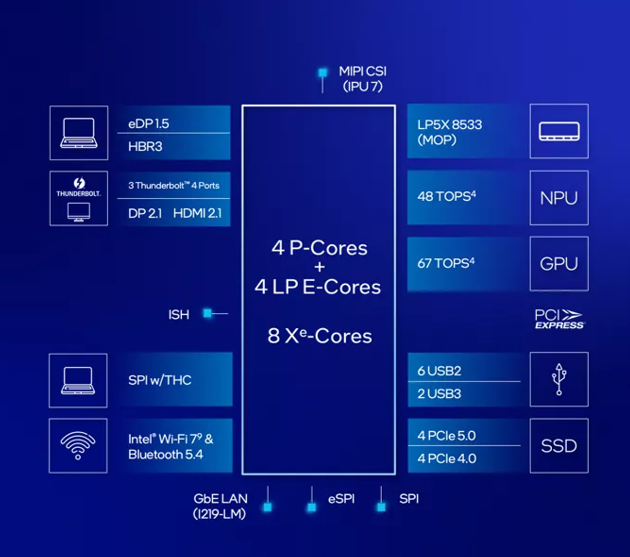
The Intel Core Ultra 288V CPU features four Performance cores and four Efficiency cores, a second generation neural processing unit (NPU) with up to 48 trillion operations per second (TOPS), and Intel Arc Graphics 140V with eight Xe2-cores delivering up to 67 TOPS, for over 100 total system TOPS.

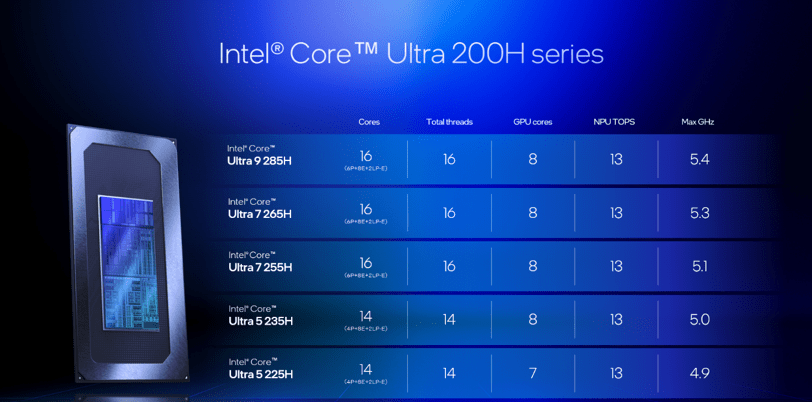
The Intel Core Ultra 285H CPU includes six Performance cores, eight efficiency cores, and two low-power cores, an NPU with up to 13 TOPS, and Intel Arc 140T graphics with eight Xe Matrix Extension (XMX)-enhanced Xe-cores capable of up to 77 TOPS, for just under 100 system TOPS. Across the platform, these processors achieve up to 99 TOPS by utilizing the GPU, CPU, and NPU

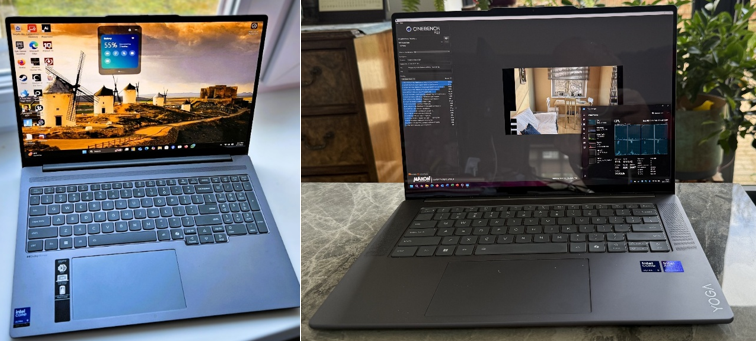
Intel provided IDC with samples of the Lenovo IdeaPad Pro 5 (model 16IAH10) featuring the 16-core Intel Core Ultra 9 285H, and the Lenovo Yoga Slim 7 15 (model 15ILL9), featuring the eight-core Intel Core Ultra 9 288V. Both these thin and light notebooks are solid options for business, content creation, light gaming, and other demanding tasks, but target quite different performance, battery life, and user workload requirements.

The Notebook Specifications

The two Intel Core Ultra 9 200 series CPUs take quite different approaches in terms of design. The Intel Core Ultra 9 288V is composed of two chiplet tiles. The largest tile is the CPU, NPU, and GPU complex together with the memory controllers, while the smaller input/output (IO) tile handles functions such as USB and PCIe connectivity. The Intel Core Ultra 9 285H, on the other hand, features four tiles, with separate CPU, GPU, SOC with NPU and two low-power Efficient cores, and IO tiles.

One of other big differences between the two different CPUs is that the Intel Core Ultra 9 285H notebook comes with 32GB of LPDDR5-8533 RAM soldered to the motherboard, while the Intel Core Ultra 288V has 32GB of the same speed RAM directly integrated into the CPU package itself, allowing for lower power and latency memory operations (compared to having to go off package to the motherboard for memory transactions).

The displays are both high definition (HD) – the Lenovo IdeaPad Pro 5 features a 16-inch 2.8K OLED panel with a resolution of 2880×1800, offering 500 nits of typical brightness and up to 1100 nits of peak brightness. It covers 100% of the DCI-P3 color gamut, has a 120Hz refresh rate, and supports DisplayHDR True Black 1000. The Lenovo Yoga Slim 7 15 features a 15-inch IPS screen, also 2880×1800.

Connectivity options for both include Wi-Fi 7, Bluetooth 5.4, Thunderbolt 4, HDMI 2.1, USB-A, and USB-C; however, the Idea Pad Pro 5 also has an SD card reader. Audio is delivered through stereo speakers optimized with Dolby Atmos. Although both platforms support Thunderbolt 5, the feature is absent from both laptops. Lenovo’s reasoning behind this choice remains uncertain, but it misses the chance to leverage higher bandwidth for quicker data transfer, superior display capabilities, accelerated charging, and greater compatibility.
For video calls and security, the system features a Full HD 1080p camera with an infrared sensor, privacy shutter, and time-of-flight sensor.

The Laptop Look and Feel

Both notebooks are built for rugged mobility. They boast a sleek and durable design with an aluminum top and bottom, providing a premium and sturdy feel. The surfaces are anodized and sandblasted for a smooth finish, and their color is Luna Grey, giving them a modern and elegant look.

The keyboards are backlit, making it easy to type in low-light conditions. They feature a traditional layout with comfortable key travel and responsiveness. The touchpads are buttonless glass surface multi-touch touchpads, supporting Precision TouchPad technology.

The Lenovo Yoga Slim 7 15 weighs in at 1.46kg (3.2lbs) and is a true thin and light notebook. The Lenovo IdeaPad Pro 5 weighs 1.72kg (3.79lbs), which makes it relatively lightweight and portable, considering its powerful specifications and large display. This combination of robust chassis, comfortable keyboard, high-resolution screens, slim profiles, and light weight makes both a great choice for work and play — but the differences mean that the products are targeted at quite different use cases. The Lenovo Yoga Slim 7 15 with the Intel Core Ultra 0 288V is focused on all-day productivity and mobility, while the Lenovo IdeaPad Pro 5 with the Intel Core Ultra 285H is geared more toward supporting high-performance mobile workloads such as content creation or design and rendering activities.

The Intel Core Ultra 9 288V

Built on TSMC’s N3B process, the Intel Core Ultra 9 288V features four Performance cores and four low-power Efficiency cores coupled with 12MB of cache, and is targeted at all-day efficiency performance for sustained productivity. Single-thread performance is competitive, with the Performance cores reaching up to 5.1GHz and the Efficient cores up to 3.7GHz.

The Intel Core Ultra 9 266V with an integrated NPU at 48 peak TOPS supports Intel Deep Learning (DL) Boost and various AI software frameworks such as OpenVINO, WindowsML, ONNX RT, DirectML, and WebNN. This makes it an excellent choice for AI and machine learning workloads. The processor’s base power is 30W, with a maximum turbo power of 37W, allowing it to power the thinnest and lightest notebooks with efficient performance all day.

The Intel Arc 140V GPU

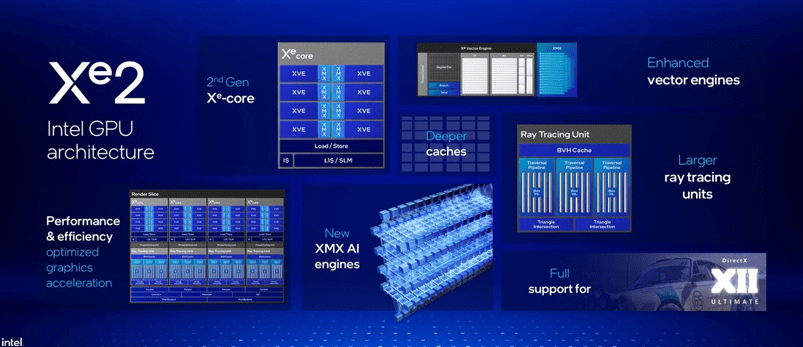
When it comes to graphics, the Intel Arc 140V graphics features eight Xe2 cores that boost up to 2.05GHz. Built on the second generation Xe graphics architecture that is also featured in the well-received Intel Arc B580 series of discrete GPUs, it is a major redesign compared with the original Xe +graphics cores.

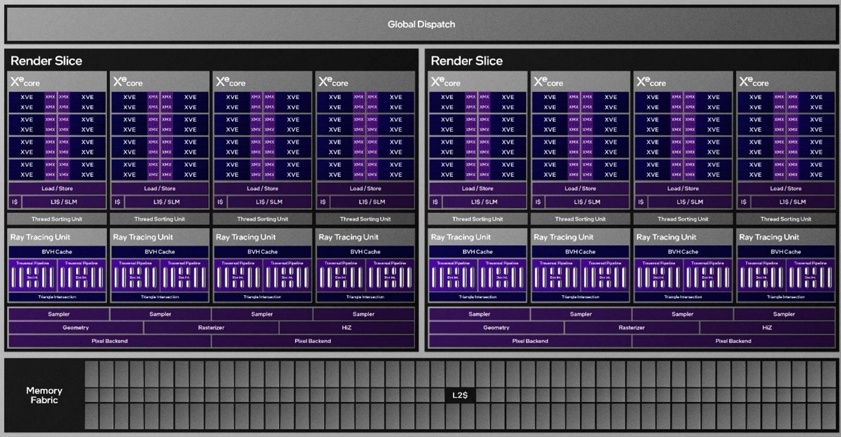
The Intel Arc 140V GPU boasts deeper caches, overhauled Ray Tracing Units (RTUs), and two Render Slices, each containing four Xe2-cores (for eight in total). It fully supports DirectX 12 Ultimate, including hardware ray tracing and mesh shading, ensuring competitive graphics performance.

The Intel Core Ultra 9 285H

Built on TSMC’s N3B lithography, with a total of 16 cores, the Intel Core Ultra 9 Processor 285H is a powerhouse designed for high-performance mobile computing. With six Performance cores, eight Efficient cores, and two low-power Efficient cores, this processor is built to handle a wide range of tasks with ease. The Performance cores can reach a maximum turbo frequency of 5.4GHz, ensuring adequate performance for demanding applications, while the Efficient cores and low-power Efficient cores provide a balance of power and efficiency for regular tasks. The processor also boasts a 24MB cache, which helps to speed up data access and improve overall system responsiveness.

In addition to its impressive core configuration, the Intel Core Ultra 9 285H supports Intel DL Boost and various AI software frameworks such as OpenVINO, WindowsML, ONNX RT, DirectML, and WebNN. This makes it an excellent choice for AI and machine learning workloads. The processor’s base power is 45W with a maximum turbo power of 115W, ensuring that it can deliver high performance when needed while maintaining energy efficiency.

The Intel Arc 140T GPU

The Intel Core Ultra 285H processor, featuring the built-in Intel Arc 140T GPU, is a standout in this generation. Built on the enhanced Xe LPG+ architecture, it offers a significant 20% performance boost over its predecessor integrated in the Intel Core Ultra 100H series, according to Intel. This uplift is particularly noticeable in AI workloads, ray tracing, and gaming, whether you are at home or on the go.

The Intel Arc 140T GPU boasts a robust configuration with double the L2 cache (8MB dedicated to the GPU) and two Render Slices, each containing four Xe-cores (totaling eight Xe-cores). It fully supports DirectX 12 Ultimate, including hardware ray tracing and mesh shading, ensuring top-tier graphics performance.

Each Xe-core is equipped with 16 Xe Vector Engines for SIMD8 width execution. The LPG+ architecture introduces XMX, which supports INT4, INT8, FP16, and BF16 data types, delivering exceptional performance for AI workloads and Intel XE Super Sampling (XeSS) AI game upscaling. XeSS leverages these capabilities to provide high-fidelity frames close to native quality with significantly higher frames per second (FPS).

Additionally, the LPG+ architecture includes a specialized RTU designed for real-time ray tracing, offering realistic lighting and reflections. Each RTU features an enhanced traversal pipeline with double the performance and a ray-triangle intersection unit capable of performing 12 box intersection tests per clock cycle.

Media and Display

The Xe Media Engine supports various codecs, bit depths, and chroma subsampling. It even supports HEVC 4:2:2 encoding and decoding, a format commonly used in professional cameras. Additionally, it ensures reliable 4K video playback from platforms like YouTube and Netflix and supports the modern AV1 codec. The engine can handle up to 8K 10-bit high-dynamic range (HDR) video workloads at 30 FPS across dual Multi-Format Codec Engines (MFXs), and 8K 10-bit HDR playback at 60 FPS on a single MFX.
The Display Engine supports a single monitor with up to 8K resolution at 60Hz with HDR, utilizing the latest HDMI 2.1 or DisplayPort 2.1 standards. It can also manage up to four external monitors at 4K resolution with HDR at 60Hz, providing a high-quality viewing experience. The integrated panel supports a refresh rate of up to 120Hz at WQUXGA (3840×2400) resolution, thanks to its eDP1.4b support.

Benchmarks

PCMark 10

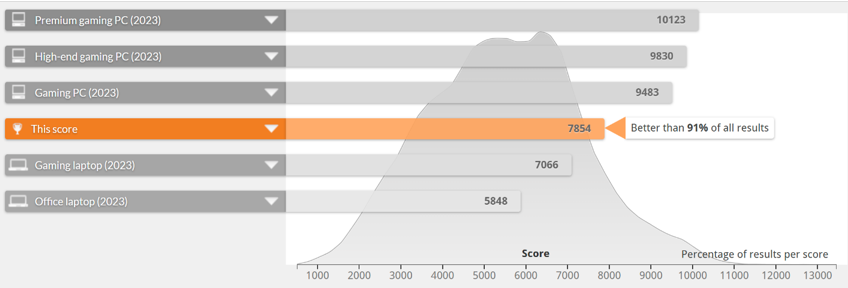
PCMark 10 is a comprehensive benchmarking tool that covers the wide variety of tasks performed in the modern workplace. Web browsing, videoconferencing, spreadsheet and word processing, photo and video editing, and rendering and visualization are some of the tasks tested by the tool.

The IdeaPad Pro 5 with the Intel Core Ultra 9 285H ‘Arrow Lake’ CPU achieved a score of 7,854, outperforming 91% of all results produced by PCMark 10. This is a strong performance that shows the productivity-focused performance advantage of the extra cores in the Intel Core Ultra 9 285H compared to the all-day efficient performance approach of the four Performance cores and the four Efficiency cores in the Intel Core Ultra 9 288V ‘Lunar Lake’ CPU, which scored a still very competitive 6,968 but at significantly lower power draw with much improved battery life.

The Procyon AI Text Generation Benchmark

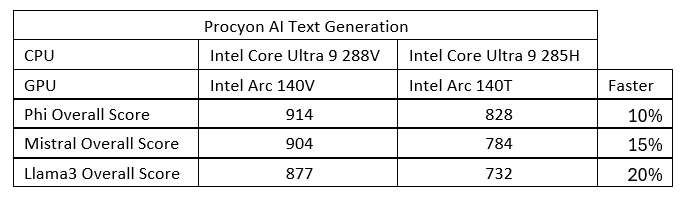
The UL Procyon AI Text Generation Benchmark, developed with insights from top AI vendors, aims to simplify and standardize the evaluation of local AI performance, especially for large language models (LLMs). It assesses performance using models such as Phi-3.5-mini, Mistral-7B, Llama-3.1-8B, and Llama-2-13B23. This benchmark measures how effectively a device handles local LLM inference tasks, like utilizing an on-device AI assistant for routine office tasks.

We conducted the test using the Intel Arc 140T and ARC 140V powered with OpenVINO 2024.5.0 as the AI inference engine. The results demonstrate that, in the realm of AI, performance depends on more than just raw power. The 140V outperforms the 140T through its enhanced architecture, innovative features, and superior efficiency.

The Procyon AI Image Generation Benchmark

The UL Procyon AI Image Generation Benchmark, developed in collaboration with key industry members, provides a consistent and accurate workload for measuring the inference performance of on-device AI accelerators, such as high-end discrete GPUs. This benchmark ensures fair and comparable results across various hardware.

We conducted the demanding Stable Diffusion XL (FP16) test using OpenVINO as the AI inference engine to evaluate performance of the integrated GPUs given the minimum requirement of 16GB of RAM. The Intel Arc 140T integrated into the Core Ultra 9 285H achieved an overall AI image generation score of 363, with a total time of 1649.551 seconds and an image generation speed of 103.097 seconds per image. The Arc 140V graphics integrated into the Core Ultra 9 288V scored 345, achieving 95% of the performance of the Intel Arc 140T, but at significantly lower system power draw.

We also tested image generation using the integrated NPU. Here, the IdeaPad Pro 5 with Core Ultra 9 285H and the first generation Intel NPU architecture with 13 AI TOPS peak performance, scored 843 compared to the score of 2,713 achieved by the Yoga Slim 7 15 with the second generation Intel NPU architecture, with up to 48 peak AI TOPS. This increase of over 200% in inferencing performance highlights the rapid increase in NPU hardware and software performance that the second generation of NPUs are able to deliver in the Microsoft Copilot+ PC category.

Blender Benchmark

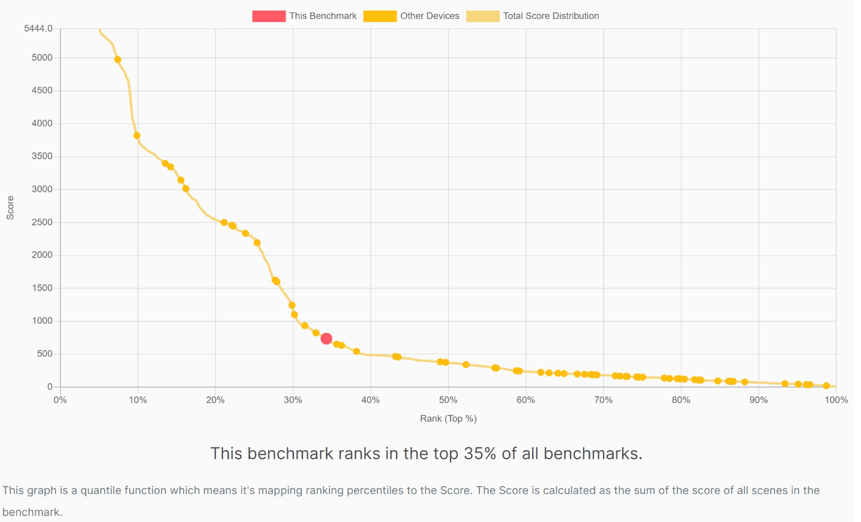
Blender Benchmark version 4.3.0 was used to assess the Intel Arc 140T GPU’s rendering performance. With a score of 761, the GPU’s performance ranked among the top 35% of benchmarks running the same workload.

Considering the Intel Arc 140T is an entry-level integrated GPU with just eight Xe-cores, its performance was unexpectedly impressive. It ranked nearly in the top third of all results, significantly surpassing our initial expectation of it being just above the bottom third.

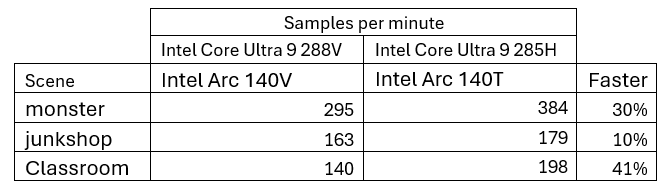
With a higher socket power budget, the Xe Intel Arc 140T also outperformed the Xe2 Intel Arc 140V graphics integrated into the Intel Core Ultra 9 288V in the Lenovo Yoga Slim 7 15:

Cinebench Performance

Cinebench is a useful indicator of a highly parallel multi-thread workload that can stress system throughput and performance. We tested both notebooks using the well-established Cinebench R23 as well as the still fairly new Cinebench 2024.

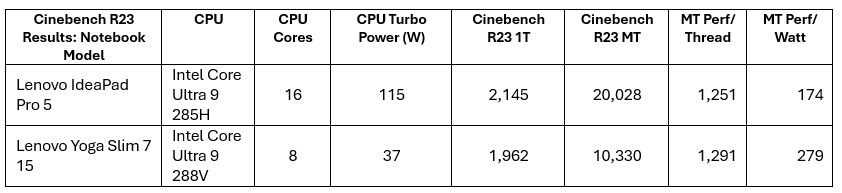
For Cinebench R23, the productivity-focused Intel Core Ultra 9 285H in the Lenovo IdeaPad Pro 5, with 16 cores including six Performance cores, managed almost double the multi-thread performance of the Core Ultra 9 288V with eight cores in total and four Performance cores.

However, the Core Ultra 9 288V, with a design focus on efficient performance, managed 60% better performance per watt on the multi-threaded workload with a turbo boost power of 37W, compared to 115W for the Intel Core Ultra 9 285H.

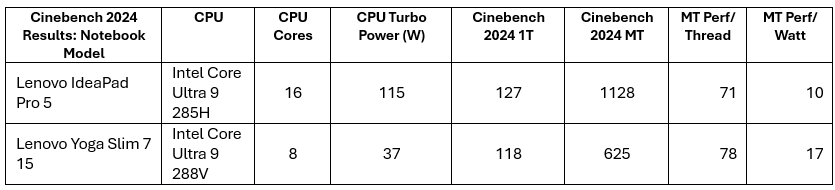
For Cinebench 2024, the story was similar, with the Core Ulta 9 285H again outperforming the Core Ultra 9 288V by 80% in ultimate multi-threaded performance, but with the Core Ultra 9 288V again having the advantage in performance efficiency with 72% better performance per watt in this test at maximum turbo power.

The Procyon Battery Life Benchmark

The video playback test uses the Microsoft Films & TV app included with Windows to measure battery life. The benchmark plays a HD video file in full-screen mode until the battery is depleted.

In our test, the Lenovo IdeaPad Pro 5 achieved a video playback battery life of nine hours and three minutes. The battery level started at 100% and ended at 3%. The maximum detected brightness was 80%, while the minimum detected brightness was 56%. The power plan was ‘balanced.’

This test highlighted just how far Intel has progressed with battery life and efficiency, with the Intel Core Ultra 9 288V, based on the ‘Lunar Lake’ architecture, achieving 17 hours and 22 minutes of battery life.

Gaming Performance

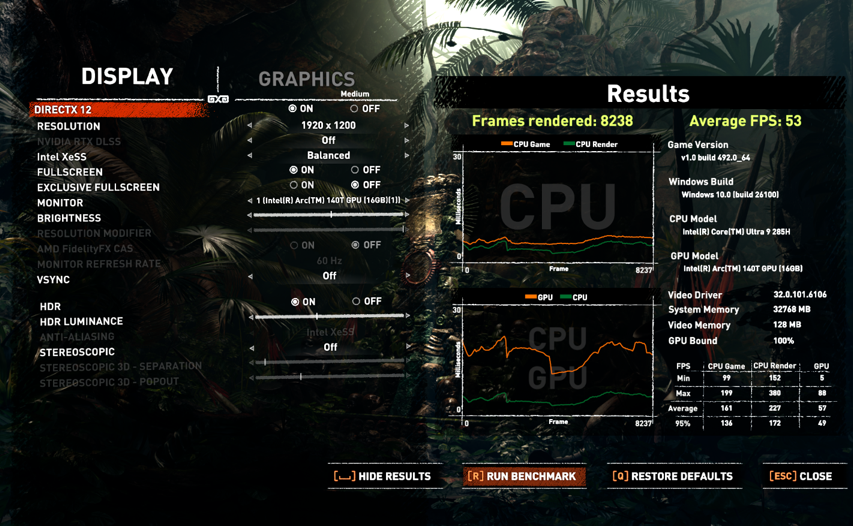
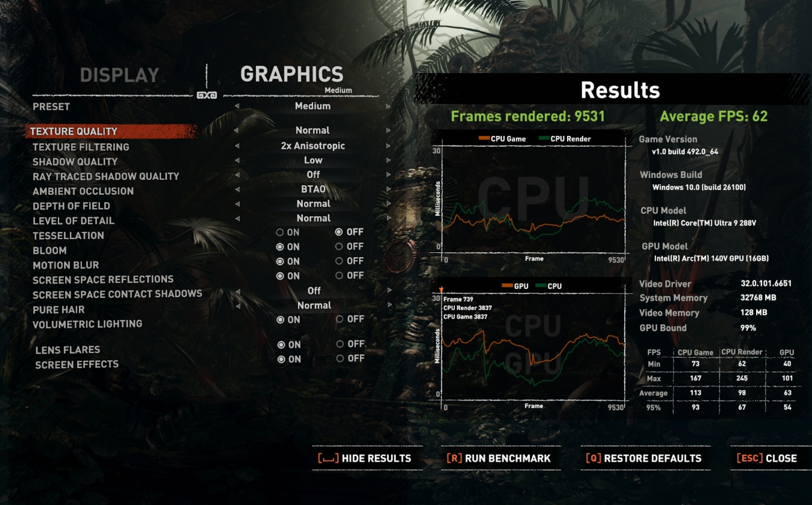
The Lenovo IdeaPad Pro 5 showed entry-level gaming performance across various titles. In The Shadow of the Tomb Raider, it achieved an average of 53 FPS on medium settings with XeSS set to balanced, at 1920×1200 resolution.

Turning to the Lenovo Yoga Slim 7 15, the Intel Core Ultra 9 achieved 62 FPS on average, highlighting the advances that Intel has made with the Xe2-based iGPU.

Looking at some other games for the Lenovo IdeaPad Pro 5:

  • For The Callisto Protocol, the laptop managed 37 FPS on the lowest settings, with AMD FSR2 set to performance.
  • Fortnite ran smoothly at 90 FPS on the lowest graphical preset, with XeSS set to performance. Switching the rendering mode from DX12 to Performance Mode, generally used by competitive gamers, boosted the frame rate to 150 FPS on average.
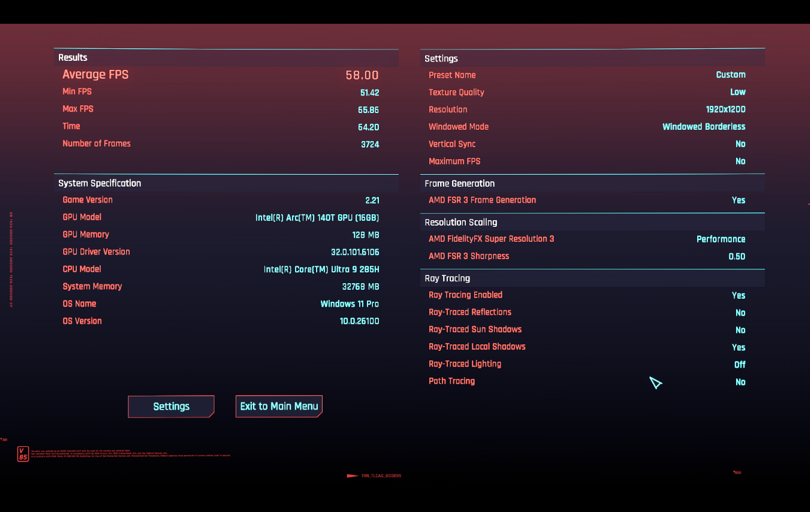
  • In Cyberpunk 2077, the built-in benchmark showed 31 FPS on average with the low ray tracing preset and Intel XeSS 1.3 set to auto. Disabling ray tracing and using the low preset increased the frame rate to 51 FPS.

Enabling ray tracing again, but with AMD FSR 3 set to performance and FSR 3 frame generation enabled, resulted in 58 FPS on average.

IDC Opinion and Conclusion

Both these Lenovo notebooks are sleek, solid, and stylish. They offer a premium look and feel, combined with professional-grade performance, excellent graphics, and lightweight mobility. Features like fast charging, long-lasting battery, and consistent fast responsiveness further enhance their appeal, making them ideal choice for work, productivity, and even some play. However, they do this in different ways to suit different use cases and ways of working.

The Intel Core Ultra 9 288V in the Lenovo Yoga Slim 7 15 is optimized for efficient performance, with great single-thread performance provided by four Performance cores that enable snappy responsiveness with lightly threaded applications. Meanwhile, the four low-power Efficient cores greatly boost battery life for background or less demanding tasks and media playback. Salespeople will appreciate its lightweight and durable design, making it ideal for trade shows and showroom demos. Executives will value the long battery life, which allows them to check spreadsheets, browse the internet, or watch media during long flights without concern.

For more demanding applications featuring many threads, such as running complex calculations, managing heavy spreadsheets with numerous formulas, or designing marketing materials and presentations, the Intel Core Ultra 9 285H with six Performance cores, eight Efficient cores, and two low-power Efficient cores provides extra processing grunt at the expense of higher overall power consumption and shorter battery life.

The standout aspect of our personal experience was the impressive speed for everyday use of both systems. This is largely thanks to the new Performance Core architecture as well as the ultra-fast LPDDR5-8533 memory and well-designed memory controller, which enhance overall system performance. This level of engineering showcases Intel’s expertise and capabilities for mobile processors. Another positive point is that both notebooks operate nearly silent almost all the time, adding to the overall pleasant user experience. Even when stress-tested or running games, the fan noise was not overly intrusive, maintaining around 35dB.

The second generation of Intel Core Ultra processors shows marked improvements in graphics performance and efficiency. The improved Xe LPG+ architecture is evident, especially in productivity, as the Intel Arc 140T demonstrated nearly double the performance of its predecessor, which was integrated in the previous generation Intel Core Ultra 9 185H in various workloads. The Intel Arc 140V similarly shows major improvements in overall performance and responsiveness and, in many aspects, is now class leading for mobile x86 processors. Intel’s engineering innovation allows integrated GPUs to leverage up to 16GB of system memory, which is a smart move. Models like Stable Diffusion XL are making notable progress in productivity applications, especially in marketing, advertising, and content creation. Due to VRAM limitations, this model will not even run on many more powerful discrete GPUs that have 8 or 12GB of VRAM.

In terms of gaming, both these notebooks are capable of supporting entry-level gaming, particularly when optimizing settings and utilizing upscaling technologies. This should get even better in the near future when XeSS 2 gets more widely adopted, with two groundbreaking new features: XeSS Frame Generation and Xe Low Latency. Combined with XeSS Super Resolution, gaming on integrated graphics will run smoother and at higher frame rates.

Mohamed Hakam Hefny - Senior Program Manager - IDC

Mohamed Hefny leads market research in EMEA on professional workstation PCs and solutions. He also reports on professional computing semiconductors, processors, and accelerators (CPUs and GPUs), as well as breakthroughs and trends related to the market. In addition, Mohamed is actively involved in AI PC taxonomy and research. He participates in business development projects, contributes to consulting activities, and provides IDC customers with analysis, opinions, and advice.

Andrew Buss - Senior Research Director, European Enterprise Infrastructure - IDC

Andrew Buss is research director for IDC's European Enterprise Infrastructure program. Based in London, he is responsible for driving IDC's research covering present and future trends impacting servers, storage and networking and IT service delivery. Central to this is understanding how on-premises IT is evolving under the emergence of Open Source, Software-Defined Enterprise, multi-Cloud adoption and Cloud-native development practices, and how this will impact everything from the low level silicon underpinnings and system design, through to the design and integration of the different infrastructure components, up to the platform management and service delivery.

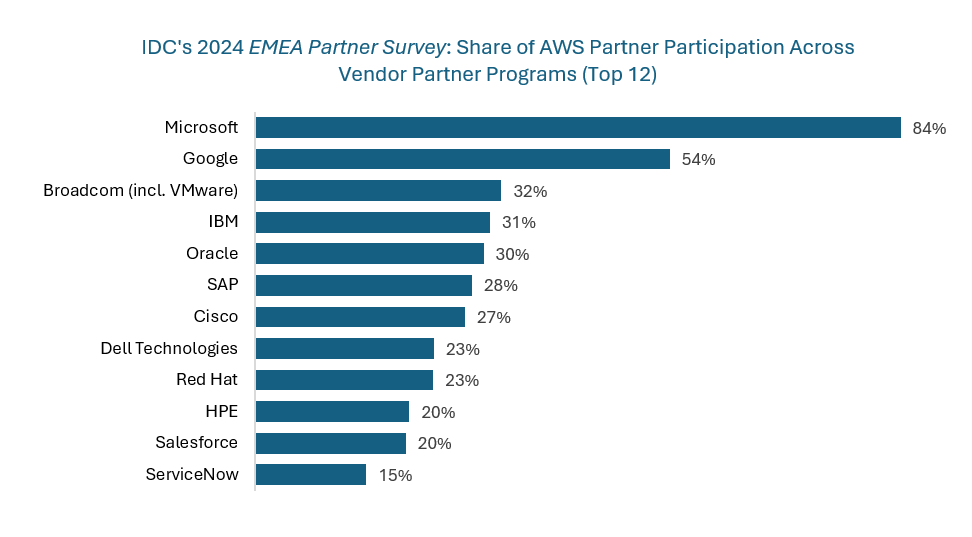
Technology partners help bridge ecosystems. IDC’s 2024 EMEA Partner Survey sheds light on some of the underlying dynamics. For instance, 2 in 5 partners surveyed (41%) said they have a relationship with AWS. Of those AWS partners, 84% said they also work with Microsoft, while 23% partner with Red Hat and 15% have a relationship with ServiceNow.

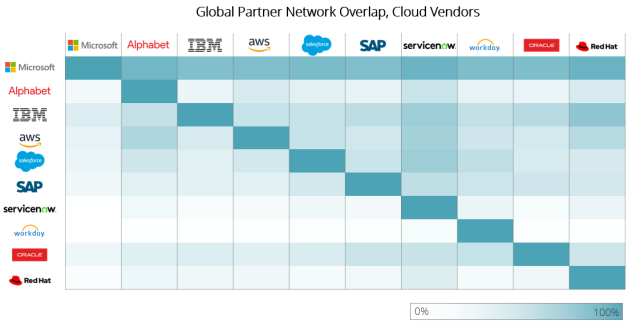
At a global level, IDC’s Channel Partner Ecosystem (CPE) Database shows how the ecosystems of major cloud and software providers overlap to differing degrees, highlighting the need for different approaches across players.

The chart below demonstrates partner network overlap. Each column represents the degree of overlap between the provider on the row and the provider on the column. The darker the color, the more the overlap. For example, the analysis of ServiceNow’s partner network (column 7) shows a greater overlap with Salesforce than with Workday.

Given the rise of connected ecosystems, insights like these aren’t just interesting stats but hold practical and increasingly strategic value in today’s tech landscape. Think about the potential of accessing the list of common partners across vendors in the map — and getting detailed information in seconds.

Links across technology portfolios and partner networks fuel opportunities for vendors and bring enhanced value to customers. The IT industry has seen a sustained rise of the “platform paradigm” that enables connectedness and modularity across infrastructure, applications, data, and more. This requires architectures that allow technologies to integrate with and layer on top of one another. This trend is fueling growth in alliances and ecosystem engagement.

Customers benefit by being able to run integrated tech stacks that match their needs and requirements. For example, an organization may choose to run SAP on Microsoft Cloud, or may leverage Red Hat OpenShift to manage hybrid environments. Approved partner solutions from SAP Store extend the functionality of the core application, while Microsoft Azure provides native integrations with data warehouse solutions like Snowflake and Databricks.

The value of an integrated technology stack based on customer choice will increase significantly with the growing adoption of AI, which depends on contextually relevant, high-quality data collected across different systems and workloads.

Vendors are supporting these increasingly connected, platform-based strategies through new technology alliances, by building out their own ecosystems, and by connecting to others. A key component in bringing these alliances and connected ecosystems to life is the integration of IT/technology partners such as systems integrators, managed service providers, and value-added resellers.

Understanding partner capabilities and relationships is key to managing the entire partner life cycle. IDC offers complementary support for partner engagement strategies, including:

• The IDC CPE Database consolidates information on more than 600,000 partners worldwide on their capabilities, business models, relationships with vendors, and more. The data-driven partner intelligence we provide enables companies to compress the time and effort needed to recruit new partners, evaluate their current ecosystem, and benchmark against competitors’ ecosystems.
• The syndicated and custom research of IDC’s Partnering Practice specializes in understanding the ecosystem of technology partners and their engagement with vendors and customers. Our team of dedicated analysts offers thought leadership and advice through quantitative and qualitative insights on the global and regional levels.

Andreas Storz - Senior Research Manager, EMEA Partnering Ecosystems - IDC

Andreas Storz is senior research manager for IDC’s Europe, Middle East & Africa (EMEA) Partnering Ecosystems program. Based in the US, Andreas focuses on the evolution of go-to-market models, new digital value chains and the wider impact on partner ecosystems, exploring how current and future trends will impact the vendor, distributor, and partner landscape.

Gabriele Roberti - Research Manager, European Industry Solutions, Customer Insights & Analysis - IDC

Gabriele Roberti is a director for IDC's European Data and Analytics team. In this role, he oversees IDC’s partner intelligence data. He manages all Channel Partner Ecosystem programs, providing an extensive view on partners’ and vendors’ capabilities and relationships. He joined IDC in 2012 with a focus on the Italian market, then moved into regional research coordinating the delivery of regional quantitative research on IT strategies for vertical markets.

I’ve been hosting the IDC Smart Cities Awards since 2018 and this year was the first time that I got choked up multiple times during the awards ceremony. And I wasn’t the only one!

IDC’s Smart City North America awards were hosted at Smart Cities Connect, held in beautiful San Antonio.  As the award winners receive their awards, each team has a chance to say a few words about their initiative and this year their messages were powerful, personal and showed the passion for their work.

The award recipient from the City of Charlotte, Jamar Davis, whose project “Access Charlotte” focused on housing as a means to drive access to broadband, was emotional as he talked about his connection to the places he was serving.  Amy Atchley from the City of Austin said, when describing their project with Austin Energy, “Smart cities is for dreamers.” She didn’t mean Smart Cities are hypothetical; she meant this is a group that is dreaming big and, slowly but surely, realizing those dreams. These were just two of the speakers that moved me and the rest of the attendees.

 We can see the practical application of technology to big ideas and big challenges in the agenda from Smart Cities Connect where we host the awards.  From Digital Transformation and urban operations to community engagement, cities and their tech partners came together to demonstrate how their use of technology has matured in service to the public. Our award winners and finalists are a microcosm of this.

Here are just a few examples of the innovative projects that made this year’s IDC Smart City North America winners and finalists so impressive, and the three key take-aways from the winners.

Deliver on What Your Community Needs and Wants

  • The city of Phoenix, AZ  – the hottest city in the US – discovered that their residents wanted access to chilled drinking water.  With ideas from the community, the city developed a custom-designed water station that features two drinking spouts at ADA-approved heights, a bottle filling station, an internal chiller, and smart meters for reporting live water usage data via a central dashboard. The initiative is tackling hydration and heat concerns by establishing a network of modern, chilled fountains that enhance resilience to extreme heat, reduce plastic waste, and support access to essential services like work and healthcare.
  • The City of Chandler, AZ developed an Instant Language Assistant (ILA) that tested real-time translation tools to improve resident communication across 250 languages. Custom devices, used at city service counters and events, the ILA supported over 560 face-to-face interactions and enabled communication through headsets, keyboards (including Braille), and ASL support. Success stories included a hearing-impaired resident renewing a passport and immediate language support in libraries and housing services. Following the pilot’s success, city leadership approved funding for 60 ILA units over three years, making Chandler a regional leader in inclusive, tech-driven public service.

Do the Hard Work to take Partnerships to a New Level to Achieve Scaled Results

  • The City of San Antonio worked with two utilities and their initiative showcases the power of inter-utility collaboration, maximizing shared infrastructure to improve service reliability, and empowering residents with real-time insights and enable more efficient operations. San Antonio Water System (SAWS) modernized its 600,000-endpoint water network by replacing manual meter reading with advanced metering infrastructure (AMI). Faced with labor challenges, rising costs, and billing delays, SAWS partnered with CPS Energy to use its existing industrial IoT (IIoT) network, avoiding the cost of building a new system. A pilot using 2,500 ultrasonic meters showed near-perfect read accuracy, real-time usage data, and early leak detection, improving billing, customer engagement, and conservation. The shared network supports future smart city uses, setting an example of how cross-utility collaboration can increase ROI, operational efficiency, and resident satisfaction.
  • South Bend, IN  launched an innovative grant program to expand the city’s Real-Time Crime Center (RTCC) by partnering with local organizations to enhance security infrastructure. Run by SBPD and the Department of Innovation & Technology, the program offers up to $4,000 for eligible investments like cameras and software by local businesses. In return, participants integrate their security systems into the RTCC via the FususCORE device. Since launch, 39 organizations have joined, adding 171 camera views—a 51% increase in RTCC coverage. Benefits include improved incident response, deterrence, and stronger community-police ties. The program prioritizes privacy and transparency and has already helped SBPD address 13 safety incidents.

Embed Resilience and Sustainability in Project Design

  • The Cincinnati/Northern Kentucky International Airport modernized its main garage by addressing poor lighting, high energy use, and inefficient space utilization. The outdated sodium vapor lighting was costly and limited future upgrades like EV charging. The project introduced LED lighting, IoT sensors, and a data platform to improve navigation, safety, and energy efficiency. Goals included enhancing passenger experience, expanding infrastructure, reducing costs, and achieving ROI within 3.5 years. The system enabled real-time parking guidance, supported scalable innovation, and created new revenue opportunities through better space management and pricing strategies. Overall, the project marked a transformative shift in airport parking operations through smart, sustainable technology.
  • Generation Park Generation Park, a 4,300-acre master-planned community in Northeast Houston, is a public-private partnership between McCord Development and the Generation Park Management District. Facing high water bills and unaccounted water loss due to aging infrastructure and lack of monitoring tools, McCord built MizuWatch, a digital twin IoT water monitoring platform, using the AWS Garnet Framework based on FIWARE open standards. MizuWatch enables real-time water usage analytics, leak detection, and system transparency. It helped reduce billing and improve efficiency by identifying leaks and enabling proactive collaboration with water operators. The Garnet Framework also prevents vendor lock-in and will serve as the data foundation for future smart city initiatives in Generation Park.

One project embodied all of these – Austin Energy’s EVs for Schools initiative which provides an educational living lab that is scaling country-wide. Austin Energy is supporting Austin’s goals to be net zero emissions by 2040 which requires 40% of all vehicle miles traveled to be electric by 2030. To achieve these goals, Austin Energy is educating  community members on transportation electrification via a sustainable transportation curriculum prioritizing students from disadvantaged communities. Teachers are provided with a digital tool kit and training highlighting STEM education, environmental justice, EVs, clean energy and sustainable mobility. Austin Energy conducts EV workshops introducing students to fun, leading-edge concepts around EV technology, an EV virtual reality experience, and field trip adventures. 

These are just a few of many amazing projects.  We had a very difficult time choosing the winners from the list of finalists. And I wish I could expand on all the projects in this blog, but that will come later in a more detailed write-up. 

The IDC Smart Cities Awards program isn’t just about recognizing the work communities are doing all around North America, it’s also to connect peers to learn from each other and share our continued vision for the future of our communities.  We hope more organizations and municipalities will join us next year!

To learn more about IDC’s work with cities and communities, and our 2026 Smart City Awards, please visit us at IDC.com.

Ruthbea Yesner - Program VP - IDC

Ruthbea Yesner is the Vice President of Government Insights at IDC. In this practice, Ms. Yesner manages the US Federal Government, Education, and the Worldwide Smart Cities and Communities Global practices. Ms. Yesner's research discusses the strategies and execution of relevant technologies and best practice areas, such as governance, innovation, partnerships and business models, essential for government and education transformation. Ms. Yesner's research includes analytics, artificial intelligence, Open data and data exchanges, digital twins, artificial intelligence, the Internet of Things, cloud computing, and mobile solutions in the areas of economic development and civic engagement, urban planning and administration, smart campus, transportation, and energy and infrastructure. Ms. Yesner contributes to consulting engagements to support K-12 and higher education institutions, state and local governments and IT vendors' overall Smart City market strategies.

Cutting Through the Noise with a Clear, Side-by-Side View of Performance

Starting with their 1Q25 results, IDC’s European Enterprise Communications Services program will publish a quarterly comparison and analysis of Europe’s top 5 telcos: BT, Deutsche Telekom, Orange, Telefónica, and Vodafone. A main goal of this initiative is to identify which telcos are most successful in transforming their monetization strategies.

Our analysis of telco performance will be based on new research by the IDC European analyst team. Other IDC products, including those from our colleagues in the Data & Analytics team, focus on telco revenue across individual product lines.

This blog post provides a high-level view of the operators’ 2024 global performance as a prelude to the quarterly analyses. Here, we compare the companies’ revenue performance, development of their geographical markets and strategic growth portfolios, and major announcements and events during the period.

The financial data has been adjusted for consistency and comparability:

  • Figures have been converted to USD on a constant currency basis at IDC’s published 2024 rate (EUR/USD 0.92420; GBP/USD 0.78269).
  • Reporting periods have been aligned to the calendar year (CY). For Deutsche Telekom, Orange, and Telefónica, this aligns to their financial year (FY). For BT and Vodafone, we have summed their quarterly results within each CY (e.g., CY 1Q24 to CY 4Q24, corresponding to their published FY 4Q24 to FY 3Q25 reports).

Group Revenue Performance

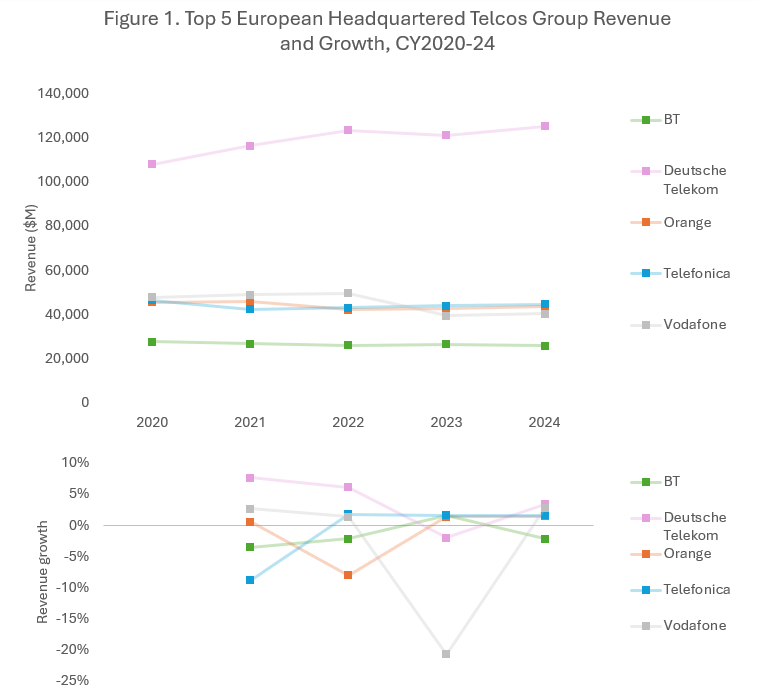
Figure 1 shows total group revenue and YoY growth for BT, Deutsche Telekom, Orange, Telefónica, and Vodafone from CY20 to CY24.

Converting all results to USD and aligning BT and Vodafone to CYs highlights the relative size differences between Deutsche Telekom (due to T-Mobile US) and BT, and the similarity between Orange, Telefónica, and Vodafone.

It also shows that CY24, like CY23, was relatively flat for Europe’s leading telcos, with top line growth between -2.2% and 3.4%. The exception is Vodafone, which posted a large decline in CY23 due to the disposal of two major country operations during 2024 (Vodafone Italy and Vodafone Spain). Vodafone’s restated historical financials omit Italy and Spain going back to CY 1Q23.  As the figures presented in this blog post are based on the restated numbers, the drop in revenue resulting from those disposals appears to occur in CY23.

Notes:

  • BT and Vodafone figures are for the CY, based on quarterly reports.
  • Growth rates reflect operators’ reported figures and include conversion from local currency to reporting currency (EUR for Deutsche Telekom, Orange, Telefónica, and Vodafone, and GBP for BT).
  • Vodafone’s negative growth in CY23 is due to the disposal of Vodafone Italy and Vodafone Spain in CY24 and subsequent revenue restatements.
  • BT remains the smallest of the top five telcos by revenue and in growth terms has been a mid-pack performer in recent years, although it was the only company in the group to post negative top-line growth in CY24, of -2.2%. In addition to several country operation disposals over the last few years, BT has signalled its clear intent through CY24 under CEO Allison Kirkby to focus on the domestic U.K. market and is exploring options for its underperforming international business.
  • Deutsche Telekom is far ahead of its European peers in total revenue due to the contribution of T-Mobile US, with group revenue between $114B and $125B. However, revenue from Europe totaled €41.2B in CY24, placing it in line with Orange, Telefónica, and Vodafone (see figure 5 for side -by -side view for the 4 operators). Deutsche Telekom posted the highest YoY growth rate in CY24 at 3.4%, largely driven by the strong performance of its mobile and broadband services. Notably, this growth is primarily attributed to T-Mobile US, fueled by rising postpaid and prepaid revenues and a slight increase in terminal equipment sales. The contribution of approximately 65% of group revenue from T-Mobile US clearly sets Deutsche Telekom apart.
  • Orange’s YoY revenue growth in CY24 was limited to 1.5%, mainly due to the deconsolidation of Orange Spain after the creation of the MásOrange joint venture, and a decline in Orange Business’ revenue of -1.9%, primarily from fixed services. However, strong growth from the META region of 7.4% stabilized Orange’s overall business.
  • Telefónica, which ranks second in group revenue, reported modest YoY growth of 1.6% in CY24. This was due to growth in service revenues (up 2.5%) driven by a stronger B2B performance (up 4.8%) but offset in part by the depreciation of various Latin American currencies (in particular the Brazilian real) against the euro.
  • Vodafone, from CY20 to CY22 Vodafone was ahead of, and accelerating away from, Orange and Telefónica. However, the disposal of its Italy and Spain operations meant a loss of over $8 billion annual revenue, effective in its restated financials from 2023. This resizes Vodafone below Orange and Telefonica but, as of CY2024, it remains on a higher growth trajectory. Vodafone completed the sale of its Spain operation (to Zegona Communications) in May 2024 for €5 billion and its Italy operation in January 2025 (to Swisscom) for €8 billion. Around the same time it received regulatory approval for its merger with Three in the U.K.

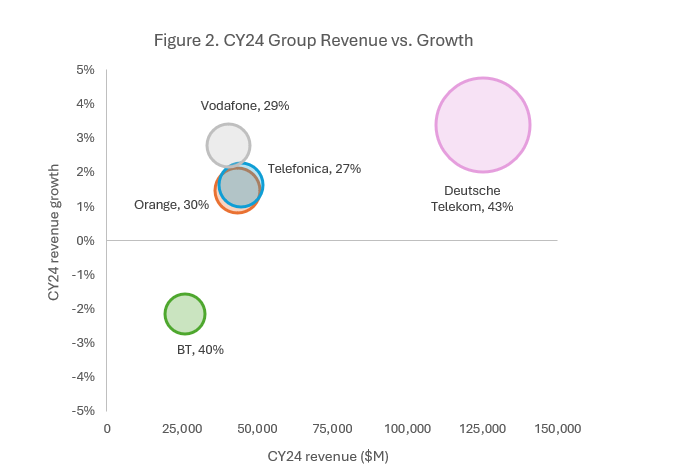
Figure 2 positions the operators based on their CY24 group revenue and growth rate over CY23, with bubble sizes representing the absolute EBITDA or EBITDAaL (EBITDA after leases) values for CY24. It brings out the similarity of Orange and Telefónica’s businesses in terms of all three metrics (size, growth, and EBITDA). Deutsche Telekom and BT, while differing significantly in both revenue and growth, show nearly identical EBITDA margins—43% and 40% respectively—indicating comparable efficiency in generating operating profit.

Notes:

  • Size of bubble refers to the value of CY24 EBITDA (BT, Deutsche Telekom, and Telefónica) or EBITDAaL (Orange and Vodafone).
  • The percentages next to operator’s name plotted on the chart represent the EBITDA margin for (BT, Deutsche Telekom, and Telefónica) or EBITDAaL margin (Orange and Vodafone).

Figure 3 rebases each operator’s group revenue to a value of 100 in CY20 and plots relative development from that point. This clearly shows Deutsche Telekom’s outperformance over the others, the similar relative performance of BT, Orange, and Telefónica over the last three years, and again the temporary drop in Vodafone’s revenue due to major disposals.

Notes:

  • Revenue is plotted relative to a baseline of 100 for all operators in CY20.
  • Vodafone’s negative growth in CY2023 is due to the disposal of Vodafone Italy and Vodafone Spain in CY2024 and subsequent revenue restatements.

Geographical Markets

Figure 4 shows how operators’ total CY24 revenue breaks down geographically. Each operator’s domestic operations are labeled as its home market on the chart. For Vodafone, we assigned its largest country market of Germany as, not being an ex-incumbent, the concept of home market is less clearly defined.

The chart highlights how international businesses, primarily opcos, gained via historical acquisitions, are a sizeable fraction of each operator’s total business. The exception is BT. Following a series of divestments in recent years, BT is now very heavily concentrated on the U.K., contributing 89% of group revenue in FY24 (the year ending March 2024, BT’s most recent geographical reporting). BT CEO Allison Kirkby’s decision to focus on the U.K. still further is an extension of a trend already well established.

Notes:

  • Vodafone’s home market is assigned as Germany, its largest revenue-contributing market.
  • BT does not publish geographical splits on a quarterly basis, so CY splits are unavailable. We applied the latest published breakdown (year ending March 2024) to CY24 revenue for illustration.
  • The chart is organized in descending order of group revenue, progressing from the highest to the lowest value along the horizontal axis.
  • The percentage shows each region’s share of the overall group revenue, and the number shows the total revenue that region produced in CY24.

B2B Revenue Performance

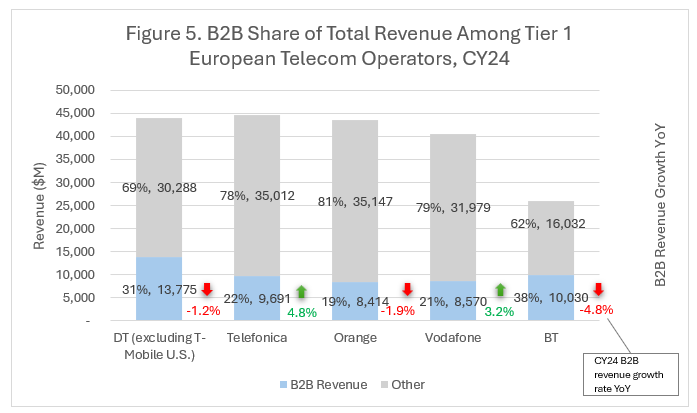
Figure 5 shows how operators’ CY24 revenue from business customers compares with total group revenue. We aimed to capture all B2B revenue, including dedicated enterprise units (BT Business, Deutsche Telekom’s System Solutions/T-Systems, Orange Business, Telefónica Tech, and Vodafone Business), as well as other reported business revenue generated by the group organization. In practice, some very small business customers buy consumer products and are served by the consumer division of an operator. We don’t attempt to break out this revenue.

Notes:

  • Growth rates shown in red (decline) and green (growth) refer to CY24 B2B revenue growth.
  • Figures represent overall B2B revenue, including enterprise business units and services sold to business customers by the parent organization.
  • The chart is organized in descending order of CY24 group revenue, with operators arranged left to right from highest to lowest.
  • Deutsche Telekom (DT) is placed first as it recorded the highest total revenue in CY24. However, in this graph T-Mobile US has been excluded from DT’s revenue in this analysis, as the company does not report a segmented B2B vs B2C revenue breakdown for the U.S. market. This exclusion ensures a more accurate and consistent comparison of DT’s European B2B revenue contribution.

Deutsche Telekom

Deutsche Telekom’s B2B revenue comes from the summation of two segments: German Business Customers and Systems Solutions (T-Systems). Deutsche Telekom serves enterprise clients globally, but only these two components are reported in the operator’s annual statements. German Business Customers, part of Deutsche Telekom’s Germany segment, generated €8.7B in CY24, down 5.7% YoY (mainly due to reclassification of some revenue as wholesale since January 2024).

Systems Solutions, operating under the T-Systems brand, focuses on ICT services in the DACH region, spanning cloud, digital, security, and advisory services as well as road toll systems. Revenue rose to €4.0B in CY24, up 2.8% YoY, reflecting steady strategic growth.

System Solutions’ growth was driven by:
• Expanding demand for digital, cloud, and road charging services
• Strong momentum in public sector IT contracts, a key vertical for T-Systems
• Ongoing customer migration from legacy infrastructure to digital platforms

Despite ongoing pressure in traditional services, the gains in high-growth areas allowed Systems Solutions to post a 3.7% increase in external revenue and a 2.3% rise in service revenue, signaling healthy market traction and improved portfolio relevance.

The overall YoY revenue decline of -1.2% shown in figure 5 for Deutsche Telekom is the result of growth in its System Solutions segment being offset by a decline in revenue from its German business segment. Together they represent 31% of DT total revenue of $44,063063M excluding the U.S. region.

Telefónica

Telefónica Tech (TTech) is the digital services arm within Telefónica’s broader B2B segment. It focuses on services such as cloud, cybersecurity, IoT and Big Data, and AI and automation, while the B2B segment overall includes traditional connectivity and managed services. In CY24, TTech generated €2,065M in revenue, growing 10% YoY and contributing to total B2B revenue of €8,957M, up 4.8% YoY.

Main B2B growth drivers included:
• Bookings and commercial funnel growing at 30% YoY and 15% respectively in CY24
• Enhanced business sustainability and larger, higher-value projects in the backlog

TTech’s cybersecurity and cloud revenue amounted to €1,821M (up 12.3% YoY), and its IoT and data revenue totaled €246M (down 4.8% YoY) in CY24.

Orange

Orange Business contributed 19% of Orange’s total revenue in CY24, at €7.8B, down 1.9% YoY due to the decline in fixed service revenues. Although declining modestly, the segment demonstrated strategic resilience and a relative shift toward higher-value digital services.

B2B growth was driven by:
• IT and integration services, up slightly (by 2.7% comparable growth, or €102M) in a complex IT market
• Orange Cyberdefense (part of IT services), up 11.2% or €120M

Despite ongoing pressure on legacy product lines and equipment sales, positive momentum in IT and mobile segments demonstrates good portfolio realignment and robust underlying market traction.

Vodafone

Enterprise customers of all sizes are handled through Vodafone Business. The unit reports service (as opposed to total) revenue, which amounted to €7.9 billion in CY24, 21% of (total) group revenue. This was up 3.2% on CY23 (based on restated figures that exclude Italy and Spain), making Vodafone one of only two telcos in the group to be growing its B2B business.

Vodafone’s B2B growth drivers include:
• Strong demand for digital services (cloud, security, and IoT), particularly in the MEA region. Cloud revenue grew 25% YoY on average per quarter, and digital services grew from 17% of total business service revenue at the start of CY24 to 20% by the end.
• Demand for fixed connectivity, again particularly in MEA.
• Project work, often in the public sector, in some markets including the U.K.

Against the growth in digital services and fixed connectivity, Vodafone’s B2B mobile business was challenged during the year, from falling inflation-linked price increases as well as ARPU erosion during large contract renewals, notably in Germany.

BT

BT Business, the merger of the former U.K.-focused BT Enterprise with BT Global, accounted for 38% of BT’s total revenue in CY24. While this is a higher relative contribution than the other operators, and in absolute terms is larger than Telefonica, Orange, and Vodafone, the unit has underperformed for several years, being 23% smaller at the end of CY24 compared with the start of CY20.

There are few positive growth drivers to report, with most B2B segments in decline. U.K. SMB was a relatively strong performer up to CY24 but growth has since flattened and turned negative. The U.K. CPS (corporate and public sector) business, conversely, has turned from strongly negative to broadly stable in CY24.

In terms of service offerings, security is a consistent growth area, and BT is betting on its global NaaS platform, Global Fabric, to revitalize its B2B portfolio and boost its international business over the next few years. The first customer went live on Global Fabric in March 2025 and the roadmap sees many of BT’s network services being offered via the platform over the next two years.

Major Announcements and Events

These are some of the main revenue-impacting developments by operator during CY24:

BT

  • December 2024: BT Group signed a new £1.29B contract with the U.K. Home Office to deliver mobile services for the government’s Emergency Services Network, aiming to enhance communication capabilities for emergency responders.
  • November 2024: Reports, later confirmed by BT, suggested that the company was looking at options for its international business following a long period of underperformance globally and a strategic focus on the U.K. market.
  • August 2024: Indian Bharti Enterprises agreed to purchase a 24.5% stake in BT Group from Altice, making Bharti the largest shareholder in BT.
  • February 2024: BT Group welcomed Allison Kirkby as its CEO, the first woman to lead the U.K. telecom giant.

Deutsche Telekom

  • November 2024: Deutsche Telekom awarded Nokia a contract to roll out a large-scale commercial Open Radio Access Network (O-RAN) across more than 3,000 sites in Germany, supporting the operator’s strategy to diversify its supplier base and enhance network efficiency.
  • July 2024: Deutsche Telekom’s U.S. subsidiary T-Mobile US announced a joint venture with KKR to acquire fiber ISP Metronet. T-Mobile is investing about $4.9 billion for a 50% stake in the JV, which will absorb Metronet’s two million FTTH customers across 17 states.

Orange

  • May 2024: Orange announced the completion of the merger between Orange Romania SA and Orange Romania Communications SA as of June 1, 2024.
  • March 2024: Orange and MásMóvil completed the creation of a 50:50 JV valued at €18.6 billion in Spain, combining their operations to form a leading operator in terms of customers.
  • February 2024, Orange SA exited the retail banking business, after years of losses, by transferring its Orange Bank customers to BNP Paribas.

Telefónica

  • November 2024: The Spanish government approved Saudi Arabian STC Group’s acquisition of a 9.9% stake in Telefónica, allowing STC to appoint a board member, with conditions to safeguard national interests.
  • July 2024: Telefónica and Vodafone Spain (now owned by Zegona) agreed to form a joint fiber venture in Spain. The non-binding MOU outlines plans to combine and expand FTTH networks to cover ~3.5 million premises.
  • February 2024: Telefónica finalized an agreement to sell its Telefónica Argentina unit for about $1.245B to Telecom Argentina.

Vodafone

  • December 2024: Vodafone Group’s merger with Three U.K. received conditional approval from the U.K.’s Competition and Markets Authority (CMA), forming the largest mobile operator in Britain.
  • December 2024: Vodafone, in partnership with AST SpaceMobile, achieved a world-first: a direct-to-mobile satellite video call using a standard smartphone.
  • May 2024: Vodafone sold its Spanish operations to Zegona Communications for €5B, as part of its strategy to simplify its portfolio and focus on core markets.
  • March 2024: Swisscom agreed to acquire 100% of Vodafone Italia for €8B, aiming to merge it with its subsidiary Fastweb to create a leading converged operator in Italy.
  • January 2024: The U.K. government raised national security concerns over the 14.6% stake in Vodafone Group acquired by Emirates telecom e& (formerly Etisalat).

Conclusion

This post has provided comparisons over a limited selection of metrics. Starting with CY 25Q1 results, we will publish more detailed comparisons and analyses in IDC’s European Enterprise Communications Services program, initially across the five operators presented here.

Masarra Mohamad - Senior Research Analyst, European 5G Enterprise Strategies - IDC

Masarra Mohamed is a senior research analyst specializing in analysing the connectivity and communications services markets, focusing on the changing networking requirements, trends, and competitive dynamics that support enterprises in their digital transformation. She explores how enterprise network strategies evolve to enable cloud, AI, and security.

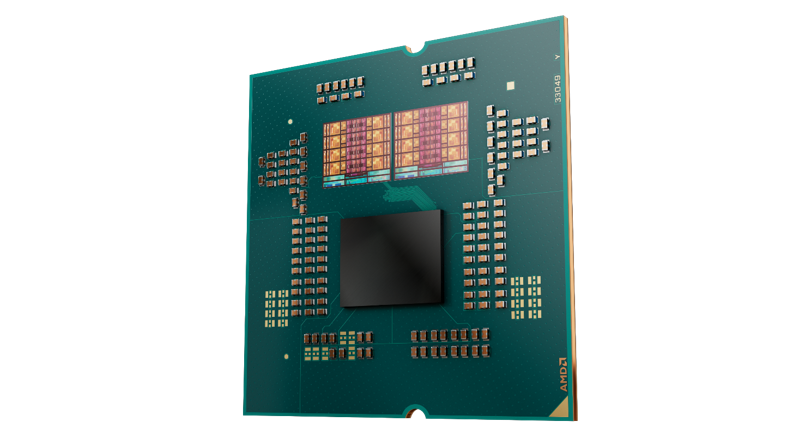
Having released the initial Zen 5 based single Core Complex Die (CCD) 3D V-Cache-based Ryzen 7 9800X3D in November 2024, AMD announced the dual-CCD Ryzen 9 9000X3D variants, including the Ryzen 9 9900X3D and Ryzen 9 9950X3D, on January 6, 2025 ahead of CES 2025.

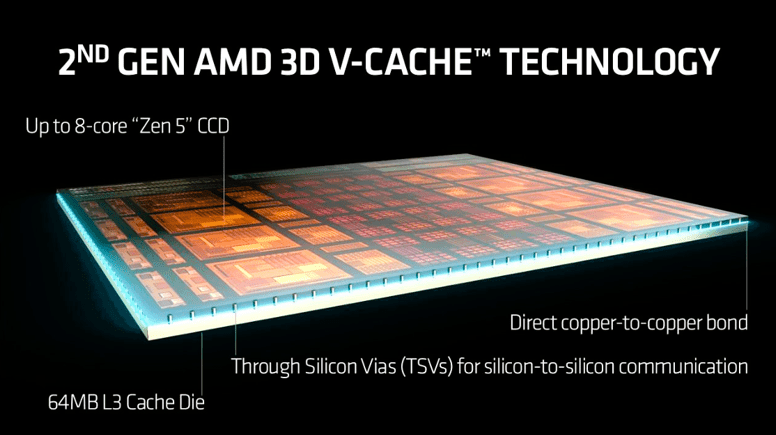
The AMD Ryzen 9 9950X3D is a high-performance desktop processor with 16 cores and 32 threads. It uses two CCDs, each containing eight cores. The processor also features 2nd generation 3D V-Cache technology, which significantly enhances performance by adding extra cache on the chip.

Each of the two CCDs in a Ryzen 9 9950X3D features 32 MB of L3 cache, and there is an additional 64MB of 3D V-Cache that is stacked under one of the CCDs. This extra cache significantly enhances the performance of tasks that benefit from larger cache sizes, especially gaming.
The AMD Ryzen 9 9950X3D became available on March 12, with a starting suggested price of $699.

2nd Generation 3D V-Cache

The new Ryzen 9 9950X3D and Ryzen 9 9900X3D feature 2nd Gen 3D V-Cache, but on only one of the two CCDs. Similar to their predecessors, the other core complex does not include 3D V-Cache. This design offers the best of both worlds: the first CCD with 3D V-cache optimized for latency, and the second CCD without it, optimized for the highest possible clock speeds and throughput for highly-multithreaded workloads that do not depend on L3 cache for performance.

AMD has advanced and optimized its 3D V-Cache technology, as we covered in our Ryzen 7 9800X3D review and now with the new Ryzen 9 9950X3D and Ryzen 9 9900X3D parts. This latest iteration, known as 2nd Gen 3D V-Cache technology, offers notable improvements in performance. The key difference lies in the cache placement. Previously, the 3D V-Cache was layered on top of the cores in the Ryzen 5800X3D and Ryzen 7000X3D processors.

In the Zen5-based Ryzen 7 9800X3D and Ryzen 9 9000X3D series, the 2nd Gen 3D-V-Cache is now positioned below the processor cores. This change allows the primary heat source, the CCD, to interface directly with the cooling solution. Since the 3D V-Cache is less sensitive to temperature, this results in up to 46% better thermal resistance, according to AMD. Cooler temperatures enable higher sustained clock speeds, both single- and multi-threaded.

AMD Provisioning Packages Service Update

The latest update to the AMD Provisioning Packages Service, which is included in the chipset driver update for Windows 11, brings significant improvements to the user experience. This service manages AMD provisioning packages, including processor and nonvolatile memory express (NVMe) power management.

Designed specifically for Ryzen 9 processors, the service optimizes CPU power and performance during gaming. It uses power/frequency optimization and core parking within the Windows Game Mode power profile. The service dynamically applies optimizations to specific power profiles when an application is launched. When gaming, it “parks” the cores on the second CCD that lacks the 3D V-Cache, making them temporarily unavailable to the OS. This ensures the game runs on the CCX. The AMD Ryzen 9 9950X 3DV features two CCDs (Core Chiplet Dies).

Each CCD in this processor contains a single CCX (Core Complex) with 3D V-Cache, improving the L3 cache hit rate and overall game performance and particularly bolstering critical elements such as the 1% low frames per second (FPS) rate.
If there are changes to the CPU name, core count, logical processor count, or L3 cache count, the service will automatically uninstall and reinstall the relevant AMD provisioning packages. AMD advises performing a clean installation of Windows when changing the processor to avoid potential configuration issues with other software. The time to complete provisioning changes is typically around two minutes after booting to Windows.

While there is no BIOS option for this feature, the AMD Provisioning Packages Service can be disabled in Windows Services settings. NVMe provisioning requires Windows 11 version 22H2 or later. The Windows 10 user experience remains unchanged.

Overall, this update enhances the predictability, performance, and efficiency of Ryzen 9 9000X3D V-Cache-enabled processors, particularly for gaming, by intelligently managing power and core usage.

AMD 3D V-Cache Performance Optimizer

The AMD 3D V-Cache Performance Optimizer enhances the performance of Ryzen 9 9000X3D 3D V-Cache processors in gaming and non-gaming tasks. It achieves this by dynamically adjusting the “favored” processor cores based on the current application. During gaming sessions, the OS prioritizes cores connected to the larger L3 cache. Conversely, for non-gaming tasks, it favors the cores with the highest frequency. Notably, the AMD 3D V-Cache Performance Optimizer does not “park” any cores.

This feature benefits desktop processors such as the Ryzen 9 9950X3D, Ryzen 9 9900X3D, Ryzen 9 7950X3D, and Ryzen 9 7900X3D. However, it does not provide advantages for single CCX X3D processors like the Ryzen 7 9800X3D or Ryzen 7 7800X3D.

Configuration options for this feature are available in the BIOS under AMD CBS/SMU Common Options/CPPC Dynamic Preferred Cores. The settings include:

– Auto | Driver: Allows the driver to decide which CPUs to prefer based on the active window.
– Cache: Always prefers CPUs in the 3D V-Cache CCX.
– Frequency: Always prefers CPUs in the highest frequency CCX.

Overall, the AMD 3D V-Cache Performance Optimizer significantly boosts the efficiency and performance of compatible Ryzen 9 processors by intelligently managing core usage based on the task at hand.

AMD Application Compatibility Database

The new AMD Application Compatibility Database, which requires both a new BIOS and chipset driver, is designed to address specific game titles that exhibit performance-limiting behavior not fully resolved by the AMD Provisioning Packages Service. These targeted optimizations reduce the thread pool size for the affected games, resulting in improved L3 cache utilization and higher FPS. This is achieved by repurposing the Windows Compatibility Toolkit’s ‘ProcessorCountLie’ feature, originally co-developed with Microsoft.

Users with Socket AM5 Platform Ryzen 9 9000 series and Ryzen 9 7000 series processors, both with and without X3D, can benefit from this new feature after a BIOS update. Currently, the Ryzen 9 9950X3D benefits from an AMD Application Compatibility Database File with optimizations for several games, including Deus Ex: Mankind Divided, Dying Light 2, Far Cry 6, Metro Exodus, Metro Exodus Enhanced Edition (RT), Total War: Three Kingdoms, Total War: Warhammer III, and Wolfenstein: Young Blood.

Overall, the AMD Application Compatibility Database enhances gaming performance by intelligently managing thread pool sizes and improving cache utilization for a smoother and more responsive gaming experience.

The AMD Ryzen 9 9950X3D for Productivity

Rendering is a good example of productivity. The choice between CPU and GPU rendering hinges on a project’s specific needs and constraints. While GPUs excel in parallel processing and are often faster for many rendering tasks, some studios and creators still prefer CPUs. CPUs can handle larger amounts of system memory, offer better price-performance ratios compared to professional GPUs with limited VRAM, and provide high precision and stability. Additionally, CPUs are usually certified by most ISVs to run their applications smoothly without issues. This makes CPUs a reliable choice for many rendering workflows, even if they take more time.

For the first-generation implementations of AMD Ryzen 3D V-Cache, the cache tile being placed on top of the CCD limited the potential for higher clock frequencies and headroom increases due to thermal constraints. This meant that while certain workloads such as gaming saw big performance increases with 3D V-Cache enabled CPUs, highly-threaded, productivity-centric applications could see worse results with the lower frequencies on the 3D V-Cache-enabled CCD.

With the cache tile being placed underneath the CCD in second-generation 3D V-Cache parts, the CPU frequency is able to boost to higher frequencies, helping make these parts much more comparable in performance to the standard, non-3D V-Cache CPUs on highly multi-threaded workloads. This capability gives demanding users the best of both worlds of gaming and productivity.

Blender Benchmark

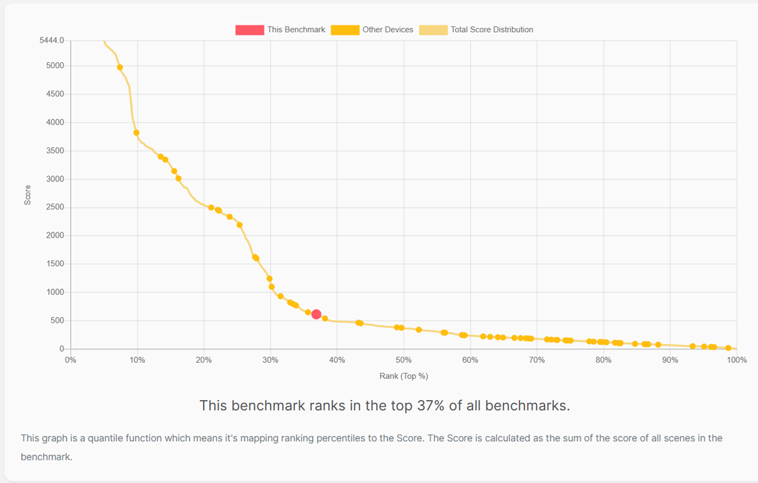
Blender Benchmark version 4.3.0 was used to assess the AMD Ryzen 9 9950X3D processor’s rendering performance. With a score of 613.88, the processor’s performance ranked among the top 37% of benchmarks running the same workloads. Given the inclusion of GPU results, the CPU performed brilliantly in proportion to its core count.

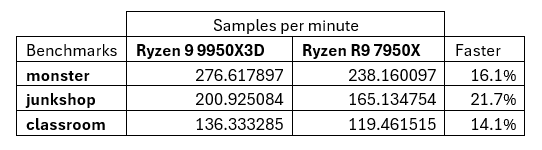
Compared to the Ryzen 9 7950X (non-3D V-Cache) that we reviewed last year, the Ryzen 9 9950X3D achieved an average benchmark performance that was 17% faster.

IndigoBench

IndigoBench v4.4.15 is another standalone benchmark based on Indigo 4’s rendering engine and the industry-standard OpenCL.

The processor scored an impressive 19.048 million samples per second on IndigoBench, ranking it among the top 30 CPU results. This was achieved with normal settings and no overclocking. Many of the top scores were from high-end server CPUs like the AMD EPYC 9654 96-Core Processor.

The processor outperformed the Ryzen 9 7950X again by 17%, thanks to its cooler operation and faster core speed of 5.2GHz on all cores under load.

Overclocking

We enabled Precision Boost Overdrive (PBO), which remains the best method for overclocking while maintaining optimal power efficiency. It is important to note that PBO is an advanced overclocking feature that may void the warranty, according to AMD. In the BIOS, under the Advanced settings, we set the limits to “Motherboard” and adjusted the CPU Boost Clock override to “+200MHz.” We incrementally adjusted the Curve Optimizer, starting at -10 and achieving stability at -20 on all cores, verified through Cinebench 2024 testing.

The single core boost hit 5.9GHz, while all cores under load consistently ran between 5.15 and 5.2GHz. Thanks to the be quiet! Silent Loop 2 280mm water cooler, temperatures remained below 80°C. In Cinebench 2024, the default settings yielded a score of 2,190 points. However, with PBO enabled, we achieved a 9.5% performance boost, raising the score to 2,399 points at a lower voltage. This was also 15% better than the Ryzen 9 7950X CPU, which scored 2,094 using PBO boost settings.

Besides overclocking manually in the motherboard’s BIOS, users can also use the Ryzen Master tool to fine-tune performance. This flexibility allows advanced users and overclocking enthusiasts to fully explore and enjoy the capabilities of this chip.

Final Words and Conclusion

The second-generation AMD 3D V-Cache, which places the cache tile underneath the CCD die, helps overcome the biggest limitations of the original generation, allowing better heat transfer and sustained higher clock speeds. The Ryzen 9 9950X3D boasts the fastest Zen 5-based 3D V-Cache-enabled CCDs, reaching up to 5,550 MHz, compared to 5,450 MHz for the Ryzen 7 9800X3D. This not only helps the new Ryzen 9 9950X3D have a better gaming performance due to the higher clock speeds of the 3D V-Cache CCD; it also also closes the multi-thread performance gap on highly multi-threaded workloads, as the clock penalty of the 3D V-Cache is much smaller than the prior generation 3D V-Cache CPUs.

3D V-Cache has been proven to work very well overall, but it is not the whole story. Looking to the future, and particularly with the prevalence of AI-enhanced workloads coming down the pipeline, we would suggest that AMD considers focusing on improving memory performance and capacity as a differentiator. With DDR5, supporting large memory capacities with four DIMMS spread across two channels normally requires dropping the memory transaction speeds significantly to achieve reliability. This usually means that many customers prefer to populate only one DIMM per channel to maximize memory throughput, which can limit the installed DRAM capacity.

Doubling the number of DRAM memory channels from two to four and providing only a single DIMM slot per memory channel in future platforms will allow the DRAM to run at maximum transfer rates for all DIMM slots to support the higher demands of dual CCD CPUs. It will also enable the use of four DIMMs per system for maximum memory capacity at a cost-effective price. A single DIMM slot per memory channel will also help to reduce electromagnetic interference issues, simplify engineering, and increase reliability and performance compared to having an empty second DIMM slot on a memory channel. This would allow for greater upgradability and significantly enhanced performance in creative applications, without compromising memory bandwidth and speed.


Mohamed Hakam Hefny - Senior Program Manager - IDC

Mohamed Hefny leads market research in EMEA on professional workstation PCs and solutions. He also reports on professional computing semiconductors, processors, and accelerators (CPUs and GPUs), as well as breakthroughs and trends related to the market. In addition, Mohamed is actively involved in AI PC taxonomy and research. He participates in business development projects, contributes to consulting activities, and provides IDC customers with analysis, opinions, and advice.

Cambridge Healthtech Institute’s Bio-IT World Conference & Expo was held from April 2nd to 4th, 2025, in Boston. It brought together an innovation ecosystem of investors, TechBios, and life sciences tech companies, a few system integrators, and biotechs and big pharma. The floor buzzed with discussions around innovation, partnering, and technology disruption. Twenty-eight hundred life sciences and IT executives from 30 countries were out there to explore and shape the future of life sciences innovation.

Kshitij Kumar, CEO, Clovertex noted Bill Gates statement that despite the AI revolution, 3 roles that will remain essential include coders, energy experts, and biologists. So, folks in the life sciences industry, we are in the good place! Important points that came up in the keynote including ‘How do you measure the probability of success when building or investing in a company? How do you maintain the balance between speed vs perfection? How do you continue to build and manage risks, especially when, in the life sciences industry, regulatory and scientific risk is higher than market risk? As Sonya Makhni medical director, Mayo Clinic, called out ‘Develop your own risk stratification strategy for clinical and technical risk’. Subha Madhavan, VP and head AI, Pfizer noted ‘Creating regulatory grade RWD will occupy our mind for the next few years’.

The Cambridge Venture Innovation and Partnering (VIP) forum was full of deep discussions where investors provided some invaluable guidance to the startup community of life sciences tech companies and Techbios on what were the critical aspects guiding their investment decisions, how AI adoption impacted these decisions and what were the critical factors impacting partnering decisions with biopharma.

Since tech investors were seen to focus on business fundamentals, while biotech investors were seen to focus on the data that TechBios generated, the importance of clearly articulating ones value proposition so that it resonated with investors was emphasized. Pharma stressed that it looks for first in class or best in class assets that have ideally been already approved – asset differentiation is key. Having an asset in hand would save spend on time and money spent on the discovery process and this is the differentiator that TechBios would bring to the table.

Notably, the timeline to demonstrate success is getting shorter and shorter, speed is a differentiator, and investors are monitoring this carefully. Establishing key partnerships with pharma would significantly enhance the valuation of TechBios. Life sciences tech companies on the other hand should focus on hiring life sciences domain experts who can train models and should have people on their boards who can determine product fit rather than those who can develop the product. VC firms called out that 2025 would be about GenAI for small molecules, while 2026 would be about AI driven intelligent lab automation.

Finally, it was not just about building the technical infrastructure, but also about building a nimble culture and an agile culture to swiftly capture the right opportunities. Biopharma companies were also advised to rethink their budgeting strategies and to factor in the spend on IT infrastructure in the cost of developing a new molecule.

Drew Dresser, Sr Director AI and Cloud Engineering, Flagship Pioneering spoke about how Flagship was building a digital backbone including scientific computing, a cloud foundation, scientific data models, and workflow orchestration engines across its portfolio of 35 companies. He touched upon the rise in Bio FMs and how biotech innovation lives in the cloud, the evolving role of AI co-scientists, such as Google AI co-scientist and the Allen AI Ai2’s code scientist, and how the role of agents will move beyond transactional activities to playing a role in hypothesis creation. 

Abbvie presented its CSR authoring solution. Tobi Guennel, SVP product innovation Quartz Bio, presented its precision medicine AI platform which leverages a series of agents including orchestration agents, DM and Intelligence Agents, Auxiliary agents, Navigator agents and more, where all agents are embedded in the fabric. He reports that this resulted in a two-fold increase in speed from data to insights and a 25% increase in R&D output. Illumina highlighted that multiomics is at the core of identifying targets for cancer vaccines, and it emphasized the importance of the use of AI in spatial genomics to determine where the target is located in the tumor.

ConcertAI, which positions itself as an oncology GenAI company, discussed how it has partnered with NVIDIA to build its platform with a multi-agentic framework and proprietary SLMs and LLMs to support oncology clinical trials. It forecasts that by 2027, domain-specific GenAI tools that are fine-tuned for pharma applications will deliver a 3-5-fold higher ROI than general purpose foundation models, particularly in regulatory-sensitive contexts.

On a separate note, Joan Chambers, Senior Consultant, Tufts Center for the Study of Drug Development, presented findings from the Partnership for Advancing Clinical Trials (PACT), survey in which 15 biotechs and pharmas had participated, and noted that 75% considered hybrid decentralized clinical trials (DCTs) as a strategic objective and that they will use DCTs in more than 45% of their trials in the coming 5 years.

Be it drug discovery, or drug development, GenAI and agents are leading the way. Life sciences is adopting AI at the speed of thought and slowly but surely, making precision medicine a reality. As Bill Fitzgerald head biotech markets Google Cloud aptly put it, ‘If AI were a drinking game, most people wouldn’t make it to breakfast’.
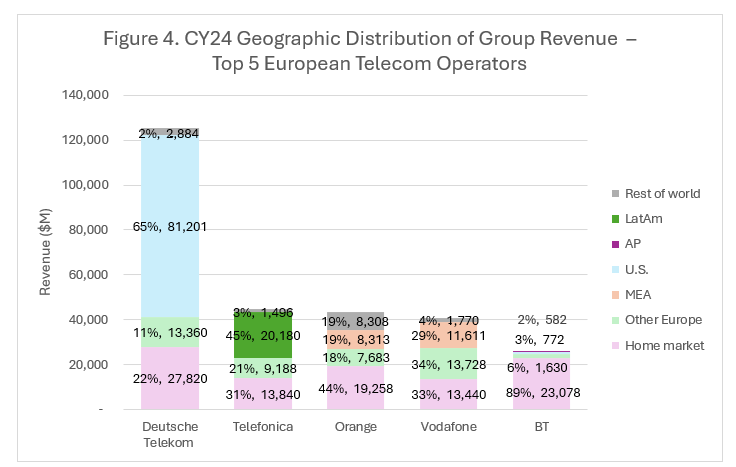
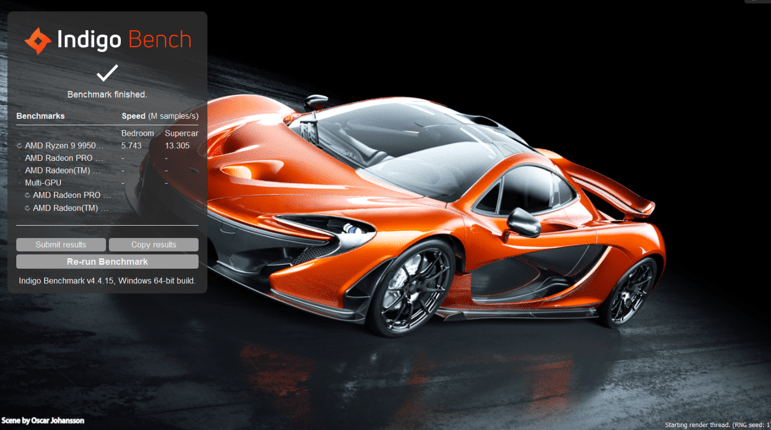
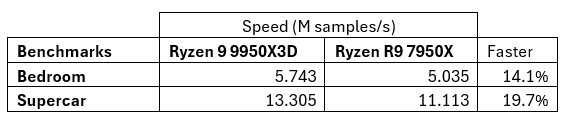
“What really stood out at the BioIT event was the sharp appetite in the industry for implementing GenAI/agents to transform drug discovery and drug development, the focused yet nuanced investment strategies of VC firms for investing in TechBios vs life sciences tech companies, and the realization that for once, the entire innovation ecosystem, including regulators, is working together to accelerate disruptive innovation in the life sciences industry”, said Dr. Nimita Limaye, Research VP, Life Sciences, R&D Strategy and Technology, IDC.

Nimita Limaye - Research Vice President - IDC

Dr. Nimita Limaye is a Research VP with IDC Health Insights and provides research-based advisory and consulting services, as well as market analysis on key topics related to R&D Strategy and Technology in the life sciences industry. She addresses aspects such as the role of digital transformation in discovery research, e-clinical ecosystems, the role of NLP, AI, ML, DL, RPA, in transforming drug development, precision medicine, pharma R&D execution and strategic outsourcing models.

The U.S.-China tech rivalry has escalated to a new level this April 2025 with U.S. tariffs becoming a targeted trade tool. The Trump administration unleashed​ waves of tariffson Chinese goods: on March 4, a 10% tariff on all imports was imposed on top of raising tariffs from 10% to 20% on many Chinese electronics, machinery and industrial components; on April 2, ending of de minimis eligibility for China and Hong Kong (from May 2) and the “reciprocal tariffs” on key critical sectors imposed an additional 34%; and on April 8, an additional 50% tariff on semiconductors, EVs, and robotics was announced.

There also continues to be tariff escalations, clarifications and exemptions like in cases where final products have more than 20% of U.S. produced components. Chinese imports can be as high as 245% on needles and syringes or as low as zero for children’s books. Imported smartphones, computers and electronics appear to be currently granted a partial tariff reprieve and may only be subject to the March tariffs of 20%. These adjustments will probably continue as the impacts are felt by American consumers and the global markets.

Some view these measures as a means to derail China’s technological ascendancy by inflating costs, disrupting supply chains, and isolating it from global markets. Beijing’s counterstrategy, a mix of aggressive fiscal stimulus packages, supply chain resilience frameworks, and enforced technology self-reliance, suggests a calculated pivot to absorb short-term shocks while securing long-term growth.

The question then is: can China’s 2025 policy playbook neutralize U.S. tariffs’ impacts and sustain its ICT ambitions?

U.S. Tariffs’ Impact on China’s ICT Sector

IDC’s 2025 projections reveal a sector under strain but adapting. Our baseline scenario, with 20% tariffs in place, China’s ICT spending is expected to grow at 9.1% driven by domestic AI, cloud, and industrial software demand. With 50% tariffs, IDC’s downside scenario will slow down growth to 5.7%, with consumer electronics (PCs, smartphones) declining ​7.6% due to inflated import duty. An optimistic scenario, with tariffs rolled back, sees China’s ICT spending growth at 9.9%, fueled by pent-up innovation and continued existing global partnerships.

Contributing to China’s ICT spending in 2025 are the key trends we are seeing in software/cloud services (+10 to 16% YoY), largely due to organizations prioritization of digital efficiency, as well as in industrial technologies such as AI, IoT, automation, which remains resilient due to state subsidies. While the consumer hardware export market is expected to falter (e.g., iPhone costs rose 25% post-April hikes), domestic demand is expected to remain steady with government subsidies.

China’s Growing Tech Independence

There is increased emphasis on China’s “dual circulation” strategy that was originally a response to the U.S. tariffs and other sanctions introduced between 2018 and 2020. The strategy seeks to prioritize domestic consumption and non-western international trade to gain greater self-reliance and resilience. This strategy can be seen at work in the likes of DeepSeek whose open-source models are now powering a ​significant portion of Chinese Cloud services including Tencent, Alibaba and many more. Huawei’s Ascend AI chips also increased their share of AI-accelerator chips to ​27% in 2024 and is expected to reach 40% by the end of 2025.

Companies’ Response: Increased Agility to Respond to Tariff Chaos

Agility is the name of the game amid all this tariff chaos. Chinese tech giants are restructuring their supply chains by accelerating offshoring to Southeast Asia, shifting their assembly lines to sidestep tariffs. They are also diversifying their markets by pivoting to emerging markets, such as expanding electric vehicle and cloud service exports to tariff-immune regions. Some companies are also innovating operations by adopting leaner strategies like AI-powered factories to cut waste or using direct shipping tech from e-commerce platforms to bypass tariffs.

China’s 5-Point Plan: A Phase-Matched Counterattack

In response to each wave of tariffs, a 5-point plan helped blunt immediate impacts while increasing long-term leverage:

1. Domestic Demand Boost via “Consumer Upgrade Action” Plan

With the aim of boosting domestic demand and spurring economic growth, the Chinese government has put in place subsidies and trade-in programs for eligible consumer goods. For smartphones, tablets, and smartwatches, the government subsidy is up to 15% of product price, capped at ¥500/item. This trade-in program is expanded in 2025 to apply to other electronics, EVs and home appliances as well, as illustrated in the following chart:

The subsidies also target rural/low-tier cities for 5G adoption, smart home devices, and rural e-commerce logistics. There are also plans to stabilize consumer confidence through stock/real estate market reforms and wage growth policies.

The effect of these subsidies can be seen in the latest sales-out PC shipments with flat growth of 1% in 1Q 2025 compared to -16% in 1Q 2024.

2. Increased Funding for Emerging Tech

China’s $138B Innovation Fund aims to boost homegrown tech innovation and reduce foreign reliance amid escalating U.S. tariffs. It focuses on discovering and increasing “original technological breakthroughs” in early-stage startups in AI, quantum computing, hydrogen energy, biomanufacturing, and 6G technology. Funding is a combination of state capital and private/local government long-term (over 20 years) investments in R&D infrastructure and tech-to-product pipelines.

The innovation fund also involves industry stakeholders such as the MIIT (Ministry of Industry and Information Technology), academia, enterprises (to enhance smart manufacturing), and foreign collaborators in the telecom/robotics sectors. The program also aims to cultivate and highlight domestic STEM talent to offset global supply chain risks, with existing success stories like DeepSeek.

3. China’s “Five Financial Priorities” Guidelines

These guidelines provide financial support to organizations providing technology, green finance, digitalization, financial inclusion, and pension products and services. It uses technology investments to bolster innovation and self-reliance. Key measures include: comprehensive financing for national tech projects and SMEs via equity, debt, and insurance tools; capital market focus prioritizing early-stage investments in emerging technology through multi-layered markets; risk mitigation mechanisms to disperse R&D risks and expand venture capital/angel funding; and patient capital to cultivate long-term investments that nurture tech leaders, unicorns, and specialized SMEs. This framework integrates financial resources to advance China’s tech competitiveness and industrial upgrades.

4. Belt and Road 2.0: Decoupling from the U.S. via Global Partnerships

“Belt and Road 2.0” aims to reduce reliance on the U.S. by expanding partnerships and promoting diversification. Strategies include upgrading multilateral mechanisms (e.g., proposed creation of a global banking infrastructure), prioritizing green tech and digital infrastructure (e.g., Green Silk Road projects), and deepening cooperation with Global South nations (e.g., Indonesia, Malaysia). It counters U.S. decoupling attempts by fostering inclusive, non-conditional collaboration and integration with third-party markets. These initiatives also emphasize resilience through regional alliances and tech self-sufficiency.​

5. Private Enterprise Symposium 2025

The symposium was used to develop joint approaches between the public and private sector to offset U.S. tariffs. DeepSeek’s NLP breakthroughs and Unitree’s humanoid robots were highlighted as successful examples that have reduced reliance on foreign tech. At the symposium, China’s President Xi Jinping pledged to dismantle market barriers, ensure fair access to resources, and expedite laws protecting private enterprises.

Conclusion

Considering ongoing trade tensions, both U.S. and Chinese IT companies must adapt quickly to shifting geopolitical dynamics. Agility and scenario planning will be critical. Companies need to develop flexible strategies and implement tools that assess the potential impacts of tariff changes and geopolitical shifts. Regular cross-functional reviews can help minimize risks and ensure swift responses to market changes.

Furthermore, customer-centric innovation will drive market success. Companies must prioritize local market needs through targeted research, ensuring that their products align with specific regional demands such as those seen in healthcare, education, or government sectors. This approach is vital as trade restrictions may limit access to certain markets, but the demand for innovation will remain constant.

Strategic partnerships and alliances are also crucial for navigating challenges. U.S. and Chinese companies should collaborate with local tech providers to better understand market regulations and explore joint ventures to mitigate tariff impacts.

As the demand for smart home appliances grows, especially with trade-in programs, vast amounts of consumer data will fuel the expansion of B2C AI use cases in China. Additionally, China’s focus on infrastructure projects and domestic LLM development marks a new phase in technological independence, where reliance on U.S. technologies may decrease.

By focusing on flexibility, innovation, and strategic partnerships, both sides can thrive despite current challenges.

Learn more how you can navigate China’s geopolitical storms with trusted intelligence, read this complimentary IDC Market Note excerpt.  Alternatively, you can book a meeting with an IDC analyst for a consultation by submitting this form.

Kitty Fok - Managing Director - IDC

As the managing director of IDC China, Kitty Fok manages over 80 specialized analysts and leads all research for the China region. Kitty's expertise includes an in-depth understanding of the IT market, with a focus on emerging technologies, the impact of the Chinese government's policies, and digital transformation, as well as the fundamentals of forecasting, business development, and strategic planning/analysis. She is often invited to be a guest speaker in the industry's leading events and is regularly interviewed by the mainstream media, including the BBC, CNN, Bloomberg, CCTV, USA Today, The Wall Street Journal, South China Morning Post, and China Daily.

IDC’s 2024 Customer Experience Management Strategies survey found that businesses globally have shifted to a focus on improving the effectiveness of their customer experience (CX) investments while driving profitable revenue growth.

IDC finds that C-suite priorities for customer experience are squarely focused on optimizing experience delivery, making experience consumption easy, and achieving experiential value parity. But achieving these directives requires organizations to rethink experience delivery as greater than just the sum of multi-channel, front-office interactions. When done right, IDC research shows that unified CX can lead to higher customer retention, improved advocacy and ultimately profitable revenue growth.

What does it mean to orchestrate unified experiences across the full lifecycle of customer outcomes?

IDC’s 2024 CX Path survey found that improving scale and consistency for orchestrating experiences across the enterprise was the #1 business driver for companies implementing customer experience orchestration solutions. To negotiate the complexity across channels, touchpoints, journeys, and systems/applications across functions, that deliver value-based outcomes based on changing customer context at every moment, organizations must adopt a multi-layered approach to CX delivery across all organizational layers, including middle and back-office functions. This involves integrating systems of record, insights, control, and engagement to ensure seamless and consistent customer interactions.

Systems of Record

Organizations need to address data fragmentation by unifying customer and operational data. This integration is crucial for scalable AI workloads and deeper customer insights. IDC’s 2024 CXMS survey found that only about 24% of organizations have access to a single source of customer data with full integration across the stack. By pooling data from front-office and back-office functions, companies can create a comprehensive view of the customer journey.

Systems of Insights

A cohesive fabric of customer insights is essential. Organizations should combine structured and unstructured data to generate actionable customer intelligence. Sharing and integrating these insights into daily operations can significantly improve customer engagement and business outcomes.

Systems of Control

The orchestration layer acts as the connective tissue, integrating various systems and ensuring real-time, context-aware customer engagement. This layer leverages AI and automation to manage workflows, business logic, and customer interactions, enhancing decision-making across the organization.

Systems of Engagement

This layer includes, but is not limited to, the various customer engagement channels across digital, physical, and blended, employee-facing tools and platforms that may be either exclusive or shared by both employees and customers, and various engagement channels through which 3rd parties engage with the brand. Organizations that isolate experience delivery to one stakeholder group will ultimately get left behind.

Where do AI Agents and Agentic systems fit into intelligent experience orchestration?

AI Agents are a route to deliver greater sophistication for unified experience orchestration. Data and computing power advancements and the availability of advanced reasoning models are driving more sophisticated, more advanced Agentic AI capabilities. Core characteristics of AI Agents make them optimally suited to address the gaps organizations must fill in order to deliver unified intelligent experience orchestration.

AI Agents all share the following core characteristics:

  • Planning: AI agents can plan and sequence actions to achieve specific goals. Empowers Al to break down complex tasks into manageable steps, developing structured approaches to problem-solving. The integration of LLMs has revolutionized their planning capabilities.
  • Perception: AI agents can perceive and process information from their environment, to make them more interactive and context aware. This information includes visual, auditory, and other sensory data.
  • Tool usage: Advanced AI agents can use various tools, such as code execution, search, and computation capabilities, to perform tasks effectively. AI agents often use tools through function calling.
  • Multi-Agent Collaboration: Facilitates multiple Al agents working together, each with specialized roles, to tackle complex problems more effectively.
  • Memory: AI agents have the ability to remember past interactions (tool usage and perception) and behaviors (tool usage and planning). They store these experiences and even perform self-reflection to inform future actions. This memory component allows for continuity and improvement in agent performance over time.

This enables AI Agents to create a new layer of ‘intelligent actions’ on top of CX and business applications. AI Agents consume and hand off customer and operational data, insights, tasks, across systems, workstreams, processes, and business functions, in a continuous, context-aware, manner. A system of AI agents essentially functions as the glue / connective tissue that connects organizational functions, systems/applications (customer-facing, operational systems, and employee tools), and data. This offers organizations the needed automation and scale for seamless vertical integration through the multiple layers for unified experience orchestration.

With 35% of enterprises reporting that fulfillment aspects of the customer journey don’t extend beyond front-office processes, enterprises face a significant gap in orchestrating and delivering whole journey customer experiences. Agentic AI presents an equally significant opportunity to unlock machine scale, beyond just productivity gains to improve connectedness across the entire CX ecosystem with intelligence at the core.

AI Agents can even bridge gaps in the fragmented technology landscape at many organizations. However, harnessing value from Agentic AI for CX will require enterprises to address long-standing, foundational challenges such as customer and operational data integrity, unification, and governance, AI governance, and customer privacy/security. Crucially, organizations must prioritize approaches to address the workforce impact of GenAI and agentic technology capabilities up front, especially front-line employees, who will continue to remain an integral part of delivering excellent customer experiences.

Sudhir Rajagopal - Research Director, Future of Customers and Consumers - IDC

Sudhir is Research Director for the CMO Advisory Service, focused on creating and executing programs and research to help companies make data-informed decisions about marketing. Sudhir's research and advisory focuses on how organizations must consider transforming their marketing function with AI at the center. In his role, Sudhir monitors the continual innovation of technologies, business strategy, and customer experiences to empower marketing leaders to make decisions on marketing strategy and operationalization.