AI is quickly changing the workplace, but not everyone is reaping the rewards. Office workers are seeing the perks of AI, while those on the front lines are lagging due to a lack of training and resources. This gap could lead to a two-tier workforce, where some people with AI skills excel while others find it tough.

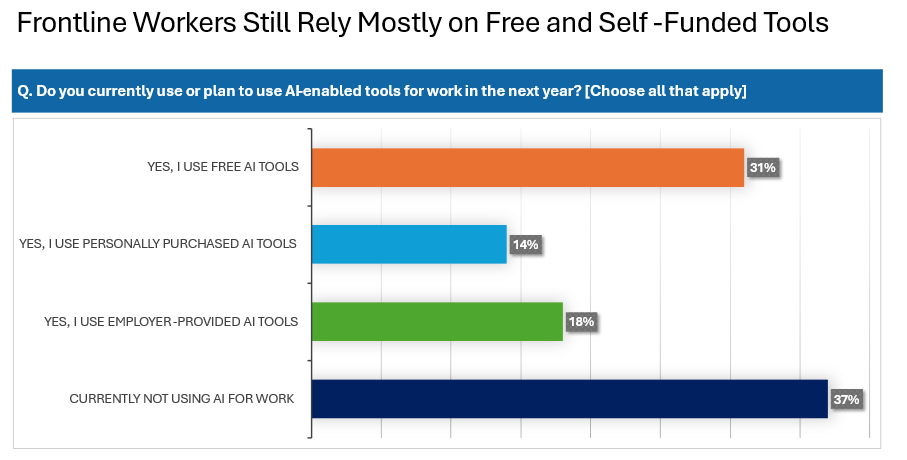
Many frontline jobs involve a lot of manual and repetitive tasks. Automation and AI are great tools to help shift workers’ focus from boring tasks to more interesting ones. So, it’s no shock that found that 63% of frontline workers are using AI tools in their jobs. Unfortunately, just 18% of employees have access to AI from their companies, which has led 45% to seek out free or personal AI tools for their work. This creates serious security risks for companies.

While frontline workers generally view AI less favorably than office staff, nearly half believe it could enhance their work experience. Generational differences are notable though, with 55% of Gen Z frontline workers expressing excitement about AI, compared to just 27% of baby boomers.

Frontline workers frequently also feel more anxious about AI, mainly because they’re worried about job security, feeling powerless against new tech, and thinking that human input in decision-making is dwindling. IDC’s survey shows that just 48% of frontline workers think AI isn’t a threat to their jobs. On the flip side, 20% feel they are at serious risk, with the remainder unsure. Getting to know AI tools better can help ease these worries for frontline workers and turn skeptics into skilled AI users.

More than 2 billion frontline workers play a crucial role in keeping our planet running. Their jobs are tough and often risky, involving 10- to 12-hour shifts in different settings. AI is changing the game for these workers by automating tasks, offering real-time insights, and giving them more power. AI isn’t just for office work anymore; it’s now making waves in most industries, including those with large numbers of frontline workers.

To move forward, tech providers and tech buyers must rethink what expertise means in today’s AI era. They must help frontline workers understand how AI tools can enable them to handle complicated tasks even with little prior experience. Our research suggests that companies can — and ought to — expand their view on who can get involved in AI-driven initiatives. By doing so, they can leverage the complete potential of their workforce and make sure that everyone is part of the AI transformation, ultimately boosting the return on investment for current and future AI projects.

Listen to Meike on the latest webcast, “Important Workplace Insights to Drive AI Sales in Europe”

Meike Escherich - Associate Research Director, European Future of Work - IDC

Meike Escherich is an associate research director with IDC's European Future of Work practice, based in the UK. In this role, she provides coverage of key technology trends across the Future of Work, specializing in how to enable and foster teamwork in a flexible work environment. Her research looks at how technologies influence workers' skills and behaviors, organizational culture, worker experience and how the workspace itself is enabling the future enterprise.

“Everything, Everywhere, All at Once” isn’t just a movie; it’s an apt description of the place of AI in the world today. No matter where you look, AI has infiltrated every aspect of work and play. You have it in your products. Your competitors have it in theirs. How can you navigate and better understand this big market shift?

What was once a bold product differentiator has become the baseline for attracting today’s digitally fluent tech buyers. Buyers who, in turn, are leveraging AI to search, compare, and choose vendors faster than ever.

In fact, as of 2024, 74% of B2B tech buyers say they plan to buy more through eCommerce and engage less with sales reps over the next three years, up from 56% in 2019. As AI pushes this evolution even further, 70% of U.S. B2B buyers will rely on GenAI tools throughout their buying process by 2028.

This evolving behavior is rewriting the product marketing playbook. Effective marketing has always been about strong positioning and creating real demand in the marketplace. If you can’t clearly communicate how your AI solution outpaces the rest, someone else will – and your C-suite knows it. The pressure to differentiate your AI is landing squarely on marketing’s shoulders.

In an AI-saturated market, the question isn’t “Who has AI?” It’s “Who markets it better?”

The Pressure Cascade: What Today’s Marketing Leaders Are Up Against

Thirty-nine percent of executives expect CMOs and their teams to develop a new strategy for customer acquisitions in the next 12 to 18 months, according to IDC’s 2024 Worldwide CMO Priorities Study. Similarly, 31% of executives expect marketing to optimize costs and improve marketing ROI. C-suite leaders are raising the bar internally for marketing performance. In other words, CEOs, CFOs, and CIOs/CTOs now expect CMOs to own growth, ROI, and technology alignment.

As the bar continues to rise, CMOs are pushing their teams harder to deliver more, faster, and with a measurable impact.

This mounting set of expectations is what we call the Pressure Cascade. Without intervention, it overwhelms strategy, fractures execution, and stalls growth.

How Executive Expectations Are Reshaping Marketing

Each executive brings a unique perspective to the table, and understanding their individual viewpoints is crucial for marketing teams to align, adapt, and lead effectively.

  • CEO: “Marketing needs to show how we’re leveraging AI to evolve the business, not just the brand.”
    • Takeaway: Marketing must lead the charge in transforming how the business shows up in the market, delivering business evolution that signals leadership and competitive strength.
  • CFO: “If we’re investing in AI tools and content, I need proof that it’s tied to real opportunity and growth.”
    • Takeaway: ROI is under the microscope. Marketing must prove how AI-enabled products generate revenue, reduce inefficiencies, and create measurable business value.
  • CTO: “Marketing must accurately communicate the business value of our AI capabilities to the market.”
    • Takeaway: Tech credibility matters. Marketing must translate complex AI capabilities into clear, trustworthy messaging that aligns internally with the technology roadmap and differentiates the business externally.

In short: your CEO wants innovation, your CFO wants proof, and your CTO wants alignment.

What’s at Stake?

AI has transformed your product, your buyer, and your internal expectations. And yet, many go-to-market (GTM) strategies haven’t caught up. When marketing fails to reflect this shift, the ramifications are real: campaigns stall, budgets shrink, strategies shift, and competitors with a differentiated AI value proposition surge ahead.

Where CMOs Go from Here: Turning Pressure Into Performance

CMOs are reframing internal conversations to reflect the new stakes, asking more urgent questions of their teams:

  • “Where’s the real market data, not assumptions?”
  • “How are our competitors using AI and how do we beat them?”
  • “What’s the story that proves we’re ahead of the curve?”
  • “What do our buyers really want and need?”

These aren’t rhetorical questions. They point directly to the biggest barriers many marketing teams face today:

Data gaps

Too many strategies are still built on outdated assumptions or incomplete insights. Without reliable, real-time data, many marketing initiatives stall before they start.

Competitive positioning

As more companies adopt AI, differentiation becomes more difficult and more urgent. Being a fast follower isn’t enough when the C-suite expects marketing to lead.

Narrative clarity

Without a clear, compelling story that connects your product to business outcomes, even the most advanced capabilities fail to inspire confidence both internally and externally.

This isn’t just about having AI. It’s about rewiring your GTM strategy to be insight-led, execution-focused, and ROI-driven. Surface-level product claims, vague positioning, and outdated assumptions don’t cut it when AI-savvy buyers and executive pressure leave no room for error.

Your Next Move

For CMOs ready to act, the upside is real. When marketed effectively, AI becomes a force multiplier:

  • Enable smarter decision-making with predictive, real-time insights.
  • Position your AI capabilities as a lasting competitive edge
  • Build internal and external trust through a credible, future-facing narrative.

Easing the Pressure Cascade is the key to capitalizing on the AI tech shift.

Ease the Pressure Cascade With Trusted Tech Intelligence

To navigate and understand big market shifts like AI, CMOs need research-backed technology intelligence.  Access to analysis and insights grounded in real buyer data, peer benchmarks, and industry-wide trends enables CMOs and their teams to make evidence-based decisions.

 Here’s how data can fuel the right decisions for your company:

  • Turn insights into action.
    Align on what matters most and take action with confidence.
  • Inform competitive positioning.
    Understand how your competitors are using AI and where you can outpace them.
  • Craft a future-forward narrative.
    Articulate a compelling story that resonates with buyers and stakeholders alike.

Without trusted intelligence, the Pressure Cascade becomes a drag on execution and morale. With the right data and partners, it becomes your launchpad to lead change, accelerate growth, and build competitive advantage.

The Bottom Line?

AI is no longer an emerging trend; it has become a mainstream technology. It’s a present reality reshaping how products are built, how buyers behave, and how market share is won.

If you’re still marketing your AI-enabled product like it’s 2020, you’re missing the moment and you’re risking your relevance. The time to recalibrate is now.

IDC serves up the data and analysis CMOs and their teams need to stay aligned with what your buyers want and where the market is headed. Based on a methodology that’s been developed and refined over 60 years and vetted by thousands of experts, IDC can help you decisively plan your next move with confidence.

Are you ready to lead? Start capitalizing on the AI technology shift.


Ryan Smith - Content Marketing Director - IDC

Ryan Smith is the Director of Content Marketing at IDC, where he leads brand-level content and social media strategy, aligning research insights with compelling storytelling to engage technology decision-makers. With a background in both IT and marketing, Ryan brings a unique blend of technical understanding and creative strategy to his work. He’s also a seasoned storyteller, speaker, and podcast host who believes the right message, told the right way, can drive both trust and transformation.

Large Cloud Providers are Supercharging Support for Security Channel

In the ever-evolving realm of cybersecurity, we are seeing exciting changes in how top vendors are supporting their channel partners. Many cybersecurity channel partners have noticed that major cloud providers are ramping up their channel support teams more quickly than other SIEM vendors. As Google and Microsoft boost their channel support, they are transforming the security landscape. Meanwhile, customers are observing a steadier pace of change in channel support staff among other SIEM vendors.

Tech Titans Turned Cyber Stars: Google and Microsoft’s SIEM Surge

Channel partners are increasingly recognizing Google and Microsoft for their efforts in enhancing channel support among vendors offering SIEM solutions. While these tech giants have traditionally been recognized by the channel as leaders in software, search, and cloud services, their role in the cybersecurity market, including SIEM, is evolving. Senior security channel executives are now viewing them as key players in cybersecurity. Historically, the responsibility for Microsoft and Google within channel organizations has not been with the security business unit. Similarly, their initial successes in the security sector were often add-on deals, with account management handled by channel staff outside the dedicated security sales team.

Google’s Security Renaissance: Mandiant Magic and Channel Opportunities

Google’s acquisition of Mandiant has reignited its focus on security, boosting customer awareness of Google’s growing role in the security market. Mandiant’s strong reputation for incident response services has played a significant part in this shift. Security incidents often lead to new priorities, vendor changes, quicker decision-making, and increased budgets, all of which position Google to benefit from investments in channel support staff. Additionally, Google’s Security Operations solution is gaining traction in the SIEM space, with the Gemini AI assistant helping to lighten the workload for analysts. Channel organizations are eager to partner with companies that customers are interested in migrating to or have existing investments with, creating opportunities for up-selling.

Microsoft’s Masterstroke: Bundling Brilliance and Channel Charm

For Microsoft, it was not a single acquisition or product category that drove demand in the security channel. Instead, it was their bundling strategy, which integrated security features into E3 and E5 licenses. Initially, security channel organizations saw this approach as a potential risk, as they often partnered with vendors competing against Microsoft and faced challenges in price comparisons. While the channel recognized the value of Microsoft’s ecosystem, there were concerns about profitability with a company not traditionally seen as channel focused. However, as Microsoft’s security capabilities have gained industry respect, channel partners have embraced the partnership. Microsoft is now seen as increasing its channel support staff in the security sector. As the second largest SIEM vendor by revenue, Microsoft continues to improve Microsoft Sentinel with SOC optimization. Microsoft’s Security Copilot works across the security products, helping security analysts work more efficiently.

Beyond SIEM: Google and Microsoft’s Security Spotlight Sparks New Opportunities

The enhanced security visibility of both Google and Microsoft extends beyond just SIEM, and their growing commitment to supporting channel partners opens up exciting new opportunities for customers to explore and evaluate products across various categories.

Cloud Marketplace Magic: AWS Leads the Way in Partner Collaboration

The influence of cloud marketplaces is truly significant. They are enhancing their collaboration with traditional reseller partners, streamlining processes to make it easier for the channel to work alongside security vendors. This improvement is particularly evident with AWS.

IBM’s Channel Shift Beyond QRadar

IBM is seen by North American channel partners as expanding its channel support staff. However, the transition of IBM’s QRadar SaaS business to Palo Alto is expected to result in this growth having a greater impact to IBM’s other security categories beyond SIEM.

Channel Balancing Act: SIEM Growth and Support Dynamics for CrowdStrike, Fortinet, and Palo Alto

CrowdStrike, Fortinet, and Palo Alto are all expanding their SIEM business, but there is a slight perception that they might be losing channel support staff rather than gaining it, due to a range of factors. As major security-focused vendors, these companies are welcoming hundreds of new channel partners each year. However, adding partners without increasing support staff can sometimes leave partners feeling overlooked if resources become stretched thin. Additionally, vendors often bring in channel support staff focused on specific vertical markets or product categories, which may not always align with every channel organization’s needs. Sometimes, vendors strategically shift their focus to certain types of partners, like GSIs over regional VARs, based on their target market segments or other considerations. In such cases, existing partners might receive less attention or see expansion opportunities shift to other partners. It is also important to remember that large cybersecurity vendors have well-established channel partner programs, and changes in personnel and organization are often seen as a normal part of the partner-vendor relationship.

Navigating Change with Cisco’s Splunk’s Acquisition

Cisco and Splunk are perceived as losing channel support staff more frequently than they are gaining it. Acquisitions can naturally lead to some disruption in the channel, as partners from both the acquiring and acquired companies may feel a bit anxious about potential changes. However, there was an optimism that Splunk could benefit from Cisco’s extensive channel presence following the acquisition.

For More Information:

To learn more about the perceived changes in channel support staff among SIEM vendors, check out IDC’s Survey Spotlight: SIEM: Vendor Perceptions of Channel Support Staff Changes (US53441425). Or check out the full results of IDC’s North American Security Channel Partners Survey, 2024. (US53227225)

Jaclynn Anderson, Research Director, Security & Trust

Jaclynn Anderson - Research Director, Security & Trust - IDC

Jaclynn Anderson is a research director for IDC's Security and Trust group focused on cybersecurity vendors’ go-to-market strategies, channel relationships, and the distribution channel. Ms. Anderson’s research explores trends related to direct sales, distribution, traditional resellers, GSIs, MSPs, and cloud marketplaces, in addition to trends related to referral sales channels and other non-traditional license partners used by cybersecurity customers.

Apple’s Worldwide Developers Conference (WWDC) 2025 presented a strategic direction with three overarching themes: a comprehensive design overhaul across all its platforms, the introduction of a new OS naming convention, and continued development of Apple Intelligence.

This year’s event was not about disruptive innovation, but rather careful calibration, platform refinement and developer enablement – positioning itself for future moves rather than unveiling game-changing technologies.

At the heart of WWDC 2025 was a comprehensive naming overhaul of Apple’s software platforms. iOS, macOS, iPadOS, watchOS, visionOS, and tvOS are all being rebranded under a year-based naming convention – iOS 26, macOS 26 (Tahoe), and so on – signaling a shift toward a more predictable, aligned cadence across the Apple ecosystem.

But this new branding is more than cosmetic. The user interface (UI) across platforms has been redesigned with a Liquid Glass aesthetic, emphasizing light, transparency and depth, heavily influenced by the visionOS UI. The look and feel – with more translucent menus, updated icons, and redesigned toolbars – brings Apple’s mobile, desktop and XR environments closer together. These changes bring a more visually appealing experience, more clarity to navigation and controls, and provide a more polished overall user experience.

Strategically, Apple appears to be leveraging a refreshed and unified user experience as a primary means to preserve ecosystem loyalty and stimulate hardware upgrades. By making the experience more cohesive, it implicitly raises the friction for users considering a switch to competing platforms, while offering a new aesthetic standard that could make Android interfaces appear dated.

Apple Intelligence

If the tech industry was hoping for Apple to make a grand leap forward in artificial intelligence, they will have to keep waiting. While Apple Intelligence was central to the announcements, its presence was more about setting direction, keep incrementing app functionality, rather than introducing new disruptive futuristic applications.

The most significant AI-related news is the decision to open up Apple’s foundation models to developers. For the first time, with the new Foundations Model Framework, developers will be able to access the same on-device and Private Cloud models used for features like Genmoji, writing tools and summarization. This step brings Apple closer to the kind of AI tools that competitors such as OpenAI, Google and Meta have been offering for some time. This move to empower developers is strategically important, as it allows Apple to leverage its vast developer community to infuse the ecosystem with AI capabilities and more specialized AI applications, catapulting them to the next level sooner.

There are also tangible improvements for users: Apple Intelligence is expanding to new countries and will support additional languages. The key consumer-facing AI upgrade is a push into translation. Building on the existing Translate app, Live Translation is being integrated more deeply with Messages, FaceTime and the Phone App. There are two important additions to the Phone app – Call Screening and Hold Assist – will improve privacy by filtering spam or unwanted calls.

Visual Intelligence also gets an important update. The iPhone will now identify additional information about screenshots, offer to add relevant events to the Calendar, or allow users to ask ChatGPT for more details about the image content. Users can also highlight a portion of an image to isolate it as the area of interest for Visual Intelligence.

Other AI enhancements include an upgrade to Genmoji, which can now combine standard emojis into custom expressions. The Shortcuts app has also been upgraded using Apple intelligence models, enabling more powerful and intuitive user-created automations with intelligent actions. Users will be able to tap into Apple models (on-device, private cloud compute, or even ChatGPT), directly from Shortcuts. More announcements were made for watchOS, tvOS and iPadOS, which will resonate well with consumers.

Currently, Apple’s AI strategy, as showcased, leans more towards systemic integration and developer empowerment rather than delivering groundbreaking consumer-facing AI functionalities that have captured market attention. While this carries the risk of competitors moving faster, it also delineates a potential pathway for Apple to offer differentiated value, likely centered on its traditional pillars of privacy and seamless integration.

This is a classic Apple modus operandi, but it now confronts significant challenges amid the ongoing AI gold rush.

Notably absent is any significant overhaul to Siri, which is expected in 2026. Meanwhile, Apple’s voice interface remains significantly behind rivals in both intelligence and utility – a gap increasingly problematic given the accelerated pace of AI innovation elsewhere. However, Apple was humble enough to explain that is not willing to compromise the user security, privacy and experience for the sake of speed, which is the exact right strategy. Consumers are not yet all hooked on AI features and the majority don’t even understand the benefits. Bringing an AI Siri experience that won’t delight users, will hinder not just Apple, but the entire industry.

iPad and Mac

On the iPad, Apple is bringing the iPad and the Mac even closer. The introduction of more Mac-like multitasking features, is a sign of the company’s continued ambition to evolve the iPad into a true productivity tool. This is a continuation of Apple’s long term strategy to position the iPad, particularly its Pro models, as a viable laptop replacement for productivity-focused tasks. For users, this could mean a significantly more efficient workflow when managing multiple applications.

The new macOS Tahoe will fully embrace the new Liquid Glass design, including fresh designs for the menu bar and window buttons. The Control Centre has been redesigned, and, for the first time, it will be possible to add third-party apps.

A new Preview app will be introduced on the iPad, which will allow users to open and edit PDF files, as well as images.

There’s also an important development in Audio and Video: users will be able to select which microphone to use. Local Capture (Microsoft Teams, FaceTime, Zoom and Webex), will allow different inputs to be used recordings combined – an excellent feature for podcasting.

Spotlight on macOS got a massive revamp to improve user experience. Users will be able to select the types of content they want to browse. A new Actions app will allow creating actions directly from Spotlight. It will be also context-aware, understanding what is on screen and possible actions.

VisionOS

For the visionPro headset, visionOS 26 introduces key features aimed at improving usability and broadening adoption among consumers and enterprises. Eye scrolling aims to make navigation more intuitive, while third-party controller support (Sony PlayStation VR controllers) expands input options beyond eye and hand tracking – critical for certain applications, especially gaming. Shared experiences (supporting up to five users) will enable content sharing and multiplayer gaming, making visionPro a more collaborative device.

watchOS

The standout feature is the introduction of a Workout Buddy powered by Apple Intelligence. The device will analyse the entire workout history and provide personalized insights. Using voices from Fitness+ trainers, the feature aims to offer support and motivation during exercise.

Looking Ahead

WWDC 2025 reflects Apple’s strategic posture in 2025: deliver reliable improvements, avoid overpromising in areas where competitors lead, and quietly preparing for more ambitious updates down the line.

For Apple, 2025 is shaping up as a transitional year. The company is maintaining user trust and developer interest, but it is not pushing the envelope in AI, a domain where rivals are moving quickly. Apple is not, at least publicly, making radical shifts in AI strategy in direct response to competitive pressures. Historically favoring execution over experimentation, Apple often enters new spaces by delivering the best possible experience to delight users.

This approach to AI, despite short-term criticism, suggests a degree of confidence in its long-term approach, or perhaps an acknowledgement that a more profound AI pivot requires more time.

It is important to remember that for the majority of consumers, AI remains a novelty, and many still do not full understand its benefits. Apple needs to continue focusing on its large installed base of users who prioritize improved experiences in the apps and services they use and love, rather than disruptive innovation every single year.

However, the stakes are rising. As competitors aggressively embed AI into their platforms, Apple face increasing pressure to deliver compelling intelligence-driven experiences. If WWDC 2025 is any indication, the groundwork is being laid – but the real test comes next year.

Until then, Apple remains in refinement mode: architecting its platforms, aligning its tools, and waiting for the right moment to act.

Francisco Jeronimo - Vice President, Data & Analytics - Devices - IDC

Francisco Jeronimo is VP for Data and Analytics at IDC EMEA. Based in London, he leads the research that covers mobile devices, personal computing devices, emerging technologies and the circular economy trends across EMEA. His team delivers data on personal computers, tablets, smartphones, wearables, PC monitors, PC gaming, enterprise Thin Client devices, smart home, augmented reality and virtual reality, and sales of used devices. He provides in-depth analysis of the strategies and performance of the key industry players.

We’ve always been the guide. Now we look the part.

Today, we’re excited to unveil IDC’s refreshed brand identity — a bold new expression of who we are, what we stand for, and the value we deliver to customers. This is more than a logo update or a new color palette (though yes, they look pretty sharp). It’s an evolution that honors our legacy while signaling the future we’re building. 

In a world moving faster than ever, where technological change is constant and complex, our job is clear: to help you navigate the changing landscape so you can confidently make the right decisions, at the right time.  

IDC has long been recognized for the depth of our research, the quality of our data, and the strength of our relationships. Our business is built on delivering trusted, evidence-based insight in a way that is accessible, human, and actionable. This new identity brings that promise to life by making our value more visible, cohesive, and aligned with what you expect from IDC. 

From vision to visuals: the story behind the design

At the heart of our refreshed look are two core elements: a refined logo and new path beacon

  • The logo honors our 60+ year heritage but elevates it with a modern, signature hue: Beacon Blue
  • The path tells our story — a dynamic visual element that flows from dark to light, symbolizing the journey from raw data to actionable insight. It’s literal. It’s metaphorical. And it’s unmistakably IDC. 

Together, they create a fresh look that visually represents the clarity and confidence we bring companies around the globe. 

This is just the beginning.

We’re rolling out the new look starting today, but this is just the start. To ensure consistency and quality every step of the way, we’ll continue unveiling our branding across new touchpoints on an ongoing basis. 

That’s important because this refresh isn’t just about appearances. It’s a signal of where IDC is headed — a company committed to quality, innovation, and deep partnership. A company evolving alongside you, expanding our reach, and ready to meet the next era of tech intelligence head-on. 

Today, we look different. But make no mistake — the IDC you trust is still here. Sharper, bolder, and more aligned than ever. We can’t wait to show you what’s next. 

#WeAreIDC 

Katie Kregel - Senior Vice President, Global Corporate Marketing - IDC

Katie is a storytelling-driven marketing leader with a flair for turning complex tech into compelling brand narratives. With 15+ years in SaaS and tech, she’s orchestrated bold campaigns, built high-impact teams, and brought big ideas to life on the global stage. Whether navigating M&A comms or crafting executive thought leadership, Katie blends creativity with strategy - always with an eye on culture, connection, and what's next.

Despite Computex’s push toward areas like data center AI and smart factories, PCs still have a long history at the show, reflective of the industry in Taiwan. Last year in particular was a particularly notable surge with the big AI PC push from the likes of Intel, AMD and Qualcomm. But this year was seemingly more quiet – at least, in terms of keynote addresses. Sure, Jensen Huang kept up his rockstar status with paparazzi and autograph-seeking crowds following him around, but NVIDIA’s messaging was centered around datacenter AI instead of PCs. The big PC-centric keynotes from the likes of Intel, ASUS, Microsoft and others were noticeably absent this year.

Now, Intel’s case was understandable given their recent management changes. And to be clear, they were very much engaged with the industry and small groups of media at their usual booth and hotel meeting rooms. That included working samples of their next Panther Lake processor, which will ship via OEMs as we transition into the new year. ASUS did not run its large launch events this year, but its executives were on stage at multiple keynotes like Qualcomm and AMD, and released an array of products in smaller media sessions, similar to its crosstown rivals Acer and MSI. Qualcomm held a keynote focused on design wins with HP and ASUS for its entry-level 8-core Snapdragon X processors as well as talking up its progress with native apps. But it deferred details of its next PC processor to its Snapdragon Summit in September. AMD’s keynote was more focused on workstations and pivoting ROCm to GPUs rather than talking too much about Krackan Point and NPU-based workloads.

That though was just from a keynote perspective. On the ground, the show floor still buzzed with energy from the modding community and overclockers with giant liquid nitrogen tanks. And to be clear, this year’s show was a week or two earlier than usual, clashing with other key industry events in May including Microsoft Build, Dell Tech World, Google I/O, and even Huawei’s HarmonyOS PC launch. Huawei’s efforts are worth a dedicated discussion on its own, but the short summary is that application support will be a critical gating factor. In the case of Microsoft, there were indeed a number of developments around new Copilot+ features, MCP support in Windows 11, as well enabling cross-NPU AI through Windows AI Foundry. But the lack of big use cases does makes one further wonder whether the momentum around AI PCs has stalled.

To be sure, the industry has been distracted with the trade war lately. Indeed, many of my conversations this year have led with a tariff discussion rather than AI PCs. We think that AI PC adoption will hit some speedbumps due to the volatility around tariffs, especially if buyers are under pressure to buy cheaper products in light of economic uncertainty. But the industry is still moving in a forward direction. All three of the PC CPU providers quietly showed off more apps taking advantage of their integrated NPUs. At the AMD event, Lenovo briefly mentioned that a school in Hong Kong used on-device AI trained on the school’s approved content to save time for both students and teachers. Overall, the industry’s progress is slower than what one might hope for, but it is still moving forward.

Disappointingly, the ongoing rumors of a potential NVIDIA and MediaTek entry into the Windows on Arm ecosystem were never confirmed. I recall waiting for confirmation last year too, but it never materialized in either year. MediaTek briefly mentioned its already-announced Kompanio Ultra for Chromebooks instead of Windows, while Jensen Huang deflected his AI PC comments toward GeForce GPUs (in his words, “RTX equals AI”) as well as DGX Spark, which is more of a specialized product for researchers. To that end, the more notable development wasn’t even at Computex, but instead at Dell Tech World, where the Dell Pro Max Plus workstation was unveiled with a Qualcomm AI 100 PC Inference Card consisting of two of the company’s Cloud AI 100 data center processors.

The industry is nonetheless still hopeful for AI PCs as a driver over time, with the installed base of NPUs being built first and developers eventually finding more ways to light up that power-efficient and optimized part of the die later. The forecast that we refreshed last week puts 57% of PC shipments next year with an integrated NPU, which is a few points lower than what we published in our previous cycle but nonetheless is close to expectations from market players, especially as Intel pushes both Arrow Lake as well as its upcoming Panther Lake processors next year. Upside scenarios could develop with the emergence of new silicon providers as well as new use cases, but that has not materialized yet. Let’s cross our fingers that the trade war doesn’t rock the boat too much either.

Bryan Ma - Vice President - IDC

Bryan Ma is Vice President of Client Devices research, covering mobile phones, tablets, PCs, AR/VR headsets, wearables, thin clients, and monitors across Asia as well as worldwide. Based in Singapore, Bryan provides insights and advisory services for both vendors and users, and coordinates his team of analysts in building IDC's core market data, analysis, and forecasts in these sectors. Bryan has been quoted in a number of publications, including The Wall Street Journal, The Economist, The Financial Times, BusinessWeek, The South China Morning Post, and The New York Times. He has been a featured speaker at numerous industry conferences and appears frequently as a guest commentator on television networks such as CNBC, Bloomberg, and the BBC.

Despite the economic uncertainty caused by global conflicts, inflation, and shifting market dynamics, one trend remains clear: companies are not pulling back from digital transformation. While spending patterns have become more cautious and strategic, investments in digital capabilities continue at a steady pace. Why? Because digital transformation is no longer optional — it’s a core part of how businesses stay competitive, resilient, and future-ready.

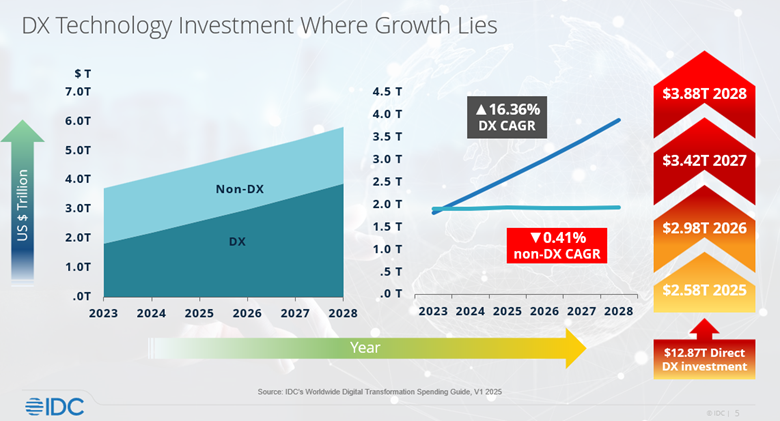
Based on current forecasts, digital transformation (DX) investments are projected to reach almost $4 trillion by 2028, accounting for about 70% of total ITC spend. Organizations understand that digital maturity is directly tied to resilience, agility, and competitive advantage. Whether it’s AI-powered analytics, supply chain automation, or cloud-based operations, the message is clear: pause now, fall behind later.

Strategic Spending in a Costly Tech Landscape

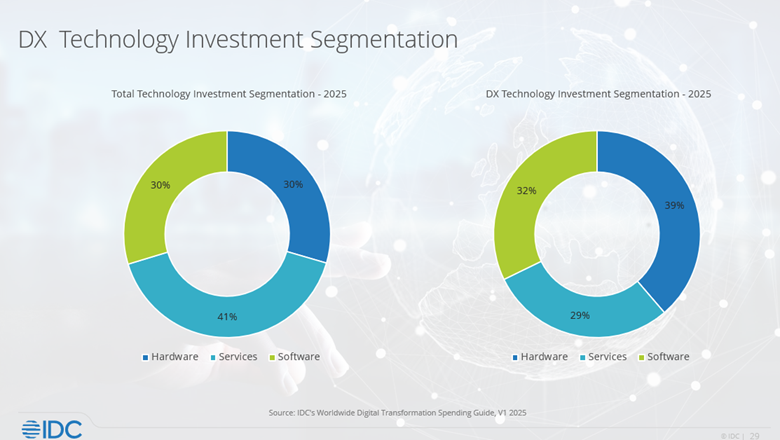
The rising costs of technology, driven in part by tariffs on hardware and components, are impacting budgets. In the first quarter of 2025, the IT spend remains robust and CIOs continue to prioritize their original IT goals. Organizations continue to invest heavily in digital transformation, with hardware accounting for an estimated 40% of total digital transformation investment. IT budgets seem more resilient than in the past as more have been moved from capex to opex. Companies are getting smarter about how they spend. They are revisiting contracts, renegotiating terms, and shifting sourcing strategies to adapt to a more expensive tech landscape. However, extending tariffs to digital services will increase costs and complexity of managing IT. Together with the economic slowdown, that is likely to trigger cuts and delays in business and DX initiatives. On the other hand, previous disruptions have accelerated major technology shifts and leading companies will likely seize the opportunity to accelerate their transformation.

Hardware is undoubtedly the most impacted area in today’s digital economy. Semiconductors, edge devices, data center infrastructure, and networking equipment are all directly affected by tariffs, labor shortages, and material price spikes. Despite these cost climbs, organizations remain committed to their hardware roadmaps. Digital transformation can’t happen without hardware, whether it’s deploying AI models, migrating to hybrid cloud environments, enabling IoT ecosystems, or powering real-time edge processing. Infrastructure is the foundation.

AI: The Cornerstone of Digital Transformation

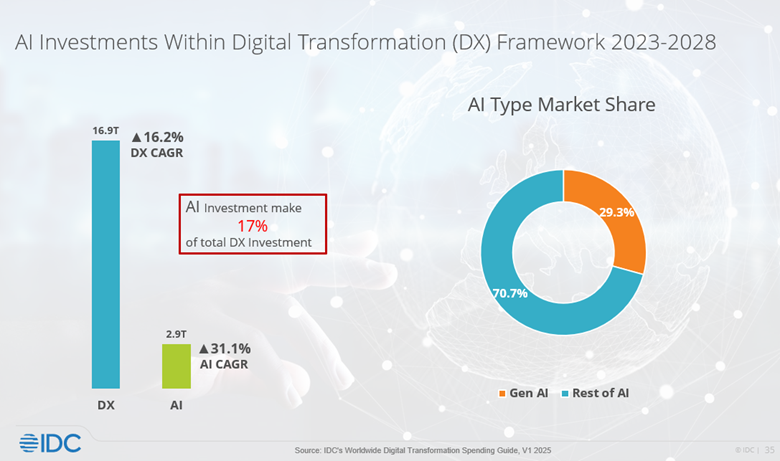
AI is quickly becoming a cornerstone of digital transformation, and hardware is the foundation enabling that shift. As organizations race to adopt AI technologies driven by talent shortages, rising labor costs, and the urgent need for efficiency, there is growing demand for systems that support autonomous decision-making at scale. From our data, we see that AI-related investments currently account for 17% of total digital transformation spend, a figure expected to rise significantly in the coming years.

At the same time, the fact that 40% of digital transformation budgets are dedicated to hardware reveals a clear pattern: companies are laying the infrastructure needed to support these AI-driven futures. This strategic emphasis on hardware isn’t about today’s needs — it’s a signal that organizations are preparing the groundwork for the next wave of intelligent, automated systems.

Regional Flavor of Global Priorities

Regions differ in terms of the maturity of their organizations’ digital transformation. The US and Western Europe are at the highest level of digital maturity, while others are catching up. Regardless of maturity level, the primary focus of digital initiatives is optimizing business operations and enhancing cyber resiliency. Modernizing infrastructure in data centers, as well as cyber recovery and resiliency, are the top drivers of increased IT spending in preparation for greater AI use in business. In the US and Western Europe, the modernization of applications is prioritized more than in other regions. Digital sovereignty influences technology strategies strongly in Europe.

The Strategic Continuum of Digital

Digital transformation is no longer a linear journey—it’s a strategic continuum. Success in 2025 will belong to the organizations that invest in strong foundations, leverage AI wisely, and adapt with intention—not hesitation.

Key Takeaways

  • Invest in scalable infrastructure: Build AI-ready, flexible hardware and cloud systems to support long-term growth.
  • Build for resilience: Diversify vendors, localize supply chains and prepare for ongoing disruptions.
  • Act fast, but strategically: Move decisively on transformation – optimize for adaptability and not perfection.

Mariya Yahnyuk - Research Analyst - IDC

Mariya Yahnyuk has been a research analyst in IDC's Worldwide Data and Analytics team since 2022. Yaknyuk supports the development of IDC's Spending Guide portfolio, assuring alignment with technology and market changes, relevancy, and business value for customers Mariya directly supports IDC's Worldwide Channel Partner Ecosystem product as well as IDC's Digital Transformation, Public Cloud Services and Line of Business Spending Guides. She is involved with data modelling and forecasting for verticals and use cases and takes part in IDC custom data projects.

I attended PwC’s Workday Tomorrow 2025 event, held in Frankfurt from March 25–27, as a speaker. The atmosphere crackled with knowledge-sharing and plans as the 50 attending HRIT leaders and professionals discussed how to leverage AI in terms of people processes.

IDC’s extensive interviews with HR leaders at the event revealed they are indeed keen to leverage AI for:

  • Recruitment: CV prioritization, interview scheduling, candidate communication
  • Performance Management: Summarization, feedback gathering, goal setting
  • HR Assistants: HR help desk, transactional assistance
  • Job Descriptions and Skills Management: Inference, automated skills surveys

As a Workday customer, you can gradually switch on the AI capabilities embedded in the functional areas to which you have subscribed. IDC, however, recommends that customers launch their AI journey with less complex use cases (e.g., “GenAI job description”) that can be switched on and tested for fit with your HRIT teams.

Each Workday client can turn on/off the AI functionality in their own tenants by way of configuration, including data contributions on a field level. Workday’s AI architecture allows customers to always retain control over their data within Workday.

To help customers adopt AI capabilities, Workday offers fact sheets for all available AI use cases in Workday Community. The vendor also offers a broad AI Masterclass to help organizations get started in adopting AI. The Masterclass aims to help HR and IT professionals deepen their understanding of AI technologies, including how to deploy and govern AI responsibly, and covers a range of concrete case studies.

The HR function is a business partner — but also a cost center. Some of the HR participants in Frankfurt discussed how HR can better establish its business value contribution to obtain resources and funding to work with AI. This requires HR to establish business cases with concrete financial ROI metrics to justify the investment. AI solutions that save significant time for employees and managers, for example, can have substantial benefits.

Comprehensive planning is required to execute such wide-ranging, transformational AI use cases. These are complex projects that demand organization, implementation, and funding. Successful project outcomes also require specialist skills to address legal topics, data security, change management, Workday configuration, and deep industry knowledge.

Workday Tomorrow 2025 offered attendees the opportunity to gain a better understanding of how consulting firms like PwC can support Workday customers to prepare, plan, and execute AI use cases within ongoing transformational programs.

How the AI Wave Will Impact the HR Function

Even if HR itself does nothing with AI, will HR be impacted by the AI deployed in the core business of organizations? (Hint: It will!)

A March 2025 IDC survey of 419 CEOs revealed that more than half (55%) believe AI will lead to fundamental business model changes in their organization in 3-5 years (IDC’s CEO Survey 2025; N = 419).

The survey showed that CEOs see a number of skills gaps impeding AI success in their organizations. Interestingly, the most important skills gap identified was teaching AI to regular business employees.
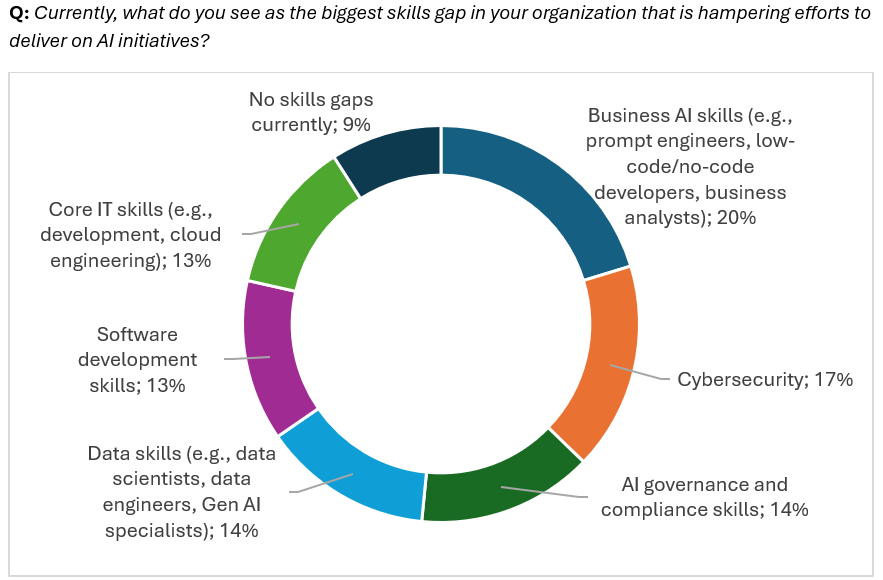
CEOs have turned or will turn to HR to help remedy this skills gap: IDC believes we will see extensive reskilling and upskilling efforts to create an AI-ready workforce. HR will also be tasked with recruiting, retaining, and developing scarce AI-related tech skills in security, AI governance, data management, development, and other areas.

Change management and communications skills will be much needed as organizations undergo difficult, tech-driven changes. Employees have a lot at stake: Some skills will lose value as AI agents take over certain tasks, and some job roles will change and result in new tasks. In Frankfurt, PwC expert Armin von Rohrscheidt talked about how – at least in a German context – involving workers’ councils early, fully, and transparently is the recommended approach.

Interesting HR Perspectives that Came to Light

  • How does an organization train its workforce to become “AI-ready”?
  • How can an organization prepare regular business users to work with conversational user interfaces, prompts, and agentic workflows?
  • Are new training methods needed?

IDC believes that traditional linear elearning approaches will not suffice to bring about such skills. Instead, collaborative, social, experimental, and hybrid approaches are called for (a mix of real-time interactions and individual learning). Furthermore, learner progress and proficiency levels must be monitored as opposed to simple pass/no-pass quizzes.

Another discussion concerned how AI will impact the career progression of junior employees. Organizations are in the process of implementing agentic workflows so that basic administrative processes, or even longer-running processes, can be automated, with humans supervising the process as opposed to just being in the loop.

These basic processes have typically been performed by junior employees to help them “get their hands dirty” and “learn the ropes” of the organization. But if these entry-level processes will be performed by AI agents, how will junior employees gain an understanding of the basic workings of an organization?

This has been a theme for IDC’s Future of Work team. One hypothesis is that AI will not only automate basic tasks but will also assume a mentor’s role, enabling junior employees to explore simulated, experimental workflows and use this as a path to insights into core business processes.

Reflecting on Workday’s Expanded Partnership with PwC

Workday’s partnership with a major partner like PwC goes far beyond the traditional applications vendor + global systems integrator setup. As a key partner, PwC has a large number of certified consultants in the various Workday solutions and cloud tools, co-sells the solutions with Workday, and markets services capabilities at Workday events.

Today, however, PwC sells its own branded solutions, certified by Workday and built natively on the Workday Extend platform. Furthermore, these PwC solutions are sold on the Workday Marketplace. PwC co-markets and co-brands events with Workday, and Workday involves PwC in its multiyear product road maps.

This implies that PwC’s customer relationships in the Workday ecosystem have become truly multifaceted, spanning strategic consulting, project services, managed services, as well as subscriptions to a range of software-based products.

Selling software products requires relatively long-term and in-depth collaboration between Workday and a partner like PwC. If PwC creates a new product — for example, Sickness and Recovery Management — it is important that Workday is not planning to add such capabilities to its own HCM solution (within the next 24 months at least). There is no perpetual guarantee of free play, of course, but a certain time window must be guaranteed.

Final Thoughts

AI is not just another wave of technology to manage and roll out. It has massive transformational potential. It will permeate the business world whether we like it or not.

Any AI initiative will receive serious scrutiny from employees, senior stakeholders, unions, and regulators. However, if HR and IT concentrate on the best practices outlined at the Frankfurt conference — especially related to internal communications and change management — now is the time to get started.

Think outside of the box. AI is not a traditional tool rollout. Knowledge must be shared internally and among peers in other organizations. Network and iterate often. The future of the HR function is — without a doubt — linked to AI and automation.

Bo Lykkegaard - Associate VP for Software Research Europe - IDC

Bo Lykkegaard is associate vice president for the enterprise-software-related expertise centers in Europe. His team focuses on the $172 billion European software market, specifically on business applications, customer experience, business analytics, and artificial intelligence. Specific research areas include market analysis, competitive analysis, end-user case studies and surveys, thought leadership, and custom market models.

At GTC 2025, NVIDIA introduced several new AI and computing solutions aimed at advancing workstation graphics and AI infrastructure. The RTX PRO Blackwell series brings updated workstation GPUs based on the Blackwell architecture, designed to enhance performance for professional workflows. NVIDIA also unveiled the DGX Spark and DGX Station, expanding AI computing capabilities with Grace Blackwell technology. Additionally, the company highlighted its ongoing ISV collaboration and application optimization efforts, aiming to improve software integration and performance across various AI-driven applications. These updates reflect NVIDIA’s continued focus on developing solutions that support AI and high-performance computing advancements. 

NVIDIA Blackwell RTX Pro

The NVIDIA RTX PRO Blackwell series are a new generation of workstation and server GPUs designed to advance workflows for AI, technical, creative, engineering, and design professionals. These GPUs should offer significant improvements in accelerated computing, AI inference, ray tracing, and neural rendering technologies, according to NVIDIA. The RTX PRO Blackwell series include data center GPUs, desktop GPUs, and laptop GPUs, providing professionals with powerful tools for tasks such as agentic AI, simulation, extended reality, 3D design, and complex visual effects.

NVIDIA RTX PRO Blackwell Workstations, source: NVIDIA, 2025

The RTX PRO Blackwell GPUs feature notable generational enhancements, including up to 1.5x faster throughput with new neural shaders, up to 2x the performance of previous RT Cores, and up to 4,000 AI trillion operations per second with fifth-generation Tensor Cores. They also offer larger, faster GDDR7 memory, enhanced video encoding and decoding capabilities, and support for fifth-generation PCIe and DisplayPort 2.1. These GPUs are designed to elevate productivity, performance, and speed for professionals across various industries, from healthcare and manufacturing to media and entertainment.

DGX Spark: Compact AI Supercomputer for Local and Cloud Integration

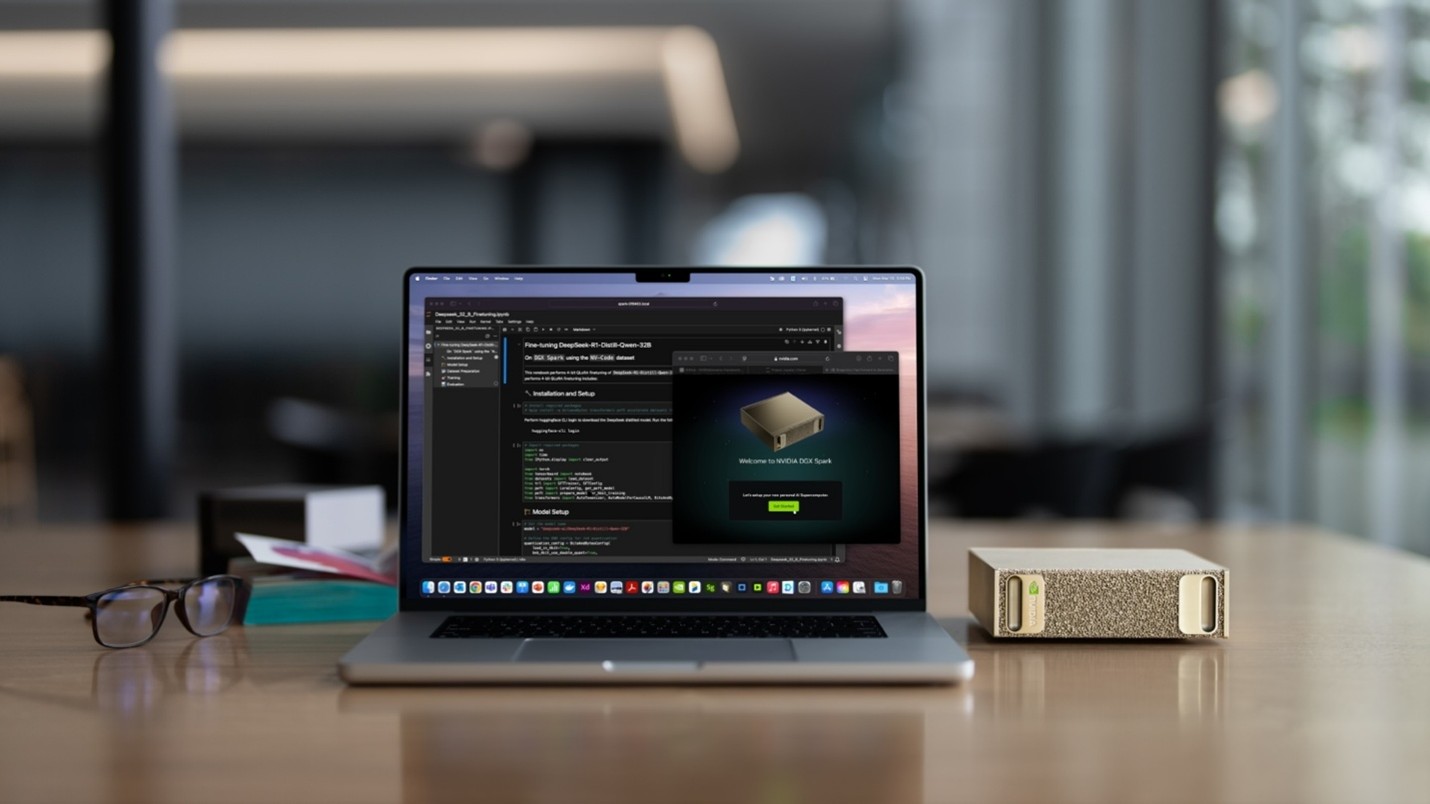
NVIDIA has introduced the DGX Spark, a highly compact desktop PC described as AI supercomputer tailored for developers, researchers, and students. This system is powered by the GB10 Grace Blackwell Superchip, which delivers up to 1,000 trillion operations per second (TOPS) of AI computing at FP4 precision. The architecture incorporates fifth-generation Tensor Cores, enabling efficient fine-tuning and inference of large-scale AI models. The DGX Spark is equipped with 128GB of unified LPDDR5x system memory, offering a bandwidth of 273 GB/s through a 256-bit memory interface.

NVIDIA DGX Spark — formerly Project DIGITS — source: NVIDIA, 2025

A key feature of the DGX Spark is its use of NVLink-C2C technology, which facilitates coherent memory sharing between the CPU and GPU, achieving bandwidth five times greater than traditional PCIe systems. This capability is particularly beneficial for memory-intensive workloads. The system supports AI models with up to 200 billion parameters locally and can scale further by connecting two units to handle models with up to 405 billion parameters. Additionally, the DGX Spark integrates seamlessly with cloud platforms, including NVIDIA DGX Cloud, allowing users to transition between local and cloud-based AI workflows without significant modifications.

The DGX Spark is designed to empower users with advanced AI capabilities in a desktop form factor, making it suitable for prototyping, fine-tuning, and inferencing tasks across various domains.

DGX Station: High-Performance AI Computing for Desktop Environments

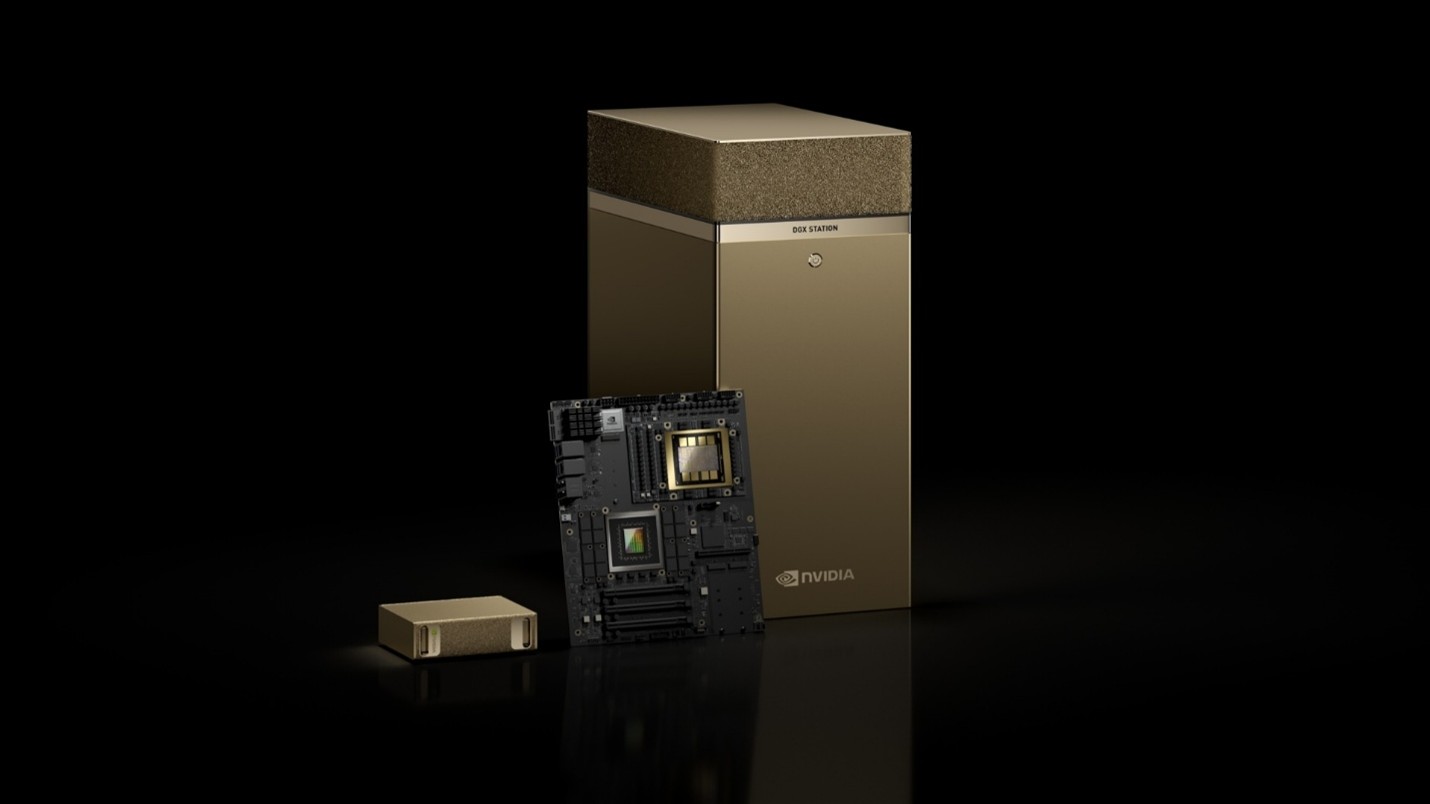
NVIDIA also announced the DGX Station, a continuation in advancement in desktop AI computing, offering data-center-level performance in a workstation format. It is built around the GB300 Grace Blackwell Ultra Desktop Superchip, which combines the Grace 72 CPU cores with a Blackwell GPU, connected via NVLink-C2C interconnect technology. This design enables high-bandwidth coherent data transfers between the CPU and GPU, optimizing performance for large-scale AI training and inferencing tasks.

NVIDIA DGX Spark and DGX Station, source: NVIDIA, 2025

The system features 784GB of coherent memory, divided between 288GB for the GPU and 496GB for the CPU, making it capable of handling complex AI models and datasets. Networking capabilities are enhanced by the ConnectX-8 SuperNIC, which supports speeds of up to 800Gb/s, allowing for efficient data movement and the ability to link multiple DGX Station units for distributed workloads.

FeatureLatest GB300 DGX StationPrevious Gen. DGX Station A100
Platform / ArchitectureNVIDIA Grace Blackwell Ultra Desktop Superchip (GB300) – an integrated solution pairing a custom NVIDIA Grace CPU with an NVIDIA Blackwell Ultra GPUDGX Station A100 – built on a proven data-center-class design utilizing discrete components
CPUNVIDIA Grace CPU (custom ARM-based processor integrated into the superchip; optimized for AI workloads)1 × AMD 7742 (64 cores, 2.25 GHz base / up to 3.4 GHz boost)
GPUNVIDIA Blackwell Ultra GPU – equipped with fifth-generation Tensor Cores offering next-generation FP4 (4-bit floating point) support4 × NVIDIA A100 GPUs, each with 80 GB – based on the Ampere architecture and proven for large-scale deep learning workloads
GPU Memory/Unified MemoryUp to 784 GB of large coherent (unified) memory – a shared pool combining high-bandwidth on-package memory for both the integrated CPU and GPU320 GB total GPU memory (80 GB per GPU) alongside 512 GB of separate DDR4 system memory
InterconnectNVIDIA NVLink-C2C chip-to-chip interconnect – enabling high-bandwidth, coherent data transfers between the integrated CPU and GPU componentsStandard NVLink interconnect architecture used to efficiently link the four discrete A100 GPUs (though not the next-gen NVLink-C2C seen in Blackwell)
NetworkingNVIDIA ConnectX-8 SuperNIC – supports up to 800 Gb/s for high-speed connectivity and scalability for AI clustersDual 10GBASE-T (RJ45) networking – sufficient for desktop AI workloads and common office networking needs
StorageNot explicitly detailed in current public disclosures (likely to feature high-speed NVMe storage to complement the onboard AI processing capabilities)Dual-drive setup: 7.68 TB NVMe U.2 drive for data storage plus a separate Boot M.2 NVMe drive
Power ConsumptionNot specifically published; engineered for desktop-form-factor efficiency for AI training/inferencingUp to 1,500 W under heavy load (as specified in the DGX Station A100 hardware datasheet)
Software/OSRuns NVIDIA DGX OS with a full-stack AI software suite (including pre-configured drivers and optimized AI libraries)Runs NVIDIA DGX OS – pre-configured with the NVIDIA AI Software Stack and containerized deep learning frameworks for streamlined deployment across cloud or local environments
Form FactorDesktop AI supercomputer – purpose-built for on-premises development and rapid prototyping with a “coherent memory” design that minimizes data movement overheadDesktop workstation-class AI supercomputer – built to deliver data-center-level performance in an office-friendly chassis with defined dimensions and thermal specifications (518 mm D × 256 mm W × 639 mm H; 91 lbs)
Additional Features– Next-generation FP4 accuracy for training and inference via 5th-generation Tensor Cores

– Integrated, high-bandwidth coherent memory with NVLink-C2C interconnect
– Proven performance on deep learning and inferencing tasks with established A100 GPUs

– Comprehensive connectivity, storage, and environmental controls (operating temperature 10°C–35°C)

A comparison between the latest NVIDIA Grace Blackwell DGX Station and the 2021 DGX A100 built around Ampere GPUs. Source: IDC, 2025

The DGX Station is equipped with the NVIDIA AI software stack, providing tools and frameworks for developing, training, and deploying AI models. This integration ensures compatibility with cloud and data center infrastructures, enabling scalability and flexibility for AI developers and researchers.

ISV Collaboration and Application Optimization

NVIDIA’s Blackwell architecture introduces significant advancements in computer-aided engineering (CAE) software, enabling simulation tools to achieve up to 50 times faster performance according to NVIDIA. This acceleration is particularly impactful for real-time digital twin applications, which rely on high computational efficiency to model and analyze complex systems dynamically. By integrating Blackwell technologies, NVIDIA announced that leading CAE software providers, including Ansys, Altair, Cadence, Siemens, and Synopsys, have enhanced their capabilities to address challenges in industries such as aerospace, automotive, energy, and manufacturing.

The architecture leverages CUDA-X libraries and optimized blueprints to improve simulation accuracy, reduce development time, and lower costs while maintaining energy efficiency.

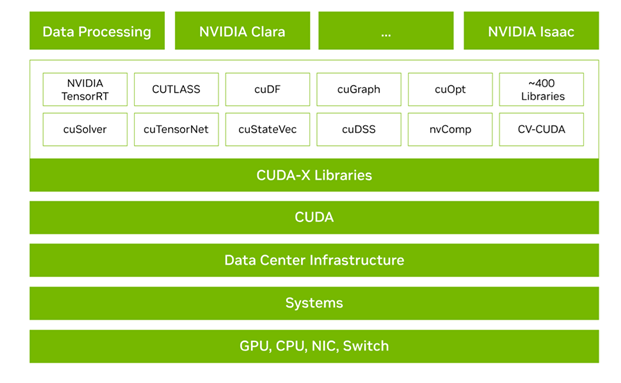
CUDA-X Microservices. Source: NVIDIA, 2025

CUDA-X is a comprehensive suite of software libraries and tools designed to accelerate computing across a wide range of applications, including AI, data analytics, and scientific computing. In the context of the DGX Station, CUDA-X plays a pivotal role by optimizing the performance of AI workloads. It provides developers with access to highly efficient libraries for deep learning, such as cuDNN and TensorRT, which are essential for training and inferencing large-scale models. Additionally, CUDA-X enables seamless integration with the DGX Station’s advanced hardware, including the Grace Blackwell Ultra Superchip and NVLink-C2C interconnect, ensuring efficient utilization of the system’s computational and memory resources. This synergy allows researchers and developers to achieve faster model development cycles and enhanced scalability, making the DGX Station a powerful platform for cutting-edge AI innovation.

For example, Cadence has demonstrated the ability to simulate multibillion-cell computational fluid dynamics models on a single NVIDIA GB200 NVL72 server within 24 hours—a task that previously required extensive CPU clusters and multiple days. This breakthrough highlights the potential of Blackwell-powered systems to transform engineering workflows, enabling more efficient design processes and reducing reliance on physical testing methods.

The collaboration between NVIDIA and ISVs underscores the growing importance of accelerated computing in addressing computationally intensive tasks, paving the way for innovations in digital twin technology and beyond.

IDC Opinion

The discontinuation of 32-bit OpenCL and CUDA support in the Blackwell architecture primarily affects legacy applications that haven’t transitioned to 64-bit, while modern, fully 64-bit productivity software remains largely unaffected and continues to benefit from Blackwell’s enhanced performance. For instance, many professional workflow applications, simulation tools, and AI development environments have long since moved to 64-bit, allowing them to take full advantage of new features like advanced Tensor Cores, FP4 precision, and high-bandwidth coherent memory without issue. However, legacy or specialized tools still dependent on 32-bit components might experience errors or fallback CPU processing, which can slow down specific tasks and temporarily impede productivity. In practice, organizations relying on such legacy applications will need to update or recompile their applications to fully harness the substantial benefits offered by the new Blackwell RTX Pro GPUs in workstation scenarios.

NVIDIA’s Blackwell architecture introduces a new generation of Tensor Cores that natively support FP4 arithmetic. But hardware alone isn’t enough to harness the full potential of FP4 precision. NVIDIA has co-developed an optimized software ecosystem built into its DGX systems that fine-tune the quantization and calibration processes for FP4 computations. These algorithmic enhancements ensure that the error margins introduced by reducing precision are minimized. While FP4 precision provides an effective way to significantly boost compute performance and energy efficiency, NVIDIA has to demonstrate those benefits in use cases, compared to formats like FP16 or FP32, especially when marketed heavily with products like the DGX Spark.

Nearly a decade ago, NVIDIA introduced the DGX desktop workstations as an entirely in-house developed AI systems to direct sales. Now, by opening up its latest GB platforms to OEM partners, NVIDIA is strategically broadening its distribution channels and market reach. This shift not only enriches desktop workstation solutions with cutting edge technology across a wider audience but also empowers partners to innovate and adapt NVIDIA’s advanced AI capabilities to diverse industrial needs, reinforcing the company’s leadership and expanding its influence.

The DGX Spark and DGX Station face cost-performance challenges compared to SFF and high-end tower workstations with discrete graphics cards. Students, startups and small software houses, who are key drivers of AI development, may find NVIDIA’s solutions costly and prefer more efficient options like gaming graphics cards.

In conclusion, the introduction of Blackwell architecture and advancements in DGX systems reflect NVIDIA’s commitment to delivering cutting edge solutions for professionals, researchers, and enterprises. As the AI landscape evolves, NVIDIA’s strategic approach to expanding access through OEM partnerships and optimizing performance across software ecosystems ensures that its technology remains at the forefront of AI driven workflows.

Mohamed Hakam Hefny - Senior Program Manager - IDC

Mohamed Hefny leads market research in EMEA on professional workstation PCs and solutions. He also reports on professional computing semiconductors, processors, and accelerators (CPUs and GPUs), as well as breakthroughs and trends related to the market. In addition, Mohamed is actively involved in AI PC taxonomy and research. He participates in business development projects, contributes to consulting activities, and provides IDC customers with analysis, opinions, and advice.

AI is reshaping more than operations — it’s redefining how organizations source software. CIOs now lead procurement strategies that demand speed, strategic alignment, and machine-augmented decision-making. In a world where every tool promises GenAI, smart sourcing is no longer tactical — it’s transformational.

Today’s software procurement hinges on using AI to reshape vendor consideration, governance dynamics, and the very definition of “fit.” With GenAI tools embedded in nearly every platform, and agentic systems increasingly capable of orchestrating tasks and negotiations, tech buying is changing at its core. Tech leaders need new tools, new evaluation frameworks, and a new mindset.

The good news: this next wave of IT sourcing can be smarter, faster, and more aligned — if you’re ready to lead it.

Procurement’s Strategic Power Play: Why CIOs Should Care Now

Present-day CIOs must be enterprise strategists. They bridge finance and operations, turn data into decision-making power, and guide tech investments that shape their organization’s future.

What you may not realize: procurement is one of the most strategic — and often overlooked — arenas for CIOs to make an impact.

Why? Because procurement sits at the intersection of cost control, risk mitigation, supplier intelligence and, increasingly, AI-powered transformation. AI platforms are evolving fast — and with them, so is the opportunity to drive meaningful change.

But the explosion of enterprise apps — particularly GenAI-enabled tools — has created a sprawling, competitive vendor maze. In the past, procurement often followed a lengthy RFP and negotiation process.

But, the game has changed.

This is where strategic procurement comes in. Instead of focusing solely on tactical execution, procurement is now a key contributor to IT strategy — helping align software vendor selection with business priorities, governance standards, and AI readiness.

AI-powered software procurement platforms like IDC TechMatch are emerging to support this shift. By combining objective analyst insights, AI-powered matching, and a structured prioritization framework, you can navigate the vendor sprawl and zero in on what fits your business best — faster and with more confidence.

AI Claims vs. AI Reality: What Tech Leaders Must Vet

Nearly every software vendor today is promoting some form of GenAI.
The key is understanding what kind of AI you’re dealing with. For instance, is it assistive, acting as a co-pilot that supports human decisions? Or is it something more advanced — truly agentic?

Many vendors claim “agentic” capabilities, but most current tools are really enhanced virtual assistants — helpful, yes, but not autonomous decision-makers. Understand what’s real today (assistive GenAI) and what’s on the horizon (multi-agent collaboration). Being able to evaluate emerging tech without being dazzled by marketing is a core leadership skill. That’s why it’s critical to evaluate these tools carefully:

• Does the solution align with your data governance policies and risk tolerance?

• Will your team be able to integrate and manage it realistically, or will it create more overhead?

Treat AI solutions like any other key software: look closely at how they’re built, what data they’re trained on, how well they work with your current systems, and whether the outputs are explainable. Instead of just asking, “What can this software do?”, ask “What will this do for us — in our environment, with our goals, and under our constraints?”

Your Governance Model May Be Slowing Down Your Sourcing

Your governance model doesn’t just determine who makes business decisions. It also determines how technology gets prioritized, which solutions get visibility, and how fast software sourcing can happen.

In centralized models, IT has the authority to set sourcing standards and vet vendors, which can reduce duplication and support better risk management. But, it may also slow innovation if lines of business feel disconnected.

Federated models strike a balance — allowing individual departments to identify needs and propose solutions while still aligning with central guidelines. This is becoming the most common approach among digitally mature organizations, especially those scaling AI.

Decentralized models allow for speed and flexibility, but often result in overlapping tools, shadow IT, and fractured procurement efforts — especially problematic in an AI-driven environment where data governance is crucial.

Understanding how your governance model interacts with software sourcing is critical. It informs not just who gets a seat at the table, but what criteria matter most when evaluating a vendor.

Why Governance Accelerates AI — Instead of Blocking It

Too often, AI governance is perceived as a bottleneck — the controls that says “no” to innovation. But effective governance ensures that AI systems are secure, explainable, and accountable.

A well-structured AI governance framework helps answer key questions before a vendor is selected. For instance:
• What data will this system use?
•   How is bias mitigated?
•   Can outputs be audited?
•   What human oversight is required?

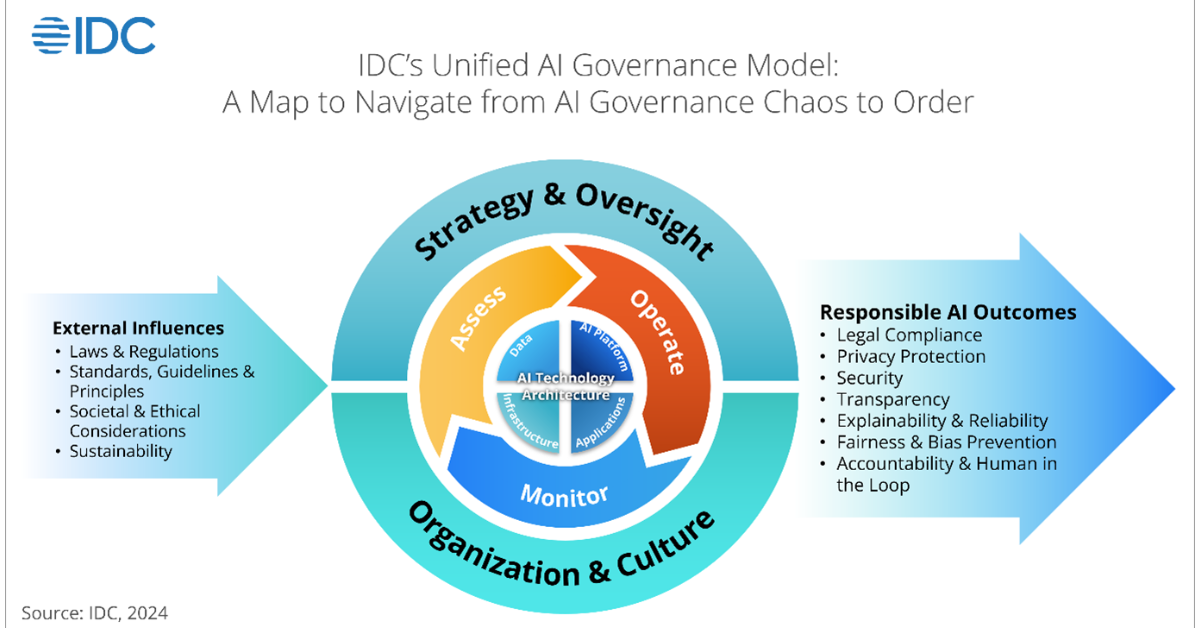
IDC’s Unified AI Governance Model outlines how organizations can move from governance chaos to clarity — integrating architecture, strategy, and culture to achieve responsible AI outcomes.

By addressing these questions up front, organizations avoid rework, maintain trust, and accelerate time to value. Strong governance becomes a competitive advantage, enabling teams to deploy AI faster and with more confidence.

It follows that contractual clauses are critical when adopting AI solutions. By emphasizing data governance, ethical considerations, security, transparency, and oversight, contractual clauses provide a framework for responsible AI adoption for businesses and organizations. These terms should be a core part of any vendor diligence process as well — because when AI is involved, assumptions aren’t enough.

Want to benchmark your AI evaluation approach? Download our AI Governance Checklist — used by tech leaders to simplify decisions, avoid vendor regret, and move faster with confidence.

The Talent Shift in Procurement (And the CIO’s Role in Shaping It)

As AI transforms procurement, new roles (and new titles) are emerging that represent a critical upskilling imperative:

The Procurement Agent Optimizer is someone who designs, trains, and manages autonomous or semi-autonomous agents that handle procurement tasks. Instead of drafting RFPs themselves, they teach the system how to do it. They define objectives, set parameters, monitor performance, and intervene when needed.

The AI Orchestration Lead manages a network of AI tools across the organization. Their job isn’t just prioritizing and selecting software but choreographing how various AI components — from co-pilots to back-end agents — interact across functions like finance, HR, operations, and IT.

These roles mark a fundamental shift in how talent adds value in procurement. For CIOs, this means two things: invest in talent that can embrace both business growth and AI fluency, and equip them with the skills and tools to act decisively.

Strategic Software Sourcing Starts with TechMatch

In this next phase of digital maturity, success in software procurement depends less on “What’s the best tool?” and more on “What’s the right fit for our mission, model, and maturity?”

Agentic systems and AI platforms offer immense promise — but only if CIOs and procurement leaders adapt their approach. That means reframing priorities around governance, alignment, and orchestration. It means empowering new roles. And it means using smarter tools — like IDC TechMatch — to navigate the vendor ecosystem with ease.

With IDC’s trusted insights and AI-powered precision, IDC TechMatch empowers tech leaders to cut through vendor noise, accelerate sourcing, and choose the right-fit solutions faster. Great tech decisions start with great intelligence. Start with IDC TechMatch.

Want to see how TechMatch zeroes in on your best-fit vendors — fast?
Watch the full demo to see how AI and IDC insights work together to match your priorities, budget, and governance needs in seconds.

Philip Carter - Group Vice President, General Manager, Research AI - IDC

Philip Carter is General Manager and Group Vice President for AI, Data, and Automation research at IDC. In this role, he leads a global team of analysts focused on delivering IDC's research and insights at the intersection of AI, data platforms, and intelligent automation - three foundational areas shaping the future of technology and business. His work is centered on helping C-Suite executives make sense of the rapid innovation in the AI space, and drive meaningful transformation through data- and intelligence-led strategies. BACKGROUND Carter has held multiple senior roles at IDC across regions. Prior to his current position, he served as GVP and GM of IDC TechMatch, where he led a global team tasked to build and commercialize IDC's first AI-powered digital platform - focused on helping CIOs and procurement executives evaluate and source technology vendors leveraging IDC trusted intelligence. Earlier in his IDC career, Carter was the lead for IDC's Global Thought Leadership research function and was also Chief Analyst for IDC Europe, where he drove innovation in research related to digital transformation, emerging business models, and technology strategy at the C-suite level. Before that, he worked in IDC's Asia/Pacific region, covering software, services, and sustainability. Prior to joining IDC, he held various leadership roles at SAS Institute across EMEA and APAC in marketing strategy, product management, and business development. He is a recognized industry voice, regularly featured on platforms such as CNBC and Bloomberg, and quoted in leading publications including the New York Times. EDUCATION/INDUSTRY ACCOMPLISHMENTS: - Honors degree in Business Science, majoring in Economics and Law, University of Cape Town, South Africa.