In today’s fast-changing business environment, startups and growing tech vendors face unique challenges and opportunities. As we approach 2025, planning for sustainable growth means more than just reacting to industry shifts—it requires a forward-thinking approach. From leveraging technology to fostering innovation, the most successful businesses are those that adapt with a proactive mindset. This blog outlines five essential strategies every startup and growing tech company can use to build resilience, drive growth, and stay competitive in an ever-evolving market. 

If you’re ready to equip your business with the tools to thrive, read on to learn how to turn today’s trends into tomorrow’s growth drivers. 

1. Embrace Technology to Stay Agile and Scalable 

For startups and growing tech vendors, agility and scalability are key to thriving in competitive markets. Advanced technologies like AI, automation, and cloud computing provide powerful tools to streamline operations, reduce costs, and respond quickly to changes. AI-driven automation, for example, can handle repetitive tasks, freeing up teams to focus on innovation and strategy. Cloud infrastructure allows businesses to expand their operations without heavy investment in physical infrastructure, providing the flexibility to scale at pace with demand. 

Staying agile doesn’t mean adopting every new tech trend—it’s about identifying use cases that align with your business goals. Consider what tools will help your business scale smoothly and improve productivity without creating complexity. Focusing on high-impact technologies, such as AI for customer support or data analysis, can lead to meaningful improvements in efficiency while ensuring your business remains flexible in a shifting market. 

2. Make Data-Driven Decisions 

In a competitive market, data is one of the most powerful tools a business can wield. By analyzing customer behavior, market trends, and operational performance, businesses can identify patterns and make more informed choices. Real-time data can help spot emerging opportunities and uncover potential challenges before they escalate, ensuring companies stay one step ahead. 

Data-driven decision-making is about turning data into actionable insights. For example, IDC’s data analytics solutions offer startups and growing vendors the ability to harness data for better decision-making. With insights into customer behavior, market trends, and operational metrics, IDC helps companies turn data into strategic advantages. These analytics tools are invaluable for identifying key trends, optimizing resources, and making timely adjustments that fuel growth. 

Using data to drive your decisions doesn’t require a complex setup; even basic analytics can reveal valuable insights. For instance, tracking customer engagement metrics can inform your product development or marketing strategies. By continually monitoring performance metrics, you can refine your approach, allocate resources wisely, and make strategic adjustments that align with growth goals. 

3. Prioritize Operational Efficiency Without Losing Flexibility 

Efficient operations are essential for startups and growing tech vendors, but it’s important to balance this efficiency with flexibility. Streamlining workflows and automating routine tasks can improve productivity, reduce costs, and allow your team to focus on high-value activities. However, maintaining flexibility is equally critical—especially in fast-moving markets where customer needs and industry standards are constantly evolving. 

Consider adopting lean practices to enhance productivity while staying adaptable. For example, automating tasks in customer support or logistics can drive efficiency, while maintaining flexible processes lets your team pivot as new opportunities or challenges arise. By regularly assessing and refining your workflows, you can find areas to optimize without sacrificing your business’s ability to respond to changes. 

Operational efficiency doesn’t mean rigidity; it means refining processes in a way that enhances agility. This balance of efficiency and adaptability will allow your business to grow sustainably, laying a strong foundation for long-term success. 

4. Build a Resilient, Sustainable Business Model 

In today’s market, sustainability is not only a regulatory requirement but also a powerful driver of brand loyalty and customer trust. Building a business that prioritizes environmental and social responsibility resonates with today’s consumers and investors alike. For example, IDC predicts that by 2027, 80% of IT buyers will only work with vendors that meet social, environmental, and governance-related responsible AI criteria in accordance with sustainable procurement requirements (IDC FutureScape: Worldwide Sustainability/ESG 2025 Predictions). For startups and new tech vendors, adopting sustainable practices from the outset can become a unique differentiator. 

Resilience and sustainability go hand in hand. By incorporating eco-friendly practices, responsible sourcing, or transparent supply chain management, you create a business model that supports longevity. This approach also aligns with regulatory demands that are increasingly focused on sustainability, ensuring your business is prepared for future industry standards. 

While sustainability can mean an initial investment, it ultimately leads to cost savings through efficient resource use, reduced waste, and improved brand reputation. By embedding sustainability into your business strategy, you’re not only building a resilient business but also positioning your brand as a leader in an increasingly conscientious market. 

5. Cultivate a Culture of Innovation and Growth 

For tech startups and growing companies, success hinges on a culture that prioritizes continuous learning, innovation, and personal growth. Companies that invest in developing their talent are better positioned to innovate, adapt, and thrive. This focus on professional growth helps attract top talent while also ensuring that your team has the skills to drive your business forward. 

Creating a culture of innovation involves more than just providing training; it requires a commitment to fostering creativity and collaboration. By encouraging your team to explore new ideas, experiment with different approaches, and challenge existing assumptions, you ensure that your team is motivated to contribute to your business’s success. 

Moreover, nurturing talent in critical areas like AI, data science, and digital transformation equips your team with the skills to lead in a technology-driven world. As the market changes, having a skilled, forward-thinking workforce will be one of your biggest competitive advantages. 

Conclusion 
The road to sustainable growth requires a proactive, strategic approach. By embracing the right technologies, making data-driven decisions, prioritizing efficiency, building a resilient business model, and fostering a culture of innovation, startups and growing tech vendors can lay the foundation for long-term success. 

In the first blog of our e-invoicing series, we explored the pivotal role of e-invoicing in pioneering the transformation of business-to-business (B2B) transactions. In our second blog, we dove deeper into the regulatory frameworks influencing these digital transformations, examining the opportunities and challenges that arise as businesses adapt to evolving compliance requirements.

In this third and final blog in the series, we explore the future of e-invoicing as it arrives with haste in Europe. We conclude with some clear guidance on selecting and implementing e-invoicing solutions.

The Rise of e-Invoicing Mandates in Europe

First was Italy, followed by France. Next in line are Germany and Poland, with Belgium, Romania, Hungary, Spain, Portugal, Greece, and others soon to follow. e-Invoicing mandates are rapidly spreading across Europe, and we anticipate a surge in new B2B e-invoicing requirements.

For organizations operating in any of these markets, or across multiple countries on this list, maintaining compliance will be a challenge. Each country has its own set of rules, making it difficult to stay up to date. However, with the right strategy, you can simplify this process considerably.

Let’s explore the challenges and opportunities and consider whether e-invoicing is merely about staying compliant — or if it can also be a competitive advantage.

Navigating Regulatory Complexity and Volatility

One of the biggest headaches organizations face when it comes to e-invoicing is the fragmented and ever-changing regulatory landscape in Europe. Although several initiatives are aiming to harmonize regulations across member states, presently there is no single, overarching EU e-invoicing act. Each country has its own unique set of e-invoicing requirements, including formats, procedures, and deadlines.

This complexity makes it difficult for organizations to remain compliant across multiple jurisdictions. Regulations can change frequently and there may be little warning. With numerous mandates on the horizon, this volatility is likely to become an even bigger pain for organizations across the continent.

The Growing Demand for Compliance as a Service

With the pressure to stay compliant growing, more organizations are turning to cloud-based solutions that offer “compliance as a service.” These platforms help organizations navigate the challenging world of regulations by handling compliance across multiple countries. This frees companies to focus on what they do best instead of getting bogged down by paperwork and admin tasks. As the regulatory landscape continues to evolve, this trend will only get stronger as more businesses realize the benefits of outsourcing compliance.

Exploring Vendor Diversity in e-Invoicing Solutions

The European e-invoicing market is set to grow rapidly over the next five years, fueled by new mandates and the potential for automation. The market has attracted a wide range of vendors, each bringing unique strengths from fields such as AP/AR automation, tax compliance, ERP, EDI, and others.

Of course, you can also expect to have e-invoicing capabilities added by your financial application vendor as a part of regular updates, or you may purchase a standalone solution. The challenge for businesses lies in identifying the option that is best suited to their specific needs from the vast array of possibilities available.

Potential for Automation and Efficiency Improvements

Compliance may initially seem like a burden, but e-invoicing has the potential to be a catalyst for wider business improvements. Companies that view e-invoicing as an opportunity rather than a challenge can leverage it to automate their invoicing workflows, reduce manual errors, and enhance operational efficiency. By adopting a strategic approach, organizations can align e-invoicing compliance with their broader digital transformation goals.

What’s Next for e-Invoicing in Europe?

The European e-invoicing market is poised for rapid expansion, driven by regulatory pressures and technological advancements. Over the next five years, e-invoicing adoption is expected to accelerate, potentially reaching near 100% adoption rates in some sectors and countries. This growth will be fueled by both national mandates for B2B transactions and the European Union’s VAT in the Digital Age (ViDA) initiative, which aims to standardize digital reporting and compliance.

Ongoing digital transformation will also continue to reshape the market. Companies that adopt robust e-invoicing solutions stand to benefit from improved efficiency and enhanced data transparency. As automation becomes more prevalent, businesses will be able to reduce manual tasks and enable employees to focus on higher-value activities.

Recommendations for Selecting and Implementing e-Invoicing Solutions

Prioritize Regulatory Coverage

Given the growing complexity of e-invoicing regulations across Europe, it is critical to select a solution that covers relevant current and future geographies and that can adapt to evolving rules and requirements. This will ensure that your organization remains compliant across all jurisdictions, mitigating the risk of fines or penalties due to noncompliance.

Choose a Scalable, Cloud-Based Solution

A cloud-first solution offers significant advantages over other deployment types, including scalability, flexibility, and ease of updates. As e-invoicing regulations continue to evolve, a cloud-based solution will allow your business to scale operations seamlessly, particularly if you are operating in multiple countries or plan to expand in the future.

Focus on Integration and Automation

When selecting a solution, ensure that it integrates smoothly with your existing financial and ERP systems. Look for automation features that handle tasks such as invoice generation, validation, and error correction. Automating these processes will reduce manual effort, minimize human errors, and enhance overall efficiency.

Align e-Invoicing with Broader Business Goals

Rather than treating e-invoicing solely as a compliance issue, consider how it can support your broader business objectives. A well-implemented e-invoicing solution can improve transparency and streamline processes, making it a vital component of your company’s long-term digital strategy.

Carefully Evaluate Vendor Capabilities and Strategies

When assessing potential vendors, look beyond the basics. Challenge them with real-world scenarios to see how their solutions perform under pressure. Request a live demo or trial period to gain hands-on experience. Additionally, prioritize vendors with a forward-looking approach, particularly those investing in and incorporating AI and machine learning capabilities to stay competitive as the landscape evolves.


Further Resources

If you are in the process of evaluating e-invoicing solutions, we invite you to check our latest report on the subject. The IDC MarketScape: European Compliant e-Invoicing 2024 Vendor Assessment provides a comprehensive overview of the e-invoicing landscape in Europe, highlighting the challenges, opportunities, and key trends shaping the market. For organizations looking to implement an e-invoicing solution, the report offers invaluable insights and recommendations to assist in the decision-making process.

As e-invoicing continues to evolve, organizations that adopt a strategic, forward-thinking approach and solutions will be well positioned to navigate the regulatory complexities while driving efficiency and growth.

Sustainability advocates are assessing changes that the new administration of President-elect Trump, due to take office in January, may make in U.S. environmental policies. Concerns include potential withdrawal of the United States from the Paris Climate Accords, cuts to investments in renewable energy, and changes in enforcement of climate-related reporting at the federal level.

The sustainability outlook is further clouded by limited outcomes at COP29. The UN Climate Change Conference was held in November in Azerbaijan, the third petrostate in a row to host the annual event (following the UAE in 2023 and Egypt in 2022).

All is not lost, however: This state of affairs offers an opportunity for Europe to strengthen and expand its role as a sustainability leader. The EU should seize this moment to reinforce its commitment to sustainability and spark a global renewal of the climate agenda.

The need for climate action is growing more urgent by the day. Scientists at the Copernicus Climate Change Service have predicted that 2024 will be the hottest year on record and the first calendar year in which global temperatures will have warmed 1.5C above pre-industrial times. Scientists warn that, after this threshold is crossed, Earth may reach the tipping point at which the catastrophic effects of global warming cannot be averted.

The European Green Deal

The ambitious goals of the EU’s Green Deal aim to make Europe the first climate-neutral continent by 2050. The EU now has a chance to double down on these efforts and lead by example. By investing in renewable energy, promoting sustainable manufacturing and agriculture, and driving social sustainability initiatives, Europe can not only reduce its carbon footprint but also create a robust, future-ready, and sustainable economy.

Such leadership can inspire other regions to follow suit, fostering global collaboration in the fight against climate change, wider environmental damage, and the deepening societal divide.

Europe’s diverse landscape allows for a variety of innovative approaches to sustainability. From Germany’s Energiewende (energy transition) to Portugal’s solar energy projects, Finland’s circular economy strategy, and Denmark’s wind energy initiatives, there’s a wealth of knowledge and experience that can be shared and expanded upon. Businesses — in collaboration with each other and innovative start-ups — must lead the way, while politicians should continue to build investment security via concise and reliable regulatory frameworks.

Digital Technologies for Sustainability

A crucial element in achieving sustainability leadership is the deployment of digital technologies, including:

IoT and AI to optimize energy use, reduce waste, and improve the efficiency of supply chains
Digital platforms and automation to facilitate greater transparency in environmental reporting and compliance, ensuring that sustainable practices are maintained and improved
Geospatial intelligence combined with AI to enable climate adaptation and help to manage climate risk
Digital twins supporting R&D and innovation processes to develop new, sustainable business models as well as approaches to enable reverse logistics, remanufacturing, and recycling of products and materials

By embracing these technologies and driving innovation initiatives, Europe can enhance its sustainability performance as well as serve as a beacon for other regions looking to adopt similar practices.

Tech vendors have an opportunity to support these developments and benefit in the medium and long term. We predict spending on ESG sustainability tech products/services in EMEA to grow by 19% on average over the next five years, reaching $104 billion in 2027.

To gain a share of this market, tech vendors should innovate responsibly and sustainably, keeping in mind the impact of technology itself (e.g., the energy consumption of AI use) as well as the impact of technology use cases (e.g., downstream Scope 3 emissions resulting from the use phase of products or services).

In conclusion, the results of the U.S. elections present a unique opportunity for Europe to strengthen and solidify its role as a global sustainability leader. By continuing to innovate and invest in sustainability technologies, Europe can pave the way for a more sustainable future for all — while at the same time establishing the conditions for future growth. The current headwinds can be transformed into future tailwinds for European business and economy.

For more information on the tech vendor opportunities, watch our latest webcast: Sustainability Headwinds: Re-Energizing Your Momentum for the Sustainability Tech Opportunity.

Katharina Grimme - Associate VP, Research and Practice Lead, EMEA Sustainable Strategies and Technologies - IDC

Katharina Grimme has more than 20 years' experience as an industry analyst and strategy consultant in the tech industry and is leading is leading IDC's Sustainability research in EMEA. With her expertise and passion for sustainable concepts for business, society, and digitization, she drives thought leadership at the intersection of sustainability and digital transformation.

We have just released our latest report, highlighting 10 critical predictions for CIOs worldwide. As we look toward 2025, the pivotal role of technology in driving business success in Europe has never been more apparent. 
In a new era of rapid technology-driven transformation, CIOs must be at the forefront, managing new cybersecurity threats while navigating the fundamental uniqueness of AI innovation and the complexities of evolving regulations.

The Unprecedented Imperative

As European organizations head into an uncertain future, they are facing unprecedented challenges and opportunities. The rapid evolution of AI technologies, coupled with increasingly stringent regulatory requirements and political uncertainty, is reshaping the landscape in which businesses operate. With data privacy laws expanding, particularly in Europe, and the growing demand for responsible AI, CIOs are being called upon to not only drive business advantage but also to ensure that innovation aligns with ethical standards and compliance frameworks.
These shifts require CIOs to adopt a more strategic role, balancing the pursuit of organization-wide innovation with the need to manage risk and maintain regulatory compliance. According to our research, by 2025, over 85% of organizations will formalize AI governance policies to align with business goals, a clear indication that the governance of emerging technologies is a top priority.

Increasing Responsibility Demands a Different Approach

Looking ahead, the role of the CIO is expected to expand even further. The increasing threat landscape is driving organizations to diversify their cybersecurity strategies, with 55% of CIOs expected to broaden security measures by 2026 to protect against new and evolving threats and attackers. Additionally, by 2027, we predict that 65% of CIOs will be directly responsible for integrating sustainability goals into technology projects, reflecting the growing importance of environmental, social, and governance (ESG) considerations.
These predictions highlight the need for CIOs to stay agile and proactive. The focus is not only on driving business success through technological innovation, but also on aligning these initiatives with longer-term strategic objectives, such as eliminating legacy infrastructure, introducing new skills, and developing the workforce to harness newly available opportunities. The ability to navigate this complex environment will differentiate successful organizations from those that struggle to keep pace.

Opportunities for CIOs in 2025

The future presents a few opportunities for CIOs to drive strategic changes within their organizations:
• Stay Abreast of the Evolving Regulatory Landscape: For multinational enterprises, navigating the patchwork of regulations across Europe and beyond is increasingly complex. By 2025, half of the G1000 will struggle with divergent regulatory changes that could hinder AI innovation. These changes require CIOs to adopt robust compliance strategies, ensuring that their technology deployments are aligned with both local and international standards.
• Technical Debt Reduction: By 2025, 40% of CIOs will prioritize initiatives to reduce technical debt, leveraging modernization efforts to gain a competitive edge. This shift will enable faster time-to-market and greater operational efficiency.
• Moving Beyond AI Experimentation: This means shifting from pilot projects to implementation, where AI drives tangible business outcomes. By focusing on the ROI of AI investments, CIOs can guide the organization towards unlocking real value, streamlining operations, and gaining competitive advantage. The key will be to transition from isolated tests to integrated AI strategies and platforms across and with ecosystem owners.
• AI and Cyber Resilience: As AI becomes integral to incident management, organizations that effectively integrate AI-infused applications will significantly improve their resilience. By 2027, only half of organizations will fully leverage AI for proactive incident detection, highlighting a significant area for CIOs to focus on.
• Strategic Workforce Development: With 80% of G1000 CIOs expected to be hired from outside their current organizations by 2028, there is a clear trend toward bringing in fresh perspectives and skills to lead digital transformation. This represents opportunities for CIOs who can demonstrate increased business value and risk reduction early. Across Europe, upskilling and reskilling current teams will be crucial to maintain competitiveness.
• Shift Sustainability from Corporate Buzzword to a Strategic Imperative: By embedding sustainability goals into technology projects, CIOs can drive both cost efficiencies and stimulate brand loyalty across Europe. The push toward ESG integration is not only about compliance reporting but also about future-proofing organizations against environmental and societal risks.

The 10 Predictions for 2025

1. Regulatory Complexity: By 2025, 50% of the G1000 will face challenges adapting to divergent regulatory changes, impacting their AI strategies.
2. AI Governance: By 2025, 85% of organizations will formalize AI risk management policies to align with business goals.
3. Technical Debt: By 2025, 40% of CIOs will focus on reducing technical debt for competitive advantage.
4. AI Experimentation: By 2026, over one-third of organizations will need to move beyond experimental AI projects to realize ROI.
5. Responsible AI: 80% of CIOs will establish roadmaps for responsible AI by 2026.
6. Cybersecurity Expansion: 55% of CIOs will diversify security strategies by 2026 to address new threats.
7. Sustainability Goals: By 2027, 65% of CIOs will embed sustainability into technology projects.
8. AI-Infused Incident Management: By 2027, only 50% of organizations will fully leverage AI for incident management.
9. CIO Hiring Trends: 80% of G1000 CIOs will be hired externally by 2028, emphasizing the need for digital innovation and strategic leadership skills.
10. Bridging the Skills Gap: By 2028, 50% of G1000 will adopt tools to address digital and AI skills shortages.

Recommendations for CIOs

To successfully navigate these trends and drive organizational success, CIOs should consider the following strategies:
• Invest in AI and Automation: Focus on scalable AI solutions that deliver clear ROI and enhance operational resilience.
• Prioritize Technical Debt Remediation: Embed debt reduction into digital roadmaps to accelerate innovation and efficiency.
• Develop a Strong Compliance Framework: Align technology initiatives with global regulations, particularly around AI governance and data privacy.
• Embrace Sustainability: Integrate ESG goals into all technology projects to enhance both environmental impact and operational efficiencies.
• Focus on Workforce Development: Upskill existing talent and leverage low-code platforms to close the digital skills gap.
• Strengthen Cybersecurity: Diversify security strategies to protect against evolving threats, ensuring both resilience and compliance.

As we move into 2025 and beyond, the role of the CIO is more critical than ever. By aligning technology initiatives with strategic business objectives and embracing a proactive approach to regulatory compliance, sustainability, and workforce development, CIOs can position their organizations for sustained growth and success in a rapidly changing digital landscape.

As we stand on the brink of a new era in energy, a surprising shift is taking place in the tech world, one that is raising eyebrows: Hyperscalers are turning to nuclear power.

Yes, nuclear power. Use of this energy source, often associated with controversy and disasters, is being considered by Big Tech to meet its enormous AI-driven power needs while staying on track with net-zero goals. Major players like Google, AWS, and Microsoft are exploring nuclear as a way to support their ambitions in AI.

The rapidly rising energy needs of datacenters worldwide could surpass 1,000TWh by 2026 — a figure roughly equal to Japan’s total electricity use, according to the International Energy Agency (IEA). In Ireland, datacenters already strain the national grid, consuming around 21% of the country’s electricity.

As AI usage continues to expand, these energy demands are set to intensify, pushing hyperscalers to consider nuclear as a stable, high-capacity option.

In this way, the rise of AI is not just a technology trend — it’s a driving force in the energy transition, reshaping the power requirements of datacenters and challenging traditional energy sources.

But this AI-driven shift raises a critical question: Are hyperscalers truly prepared to handle the complexities and safety requirements of nuclear energy?

Balancing Sustainability with AI Power Needs

For hyperscalers, AI is creating an unprecedented demand for energy. Generative AI (GenAI), in particular, can use up to 33 times more energy than traditional software for a single task.
Given this surge in energy demand, hyperscalers face a major dilemma: how to secure a reliable power supply that aligns with their sustainability commitments.

Expanding grid connections to meet this demand is not a viable solution in many instances. In the U.S., for instance, about 1.5TW of generation capacity, mainly from low-carbon power sources such as solar and wind, is waiting for grid access. This backlog underscores the growing strain on the grid and the challenge of meeting rising energy demands in a sustainable manner.

In response to these challenges, hyperscalers are looking at restarting existing reactors already connected to the grid, as well as at the potential of off-grid small modular reactors (SMRs), which are faster to build and, according to proponents, safer.

However, a key question persists: Will nuclear power truly meet hyperscaler needs in a sustainable way — or will it cause more problems than it solves?

Why Nuclear?

Nuclear power offers reliable, low-carbon energy 24 x 7. A steady power supply is vital for datacenters, which need to operate continuously. Unlike solar or wind power, which depend on weather conditions, nuclear energy can provide power without interruptions.

For hyperscalers, reliability is crucial. A power failure at a datacenter could lead to major financial losses and service disruptions — making nuclear power’s dependability especially attractive.

Examples of hyperscaler investments in nuclear energy include:

  • Google has partnered with Kairos Power to install SMRs, with a target of 500MW of capacity by 2035.
  • AWS is working with Dominion Energy and X-energy on SMR projects that could provide up to 5GW by 2039.

Is nuclear energy as clean and safe as it needs to be? Opinions on nuclear safety are still divided. Our World in Data says nuclear is among the safest energy sources, with just 0.03 deaths per terawatt-hour, much lower than coal or oil. It’s also one of the cleanest, producing only six tons of CO2 per gigawatt-hour.

However, many members of the public continue to have serious concerns about nuclear safety, especially in countries like Germany and Japan, where memories of nuclear incidents remain fresh.

Risks and Complexities

Nuclear energy projects often face delays and budget overruns. SMRs promise lower up-front costs, but their economic viability is still unproven in practice. NuScale, the first U.S. company to gain SMR design approval, recently cancelled its first commercial project due to unexpected costs. With just two SMR designs in commercial operation so far, their ability to meet both cost and performance expectations remains largely untested.

There are also safety and security challenges. Relying on imported uranium (20–30% of which comes from Russia) may be risky geopolitically. Additionally, nuclear sites can be vulnerable to cyberattacks. A recent court case against the Sellafield nuclear waste site in the U.K., for instance, exposed cybersecurity weaknesses that could have had serious consequences.

For those uneasy about nuclear energy’s history and the associated security and safety concerns, the risks may be difficult to ignore. And with a history of budget overruns and regulatory obstacles, can nuclear realistically meet the short timelines hyperscalers need for their AI-driven power demand?

Hyperscalers as Energy Companies

The bottom line: As hyperscalers move toward nuclear power, they start to look more like energy suppliers than traditional tech firms. Building off-grid nuclear plants, investing in energy infrastructure, and complying with new regulatory requirements are pushing them into unfamiliar territory. But they may have little choice.

The Way Forward

Where does it all lead? Hyperscalers that want to move into nuclear energy face a tough decision. On the one hand, nuclear power might provide the energy they need to support AI’s growth without compromising low-carbon goals. On the other, such a step brings significant risks and challenges that go far beyond their core business.

The hyperscaler shift to nuclear could mark a new chapter in which Big Tech becomes deeply involved in energy transition policy and infrastructure. Whether this will lead to a more sustainable future is uncertain — but the decision could set a precedent that others will follow … or at least learn from.

Learn More
Curious about the energy transition? Discover IDC’s new Worldwide Energy Transition Strategies program, which builds on our utilities research to explore how this evolution impacts various industries.

As I frequently discuss with clients, the role of a business relationship manager (BRM) is both essential and elusive. BRMs bridge IT and business functions, ensuring that technology aligns with and propels business objectives. Despite the importance of this role, many organizations struggle to fully leverage their BRMs. They can find the role challenging to define, measure, and elevate beyond a tactical level. BRMs often face the challenge of being too accessible, getting pulled into tactical issues simply because they are available.

Recently, a client shared that some of her BRMs were handling help desk tickets because there was no one else to support the teams. This highlighted a broader challenge: BRMs can become bogged down in day-to-day tasks, preventing them from taking on a more strategic, consultative role.

This misalignment prevents BRMs from guiding the business in identifying, designing, and deploying technology solutions that could create competitive advantages. How can companies grow their existing BRMs into strategic partners, identify those who may struggle with this evolution, and demonstrate the value of BRMs in a measurable way? One approach I recommend is an annual strategic client partnership plan, which can transform the role of BRMs and provide a framework for ongoing alignment with business objectives.

The Strategic Client Partnership Planner

The strategic client partnership planner offers a road map for BRMs to elevate their roles, helping them engage in high-level strategic planning while remaining responsive to business needs throughout the year. This planning process is structured around six key areas:

1. Partner Goals and Objectives

The first step in building an effective BRM partnership is establishing clear, measurable business goals that the IT strategy will support. By aligning IT efforts with business objectives, BRMs can define how they will contribute to broader organizational success.

For example:

  • Partner goal 1: Increase market share by 15%
  • Partner goal 2: Enhance operational efficiency to reduce costs by 10%
  • Partner goal 3: Improve customer satisfaction by 20% by Q4 202x

These goals provide a foundation for understanding the business’ strategic priorities and help the BRM identify where technology can make a meaningful impact.

2. Current State Analysis of IT

Understanding the current state of IT and its alignment with partner goals is essential for identifying areas for improvement. BRMs should assess how well the organization’s IT capabilities support specific business objectives.

For example:

  • Partner goal: Increase market share
  • IT support: Scalable XYZ function but limited scalability in ABC function, which may hinder rapid market expansion

This analysis helps BRMs and their business partners pinpoint areas where IT may be falling short and highlight opportunities for targeted improvements that align with business priorities.

3. Defining the Approach

Once the goals and current state are understood, BRMs should translate partner goals into concrete IT initiatives. Each goal should be mapped to a specific IT initiative that will support it, along with the relevant technologies required.

For example:

  • Partner goal: Enhance customer experience
  • IT initiative: Develop a digital customer feedback platform to monitor satisfaction in real time
  • Technology solutions: Cloud-based analytics, customer relationship management (CRM) software

This mapping allows BRMs to move from high-level strategy to actionable initiatives, demonstrating how IT investments directly contribute to achieving business outcomes.

4. Gap Analysis

The gap analysis identifies the areas where IT capabilities need to evolve to meet future business requirements. Gaps can include missing skills, outdated technology, ineffective processes, or insufficient governance structures.

For example:

  • Gap 1: Lack of integration between CRM and ERP systems, impacting customer insights
  • Gap 2: Outdated data management systems that limit scalability

Prioritizing these gaps helps ensure that IT efforts focus on areas that will have the greatest impact on achieving business goals, enabling BRMs to advocate for targeted investments and improvements.

5. Key Initiatives

This section identifies and outlines the major IT initiatives that will drive partner goals forward. Each initiative should have an expected timeline and key milestones, allowing the BRM to monitor progress and report on success.

For instance:

  • Initiative 1: Cloud migration to improve scalability
    • Expected timeline: Q1 2025 to Q4 2025
    • Key milestones: Cloud provider selection by Q1 2025, migration completed by Q4 2025
  • Initiative 2: Digital transformation of customer experience
    • Expected timeline: Q2 2025 to Q1 2026
    • Key milestones: Launch of customer feedback app by Q3 2025

Defining these initiatives with timelines and milestones enables BRMs to track progress, making it easier to communicate the value of their work to business partners.

6. Communication Plan

A strong communication plan is essential for maintaining alignment between IT and business stakeholders. By establishing regular communication touchpoints, BRMs can keep partners informed of progress, address any emerging concerns, and adapt initiatives as needed.

For example:

  • Audience: Executive team, IT staff, partner unit leaders
  • Communication frequency: Quarterly updates
  • Communication channels: Email reports, executive presentations

Annual, Yet Agile

The strategic client partnership planner is an annual process but not a static one. BRMs should monitor the business or competitive landscape for changes that could require adjustments to the plan. By staying engaged throughout the year, BRMs can address shifts, ensuring that IT initiatives remain aligned with business needs and continue to provide value.

The role of a BRM is inherently dynamic, bridging the gap between IT and business objectives in a way that creates measurable value. By leveraging a structured planning process, BRMs can elevate their roles, demonstrating their strategic value to their partners while avoiding the common pitfalls of being pulled into tactical tasks.


Related Resources:

Daniel Saroff - GVP, Consulting and Research Services - IDC

Daniel Saroff is Group Vice President of Consulting and Research at IDC, where he is a senior practitioner in the end-user consulting practice. This practice provides support to boards, business leaders, and technology executives in their efforts to architect, benchmark, and optimize their organization's information technology. IDC's end-user consulting practice utilizes our extensive international IT data library, robust research base, and tailored consulting solutions to deliver unique business value through IT acceleration, performance management, cost optimization, and contextualized benchmarking capabilities.

In September 2024, in California, landmark AI legislation was passed. Among other, this included law AB 2013, which requires that developers provide publicly available information on their websites about training data. On the other hand, Governor Newsom vetoed SB 1047 or the “AI Safety Bill,” which was said to apply overly “stringent standards to even the most basic functions.”  

The case of California is just the latest example of how AI-related regulations are taking precedence across the world, from the EU AI Act to the Ministry of AI in Dubai. It also is part of a broader international debate on AI’s impact, and the question of how to balance innovation with ethics. However, it’s not just AI regulations that are making a splash – governments and international organizations are setting standards that span multiple facets of the digital landscape, from privacy protection to fostering a resilient digital economy. But with so many digital regulations across the world, how can companies know which ones are important – especially companies that span multiple jurisdictions? And how should companies deal with these in light of the many elections in 2024 that are already shaping the future? 

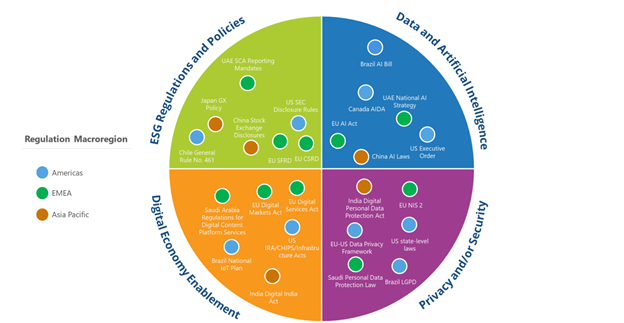
IDC’s Worldwide Digital Regulation Radar solves this problem (IDC #US523524224). It categorizes digital regulation into four main areas: environmental, data and AI, privacy and security, and digital economy enablement regulations. 

IDC’s Worldwide Digital Regulations and Policies Radar 

Note: this is not an exhaustive list

In the next sections, we’ll take a look at exactly what these categories mean. 

Data and AI Regulations 

The rapid adoption of artificial intelligence and big data analytics presents complex regulatory challenges. Ensuring that these technologies are used ethically, safely, and transparently is crucial for maintaining public trust and innovation. As examined in AI Regulations and Policies Around the World, 2023, (US#51356423), AI regulations can be currently mapped out loosely on a spectrum. They range from jurisdictions with no regulation to strict regulation, and jurisdictions that legislate AI as a single technology to those that legislate it according to multiple issues/technologies that are addressed as they arise. In Navigating the Fragmented U.S. AI and GenAI Regulatory Landscape, we also outlined some general approaches to the types of laws being implemented in the US. These include: 

1. Safe AI: Regulations to ensure the safe development and deployment of AI. 

2. Profiling and discrimination: Regulations designed to prevent AI from exacerbating existing biases or creating new forms of discrimination, as well as limiting profiling of consumers. 

3. Consumer warning and transparency: Requiring AI developers and companies to specifically warn the consumer of the US of AI or the use of their data. 

4. General registration and documentation: Regulation requiring documentation of data, safety measures, registration of AI deployments, etc. 

Overall, policymakers are pushing for regulations that hold AI developers accountable for potential biases, errors, and impacts on employment. Governments worldwide are also exploring stricter regulations for data privacy and security, which are closely linked to AI regulations. For example, in India, the Digital Personal Data Protection Act came into effect in September 2023 and has sections directly implicating AI training data sets on top of protecting personal data. 

For more information on individual laws, see our Worldwide Regulation Radar and AI Regulations Around the World reports. 

Privacy and Security Regulations 

As aforementioned, digital privacy and security regulations are some of the most established forms of digital regulation and are strongly linked to AI. They reflect growing public concern over personal data protection, cybersecurity, and the right to privacy in the digital age. These acts are increasingly common around the world. This includes general data protection laws such as the EU’s GDPR and the California Consumer Privacy Act (CCPA). These regulations emphasize user consent, transparency, and individual rights over data ownership. 

 Many countries have also introduced cybersecurity regulations to safeguard national infrastructure, corporate networks, and personal data from cyber threats. The U.S.’s Cybersecurity Information Sharing Act (CISA) and China’s Cybersecurity Law are examples of national laws that mandate certain security practices for digital infrastructure. 

ESG Regulations and Policies  

As digital technology expands, so does its carbon footprint. Data centers, AI computation needs, and electronic waste contribute significantly to environmental impact, requiring digital regulations that promote sustainability and environmental responsibility. The EU is leading in sustainability disclosures with the Corporate Sustainability Reporting Directive (CSRD) and Sustainable Finance Disclosure Regulation (SFDR). We therefore see many countries around the world following this, for example with stock exchange disclosures and reporting mandates. Governments are also creating legislation to support better energy policy, management of waste, and more.  

Digital Economy Enablement 

Digital economy enablement regulations focus on promoting technological infrastructure, innovation, and competitiveness in the digital space. These include incentives, subsidies, and policies that support the growth and sustainability of the digital economy. For a more comprehensive list of incentives, take a look at The Digital States – Part 1, 2024: What Government-Supported Investment Opportunities Exist for the Technology Market? (US#51025223). Some key types of digital incentives include: 

  1. 5G and Network Infrastructure Promotion: 5G technology is critical for advancing connectivity and enabling new digital services. Countries such as South Korea, the U.S., and China have enacted policies to accelerate 5G rollout through spectrum allocation, subsidies, and grants for telecommunications providers. 
  1. Semiconductor and Tech Manufacturing Subsidies: In response to global supply chain disruptions, countries are investing in domestic semiconductor manufacturing. The U.S. CHIPS Act, for instance, provides subsidies and incentives to reduce reliance on foreign-made chips and bolster domestic tech production. 
  1. Digital Startups and Innovation Funds: Governments often support the digital economy by fostering startup ecosystems and innovation hubs. For example, India’s Digital India Initiative provides funding, tax breaks, and incubator programs to encourage digital innovation and entrepreneurship. 
  1. International Trade Agreements for Digital Products: Many trade agreements, such as the Digital Economy Partnership Agreement (DEPA) between Chile, New Zealand, and Singapore, facilitate cross-border data flow, digital services, and e-commerce, making it easier for digital companies to operate internationally. This will be covered in-depth in Digital Economy Strategies’ upcoming report on digital trade agreements. 

The Future of Digital Regulation  

As digital technology’s influence on society continues to grow, governments are increasingly adopting a balanced approach that fosters both growth and responsibility. While regulations around privacy, security, and environmental impact address pressing ethical concerns, enablement policies incentivize the adoption and expansion of emerging technologies. Additionally, regulation is subject to change, of course, especially with 2024 being the “year of elections.” For a closer look at EU-level regulation, the EMEA Digital Regulations and Policies Radar (#EUR152325424) gives a glimpse at the most important EU digital legislation. Furthermore, the US election, which occurred on November 5th, will have major repercussions for tech companies. Three key areas it will impact include digital AI regulation, data privacy and cybersecurity, and tech innovation and trade policy. For a deeper dive on how the US election impacts these policies, sign up for the upcoming State of the Market webinar on November 13, 2024. Additionally, follow IDC’s Digital Economy Strategies CIS to get the latest updates on how digital regulation is impacting the business landscape. 

Elisabeth Clemmons - Research Analyst - IDC

Elisabeth Clemmons is a Research Analyst for IDC's Worldwide Small and Medium Business Markets program, where she covers the technology priorities, needs, challenges, and goals of small and medium businesses across the globe. Leveraging primary and secondary SMB research, she provides insights into technology trends and developments, buying patterns, market segmentation, and more. She additionally serves as an analyst for the Digital Economy Strategies research theme, covering the interrelationship between geopolitics, macroeconomics and the technology industry.

As a growing tech vendor, gaining traction in a competitive marketplace can be a daunting challenge. While creating in-house content is crucial for brand visibility, there’s another powerful tool that can significantly enhance your credibility and market positioning: third-party content. Independent, expert-driven insights like analyst briefs, whitepapers, and industry reports offer an unbiased, authoritative perspective that customers trust, helping you stand out from the competition.

In this blog, we’ll explore three reasons why third-party content matters for growing tech vendors and provide actionable tips on how best to use it to drive growth.

1. Builds Trust and Credibility

One of the biggest hurdles for emerging tech vendors is building trust with customers and investors. No matter how strong your product or service is, buyers are often skeptical of vendor-authored content because they understand it ultimately serves your interests. This is where third-party content, such as analyst briefs or independent whitepapers, becomes invaluable.

Independent analysts and research firms like IDC have earned reputations for providing impartial, data-backed insights. By leveraging content from these sources, you align your brand with trusted voices, lending credibility to your solutions and establishing a stronger position in the market. Customers are more likely to trust your offering when it’s supported by an unbiased, expert perspective.

How to Use It:

  • Reference third-party reports and data points in your blog posts, case studies, and sales presentations to add weight to your claims.
  • Use analyst-backed insights to create a more compelling narrative in your marketing campaigns, positioning your product within the broader market context.
  • Promote whitepapers or reports on your website as gated content to attract leads, showcasing your company’s alignment with industry trends.

Example:
When launching a new product, reference findings from a relevant IDC report that validates your solution’s importance within your niche. Incorporating trusted data helps position your offering as a solution to real market needs, easing the buyer’s decision-making process.

2. Enhances Your Go-to-Market Strategy

In a fast-paced tech landscape, staying ahead of emerging trends is essential for creating a strong go-to-market strategy. Third-party content provides valuable insights into market dynamics, competitive landscapes, and customer behavior, helping you make informed decisions. Analyst reports and industry studies can reveal growth opportunities, identify potential challenges, and offer strategic recommendations that align with where the market is heading.

By leveraging these insights, you can fine-tune your go-to-market approach, ensuring your product or service is positioned to meet current and future demand. Whether you’re entering a new market, launching a new feature, or refining your sales approach, third-party content gives you the context and data needed to make informed, strategic moves.

How to Use It:

  • Integrate analyst predictions into your product development roadmap, ensuring your offerings are aligned with future market trends.
  • Use insights from industry reports to identify growth opportunities or untapped customer segments.
  • Incorporate findings into pitch decks or investor presentations, highlighting how your company is staying ahead of the curve.

Example:
A growing SaaS company can leverage IDC market reports to refine its product roadmap, ensuring that features being developed align with customer needs and anticipated market shifts. By using these reports to guide product development, the company stays competitive and relevant as customer demands evolve.

3. Differentiates You from Competitors

In crowded tech markets, differentiation is key to standing out. While every vendor can create content promoting their product, third-party content provides an extra layer of differentiation. It offers an independent, trusted perspective that helps validate your position and sets you apart from competitors who may only rely on self-promotion. By backing your claims with third-party reports and analysis, you strengthen your value proposition and present a more balanced, credible view of your solution.

Moreover, independent content can highlight your unique strengths or competitive advantages in a way that resonates with buyers. For instance, an analyst report that highlights emerging trends can help position your product as a cutting-edge solution, differentiating you from competitors who aren’t addressing the same needs.

How to Use It:

  • Use third-party comparisons or reviews from analyst firms to demonstrate how your solution outperforms competitors.
  • Reference independent content in product launches or feature announcements to highlight why your offering stands out in the marketplace.
  • Share third-party reports that showcase your company’s alignment with market trends, positioning yourself as an industry leader.

Example:
When launching a product update, include a relevant IDC report that shows why your solution addresses the latest market trends. Use this to highlight your forward-thinking approach and differentiate your product from competitors who aren’t keeping pace with these changes.

How to Maximize the Value of Third-Party Content

To get the most out of third-party content, it’s important to use it strategically across multiple channels. Here are some best practices to ensure you’re maximizing its impact:

  • Repurpose Content Across Platforms: Turn a single analyst report into multiple pieces of content, such as blog posts, infographics, and social media snippets. Repurposing allows you to reach different audience segments while making the most of your content investment.
  • Use It in Lead Generation Campaigns: Third-party content is often seen as more trustworthy, making it highly effective for lead generation. Offer whitepapers or reports as gated content, attracting high-quality leads who are seeking unbiased, expert insights.
  • Incorporate It into Sales Conversations: Equip your sales team with third-party reports and whitepapers to help them build trust with potential clients. These materials can strengthen your sales pitch by providing a neutral perspective that validates your solution.
  • Cite It in Thought Leadership: Align your brand with independent, trusted voices by referencing third-party content in webinars, blog posts, and thought leadership articles. This not only enhances your credibility but also helps position your company as an informed industry player.

Conclusion

For early-stage to mid-market tech vendors, building credibility and driving growth relies on increasing market awareness, generating leads, and capturing investor attention. Third-party content, such as analyst reports and whitepapers, is a powerful tool to help you achieve these goals. By partnering with a respected analyst firm, you gain independent validation that enhances your brand’s visibility and builds trust across the tech ecosystem.

Leveraging third-party insights helps you understand your competitive landscape, target key audiences, and refine your go-to-market strategies. Whether you’re focused on product differentiation, customer engagement, or growth acceleration, independent content provides the expertise and authority to back your claims.

For over 60 years, IDC has helped startups and growing tech vendors navigate the complexities of the market, building third-party validation that drives recognition and growth. Ready to take the next step?

Contact us today to learn how IDC can help you build momentum and accelerate your success.

It’s more important than ever for IT and business teams to be on the same page. Yet, many organizations struggle with a communication gap between these two groups. Why is this such a common issue? And how can dashboards be the bridge to solve it? Let’s break it down.

The Communication Gap Between IT and Business

1. Misaligned Objectives – One of the biggest reasons IT and business teams struggle to communicate is that they often have very different goals. IT tends to focus on metrics like system uptime, network performance, and cybersecurity. Meanwhile, the business side is more interested in things like revenue growth, customer satisfaction, and market share. With both teams speaking different “languages,” it’s no surprise that they often end up talking past each other, leading to misaligned priorities.

2. Too Much Jargon – Let’s be honest: IT can be a jargon-heavy world. Terms like “network latency” or “data redundancy” are second nature to IT professionals but can sound like gibberish to someone on the business side. Business leaders need information that directly ties into business outcomes—not a lesson in technical terminology. When served this jargon ridden reporting, it reinforce the business perception of IT as a back office function disconnected from a leadership role in the organization.

3. Too Long; Didn’t Read (TLDR) – I recently reviewed a client dashboard where the CIO had 10 minutes to report in the monthly management review meeting IT. It was ten, very detailed, slides. Realistically, there wasn’t sufficient time in 10 minutes to cover even 2-3 slides, and the key business concern – are we on progress to deliver to the business strategy was never addressed succinctly. That answer had to be read from multiple different slides.

4. Why Should I Care – IT reports are often dense with technical data but lack business context. A report on server downtime, for instance, may not explain how that downtime is affecting customer experience or revenue. Without that essential context, it’s hard for business leaders to grasp the true impact of what’s going on in IT, which leads to less informed decision-making. I recently saw a client report which reported on “94% deflection” – a business user would not understand what that meant or even care!

The Role of Effective Dashboards

So, what’s the fix? One key solution lies in effective dashboards that can translate complex IT data into business-relevant insights. When done right, dashboards can serve as a powerful tool to bridge the communication gap.

How Dashboards Help

Bridging the Gap: Dashboards translate technical metrics into business insights. Instead of presenting a laundry list of technical KPIs, dashboards present data in a way that aligns with business goals—making it easier for business leaders to understand how IT performance affects them.

Key Features of an Effective Dashboard

  • Clarity and Simplicity: A dashboard should be clean and easy to understand. Focus on the most critical metrics and strip away unnecessary data clutter. Less is more when it comes to business-facing dashboards.

In my previous example with the 10-slide presentation, I asked the team a straightforward question about the four strategic initiatives: are they on schedule or behind? The response was that three were on track, and one was delayed. However, I only found this out by asking directly—there was no clear indicator, like a simple green, amber, or red flag, to make this status immediately visible. This was the base-level information that the business wanted to know at a glance.

  • Contextual Information: Data is useful, but not sufficient. People need to understand why the data matters. How does what is being reported impact them?
  • Visual Appeal: “People eat with their eyes, not just their mouths,” means it’s got to look good too. Charts, graphs, and colors can make complex data easier. A well-designed dashboard helps non-technical users understand key information.
  • Know Your Audience: A dashboard should be tailored to the specific needs of its audience. Different stakeholders—executives, department heads, or IT managers—need differing levels of detail and focus. For example, a high-level executive might want a quick overview of strategic KPIs, while a department manager may need more granular data on operational performance. Understanding who will be using the dashboard helps ensure it presents the right information in the right format.

Often, I see IT departments presenting what THEY feel is important at the expense of what their audience actually cares about.

  • Understand What Outcome You Are Trying to Get: A dashboard is not just a tool for presenting data—it’s a form of marketing from which IT hopes to achieve a beneficial outcome. Whether the goal is to gain executive buy-in, influence decisions, or highlight the value IT brings to the business, the dashboard should be designed with this in mind. It’s about showcasing IT’s impact in a way that drives action, whether that means securing more resources, aligning priorities, or improving collaboration. By understanding what outcome you’re trying to achieve, you can ensure the dashboard tells the right story and promotes the desired business result.

Any opportunity to communicate with the business is an opportunity to reinforce that IT is a strategic business partner and not simply bits and bytes.

Types of Dashboards

1. Strategic Dashboards: Designed for executives, these dashboards present high-level metrics that are directly tied to business objectives priorities, and strategies, but don’t forget to call out successes.

2. Tactical Dashboards: These are meant for middle managers who are overseeing specific projects or departments. They offer a more detailed look at operations but still focus on IT performance or OKRs.

3. Operational Dashboards: Used by IT teams, operational dashboards monitor day-to-day technical metrics like system health and security. While these dashboards are more technical, they can be connected to business goals when integrated into the larger dashboard framework.

Conclusion

IT and business alignment is critical for an organization’s success, yet it’s an area where many organizations fail. By addressing the root causes of the communication gap—complexity, jargon, lack of context, TLDR, etc.—and implementing dashboards that speak directly to business needs, organizations can turn IT from being perceived as wire-pullers or propeller heads into a partner.

In short, if IT is going to speak to the business effectively, the conversation needs to change—and dashboards are a powerful way to make that happen.


Related Resources:

Daniel Saroff - GVP, Consulting and Research Services - IDC

Daniel Saroff is Group Vice President of Consulting and Research at IDC, where he is a senior practitioner in the end-user consulting practice. This practice provides support to boards, business leaders, and technology executives in their efforts to architect, benchmark, and optimize their organization's information technology. IDC's end-user consulting practice utilizes our extensive international IT data library, robust research base, and tailored consulting solutions to deliver unique business value through IT acceleration, performance management, cost optimization, and contextualized benchmarking capabilities.

Cloud computing has been heralded as the panacea for modern IT challenges, promising scalability, flexibility, and cost savings. However, as the cloud landscape matures, many organizations are finding that the reality of cloud adoption does not always align with their expectations. This has led to a growing trend of repatriating workloads back to on-premises or private cloud environments. In this article, we will explore the reasons behind these missed expectations and why some businesses are choosing to bring their cloud workloads back home.

The Promise vs. Reality of Cloud Computing

Cost Overruns

One of the primary drivers for cloud adoption has been the promise of cost savings. However, many organizations are finding that their cloud spending is exceeding initial estimates. According to IDC’s Cloud Pulse 4Q 2023 survey, close to half of cloud buyers spent more on cloud than they expected in 2023, with 59% anticipating similar overruns in 2024. The complexities of cloud environments, coupled with unforeseen external influences, make it challenging to forecast costs accurately. Factors such as the increasing cost of third-party services, energy costs, and the financial implications of new technologies like GenAI are contributing to these budget blowouts.

Performance and Latency Issues

While cloud providers offer robust infrastructure, not all workloads are suited for the cloud. Performance and latency issues are common complaints, particularly for applications that require real-time processing or have stringent performance requirements. For instance, technical and AI-related workloads often experience performance bottlenecks in public cloud environments, prompting organizations to consider repatriation.

Security and Compliance Concerns

Data security and regulatory compliance are critical considerations for any organization. Despite the advanced security measures offered by cloud providers, many businesses remain concerned about data breaches and compliance with industry regulations. This is particularly true for sectors like finance and healthcare, where data privacy is paramount. As a result, production data and backup/disaster recovery processes are among the most repatriated elements of workloads.

Complexity in Management

Managing a multi-cloud or hybrid cloud environment can be incredibly complex. Organizations often struggle with integrating different cloud services, managing data across multiple platforms, and ensuring consistent security policies. This complexity can negate the perceived benefits of cloud adoption, leading some businesses to reconsider their cloud strategies.

The Repatriation Trend

What is Repatriation?

Repatriation refers to the process of moving workloads from public cloud environments back to on-premises or private cloud infrastructure. This trend is part of a broader industry movement towards hybrid multi-cloud IT strategies, where organizations seek to optimize their workload placement across various environments.

Drivers for Repatriation

Several factors drive the decision to repatriate workloads:

  1. Cost Management: As mentioned earlier, unexpected cost overruns in the cloud can make on-premises solutions more attractive. By repatriating workloads, organizations can gain better control over their IT spending.
  2. Performance Optimization: For workloads that require high performance and low latency, on-premises infrastructure can offer superior performance compared to public cloud environments.
  3. Security and Compliance: Repatriating sensitive data and critical applications can help organizations meet stringent security and compliance requirements more effectively.
  4. Operational Control: Having workloads on-premises allows for greater control over IT operations, enabling organizations to tailor their infrastructure to specific needs and optimize resource utilization.

The Scale of Repatriation

While repatriation is a growing trend, it is not a wholesale migration. According to IDC’s Server and Storage Workloads Survey, only 8-9% of companies plan full workload repatriation. Instead, most organizations repatriate specific elements of their workloads, such as production data, backup processes, and compute resources.

Larger Organizations Leading the Way

Larger organizations are more active in repatriating workloads compared to smaller businesses. This is due to their greater resources, larger workloads, and more complex IT environments. Economic factors and comprehensive workload strategies also play a role in driving repatriation activities among large enterprises.

Conclusion

The initial promise of cloud computing has not been fully realized for many organizations, leading to missed expectations and a growing trend of workload repatriation. Cost overruns, performance issues, security concerns, and management complexities are some of the key factors driving this shift. While the cloud remains a vital component of modern IT strategies, businesses are increasingly adopting a hybrid approach, optimizing their workload placement across public cloud, private cloud, and on-premises environments.

As the cloud landscape continues to evolve, organizations must carefully assess their cloud strategies, balancing the benefits of cloud adoption with the realities of their specific needs and challenges. By doing so, they can make informed decisions about where to best deploy their workloads, ensuring they achieve the desired outcomes without compromising on cost, performance, or security.


References:

Daniel Saroff - GVP, Consulting and Research Services - IDC

Daniel Saroff is Group Vice President of Consulting and Research at IDC, where he is a senior practitioner in the end-user consulting practice. This practice provides support to boards, business leaders, and technology executives in their efforts to architect, benchmark, and optimize their organization's information technology. IDC's end-user consulting practice utilizes our extensive international IT data library, robust research base, and tailored consulting solutions to deliver unique business value through IT acceleration, performance management, cost optimization, and contextualized benchmarking capabilities.