Technology is no longer just an enabler – it transforms how organizations function, compete, and deliver value.  Specifically, AI is now fundamentally changing business processes, operations, and experiences, something that presents CIOs with both challenges and opportunities. As a result, the role of the CIO and IT must evolve beyond an enabling function.

Historically focused on operational excellence, CIOs now face a strategic imperative: becoming orchestrators of business value. Leveraging deep technical expertise and proactively acquiring new capabilities, CIOs are expected to effectively harness AI to drive meaningful innovation and measurable business outcomes.

However, many CIOs and IT departments remain too focused on traditional IT and IT-related metrics, limiting their ability to drive broader business outcomes. Closing this gap requires a fundamental shift that was already anticipated as part of digitalization efforts but now intensified by the pressure to deliver value on the AI agenda.

CIOs must evolve from technology stewards to strategic innovators, driving resilient and adaptive organizations. Those who proactively do and align AI with business priorities will shape their organization’s future, those who hesitate risk being left behind. To successfully navigate this evolution, CIOs must address six imperatives. This is what this looks like in practice.

1. Manage Regulatory Complexity and Enforce AI Governance

Rapidly changing AI regulations present major hurdles. In the report IDC FutureScape: Worldwide CIO Agenda 2025 Predictions – Asia/Pacific (Excluding) Japan Implications, IDC predicts that in 2025, 50% of the Asia-based top 1000 (A1000) organizations will struggle with divergent regulatory changes and rapidly evolving compliance standards, challenging their ability to adapt to market conditions and drive AI innovation. CIOs must proactively address these challenges by developing agile compliance frameworks.

Also, 41% of APEJ organizations are focusing on establishing organizational data governance policies for AI/GenAI usage, according to the IDC 2024 CIO Sentiment Survey. We expect this to increase as this regulatory complexity demands organizations to have unified AI governance, and IDC predicts that by 2025, 70% of organizations will be formalizing policies and oversight to address AI risks (e.g., ethical, brand, and PII), aligning AI governance with strategic business goals. CIOs must develop trust-centric AI governance models that align clearly with strategic business objectives. This can help organizations use AI responsibly, maintaining customer trust, while still capturing the benefits of rapid technological innovation.

2. Reduce Technical Debt to Accelerate Innovation

Modernizing IT is the top strategic priority for 37% of CIOs in the Asia/Pacific region, according to the same survey. This is because technical debt creates complexity, slows innovation, and restricts the ability to effectively adopt and scale new technologies like AI. IDC predicts that responding to the drag of technical debt, 40% of CIOs in 2025 will drive enterprise initiatives in high-impact areas to remediate technical debt for competitive advantage. Clearing technical debt – from aging codebases to outdated systems, and inefficient processes – enables organizations to quickly adopt new technologies, reducing barriers to innovation and accelerating AI integration.

CIOs who prioritize tackling technical debt will position their organizations to adopt technology innovations faster, ensuring readiness for more complex AI-driven transformations. This can help boost innovation, improve agility, and increase the return on technology investments.

3. Turn AI Experimentation into Enterprise Value

Although AI adoption has rapidly moved from niche to mainstream, many organizations remain stuck in pilot paralysis, struggling to advance beyond the proof-of-concept (PoC) stage. According to the IDC’s 2024 Future Enterprise Resiliency and Spending (FERS) survey, wave 4, organizations in Asia Pacific conducted an average of 24 GenAI pilots over the past 12 months, but only 3 progressed into production, partly due to the lack of clear direction. In fact, IDC predicts that in 2026, over one-third of organizations will be stuck in the experimental, point-solution phase of AI experimentation, requiring a shift of focus to enterprise use cases to deliver ROI. This stagnation hinders competitiveness, slows growth, and increases exposure to ethical risks and regulatory scrutiny.

CIOs must become orchestrators of business value by effectively partnering with other CxOs to translate unclear ideas into practical AI applications. They should establish an AI Center of Excellence (CoE) to centralize expertise, share best practices, and coordinate cross-functional teams, accelerating AI deployment and ensuring consistency. Additionally, CIOs must lead the creation of a strategic roadmap for responsible AI that maximizes business impact, ensures ethical deployment, and proactively mitigates risks. So, we expect that by 2026, 70% of CIOs will lead the creation of a strategic road map to rapidly implement responsible AI solutions, maximizing benefits while mitigating risks across their operations. CIOs who bridge the gap between innovative AI experimentation and enterprise-wide deployment will help their organizations capture substantial competitive advantages and achieve tangible financial returns.

4. Strengthen Cybersecurity with AI-Driven Defense

Cybersecurity is much more than just an IT issue; it is a strategic business imperative. Yet, CIOs are ultimately responsible for safeguarding their organizations, particularly as threats grow increasingly sophisticated. IDC predicts that in 2026, 50% of CIOs will diversify and broaden security strategies across their organization’s IT and security teams to address new/fast-evolving threats to their technology and supply chain ecosystem. CIOs must actively integrate AI and ML into their cyber-defense systems to protect against advanced threats, both internal and external.

AI-driven cybersecurity can help not only improve threat detection, but also enhance incident response times, potentially reducing risks to operations and reputation. CIOs who effectively leverage AI to protect their IT infrastructure can improve organizational resilience, positioning their organizations as leaders in cybersecurity effectiveness.

5. Embed Sustainability into IT Strategy

Sustainability has become a core business priority and technology investments play a critical role in achieving organizations’ ESG goals. IDC predicts that by 2027, 50% of CIOs will be accountable for embedding sustainability goals into every technology project, measuring outcomes to refine investments and align with environmental objectives. CIOs must actively incorporate environmental considerations into IT investment decisions, embedding clear sustainability metrics into infrastructure development and AI initiatives.

By proactively integrating sustainability into their technology agendas, CIOs are effectively linking technology leadership with broader corporate responsibility. This can help in positioning organizations favorably in the minds of consumers, investors, and regulators, strengthening brand value and competitive differentiation.

6. Close the Digital and AI Skills Gap with Advanced Tools

The rapid adoption of AI technologies exacerbates an already complex problem: the digital skills shortage. To address this over 45% of Asia/Pacific organizations are giving more developer duties to non-IT staff, according to the IDC’s 2024 Asia/Pacific Software Survey. So, IDC predicts that by 2028, 50% of A1000 will adopt cutting-edge tools to close the digital and AI skills gap, easing reliance on specialized talent, boosting the workforce, and bridging the expertise gap for innovation. Organizations will actively leverage automation, AI-driven platforms, and low-code/no-code tools to empower nontechnical employees to create and manage applications. While this expands access to digital solutions, boosting productivity and freeing skilled talent for strategic work, it also introduces the risk of app sprawl, a challenge that must be managed as AI further simplifies app development.

CIOs must ensure the workforce is not only technically skilled but also aligned with business outcomes. Embracing low-code/no-code platforms can democratize technology access, allowing teams to quickly develop customer-facing applications. By leading this shift in skills, CIOs can enhance speed to market, drive business agility and create lasting competitive advantage.

The Path Forward in the AI-Fueled Era

The CIO role is evolving rapidly, with AI at its core. CIOs must move beyond technology facilitation and take the lead in AI governance, cybersecurity, skills development, sustainability, regulatory compliance, and technical debt management. Ultimately, they hold the key to bridging technological opportunities and strategic business outcomes. Those who embrace these responsibilities will not only drive business value but also shape their organizations’ futures, becoming indispensable leaders in the AI-Fueled Organization.

To learn how to integrate AI into your strategy and make 2025 a defining year for your organization, download the IDC eBook Top Predictions and Insights for CIOs in 2025 today!

Daniel-Zoe Jimenez - Vice President, Digital Innovation, CX & Software, DNB/Start-ups, SMBs, Consumer and Channels Research - IDC

Daniel provides strategic advisory services to the C-Suite (CIOs, CTOs, CFOs, CDOs, CMOs, and CHROs) on how to develop and leverage technologies (e.g., AI/Analytics, Cloud, RPA, AR/VR, ERP, CRM) and new business operating models to become more agile, resilient, and competitive. He delivers workshops and strategic engagements for customers across Asia/Pacific such as assessing maturity, identifying gaps, crafting strategies and technology roadmaps, determining ecosystem readiness, business value metrics (KPIs), and skills required to drive future growth and profitability. Also, he provides research and strategic advisory to tech buyers and suppliers into the most emerging technologies and market developments like the Metaverse.

Just when businesses in Asia/Pacific thought they were getting to grips with artificial intelligence-led disruptions in their industries, here comes something new called Agentic AI and its ability to turn generative AI (GenAI) functionality and capabilities into actionable services. In practical terms, Agentic AI is more than just advanced chatbots, this is the next step in the evolution of AI, allowing AI agents to act with increased autonomy.

A simplistic retail example would be, where previously the AI will recommend restaurants based on a user’s preferences, now it can book the restaurant and offer alternatives that match its users’ health and dietary needs (vegan, gluten-free, high protein, etc). From a marketing perspective, this progression in AI utilization has a drastic impact on how businesses promote their goods and services to potential customers. Previously, marketers would target their campaigns directly towards the customers but now the shortlisting and decisions are made by the AI. How does the AI choose the “right” product/service? What changes do marketing teams need to make to incorporate Agentic AI?

Before we try and understand where we are going let’s first come to grips with where we are and look at the current state of marketing in Asia and how marketers are currently using AI. Some of the key goals for marketing in the region today are:

  • Develop a more unified and enterprise-wide marketing strategy: Provide consistent marketing experiences across various touchpoints
  • Personalization as a differentiator: Making marketing campaigns relevant to segments, micro-segments or even individuals based on their personal preferences and characteristics
  • Streamline processes through automation

Asian businesses, particularly those in China, have been relying on AI in all of these areas and some of the more common uses of AI are:

  • Automated content creation (including visual content such as videos and images) for campaigns
  • Predictive analytics to improve overall campaign effectiveness and performance
  • Data analysis and insights into customer behavior trends, gauging public sentiment and achieving a better understanding of the customer journey

More detailed insights of how Chinese firms are using AI in marketing can be found in IDC PeerScape: C2G Peer Insights to Augment Customer Intelligence Using Generative AI.

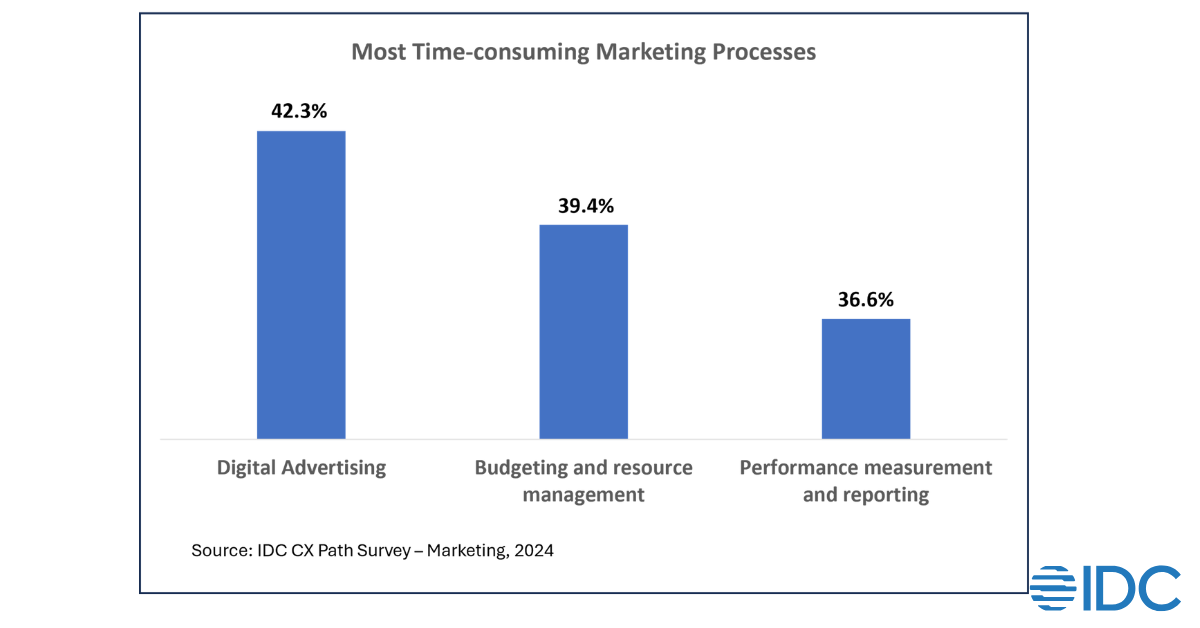
By leveraging AI, marketers can optimize their marketing campaigns for targeted messaging to a wide range of customer segments across numerous online channels, while controlling distribution frequency to minimize advertising fatigue in a cost-effective method. For example, as shown in the below figure, digital advertising is still the most time-consuming process for marketers.  Actions such as amending and formatting communications for different digital mediums as well as determining which segments to target take a significant amount of time and prolong the time required to launch a campaign – all of which can now be done by GenAI and Agentic AI.

With a better understanding of how marketers in the region are using AI, let’s now look at Agentic AI and what the future holds for marketing.

Agentic AI Will Impact the Marketing Workforce Composition

We will see that with continued use of AI, especially in campaign cost optimization,  impacts marketing workforce composition. Currently, marketers are using AI to take over mundane and repetitive tasks (e.g. formatting images across different social media platforms) which will eventually transition to taking over full-time marketing roles allowing humans to focus on more strategic initiatives. In the IDC FutureScape: Worldwide Chief Marketing Officer 2025 Predictions — Asia/Pacific (Excluding Japan) Implications, IDC lists the top most urgent trends that marketing leaders must pay attention to. One of our predictions on the impact of Agentic AI on workforces states that by 2028, 1 out of 5 marketing roles or functions will be held by an AI worker, shifting human expertise to driving strategy, creativity, ethics and managing a blended human and AI workforce.

Increased Focus on AI Governance by Marketing not IT

There will be a need to supervise and ensure proper performance with Agentic AI taking on more responsibilities. This will require monitoring by the marketing team themselves who know when something goes wrong as opposed to IT who monitor based on code alerts. This will require the marketing team to be trained on AI use, to make them comfortable with the use of AI and understand how it can help rather than replace them so they can truly appreciate the technology and learn  the processes and systems to use in finetuning AI performance or troubleshooting errors when they occur.

Marketing Workflows Will Change

The use of Agentic AI by consumers will force a change in the marketing mindset, creating new processes and areas of focus which will force businesses and marketers to rethink how they operate. As an example, let’s address the question raised earlier in this blog – How does the AI choose the “right” product/service?

When the Internet and search engines grew in popularity, search engine optimization was created to improve the quality and quantity of website traffic. Companies had to rethink how they setup their websites to ensure it was “visible” in rankings to the search engines. In addition to this, many paid to have their websites listed on top of searches. IDC predicts that businesses in Asia will have to work with AI companies and start spending on Large Language Model (LLM) optimization in the same manner so that businesses and their products and services are visible to Agentic AI systems.

By 2029, companies will spend up to 3x more on LLM optimization than search optimization to influence GenAI systems and raise the priority & ranking of their brands.

The AI road ahead has no doubt more bumps and turns and marketers must be willing to meet these changes and challenges head on. Here are a few things marketers can do to prepare for Agentic AI:

  • Build a portfolio of AI case studies and use cases to determine what works best for you. By matching thought leadership initiatives with AI-infused case studies, marketers will be able to develop campaigns that competitively differentiate their companies and products.
  • Work with the technology team to ensure marketing and technology strategies are in sync, especially when it comes to AI-related changes such as in the organization’s client data infrastructure.
  • Build a brain trust to analyze and create new marketing strategies for an AI-everywhere world. This will include looking at changes in human resourcing, the impact of deploying AI agents (internally and externally) and the required communications to ensure key stakeholders understand and accept the new technologies and protocols.

Know how Asia/Pacific marketing organizations are pivoting into an AI world leveraging AI-fueled apps. Download this eBook from IDC.

As Asia/Pacific businesses accelerate their digital transformation journeys, artificial intelligence (AI) is becoming a core innovation enabler. From identity and access management (IAM) to risk-based trust frameworks, AI is reshaping the cybersecurity landscape. However, as AI adoption grows, so do concerns around security, trust, and compliance.  

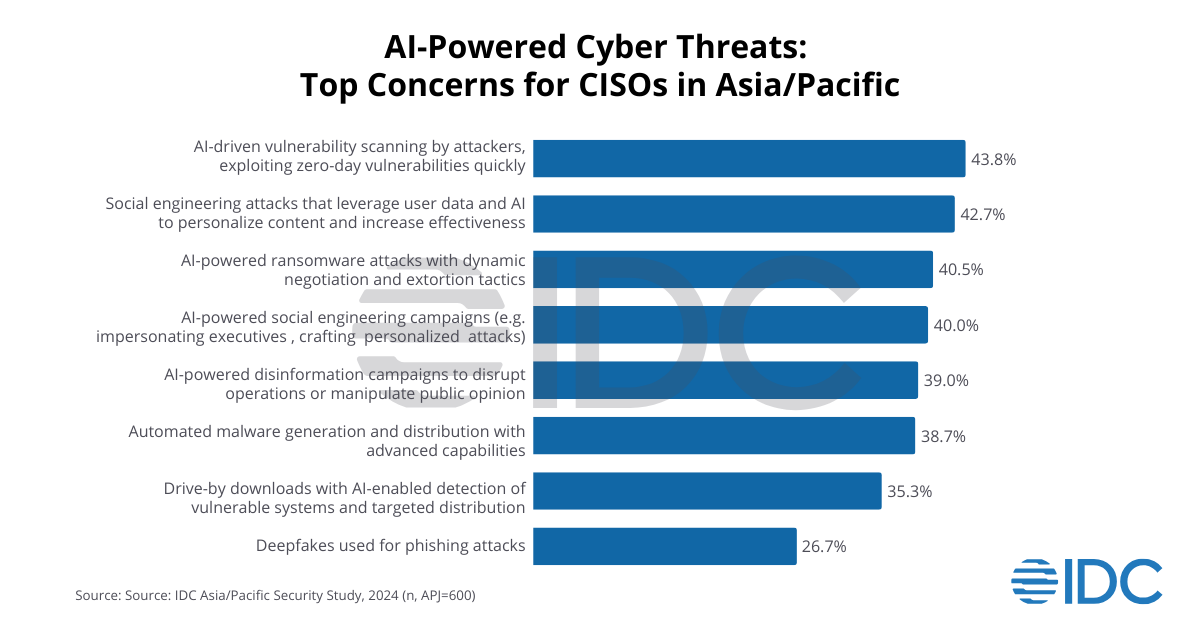
According to IDC’s Asia/Pacific Security Study, 2024, 76.5% of enterprises in the region say that they are not confident in their organization’s ability to detect and respond to AI-powered attacks. Most are concerned about AI-driven vulnerability scanning by attackers, the rapid exploitation of zero-day vulnerabilities, increasingly personalized and effective social engineering attacks that leverage AI, and AI-powered ransomware attacks with dynamic negotiation and extortion tactics. The risk of AI-driven risk vectors increases in verticals dealing with sensitive and confidential information such as Banking and Financial Services (BFSI) and Healthcare as well as critical infrastructure sectors like energy, transportation, and telecommunications, where disruptions can have widespread consequences. 

With cybersecurity emerging as a central theme across the region, AI-fueled business models must address key challenges:  

  • How can organizations ensure AI systems are secure, transparent, and resilient?  
  • How should regulatory frameworks evolve to accommodate AI-driven cybersecurity?  
  • What steps can businesses take to balance AI innovation with trust?  
  • How can enterprises implement a robust AI governance framework to manage security, compliance, and ethical risks effectively? 

To navigate these challenges, enterprises must address three key areas that impact the secure and responsible deployment of AI: 

1. Integration and Cost Barriers to AI Security Adoption 

Despite its potential, AI-driven security automation struggles with integration issues and high costs. According to IDC FutureScape: Worldwide Security and Trust 2025 Predictions – Asia/Pacific (Excluding Japan) (APJ) Implications, by 2027, only 25% of consumer-facing companies in the region  will use AI-powered IAM (Identity and Access Management) for personalized, secure user experiences due to persistent difficulties with process integration and cost concerns, creating a trust gap in AI authentication and identity protection, particularly in consumer-facing sectors like retail, banking, and e-commerce. 

2. Regulatory Fragmentation Complicates Compliance 

Asia/Pacific’s inconsistent AI regulations make compliance difficult. While Singapore and Australia lead AI governance, India and ASEAN nations lag behind, creating inconsistencies in how businesses implement AI security solutions. China has implemented strict AI laws focused on security assessments and algorithmic transparency, while Japan follows a more flexible, self-regulatory approach emphasizing Responsible AI. One of the most critical shifts in cybersecurity will be the introduction of AI Bills of Materials (AI BoM). By 2028, 70% of data products will include a Data BoM, detailing how data was collected, processed, and consent was obtained. This evidentiary trail will be essential for demonstrating compliance and ensuring AI systems do not operate as black boxes. Alongside, AI governance is mandatory, rather than exploratory. Some nations have demonstrated leadership in already initiating AI governance frameworks – such as Singapore, Australia, India, and Japan – setting the stage for responsible and secure AI adoption across the region. These countries are proactively developing policies and frameworks to ensure AI-driven technologies align with security, compliance, and ethical standards. 

3. Unchecked GenAI Adoption Creates Security and Compliance Risks 

The rapid expansion of GenAI poses major security and governance challenges for enterprises. IDC predicts that in 2025, 20% of organizations in APJ will move from proof-of-concept (POC) to production in specific GenAI use cases without a comprehensive risk-based assessment of their trust capabilities, potentially creating a cybersecurity house-of-cards scenario. Key risks include data leaks, bias in AI models, and regulatory penalties as governments tighten AI security laws. Without proactive governance, enterprises risk non-compliance, reputational damage, and increased exposure to AI-driven threats. 

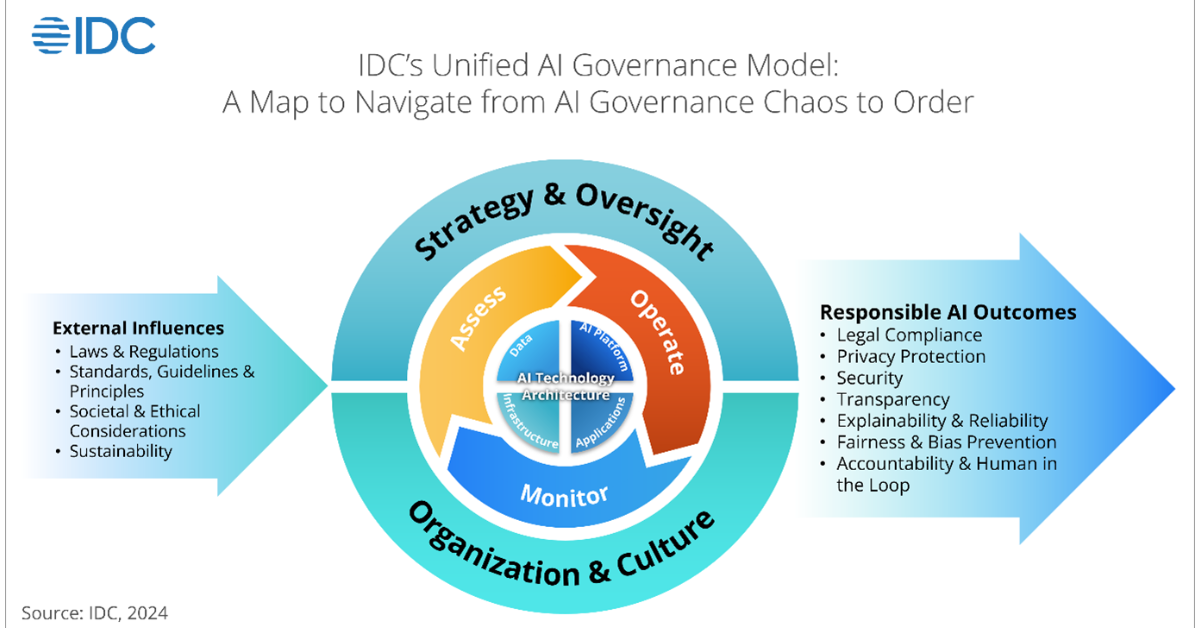
To mitigate these risks and build trust in AI-powered security, organizations must establish a robust governance framework that ensures transparency, compliance, and operational resilience. This is where IDC’s Unified AI Governance Model comes into play. 

IDC’s Unified AI Governance Model 

IDC’s Unified AI Governance Model is a strategic framework that balances innovation with risk management, ensuring AI deployment aligns with compliance, security, transparency, and ethical standards. It is built on four key pillars: transparency and explainability, security and resilience, compliance and privacy protection, and human-in-the-loop (HITL) governance. 

IDC defines AI governance as a system of laws, policies, frameworks, practices, and processes that enable organizations to manage AI risks while driving business value. Governance must be integrated into strategy rather than treated as a reactive measure. Without it, enterprises face operational inefficiencies, legal exposure, and reputational risks. The model also acknowledges external influences, such as regional regulations, ethical considerations, and societal expectations, which vary significantly across APJ markets. Ensuring that AI governance adapts to these external factors is critical for sustainable and trusted AI adoption. 

IDC’s Unified AI Governance Model provides a structured approach to managing AI security and trust by addressing some key questions such as:  

  • Who is using what data, and where is it stored?  
  • How is personally identifiable information (PII) data protected through encryption or anonymization?  
  • Are AI models being tested against risk controls and compliance requirements?  

Is there a risk assessment framework for GenAI deployments? 

Path Forward: Cybersecurity and AI Governance for Asia/Pacific Businesses 

To foster a secure AI-driven future, businesses must take a proactive approach to cybersecurity and AI governance. Key steps include: 

  1. Embedding AI Bill of Materials (BoM) in Cybersecurity Practices: Developing transparent AI security frameworks that document data provenance, consent mechanisms, and compliance checkpoints. 
  1. Investing in AI-Powered (Identity and Access Management) IAM with Risk-Based Authentication: Incorporating adaptive authentication, behavioral analytics, and risk scoring to strengthen trust in AI-driven security systems, instead of relying solely on AI-driven IAM. 
  1. Conducting Comprehensive Risk Assessments for GenAI Deployments: Establishing robust governance policies to prevent unintended risks when moving from GenAI POC to production. 
  1. Integrating Autonomous AI for IT Operations: By 2027, GenAI and analytics deployments for IT operations use cases will increase team productivity by 15%, generating $1.5 billion in economic and business value. Automated IT service desk responses, anomaly detection, and predictive resource capacity planning will be critical for AI-enabled security frameworks. 
  1. Collaborating with Regional Regulatory Bodies: Actively participating in shaping AI governance discussions, ensuring their cybersecurity policies align with emerging regulatory frameworks. 

Watch Linus Lai, IDC Asia/Pacific Vice President VP for Software and Services, discuss Unblocking the AI Everywhere Blockers in 2025 and AI’s impact on enterprise applications, infrastructure strategies, and governance models in this on-demand webinar

Partner with IDC | CSO to elevate your brand presence at Asia’s leading gathering of CISOs and IT security executives. Position your unique capabilities to become security leaders’ trusted vendor of choice in safeguarding their valuable corporate data in the cloud and in exploring the pivotal role of AI and quantum-proof technologies. Happening across 7 Asia/Pacific cities from April to November 2025, join us at the event to showcase your case studies, success stories, and more! 

Sakshi Grover - Senior Research Manager - IDC

Sakshi Grover is a senior research manager for IDC Asia/Pacific Cybersecurity Services, supporting its research and client engagement activities across Asia/Pacific markets. Additionally, she serves as the lead security analyst for IDC India. Sakshi is responsible for delivering syndicated custom research and consulting engagements on next-generation emerging and disruptive technologies. Her tasks include developing and socializing IDC's point of view within security services, covering both legacy and modern cybersecurity technologies. Her role involves close collaboration with technology vendors and buyers, developing market insights, and providing research, consulting, and advisory services in the fields of security software and services. This includes partnering on research efforts with relevant country analysts in the local IDC offices. Sakshi's views on security have been quoted in numerous publications, such as the Economic Times, Business Standard, Data Quest, CRN, and others.

The process that tech leaders typically follow to measure digital transformation is antiquated and must change. The reason? They tend to concentrate on IT performance metrics that aren’t tied to business outcomes.

By falling into the trap of focusing on IT-centric performance metrics—such as uptime, system availability, and IT spending — without linking them to broader business outcomes like revenue growth, customer experience, and innovation, tech leaders struggle to justify investments, CIOs lack visibility into true impact, and digital transformation stagnates.

To break free from this outdated approach, IT leaders must rethink how they define and measure the outcomes achieved through digital transformation. 

Designing, planning, initiating, funding, implementing, and continuously driving an organization’s digital transformation are essential tasks, but tech leaders must also continue the momentum for collaboration with technical and business stakeholders. This is done by measuring outcomes to see progress. The CIO plays a critical role here; they must facilitate and lead digital transformation with KPIs that show progress and outcomes.

Here is what we recommend.

Step 1: Shift Your Thinking and Your Team’s Culture from Measuring IT Metrics to Business-Aligned KPIs

Measuring infrastructure uptime, number of deployments, or IT costs in isolation is an obsolete approach as these details will not show the necessary alignment of tech investments with the changes necessary to transform the organization into a digital leadership position. Different approaches to change thinking are to align technology investments with defined digital initiatives that are intended to improve business value such as revenue impact, operational efficiency, and customer satisfaction, just to mention a few.

How do you do that? First, engage your team to define business outcomes. In other words, identify what IT success looks like to business stakeholders. For example, for IT operations, it could be improvements in customer satisfaction, measured by Net Promoter Score and digital experience data. For application design and development, it could be faster time to market for new digital products, measured by speed of product innovation cycles. And for project and portfolio management, it could be the revenue or cost savings directly attributable to digital initiatives.

Why this matters: Traditional IT metrics measure efficiency, but they don’t tell the full story of digital transformation success. Instead, CIOs and tech buyers must demonstrate how technology investments drive real business impact, and that requires a cultural shift to let go of old approaches that measure IT without connection to the business.

Step 2: Build a Digital Transformation Index (DXI)

A digital transformation index (DXI) is a set of key objectives with associated key performance indicators (KPIs) used to evaluate and measure an organization’s progress on the different strategic objectives and goals defined within the digital transformation strategy.

The following are key strategic objectives for making progress in your digital transformation but should be adjusted to your specific digital business strategy.   

  • Development and guidance of the organization through digital strategy and leadership: This objective is specifically focused on ensuring that there is a digital vision and a strategic road map, as well as commitment and support from executive leadership to drive digital initiatives that are part of the organization’s vision and road map. You’d likely want to set measures around certain milestones achieved as well as key ongoing initiatives.
  • Changes in business models to achieve business outcomes: When selecting and creating business model objectives, start thinking about how your organization with its people, processes, and technology diversifies and grows revenue streams, grows shareholder value, manages costs, or improves profitability.
  • Transformation progress to leverage strategic technology assets toward superior customer value: This objective should include measurements in terms of transformations on technological aspects defining value for customers in your respective market. Example metrics could be investments into core and emerging technology; architecture and data; or progress in the adoption of AI, cloud, automation, and security strategies, all for delivering superior customer value.
  • Improvements around organization, culture, and innovation: This objective includes the strategic approach to optimize or reengineer existing processes, for example leveraging   DevSecOps or Agile. Additional pursuits are agility improvements of the overall workforce; upskilling initiatives to improve digital skills development; and collaboration and cross-functional teamwork in pursuing new digital productions, solutions, or services to solve problems of your customers.
  • Operational excellence to scale and accelerate innovation: Operational excellence includes the ability to minimize overhead, reduce costs, and introduce automation optimizations to shift funding toward innovation. The measures could be technical debt removal, intelligent automation while managing cost, security, and agility, all balanced with new technology adoptions accelerating digital innovations.   

Why this matters: Organizations that fail to track holistic digital transformation progress risk making decisions in silos. A DXI with key measurement objectives provides clarity, accountability, and a connected approach to measuring digital transformation success. Some best practices are to track only the most meaningful transformation metrics that align with business goals; set baseline measurements and monitor improvements over time; and align IT, finance, and business units to ensure shared ownership of KPIs.  

Step 3: Make KPIs Actionable for Meaningful Progress

One of the most common mistakes CIOs make is tracking digital transformation progress without taking corrective action. Collecting data is only half of the journey — what matters is using it to drive real-time decision-making. Leveraging real-time dashboards that provide visibility across teams, enabling data-driven course corrections, are a good first step.

Other important tasks are to make sure there is KPI ownership by involving both the business and IT leaders who can drive accountability and alignment, and to safeguard that there are structured review cycles to assess performance, adjust strategies, and ensure digital initiatives stay on track.

Why this matters: Metrics should not exist in a vacuum. CIOs must embed digital transformation measurements into business decision-making, ensuring that KPIs drive agility, adaptability, and impact.

Step 4: Future-Proof Your Measurement Strategy

Digital transformation isn’t static, and, therefore, its objectives must evolve as technology and business need change. It is important to regularly reassess objectives and the associated KPIs to ensure they remain relevant as new technologies, good practices or market changes occur. If possible, initiate benchmarks against industry peers and competitors to identify strengths and gaps.

Why this matters: A rigid approach to measurement can stall innovation. The most successful organizations continuously refine their digital transformation objectives and KPIs, ensuring they remain aligned with changing business priorities or changes in their respective industry.

Now It Is Your Turn to Shift from IT Metrics to Measurable Impact

CIOs and IT leaders have a unique opportunity to redefine how digital transformation is measured. By shifting from IT-centric metrics to business-driven KPIs, organizations can prove the value of technology investments, drive innovation, and maintain competitive advantage. Start by changing your and your team’s thinking toward business outcomes.

Next, define your DXI objectives and relative KPIs for an end-to-end view of how well your organization is driving business growth, improving efficiency, and accelerating customer value. Then, ensure that the DXI KPIs drive real-time decision making and corrective action, with metrics owned by and responsibilities tasked to business stakeholders and IT. Finally, establish a schedule to reassess objectives and KPIs to keep pace with technological and business change.

The annual Mobile World Congress trade show, as the name suggests, is normally a telco and handset-driven event, and this year’s event in Barcelona last week was no exception. Even though vendors that we associate with PCs like Intel, AMD, and Dell had on-site booths as well, they were more focused on telco and data center opportunities rather than PCs.

That doesn’t mean that there weren’t significant PC market developments though. Indeed, last year we saw Intel launching the vPro version of its Meteor Lake processors at MWC, and this year we saw vPro for Arrow Lake being unveiled under the Intel Core Ultra (Series 2) name. At first glance this might seem just like an uneventful annual cadence, but we think the industry is underappreciating how significant this development is for moving the PC industry toward on-device AI.

The reality is that many commercial PCs leverage Intel vPro, as well as the AMD equivalent more recently. This is not just because of the product-level features catering to IT departments around manageability and security, but also because PC OEMs like HP, Dell, and Lenovo create commercial PC product lines based on vPro. More than half of the total PC market is driven by the commercial sector rather than consumers, so Intel’s release of the vPro version of its latest processor is key to adoption as a whole. And hey, it has an NPU for on-device AI workloads.

Granted, what businesses will do with those NPUs is still up for debate. Use cases so far have been limited, and delays and confusion around Microsoft Copilot+ PC features haven’t helped either. (Frankly, we think offloading system tray tasks to the NPU for the sake of power efficiency and longer battery life is not talked about enough, but to be honest, it is not the sexiest topic.) Eventually the use cases will come, as long as the other big hurdle of security is assured. In the meantime, NPUs are shipping for software developers to take advantage of, and the installed base of AI PCs is growing. Chicken, meet the egg.

Software, by the way, is where Intel has an advantage. This is in two forms. First, it is in terms of how much Intel has embraced and invested in developers to take advantage of its silicon, with its AI PC Acceleration Program helping ISVs to leverage not just the NPU, but also the GPU and CPU. More significant though is the assurance of existing applications being compatible with its silicon. As much as Qualcomm and Microsoft deserve big credit for getting a significant number of applications natively deployed on ARM (while also offering a well-praised emulator as a workaround), corporate images have deeper system-level software like anti-virus, VPN, remote desktop, backup, and possibly accessory drivers that may not all be ported over yet. And this inertia keeps Intel moving among commercial buyers.

The point either way is that NPUs are shipping, even if these Arrow Lake systems feature a less powerful 13 TOPS NPU compared to competing >40 TOPS parts including not just Intel’s own Lunar Lake platform, but also those from AMD and Qualcomm, the latter of which incidentally can reach much lower price points than Intel. Intel’s new vPro Fleet Services are also encouraging. It is an Intel-hosted SaaS that makes it easier for IT departments without on-premise servers to activate vPro’s Active Management Technology (AMT), which recently garnered huge success stories for organizations who got back on their feet quickly during last year’s Crowdstrike “Blue Friday” incident due to AMT usage. Intel separately launched its Assured Supply Chain program, which is very timely given today’s uncertain geopolitical and tariff-clouded environment.

Speaking of Qualcomm, there were no new Snapdragon X announcements at MWC, but their booth showcased a Lunar Lake-based Surface Laptop for Business alongside one using its own Snapdragon X Elite to illustrate performance differences when unplugged on battery power. It was a message that we’d seen from them already but was now demonstrated live with a fresh Lunar Lake-based Surface Laptop that only just started shipping recently. Qualcomm’s strengths on battery are indeed a competitive advantage that deserves more attention.

Finally, one can’t do justice to talking about PCs at MWC without mentioning Lenovo. Its presence at the show catered to the telco segment via its infrastructure business group as well as its Motorola lineage, but a significant portion of its booth was dedicated to its PCs too. That included not just refreshed Think and Yoga product lines, but also its wide range of concepts, including an outward-folding notebook, secondary-screen attachments, solar-powered backpanels, and 3D screens. Even if they were just concepts, Lenovo got the message out about its ability to innovate.

One item from Lenovo that didn’t seem to get much media coverage but that we were particularly fascinated by was Lenovo’s use of discrete NPUs in peripherals like monitors. In one concept that Lenovo showed, it not only allowed the (motorized) monitor to follow its user’s movements when needed, but more importantly, allowed a non-NPU notebook to use the dNPU in the monitor. It was just a proof of concept, so the ease of developers to access that has yet to be proven. But that NPU installed base nonetheless stands to increase as the industry thinks more in this direction.

Bryan Ma - Vice President - IDC

Bryan Ma is Vice President of Client Devices research, covering mobile phones, tablets, PCs, AR/VR headsets, wearables, thin clients, and monitors across Asia as well as worldwide. Based in Singapore, Bryan provides insights and advisory services for both vendors and users, and coordinates his team of analysts in building IDC's core market data, analysis, and forecasts in these sectors. Bryan has been quoted in a number of publications, including The Wall Street Journal, The Economist, The Financial Times, BusinessWeek, The South China Morning Post, and The New York Times. He has been a featured speaker at numerous industry conferences and appears frequently as a guest commentator on television networks such as CNBC, Bloomberg, and the BBC.

The Mobile World Congress (MWC) 2025 in Barcelona has once again served as a barometer for the future direction of the mobile industry. This year’s event, themed “Converge. Connect. Create.”, revealed some technological shifts that will define market dynamics in the coming years.

Two dominant trends emerged in the devices space: rapid integration of AI across devices and the evolution of form factors.

Artificial Intelligence: The Battle for Intelligence Continues

The biggest takeaway from MWC 2025 was the industry-wide push toward AI, particularly on-device AI. Key players showcased their strategies to integrate AI more deeply into their ecosystems:

  • Honor’s New Corporate Strategy: Honor’s announcement of a $10 billion investment over the next five years to develop AI for its devices indicates a strategic move towards establishing a global AI device ecosystem, encompassing smartphones, PCs, tablets, and wearables. This substantial commitment indicates a broader industry trend of integrating AI to enhance device functionality and user experience.​
  • OPPO: At the OPPO AI Tech Summit, OPPO reinforced its commitment to AI across productivity, creativity, and imaging. They introduced features like AI Call Translator for real-time call interpretation and AI VoiceScribe for multi-use voice summarization. OPPO also announced deeper collaboration with Google, integrating Google Gemini across native apps like Notes, Calendar and Clock for improved AI functionality. To bolster user privacy, OPPO is implementing Private Computing Cloud with Confidential Computing from Google Cloud for secure data protection in AI features. They also highlighted a partnership with MediaTek to optimize chips for high-efficiency, real-time AI processing, ensuring powerful performance without excessive battery drain. OPPO aims to bring generative AI features to 100 million users by the end of 2025 (doubling its 2024 target of 50 million) and plans to deliver an average of one new AI update per month.
  • Samsung: Samsung’s emphasis on AI’s role in personalizing user interactions, with 75% of Galaxy device owners utilizing AI features daily, highlights the growing consumer acceptance and demand for intelligent functionalities. Samsung also launched two new devices, the Galaxy A36 and Galaxy A56, aiming to democratize AI by bringing AI features to affordable price points.
  • Deutsche Telekom AI Phone: In partnership with Perplexity AI, Deutsche Telekom unveiled an AI-centric phone that prioritizes AI interactions over traditional app usage. This “AI Phone” features the Perplexity AI assistant, accessible via voice or a double-tap of the power button, which can perform tasks like real-time translation, booking services, and text summarization.
  • Newnal AI Phone: South Korean startup Newnal introduced a novel AI phone concept, featuring a unique operating system that creates a personalized AI assistant by analyzing user data like social media activity, medical records, and financial information. This personalized AI aims to streamline tasks such as shopping and email composition, offering a highly customized user experience. The phone runs on a hybrid OS combining Newnal’s system with Android, with a planned global launch on May 1st at a price of $375.
  • Arm & Stability AI: Arm partnered with Stability AI to develop Stable Audio Open directly on smartphones without an internet connection. They demonstrated a 30x improvement in on-device generative AI for audio, proving that local AI processing is no longer an experimental feature but a necessity. This will allow users to create a professional sound with just a smartphone. This integration enables faster response times for AI-powered features like image recognition and natural language processing, enhancing user experience. While last year the focus was on the camera and content generation, this year we saw AI being expanded to new areas.
  • Qualcomm: Showcased AI-powered processors designed to improve user experiences without relying on cloud connectivity. Qualcomm made significant strides in 5G and AI with the launch of its Dragonwing FWA Gen 4 Elite Platform, featuring on-device AI-enhanced traffic classification, 40 TOPS Edge AI integration and delivering ultra-fast broadband speeds up to 12.5 Gbps. It also announced the Snapdragon X85 modem-RF, designed for 5G and future smartphones. It achieves record-breaking download speeds of 12.5 Gbps and upload speeds of 3.7 Gbps.
  • Mediatek: The announcements focused heavily on AI, particularly on how it can enhance the smartphone experience. Their Dimensity 9400 chip utilizes AI for improved photography and videography features, including AI-powered portrait mode, low-light photography enhancements, and AI-enhanced zoom capabilities. They also showcased generative AI applications for smartphones, like creating moving portraits from still images.

Smartphones: Evolution in Design and Functionality

The smartphone announcements at MWC 2025 indicate a strategic focus on design innovation and enhanced functionalities.

Xiaomi‘s introduction of the 15 Ultra, featuring a 200MP periscope telephoto lens with 4.3x optical zoom, demonstrates the industry’s commitment to advancing mobile photography capabilities. This development reflects a broader strategy to differentiate products through superior camera technology, catering to the growing consumer interest in high-quality imaging.​

Nothing‘s launch of the Phone (3a) and Phone (3a) Pro, maintaining the brand’s signature transparent design, signifies an effort to blend aesthetic uniqueness with affordability. This approach targets a segment of consumers seeking distinctive yet cost-effective devices, suggesting a strategic move to capture diverse market demographics.​

Tecno’s Spark Slim Phone key feature is a thermochromic pigment that allows users to change the phone’s color, offering a unique and customizable design.

Personal Computers: Innovations in Form Factor and Sustainability

Lenovo’s unveiling of the ThinkBook Flip with a rollable OLED display expanding from 13 to 18.1 inches represents a strategic innovation in adaptable form factors, targeting professionals requiring versatile computing solutions. Such developments indicate a market shift towards flexible and multifunctional devices.​

The introduction of the Yoga Solar PC, featuring a solar-powered charging system, reflects a strategic emphasis on sustainability and energy efficiency. This move aligns with the growing consumer and regulatory focus on environmental responsibility, positioning companies that prioritize eco-friendly innovations favorably in the market.

Wearables: AI Integration and Health Monitoring

The wearable technology showcased at MWC 2025 highlights a focus on AI and health monitoring features. Honor’s Watch 5 Ultra, offering active noise cancellation and AI real-time translation, exemplifies the trend towards multifunctional wearables that enhance user convenience and connectivity. Wearable devices need to expand beyond traditional fitness tracking functionalities, to continue driving interest from consumers.

Strategic Shifts and Opportunities

The announcements at MWC 2025 indicate several key trends in the mobile devices industry:​

  • AI as a Core Differentiator: The substantial investments and integrations of AI across devices underscore its role as a key differentiator. Companies that effectively harness AI to enhance user experience are likely to gain competitive advantage, prompting industry-wide acceleration in AI development and adoption.​
  • Design Innovation and Diversification: The focus on unique design elements and adaptable form factors reflects a strategic effort to cater to diverse consumer preferences. This trend suggests that companies are moving beyond traditional device designs to offer personalized and versatile products, potentially capturing broader market segments.​
  • Sustainability as a Strategic Imperative: The introduction of eco-friendly technologies, such as solar-powered PCs, indicates a strategic response to the increasing consumer and regulatory demand for sustainable products. Companies that prioritize environmental responsibility may enhance their brand reputation and meet the evolving expectations of socially conscious consumers.​

Conclusion

In conclusion, MWC 2025 highlighted strategic trends that are reshaping the consumer electronics landscape. The emphasis on AI integration, design innovation, and sustainability reflects a market that is rapidly evolving to meet changing consumer demands and technological advancements. Companies that align their strategies with these trends are positioning themselves to lead in this dynamic environment.

📢 Missed our daily insights from MWC 2025?
Catch up on all the key highlights! 🚀 Check out IDC’s Hot Takes from last week below. ⬇️

Francisco Jeronimo - Vice President, Data & Analytics - Devices - IDC

Francisco Jeronimo is VP for Data and Analytics at IDC EMEA. Based in London, he leads the research that covers mobile devices, personal computing devices, emerging technologies and the circular economy trends across EMEA. His team delivers data on personal computers, tablets, smartphones, wearables, PC monitors, PC gaming, enterprise Thin Client devices, smart home, augmented reality and virtual reality, and sales of used devices. He provides in-depth analysis of the strategies and performance of the key industry players.

For marketers driving adoption of AI-enabled products, differentiation is no longer optional, it’s essential. To capture attention, build trust, and accelerate buyer decisions, you need a strategy that aligns sales activation, brand positioning, and customer engagement—at scale.

IDC’s latest research shows that midmarket vendors who adopt AI-driven strategies aligned with three key pillars—differentiation, active buyer engagement, and fast sales activation—are outpacing their competitors. Here’s how leading companies are doing it.

Strategy 1: From Static Messaging to Real-Time Personalization

B2B buying is evolving fast, mirroring the seamless, predictive experiences of B2C. By 2028, 70% of B2B buyers in the U.S. will rely on GenAI to discover, evaluate, and select vendors (IDC, 2024). The challenge? If you’re not leveraging AI to personalize in real-time, you’re already behind.

Winning marketers aren’t just gathering customer data—they’re activating it instantly. IDC research confirms that vendors with AI-powered Customer Data Infrastructure (CDI) see higher engagement rates, as they can dynamically adapt messaging based on buyer behavior (IDC, 2024). This shift from broad personalization to real-time precision is what will separate leaders from laggards.

Over the next few years, 62% of traditional B2B lead and demand generation efforts will transition to automated sensing, personalized engagement, and AI-powered content creation. AI will bridge the gap between digital and physical engagement, allowing seamless, highly relevant interactions.

By 2028, AI-powered agents will redefine luxury and high-value for both B2C and B2B interactions. From frictionless service to predictive personalization, these agents will enhance customer experiences, allowing brands to scale premium engagement, democratizing “white-glove” experiences.

Winning Move: Build an AI-powered customer data infrastructure (CDI) that unifies insights across platforms, enabling tailored engagement before competitors reach your buyers (IDC, 2024).

By leveraging AI, vendors can deliver deeply personal experiences that build confidence rather than hesitation. The key is transparency: showing customers how AI enhances rather than replaces human connection, along with enabling clean, freely shared data collection from consumers.

This delicate balance between automation and authenticity defines the next era of consumer — and customer — engagement.

Strategy 2: Aligning AI with Buyer Expectations—Not Just Marketing Tactics

Marketers often focus on how AI enhances their campaigns, but what truly matters is how AI changes buyer behavior. The brands growing fastest today are those that position their AI-enabled products as essential to their customers’ success.

For example, 62% of B2B demand generation will be AI-powered by 2027, automating how buyers are reached and nurtured (IDC, 2024). But automation alone isn’t enough—buyers need proof. Vendors who provide benchmarks, case studies, and independent validation will build credibility faster than those relying on broad claims.

Additionally, by 2029, companies will spend up to five times more on optimizing AI-powered large language models (LLMs) than traditional search optimization. This shift will redefine how brands surface in AI-driven recommendations and product searches, making LLM optimization a top priority for marketers.

Winning Move: Lead with trusted results, not just AI features. Show how your product delivers real, measurable outcomes in an AI-driven world.

Strategy 3: AI as a Sales Activator—Not a Sales Replacement

AI is transforming the buying journey, but sales teams remain critical in closing deals. However, the role of sales is shifting. With AI accelerating the discovery and consideration phases, traditional outreach won’t be enough.

Reality Check: If your AI-powered product isn’t integrated into an AI-optimized sales strategy, you’re losing deals.

IDC research highlights that high-growth companies are leveraging AI to identify buyer intent, surface in AI-driven searches, and automate engagement triggers that put their sales teams in the right conversations at the right time (IDC, 2024).

As AI increasingly shapes the discovery and consideration process, sales reps might worry about being overshadowed or losing relevance. Rather than fearing AI, sales leaders can empower their teams by embracing AI and learning how to leverage it effectively.

Winning Move: Train your sales teams to use AI insights, ensuring they step in when and where they add the most value—at the moments AI alone can’t close the deal.

AI is reshaping how to reach decision-makers, personalize engagement, and drive growth for AI-enabled products. Marketers who act now will lead in a future where AI is the very foundation for a competitive advantage.

IDC’s bundled solutions are designed to help marketers sell value, not just products. Our solutions focus on:

  1. Differentiating Your Strategy – Research-backed insights to set your brand apart.
  2. Reaching Active Buyers – Engaging the right audience with compelling content.
  3. Activating Sales Fast – Providing ready-to-use tools for quicker conversions.

The combined power of IDC’s award-winning intelligence experts and proprietary data has facilitated customer growth for over 60 years.

Let’s talk about how you can accelerate adoption, build trust, and win buyers in the AI era. Reach out today.

As the tech landscape continues to evolve, businesses worldwide are looking for new ways to expand their reach and tap into unexplored markets. For home-grown technology vendors, the opportunity to scale their businesses beyond local borders is vast—but understanding the nuances of global markets is key to navigating this growth.

IDC’s X2G Research focuses on helping home-grown vendors (X) broaden their global (G) market reach by understanding new wallets and tapping into global demand. This research is designed to provide critical insights to succeed in new regions, increase market presence, and build stronger relationships with international stakeholders.

Understanding Tech Buyer Intentions and Vendor Perspectives in Asia

One of the biggest challenges for home-grown vendors is understanding the diverse needs and expectations of tech buyers across the Asia/Pacific region. IDC’s X2G Research gives an overview of Asian tech buyer intentions and vendor perspectives, comparing the experiences and requirements of multinational corporations (MNCs) with those of Asian home-grown tech vendors.

Key Questions Explored:

  • What do buyers in Asia/Pacific Japan value most when selecting a tech vendor?
  • How do perceptions of MNCs differ from those of local vendors?
  • What are the pain points buyers face when working with home-grown vendors, and how can these be addressed?

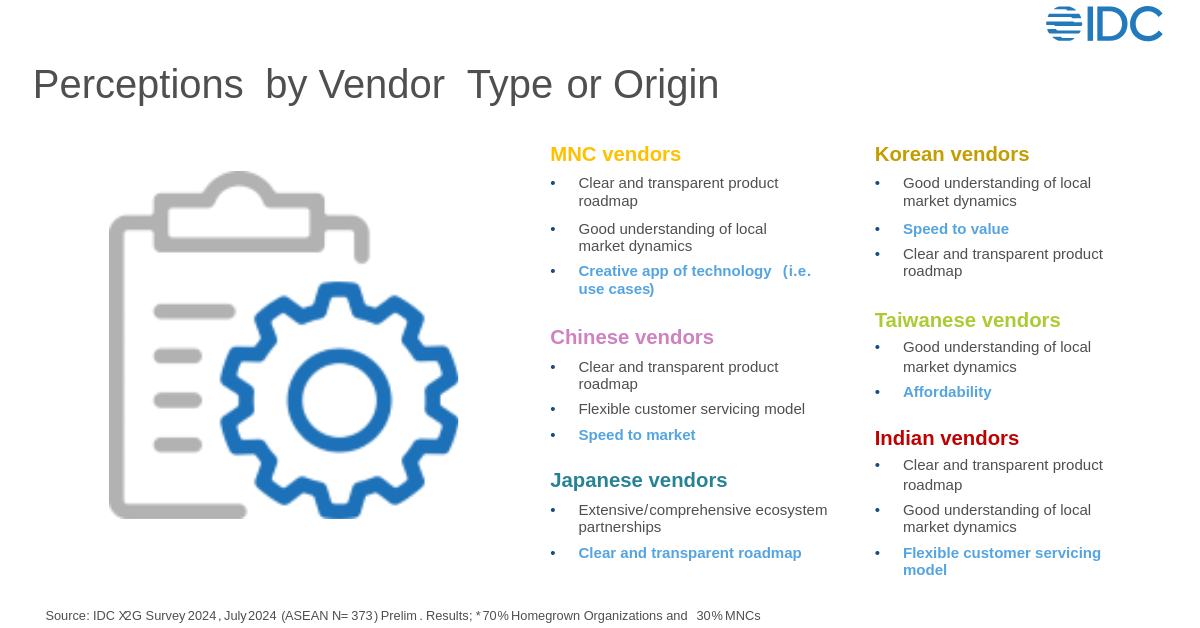
IDC found in its survey of Asian home-grown and MNC vendors that while MNC vendors are valued by the region’s tech buyers for their creative applications of technology (e.g., use cases), Asian home-grown vendors are preferred for their speed to value/market, extensive/comprehensive ecosystem partnerships, affordability and flexible customer servicing models, to name a few.

By uncovering these insights, vendors can tailor their offerings, messaging, and customer engagement strategies to better align with buyer expectations in Asia, ultimately driving higher conversion rates and customer satisfaction.

Crafting Effective Go-to-Market Strategies, Identifying Opportunities and Addressing Challenges

A strong go-to-market (GTM) strategy is critical for any vendor looking to expand its footprint. However, what works in one market may not necessarily work in another. IDC’s X2G Research offers actionable insights into developing GTM strategies that resonate with local audiences while maintaining a global appeal.

Key Considerations:

  • Localization: Adapting products, services, and marketing campaigns to suit regional preferences.
  • Partnerships: Building alliances with local players to accelerate market penetration.
  • Pricing and Packaging: Aligning pricing models with local economic conditions and buyer expectations.

In the same survey IDC found that the top vendor selection criteria used by tech buyers in Asia/Pacific, in order of priority, are product roadmap, product quality and trust, functional expertise (business process), pricing and service delivery, industry knowledge, and innovation.

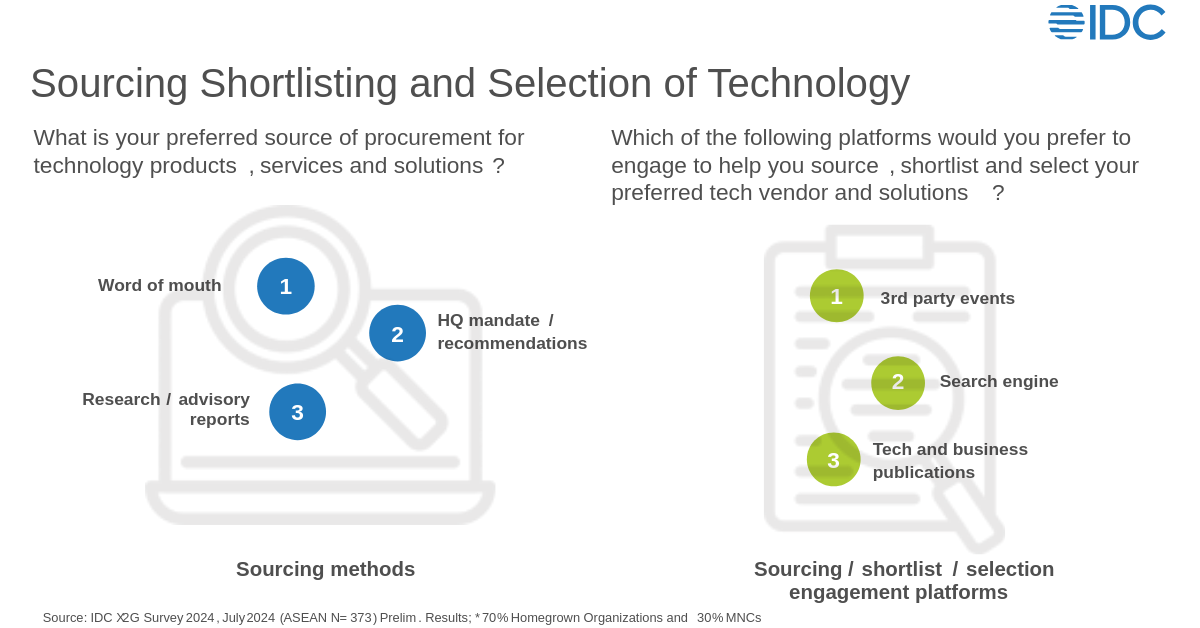
In terms of sourcing method of procurement for technology products, services and solutions, word of mouth comes first, followed by HQ mandate/recommendation and while research/advisory reports. In sourcing, shortlisting and selecting their preferred tech vendor and solutions, the region’s tech buyers prefer engaging the most in third-party events, followed by researching online via search engines and tech/business publications.

By adopting a data-driven approach to GTM planning, vendors can maximize their chances of success in their expansion into new markets.

Doing Business in ASEAN: Success Playbooks for Tech Vendors

Ultimately, the success of home-grown vendors hinges on their ability to identify and capitalize on high-growth opportunities. This research equips vendors with the knowledge and tools needed to target specific industries, segments, and geographies effectively.

Key Insights Provided:

  • Emerging trends and opportunities in key industries such as fintech, security, cloud, manufacturing, and more.
  • Regional market dynamics and growth potential across Asia/Pacific.
  • Best practices for building brand credibility and trust in new markets.

With these insights, vendors can make informed decisions about where to focus their efforts, ensuring they achieve sustainable growth and long-term success.

Why This Matters

The Asia/Pacific region is home to some of the world’s most innovative tech vendors yet many struggle to break into global markets or compete with established MNCs. By addressing the unique challenges these vendors face—from understanding buyer intent to navigating regulatory landscapes—this research aims to level the playing field and unlock new opportunities for growth.

For home-grown vendors, the message is clear: the world is your oyster, but success requires a strategic, informed approach. By leveraging the insights and strategies outlined in this research, Asia’s tech vendors can not only expand their reach but also cement their position as global leaders in the tech industry.

What are your thoughts on the challenges and opportunities for home-grown tech vendors in Asia/Pacific?

Register today for our webinar on ASEAN IT Market Opportunities for Asian Homegrown Tech Vendors to gain critical insights on tech buyers’ intentions and perceptions of Asian tech vendors, the state of the ASEAN IT Market, and winning go-to-market strategies. To learn more about IDC X2G Research, contact us by submitting this form or email Tessa Rago at trago@idc.com.

Franco Chiam - Vice President - IDC

Franco Chiam is the vice president for IDC's Asia/Pacific (excluding Japan) Cloud, Datacenter, Telecommunication, and Infrastructure Research Group. He manages and shapes the above domains' offerings to IDC clients, which include cloud and infrastructure surveys, market analysis and perspective, speaking engagements, and executive briefings. In the ever-evolving landscape of technologies, the pillars of cloud computing, datacenters, and telecommunication have emerged as the driving forces behind our interconnected world. As these domains continue to shape the future of infrastructure, their integration and advancement play a crucial role for the foreseeable future.

As we navigate the complexities of the global economy, the most recent tariffs imposed by the US on China have introduced new variables into our forecasts. The current IDC forecast of 9% growth includes the impact of the additional 10% tariffs levied last month. While the consensus was that these initial tariffs would have a limited net impact on overall spending, they have caused competitive disruption and created additional risks for consumer spending. We’ve already seen signs of weakness in consumer spending, which increases the risk of a downturn lasting into CYQ2.

We will be factoring the tariffs announced today into our forecast, if they stay in place, with the potential impact being more significant than last month’s tariff actions. The downstream impact is lower GDP forecasts by the end of March for the U.S economy. The duration of these tariffs, along with other factors like currency and interest rates, will play a crucial role in the impact on this year. Some economic indicators for Q1, especially consumer confidence, are already starting to deteriorate.

The obvious downside risk of these tariff actions is that a prolonged trade war could add to existing pressure on consumer spending and trigger a U.S. recession, as consumer goods are heavily impacted by the most recent tariffs.  Recently, IDC published a new downside scenario illustrating the potential impact on IT spending, with most of the impact on devices and IT services, while infrastructure and software remain more resilient.

IDC’s baseline IT forecast is currently at 9% IT spending growth in 2025, with a prolonged trade war downside scenario of 4% growth. Within this range, the highest likelihood is that PC and smartphone demand would see the quickest declines, with early estimated potentially bringing the baseline down to 6-8%, followed by impacts on services and other segments if the trade war continues.

An unlikely downside scenario exists where a recession triggers a rapid reduction in AI interest, negatively impacting server and storage server spending. However, the risk of this scenario remains low as all indications are that hyperscale suppliers will continue to double down on spending plans to support AI workload. To that point, we are expecting about 20% revenue growth in server and storage spending this year, on the heels of the 50+% growth that we saw last year.

On the other hand, there is an upside scenario where IT spending growth could reach double digits again in 2025, driven by new trade agreements, falling inflation, and deregulation. However, this scenario is currently less likely due to the current policy direction.

Overall, we see far more downside pressure on our IT forecast because of the tariffs, but it might take until the middle of 2025 to fully play out. Even with the reality of tariffs, many businesses are holding off on making major buying adjustments. Given this uncertainty, our forecast range is unusually large and reflects policy uncertainty and will likely be biased to the downside unless policies change in the near term.

Conclusion

The impact of tariffs on IT spending is a rapidly evolving issue. While our baseline forecast remains at 9% growth for 2025, the potential downside risks from prolonged trade tensions and economic uncertainties could significantly alter this outlook. We believe businesses are currently in a wait-and-see mode, and the full effects of the tariffs may take a few months to manifest. As this fluid situation evolves it is crucial for companies to maintain agility and hedge against the impact that will come from continued varied scenarios.

Customers need to be proactive and adaptable in navigating this uncertain landscape. As stated earlier, the current IDC forecast of 9% growth includes the impact of the additional 10% tariffs which the US levied on China last month. At that time, we forecast that those initial tariffs would have a limited net impact on overall spending. These actions will cause competitive disruption in the supplier landscape (not all vendors are impacted equally), and this turn of events has created some additional downside risk for consumer spending going forward and some “buy forward” activity in anticipation of tariffs coming into effect, which creates more of an overhang for the remainder of the year.

We believe today’s tariff announcement, if they stay in place, increases the risk of a downturn in consumer spending lasting into Q2, which would increase the likelihood of a downward revision to IDC’s IT forecast to the midpoint of our 4%-9% growth range for total IT in 2025.

Crawford Del Prete and Stephen Minton contributed to this blog.

Crawford Del Prete - President - IDC

Crawford Del Prete was appointed President of IDC in February 2019. Prior to his current role, he served as IDC's Chief Operating Officer. Through his leadership, IDC has established a leading position as the world's most prominent and trusted technology market intelligence provider. Crawford joined IDC in 1989 as a research analyst. Throughout his IDC career, he has grown multiple IDC businesses to industry leadership positions. He was instrumental in creating IDC's high visibility research and data tracking products which are used daily in the IT industry for strategic planning. Crawford is a leading authority on the IT industry and has completed extensive research on the structure and evolution of the information technology industry. He advises technology and business leaders on how to adapt and change in a time when technology is changing the world. He is frequently quoted in publications such as The Wall Street Journal, The Financial Times, The New York Times and other leading media sources. He is a regular guest on Bloomberg Technology TV, offering insight and perspective on daily technology events. He was awarded The Patrick J. McGovern Award for Management Excellence in 2014. In 1995, he was awarded IDC's James Peacock Award for research excellence, IDC's highest research honor. He holds a B.A. from Michigan State University and in 2012, he was named a Distinguished Alumni of the University. Follow Crawford on Twitter @craw.

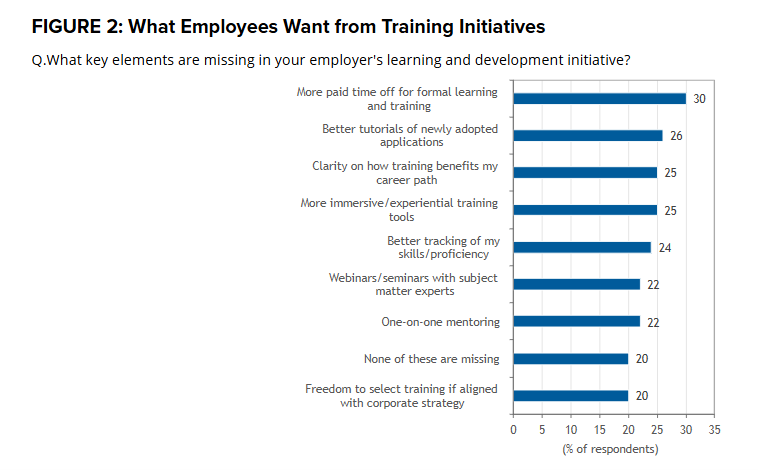
In today’s fast-paced world, technological shifts are no longer happening in decades; they’re happening in years, if not months. For enterprises to remain competitive, relying on past knowledge and static skills isn’t enough. Instead, businesses must cultivate a dynamic, adaptable, and continuously learning workforce. A culture of continuous learning has transformed from being a desirable trait to an essential strategy for sustainable growth.


The pressure to keep up with rapid change is particularly pronounced in tech-driven industries, where new frameworks, tools, and innovations emerge constantly. Enterprises that successfully instill a learning culture are not just enhancing their talent pool—they are future-proofing their business. In fact, according to IDC research, organizations that prioritize continuous learning report higher innovation rates, better employee retention, and a stronger competitive edge in the market.


So, for tech leaders, what exactly does it mean to build a culture of continuous learning, and how can companies overcome the common challenges that derail such efforts? Let’s explore.

The Growing Importance of a Learning Culture

Organizations around the globe are facing a widening skills gap, particularly in IT and technology. As roles evolve and job functions demand new expertise, traditional approaches to hiring no longer suffice. Simply put, enterprises and technology leaders can’t hire their way out of the skills gap; they must invest in upskilling their existing workforce.

However, while many organizations recognize the need for continuous learning, few manage to implement it effectively. A primary reason for this gap lies in outdated training methodologies. According to IDC findings, several common pitfalls prevent traditional learning programs from being effective:

  • Lengthy, uninspiring courses: Employees often find traditional courses too long, which reduces engagement and retention.
  • Irrelevant content: Training programs that don’t align with employees’ roles or career aspirations fail to deliver meaningful value.
  • Lack of real-world application: Without opportunities to apply new skills in real-world contexts, the knowledge gained from training can quickly fade.

These barriers highlight a critical point: fostering a learning culture is not about offering more training; it’s about offering better, more relevant learning opportunities that integrate seamlessly into the flow of work.

Key Elements of a Successful Learning Culture

Creating a continuous learning culture requires more than just access to educational resources. It involves a fundamental shift in how organizations view learning and development. Here are the key elements that drive a successful learning environment:

1. Personalized Learning Paths

One-size-fits-all training programs often fall flat because they fail to account for individual learning needs. To truly engage employees, organizations should offer personalized learning paths tailored to specific roles, career goals, and skill levels.

For instance, an enterprise technology company could develop tailored learning tracks for IT architects, business analysts, and sales leaders. These tracks might include foundational competencies complemented by elective modules, allowing employees to customize their learning journey based on their roles and areas of interest.

2. Blended Learning Approaches

A mix of different learning methods—such as online courses, in-person workshops, mentoring, and microlearning—keeps learning fresh and engaging. Blended learning not only caters to different learning styles but also allows employees to learn at their own pace while balancing work responsibilities.

Microlearning, in particular, has gained popularity for its ability to deliver bite-sized, easily digestible content. Whether it’s a short video, an interactive quiz, or a quick article, microlearning helps reinforce key concepts without overwhelming the learner.

3. Knowledge Sharing and Collaboration

Learning shouldn’t be a solitary endeavor. Encouraging employees to share their expertise and learn from each other fosters a collaborative learning environment. This can be facilitated through:

  • Internal communities of practice: Groups where employees with shared interests or roles can discuss challenges, share insights, and collaborate on solutions.
  • Mentorship programs: Pairing less experienced employees with seasoned professionals helps transfer knowledge and build stronger internal networks.

4. On-the-Job Learning Opportunities

While formal training is important, much of what employees learn happens on the job. Organizations can enhance this natural learning process by:

  • Assigning stretch projects that push employees to develop new skills.
  • Encouraging cross-functional collaboration, which exposes employees to different perspectives and areas of expertise.
  • Providing access to real-time learning tools and resources, such as AI-driven coaching platforms.

5. Recognition and Rewards

People are more likely to engage in continuous learning if their efforts are recognized. Creating a system that acknowledges and rewards employees for skill-building not only motivates individuals but also reinforces the organization’s commitment to learning.

Recognition doesn’t always have to be monetary. It can include public acknowledgment, career advancement opportunities, or even simple peer-to-peer shout-outs. The key is to create a culture where learning is celebrated and seen as a core part of professional success.

Leadership’s Role in Driving a Learning Culture

A learning culture cannot thrive without the active involvement of leadership. When executives champion continuous learning and model it through their actions, it sends a powerful message to the entire organization. IT leaders can drive this culture by:

  • Communicating the value of learning: Regularly highlighting the importance of skill development in company meetings, newsletters, and one-on-one discussions.
  • Investing in learning initiatives: Allocating sufficient budget and resources to support learning and development programs.
  • Leading by example: Participating in learning activities themselves, whether it’s attending workshops or completing online courses.

When leadership prioritizes learning, it becomes embedded in the organization’s DNA, driving a mindset of continuous improvement across all levels.

The Bottom Line: Learning as a Strategic Imperative

In a technology landscape defined by rapid change, the ability to learn and adapt is what separates thriving organizations from those that fall behind. Championing a culture of continuous learning is no longer just a best practice—it’s a strategic imperative.

Organizations that succeed in fostering this culture will not only bridge the skills gap but also position themselves as leaders in innovation, agility, and employee engagement. As Peter Drucker aptly said, “The only skill that will be important in the 21st century is the skill of learning new skills.”

For enterprises looking to stay ahead, the time to start building that skill is now. For more information, including analyst-led advice for tech buyers, read our latest research.